


Trump Proposes New Tariffs On Dozens Of Countries (Trade)
Ukraine Defends Refinery Strikes As Russia Vows Retaliation (Conflict)
Russia Approves Record Post Soviet Military Budget (Russia)
Merz Warns Russian Ambitions Extend Beyond Ukraine (Europe)
Eisenkot Secures First Israeli Coalition Agreement (Middle East)
Israeli Judges Recommend Dropping Netanyahu Bribery Case (Middle East)
Fuel Tanker Fire Kills At Least 31 Near Cairo (Africa)
Solomon Islands Signs Security Treaty With Australia (Australasia)
UK Takes Precautions Against Drone Threats To Airbases (UK)
SpaceX Wins Approval For One Million Orbital Satellites (Technology)
A succinct daily briefing delivered each weekday to help you stay on top of the stories shaping the world.

As previously heralded, the Trump administration proposed new tariffs on imports from dozens of countries on Wednesday, accusing trading partners of unfair manufacturing practices that undermine American industry and contribute to the US trade deficit. The duties would be imposed under Section 301 of the Trade Act of 1974, after the Supreme Court invalidated Trump’s original country-specific tariffs earlier this year.
Proposed duties on some Chinese imports would start at 20%, potentially rising to 40% if Beijing fails to honour its trade agreement. European Union tariffs would initially be set at 15%, potentially increasing to 25%. Both China and the EU disputed the administration’s claims regarding excess manufacturing capacity.
The announcement coincided with data showing US inflation accelerated to 3.8% in October. Democrats, who secured control of both chambers of Congress in the midterm elections, have identified rolling back tariffs as a legislative priority.
Sources: New York Times, Wall Street Journal

Ukrainian Foreign Minister Andrii Sybiha told Russian President Vladimir Putin to stop complaining about attacks on Russian oil refineries, arguing that Moscow could end the strikes by ending the war. Putin warned on Tuesday that Russian retaliation was inevitable and acknowledged that the country’s fuel supply situation remained challenging.
Ukrainian President Volodymyr Zelensky said earlier this month that Ukrainian strikes had disabled more than 55% of Russia’s oil-refining capacity. Moscow has retaliated against Ukrainian energy infrastructure, with Ukraine’s allies warning that the country faces another winter of blackouts and freezing temperatures.
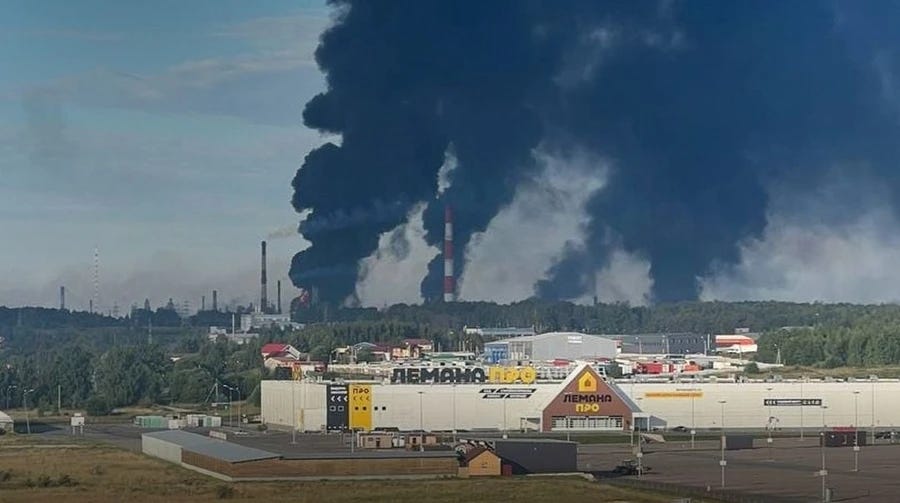
The escalating attacks highlight the failure of an energy ceasefire announced by US President Donald Trump in October, which collapsed within days. Washington previously threatened to suspend intelligence sharing and weapons sales to Europe for Ukraine unless Kyiv halted its refinery strikes, exposing differences between Washington and Kyiv over the conduct of the war.
Sources: The Hill, CNBC

Russia’s lower house of parliament has approved a three-year budget allocating approximately $606 billion to military spending between 2027 and 2029, the highest level since Soviet times. Defence expenditure in 2027 alone will reach $208.9 billion, up from $157.5 billion this year. The budget still requires approval from the upper house.
To finance rising military expenditure, lawmakers separately approved tax increases targeting mining companies and income from interest, dividends and property sales. Meanwhile, funding for housing and utilities will fall by 8%, healthcare by 3% and social support, including pensions, by 6%.
Russia has already spent approximately $710 billion on its military since launching its full-scale invasion of Ukraine in 2022, with cumulative expenditure projected to exceed $1.3 trillion by the end of 2029. The budget reinforces Moscow’s prioritisation of military expenditure over civilian needs, despite sluggish economic growth and a widening budget deficit.
Sources: Washington Post, Associated Press

German Chancellor Friedrich Merz warned on Wednesday that Russia was escalating its conflict with the West across Europe and in space, arguing that Moscow’s ambitions extended beyond Ukraine. The German government said on Monday it was taking seriously intelligence shared by Western allies suggesting Russia could launch a nuclear weapon into space as early as next month.
Addressing the Bundestag, Merz defended plans to increase German defence spending by 30% and allocate €11.6 billion to Ukraine in 2027. Germany has become Kyiv’s largest financial and military donor since US President Donald Trump returned to office.
However, Merz faces declining domestic support for military assistance. A recent survey showed that while more than 80% of Germans viewed Russia as a threat, only 46% supported military aid to Ukraine, down from 59% last year. Berlin is seeking to secure multiyear funding for Kyiv through the EU’s 2028-2034 budget.
Sources: FT, Bloomberg

Israeli opposition leader Gadi Eisenkot has secured his first coalition agreement since October’s election, with his Yashar party agreeing to sign a pact with the right-wing Israel Our Home party led by Avigdor Lieberman. Eisenkot has until 6 December to form a government, although he can request a 14-day extension.
Eisenkot’s bloc holds 48 seats in the 120-seat Knesset, short of the 61 required for a majority. Negotiations remain open with ultra-Orthodox parties, whose longstanding opposition to military conscription complicates a potential agreement and parties representing Israel’s Palestinian minority, which collectively hold 19 seats.
Eisenkot is also exploring a unity government with caretaker Prime Minister Benjamin Netanyahu’s Likud party. However, the left-wing Democrats party has suspended coalition talks with Eisenkot following his discussions with Likud. Should Eisenkot fail to form a government, Netanyahu could receive a mandate, with another election possible if neither succeeds.
Sources: Al Jazeera, New York Times
Restacking this post will help it reach more readers interested in the world.

Judges at the Jerusalem District Court recommended on Wednesday that prosecutors drop the most serious corruption case against Israeli caretaker Prime Minister Benjamin Netanyahu, citing the low likelihood of conviction. The case concerns allegations that Netanyahu granted regulatory favours to a telecommunications company in exchange for favourable media coverage.
The judges also questioned whether Netanyahu’s conduct in a second case involving another alleged media arrangement constituted a criminal offence and recommended seeking a plea agreement in a third case concerning luxury gifts. Attorney General Gali Baharav-Miara said she would consider the recommendations. Netanyahu, who denies wrongdoing, called for his trial to end immediately.
The development comes as opposition leader Gadi Eisenkot attempts to form a government following October’s inconclusive election. Meanwhile, parliament voted in favour of legislation seeking to impose prime ministerial term limits and restrict individuals under criminal indictment from serving as prime minister.
Sources: BBC, Al Jazeera

At least 31 people were killed and 21 injured after a fuel tanker crashed and caught fire on a busy highway in Egypt’s Giza governorate near Cairo on Wednesday evening. Prosecutors said preliminary estimates indicated that 27 vehicles, including cars and motorcycles, were destroyed in the blaze.
Authorities deployed 39 ambulances and transferred the injured to three hospitals, where patients were treated for burns and smoke inhalation. Egyptian Health Minister Khaled Abdelghaffar placed nearby hospitals on high alert. Prosecutors have opened an investigation into the crash and ordered DNA testing to identify two victims. The highway has since reopened.
The disaster highlights Egypt’s longstanding road safety challenges, with collisions frequently attributed to poor maintenance and widespread violations of traffic laws. Official figures show that nearly 6,000 people died on Egyptian roads last year, an increase of several hundred compared with the previous year.
Sources: BBC, CNN

The Solomon Islands signed a security and economic treaty with Australia on Wednesday, following reports that Honiara had informed Beijing it would not renew their controversial 2022 security pact when it expires in April 2027. Solomon Islands Prime Minister Matthew Wale declined to confirm the decision, citing a non-disclosure agreement with China.
The new treaty establishes Australia as the Solomon Islands’ preferred security partner and requires prior consultation with Canberra on critical infrastructure. Honiara has committed to preventing the militarisation of sensitive infrastructure, prohibiting foreign military or security bases and prioritising security cooperation with Pacific Islands Forum members, of which China is not one.
Australia will reportedly provide A$740 million in grants and concessional loans supporting education, infrastructure, security and other development priorities. The agreement represents a diplomatic gain for Canberra following years of concern over China’s expanding strategic influence in the Pacific.
Sources: BBC, ABC

Britain’s Royal Air Force (RAF) is reportedly introducing additional measures to protect military aircraft against potential drone attacks amid growing concerns over suspected foreign threats to British airbases. The Ministry of Defence said it was adapting to potential security threats but did not specifically confirm the reported measures.
The developments follow suspected Iranian plots targeting British military facilities, which have prompted the United States to relocate aircraft from two British airbases. British and American authorities have charged five men in connection with one suspected plot. Iranian Foreign Minister Abbas Araghchi has rejected Britain’s accusations.
RAF chief Air Chief Marshal Harv Smyth said on Tuesday that the air force was preparing for a scenario in which British territory could no longer be considered a sanctuary during conflict. Separately, MI5 and the Ministry of Defence warned British companies supplying Ukraine’s military of an increased risk of Russian sabotage.
Sources: Reuters, Iran International

The US Federal Communications Commission (FCC) on Wednesday authorised SpaceX to deploy up to one million satellites to create orbital data centres for artificial intelligence computing. The approval, the first of its kind, requires SpaceX to deploy at least one satellite by 2033, with further deployments scheduled through 2040.

SpaceX argues that solar-powered orbital data centres could offer cheaper and more environmentally friendly alternatives to terrestrial facilities, reducing demand on electricity grids and water resources. However, the company has acknowledged that the technology remains unproven and may never be commercially viable. Significant engineering challenges include heat dissipation, solar power collection and data transmission to Earth.
Scientists have also warned that the proposed constellation could increase satellite collisions, generate orbital debris and disrupt astronomical observations. The FCC maintained that the proposal complied with its orbital debris regulations but dismissed environmental concerns as outside its jurisdiction.
Sources: Associated Press, Bloomberg
Restacking or sharing this publication means more people can read it. Commenting extends the conversation. Liking shows your appreciation.
On this day …
On this day in 2008, ten militants from the Pakistan-based group Lashkar-e-Taiba launched coordinated terrorist attacks across Mumbai, India’s financial capital.
The attackers targeted the Taj Mahal Palace and Oberoi Trident hotels, Chhatrapati Shivaji Terminus railway station, a Jewish community centre and other locations. The attacks continued until 29 November, killing 166 people and injuring hundreds more.
Indian investigations linked the operation to militants based in Pakistan, significantly worsening relations between the two nuclear-armed neighbours.
The attacks exposed vulnerabilities in urban security and emergency coordination, prompting reforms to India’s counterterrorism capabilities and renewed international attention to cross-border militant networks.