


Trump Sends Envoys To Advance Ukraine Peace Push
Macron Says Russia Shows No Willingness For Ceasefire
Russian Drones Trigger Regional Alerts In Romania
Bolsonaro Begins 27 Year Sentence For Coup Plot
Taiwan Sets $40 Billion Defence Budget
UN Warns Gaza Faces Decades Of Recovery
China Rebukes Japan Over Taiwan At UN Forums
Ageing Populations Threaten Long-Term Growth
India Cuts Russian Oil To Avoid Sanctions Risk
Jakarta Becomes World’s Largest City
On this day ….
On this day in 2008 coordinated attacks struck across Mumbai targeting hotels, a railway station, a café, and a Jewish centre, leaving more than 160 people dead.
The assault exposed vulnerabilities in India’s urban security and triggered significant reforms in policing, intelligence coordination, and coastal surveillance.
It also strained India–Pakistan relations, as New Delhi blamed Pakistan-based militants, prompting diplomatic pressure and military signalling.
The scale, duration, and symbolism of the targets made the event a defining moment in South Asia’s modern security landscape.
Did the post-2008 reforms fundamentally strengthen India’s ability to respond to complex urban threats or does the risk persist?

President Donald Trump said his plan to end the war in Ukraine has been fine tuned and is now moving into a new phase of direct engagement. He confirmed that envoy Steve Witkoff will travel to Moscow to meet President Vladimir Putin, while Army Secretary Dan Driscoll will hold talks with Ukrainian officials. However, Trump cautioned that he will not meet either leader himself until further progress is made in negotiations.
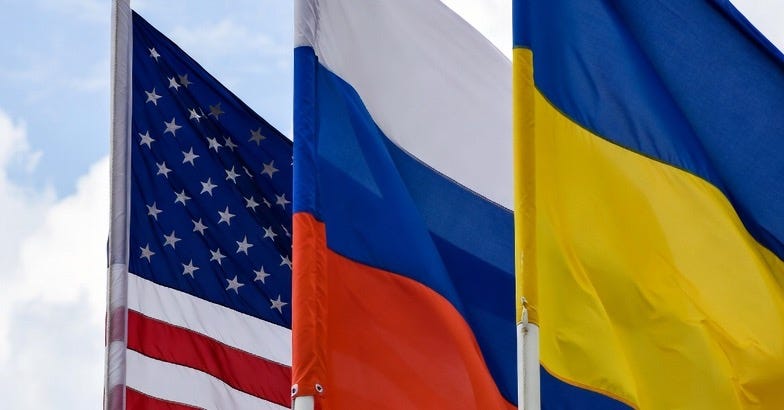
The plan emerged last week and drew immediate concern in Kyiv and across Europe, as it heavily favoured Russia in its initial form. As a result, Ukrainian and American negotiators intensified discussions in recent days, while European leaders scrambled to steer the emerging proposal toward addressing their security concerns. Meanwhile, Witkoff and Driscoll have continued wider talks, including with Russian officials in Abu Dhabi.
Trump said momentum is building behind the effort, adding that people are beginning to see it as a workable deal for both sides.
Sources: Associated Press, Euronews

French President Emmanuel Macron has warned that Russia has shown no readiness to agree to a ceasefire in Ukraine, despite renewed diplomatic efforts to amend a US peace plan. Speaking after a video call of the 30 country coalition supporting Kyiv, he said Moscow had provided no indication that it would discuss a revised version of the proposal developed in recent talks in Geneva. Participants in the call, including Volodymyr Zelensky and US Secretary of State Marco Rubio, reported directly on their exchanges with Russia.
Macron said the war continued unabated, with recent strikes hitting civilian infrastructure and Ukrainian civilians. As a result, he argued that continued pressure was needed to bring Moscow to negotiations and insisted support for Ukraine would continue with force.
He also called for a strong Ukrainian army without limitation as part of post war security guarantees, and said a decision on frozen Russian assets, viewed as an important source of funding and leverage, would be finalised in the coming days.
Sources: Le Monde, Barrons

NATO jets were scrambled on Tuesday after Romanian and German pilots tracked a drone that penetrated deeper into Romania’s airspace than any previous breach since Russia’s 2022 invasion of Ukraine. Defence officials said the pilots came close to shooting it down but held off because of the risk of damage on the ground. Drone fragments without explosives were later recovered. In a separate incident, radar detected another breach, prompting Romanian F-16s to launch and residents across several counties to take shelter.
Meanwhile, Moldova reported six drones in its airspace, including one that struck a residential roof, underscoring the wider pressure created by overnight Russian missile and drone attacks on Ukraine. Ukrainian authorities said at least six people were killed in Kyiv, with further strikes on Dnipro, Cherkasy, Chernihiv, Kharkiv and Odesa.
The Romanian defence ministry said the tracked drone moved more than 100 kilometres inland before re-entering Ukraine, highlighting concerns along NATO’s eastern flank.
Sources: Reuters, Newsweek

Brazil’s former president Jair Bolsonaro has been ordered to begin serving a 27 year sentence after the Supreme Court upheld his conviction for plotting a coup to stop Luiz Inácio Lula da Silva taking office. The case formally concluded after the appeals period ended, and he was moved from house arrest into custody in a specially prepared room at a federal police base. His plot had included plans to kill Lula and Geraldo Alckmin, but it faltered when senior military figures refused to take part.
He was arrested after tampering with his ankle monitor, later admitting to applying a hot soldering iron to the device. As a result, he must now serve his term in a secure cell reserved for former heads of state, while six co-conspirators have also been ordered to start their sentences.
Support for Bolsonaro has waned, according to polls, and protests have so far been small. His son said he is psychologically devastated.
Sources: The Guardian, Washington Post

Taiwan’s president, Lai Ching-te, has announced a special 40 billion dollar budget for arms purchases, to be allocated from 2026 to 2033. He said the funding will focus on building a new air defence system with high-level detection and interception capabilities, as well as acquiring additional weapons from the United States. The move follows earlier commitments to raise defence spending to 5 percent of GDP and comes amid escalating threats from China.
Lai said military intrusions, maritime grey zones and disinformation campaigns had intensified around the Taiwan Strait and across the wider region. As a result, he argued Taiwan must show determination and strengthen its ability to defend itself, describing the island as a critical part of the first island chain.
Taiwan is currently planning to increase its regular defence budget to 3.3 percent of GDP for 2026, while the special funding will sit alongside this allocation.
Sources: Associated Press, New York Times

Gaza’s economy has suffered an unprecedented collapse, with the United Nations warning the territory’s survival is in doubt after two years of war. In a new assessment, the UN Trade and Development agency said military operations had undermined every pillar of survival, from food and shelter to healthcare, creating what it called a human made abyss. The agency estimated that reconstruction will cost more than 70 billion dollars and could take several decades even with sustained foreign aid.

The report found that Gaza’s economy contracted by 87 percent between 2023 and 2024, pushing GDP per capita to 161 dollars, among the lowest globally. In contrast, conditions in the West Bank have also deteriorated, with violence, settlement expansion and mobility restrictions decimating economic activity.
UN officials called for immediate and substantial international assistance, combined with restored fiscal transfers and eased constraints on trade and movement. Without this, they warned that Gaza may struggle to remain a liveable society.
Sources: Times of Israel, The Guardian

China intensified its criticism of Japan at the United Nations last week, delivering two formal interventions that targeted Prime Minister Sanae Takaichi’s recent remarks on Taiwan. Beijing’s envoy Fu Cong first told a UN debate that Tokyo was “totally unqualified” for a permanent Security Council seat and called Takaichi’s comments “brazen” and “provocative”. He followed with a letter to the UN Secretary General describing the remarks as “gravely erroneous” and of “profoundly malicious nature and impact”.
Japan responded on Monday with its own letter to the UN, arguing that its basic policy remains exclusively defence oriented and that China had misinterpreted its position. It also said its stance on Taiwan is unchanged from the 1972 Japan China Joint Communique.
However, China continued to frame Takaichi’s comments as the first threat of force against China by a Japanese prime minister. Beijing’s letter warned that any attempt by Japan to intervene militarily in a cross strait crisis would be treated as aggression and met with self defence.
Sources: South China Morning Post, Kyodo News

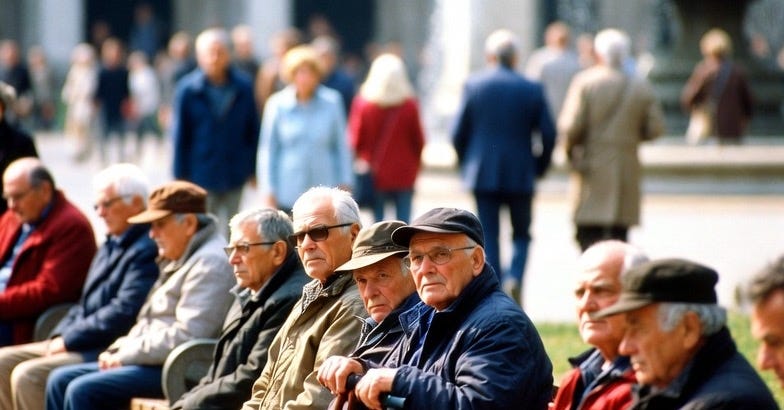
Ageing populations are emerging as a major drag on long-term economic growth, the European Bank for Reconstruction and Development (EBRD) has warned, with shrinking working-age shares already eroding living standards.
The Bank said emerging Europe faces some of the steepest pressures, projecting that the decline in working-age populations could reduce annual per capita GDP growth by almost 0.4 percentage points between 2024 and 2050. However, the problem is becoming visible across many economies, where fertility rates have fallen well below replacement level.
The report found that pro-natalist incentives have failed to deliver lasting increases in birth rates, while migration at the scale required to offset demographic decline remains politically difficult. Meanwhile, citizens are ambivalent about using artificial intelligence to boost productivity.
As a result, the EBRD said the biggest lever available is extending working lives, though this requires retraining and politically unpopular pension reforms. It warned that ageing electorates and leaders make difficult choices even harder, reinforcing the demographic headwinds now weighing on growth.
Sources: Reuters, EBRD

India’s imports of Russian crude are set to fall to their lowest level in at least three years in December as refiners move away from sanctioned suppliers. Trade and refining sources said the shift follows tightened measures from Britain, the EU and the United States, including new US sanctions on Rosneft and Lukoil. Buyers had until November 21 to wind down dealings with those firms, prompting Indian refiners to turn to alternative suppliers.
Bank scrutiny has also made state refiners extremely cautious, and India is expected to receive about 600,000 to 650,000 barrels per day of Russian oil in December. By contrast, provisional data shows November arrivals at 1.87 million barrels per day, after refineries filled stocks ahead of the deadline. Meanwhile, most Indian refiners have halted Russian purchases, while others say they will buy only from non-sanctioned entities.
As a result, shipments from the United States have increased, helped by an arbitrage window and pressure from Washington after it doubled tariffs on Indian imports to 50 percent.
Sources: Mint News, Reuters

Jakarta has become the world’s largest city, according to the United Nations’ latest World Urbanization Prospects 2025 report. The Indonesian capital now has a population of almost 42 million, placing it ahead of Dhaka, which has risen sharply to around 36 million. Tokyo, previously the world’s biggest city, has fallen to third. Meanwhile, the UN notes that nine of the world’s ten largest cities are located in Asia, underlining the region’s rapid urban expansion.

The report also highlights the broader trend of global urbanisation. The number of megacities with populations above ten million has grown to 33, compared with just eight in 1975. By contrast, projections show Dhaka continuing to expand and likely becoming the world’s largest city by the middle of the century.
However, rapid growth comes with rising pressures. Both Jakarta and Dhaka face environmental vulnerabilities, while the UN emphasises that urbanisation will continue to shape economic and social development worldwide.