


Russian Warning Puts British Factories In Focus (UK)
Hormuz Talks Produce First Diplomatic Opening (Middle East)
US Sanctions Bite But Tehran Shows No Sign Of Yielding (Middle East)
Canada Retaliates As Trade War With US Deepens (Trade)
Haiti Gang Attack Exposes Fragile Security (Conflict)
Ukraine Needs A Strategy Before Time Runs Out (Conflict)
Myanmar Rights Crisis Deepens With Conflict Economy (Asia)
Trump Policies Could Double US Power Emissions (Environment)
UN And Red Cross Push For Killer Robot Rules (World)
US Risks Blocking Progress At UN Land Talks (World)
A succinct daily briefing delivered each weekday to help you stay on top of the stories shaping the world.

A former senior Russian official has warned that British factories producing drones for Ukraine could be attacked by “semi-military” or “unknown” forces as Moscow condemns expanding UK military support for Kyiv.
Former Deputy Foreign Minister Andrei Fedorov said Russian President Vladimir Putin was under pressure from public opinion and Russian media to act against Britain. He raised the possibility of attacks on drone factories, cyberattacks or unspecified political measures while saying such action would not be at an official level.
The warning followed Prime Minister Andy Burnham’s agreement to provide Kyiv with classified technology to manufacture a British/French-designed cruise missile in Ukraine. Kremlin spokesman Dmitry Peskov accused Britain of becoming increasingly involved in the war and said Russia was gathering information on potential production sites so they could be targeted. Britain has also pledged to supply at least 120,000 drones to Ukraine this year.
Sources: CBS News, Bloomberg

Iran and Oman have edged towards an interim agreement on managing shipping through the Strait of Hormuz, offering the first sign of diplomatic progress in weeks over the strategic waterway. Their proposed framework includes a temporary transit corridor and a joint mine-clearing project, with technical talks continuing on permanent navigation arrangements and future administration.
Omani Foreign Minister Sayyid Badr Albusaidi said he hoped the countries would soon announce a temporary corridor and practical arrangements to restore safe navigation. Iranian officials, however, have insisted that such a deal would not immediately restore free traffic through the strait.
Tehran says the United States must first lift its naval blockade, restore an oil-export waiver and meet other demands. Traffic remains largely paralysed through a waterway that normally carries around one-fifth of global oil and liquefied natural gas exports, leaving any interim corridor as a step towards, rather than a substitute for, a broader settlement.
Sources: FT, Al Jazeera

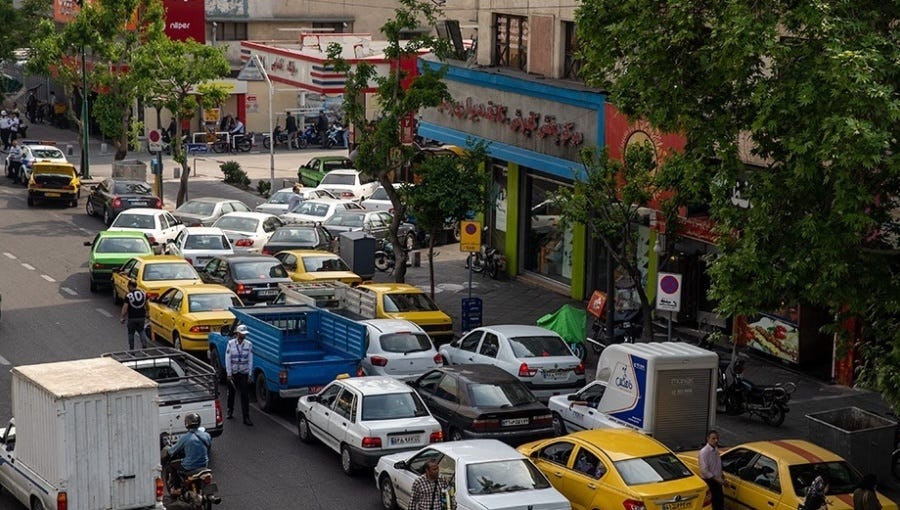
Petrol queues are lengthening across Tehran as tighter US sanctions and a naval blockade deepen economic strain, with some drivers waiting two hours or more to fill up. Inflation is in double digits, the rial has hit a record low and households say rising prices are eroding purchasing power for many people.
US Treasury Secretary Scott Bessent has vowed to sever Iran from the global economy, with expanded secondary sanctions targeting sectors including digital assets, technology, gold, aviation and shipping.
President Masoud Pezeshkian accused Washington of turning to economic measures after failing to defeat Iran militarily and has rejected surrender as an option.
Yet there are no signs so far that worsening conditions have revived the anti-government protests crushed earlier this year. Iran has endured international sanctions for decades, while oil sales to China remain a lifeline whose vulnerability to further US measures is uncertain as is China’s response to the latest round of sanctions.
Sources: Associated Press, South China Morning Post

Canada will impose retaliatory tariffs of up to 50 per cent on about $20 billion of US goods from September 8, sharply escalating a trade dispute between the two countries. Tariffs on American steel and aluminium will double from 25 to 50 per cent, while more than 700 other products will face levies of 15, 25 or 50 per cent.
Finance Minister François-Philippe Champagne said the measures were designed to protect Canadian industry and help domestic companies compete against US products. Canadian officials said the tariffs were intended to match US measures and reduce American imports, while acknowledging they would raise costs for some businesses and consumers.
The retaliation follows new 50 per cent US tariffs on Canadian goods after trade negotiations collapsed. Canada and the United States remain deeply integrated across autos, energy, agriculture and manufacturing, making a prolonged dispute potentially costly on both sides.
Sources: Washington Post, Associated Press

At least 47 people were killed and more than 50 kidnapped in a gang attack on Kenscoff, near Haiti’s capital in the largest assault on the community since the first major attack there in January 2025. At least five of those killed were children, and 25 homes were set alight.
A gang leader threatened to kill the hostages if police operations injured any of his fighters, while Romain Le Cour, head of the Haiti Observatory at the Global Initiative Against Transnational Organized Crime, said the attack could be intended to force police and the UN-backed gang suppression force to spread limited personnel more thinly.

The attack shattered hopes that security was improving in Haiti. Armed groups control an estimated 70 per cent of Port-au-Prince, gang violence has displaced 1.5 million people and more than 3,050 people were killed across Haiti between January and June.
Sources: The Guardian, DW
Restacking this post will help it reach more readers interested in the world.

Ukraine appears to be slowly losing the war against Russia and has only several months to make key decisions that could change its trajectory, according to ousted Defence Minister Mykhailo Fedorov. He said Kyiv lacked an overall vision for victory and was failing to combine existing military technologies into a coherent strategy.
Fedorov said Ukraine should urgently prioritise autonomous drones guided by artificial intelligence, cheap interceptor missiles and its own ballistic missile programme. He argued that technologies already existed that could stop Russian forces but were not being applied effectively.
His warning comes as Russia continues advancing slowly in the Donbas and is striking Ukrainian factories and warehouses with ballistic missiles while Ukraine’s interceptor stocks run low. Ukraine’s presidential office rejected Fedorov’s assessment, saying he had been positive about the war while in government and that only his personal status had changed.
Sources: Kyiv Post, Reuters

Myanmar’s human rights situation has “plummeted to a new low”, the UN says, as military violence, abuses against the Rohingya and illicit resource extraction compound civilian suffering. An estimated 8,075 civilians, including 1,074 children, have been killed since the 2021 coup, while 3.6 million people are internally displaced.
The report says Myanmar’s military continues to use airstrikes, arson attacks, displacement and denial of assistance, while both the military and the Arakan Army have committed widespread and systematic abuses against the Rohingya in Rakhine State.
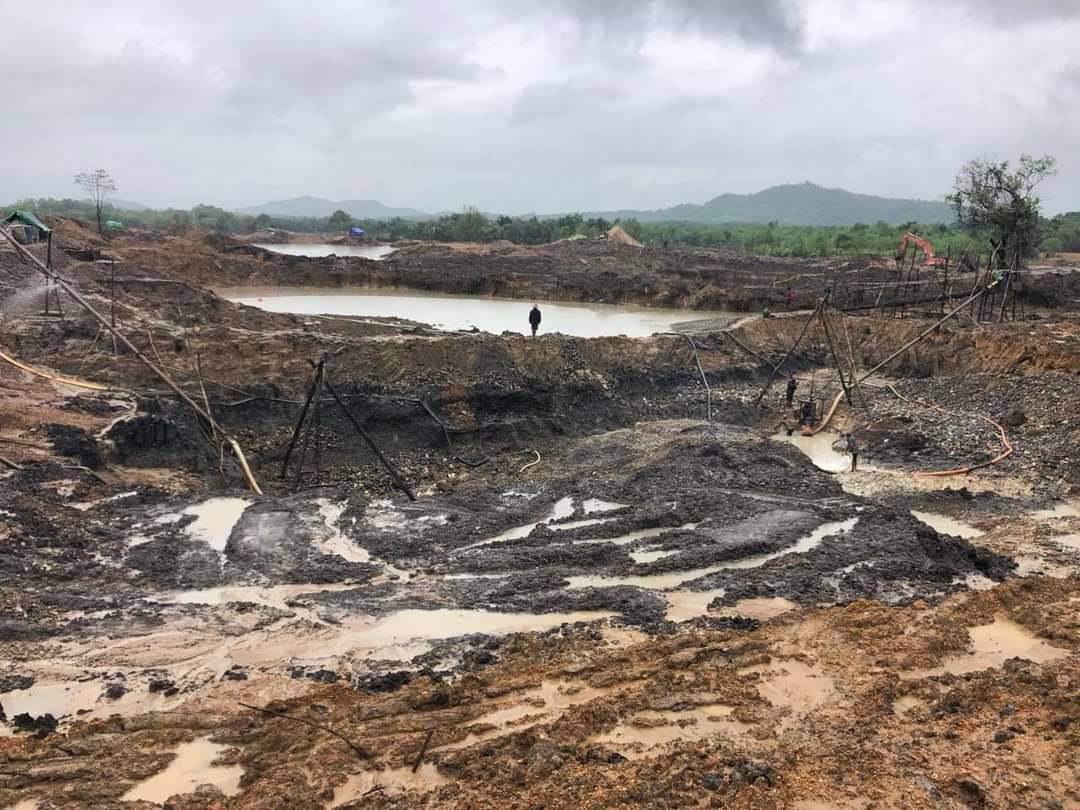
The collapse of the rule of law has also fuelled illicit economies. Illegal rare-earth mining in Kachin and Shan has strengthened transnational criminal networks, while toxic runoff has caused environmental contamination linked to miscarriages and pregnancy complications.
UN High Commissioner for Human Rights Volker Türk urged states, companies and investors to reconsider their involvement.
Sources: OHCHR, Al Jazeera

Trump’s energy policies could double US power-sector carbon emissions by 2035 while eliminating $700 billion in clean-energy investment, according to analysis by the Natural Resources Defense Council. The group estimates that 390 to 540 gigawatts of new wind, solar and energy-storage capacity could be lost over the next decade.
The report attributes the shift to measures including the removal of clean-energy tax credits, tariffs that raised technology costs, efforts to keep ageing fossil-fuel plants operating and delays to new wind permits. It estimates consumers could pay up to $30 billion more each year for electricity by 2035, with household bills rising by as much as 25 per cent in some regions.
Power-sector carbon dioxide emissions could exceed one billion metric tonnes by 2035, compared with just over 500 million tonnes under the report’s counterfactual scenario. Both scenarios included rapid electricity-demand growth from data centres.
Sources: Energy News, Japan Times

The United Nations and International Committee of the Red Cross have renewed calls for legally binding restrictions on autonomous weapons, warning humanity is “dangerously close” to allowing machines to target people without human control.
Their appeal seeks prohibitions on two categories: autonomous weapons whose effects cannot be predicted or anticipated and systems designed to target human beings. The organisations said advances in artificial intelligence and military technology are widening the gap between technical capability and regulation, while making accountability for lethal decisions harder to establish.
The push comes ahead of the November review conference of the Convention on Certain Conventional Weapons in Geneva, which the UN and Red Cross describe as the clearest route towards binding rules. They first called for an international agreement in 2023, arguing that human judgement and control must be retained over life-and-death decisions.
Sources: The Independent, UN

France has warned that US opposition at UN land talks risks blocking progress as negotiators enter the decisive second week of COP17 in Ulaanbaatar. Former French ecological transition minister Barbara Pompili said Washington was resisting efforts to link land degradation with climate change, biodiversity loss and water scarcity, while Russia was also obstructing scientific work.
The dispute comes as negotiators remain divided over drought, including whether to adopt a legally binding protocol or a voluntary framework. Talks on stronger cooperation between the Rio Conventions have yet to begin.
COP17 has made progress on rangelands, grasslands and soil health, including a $1.2 billion Rangelands Flagship Initiative. But a $278 billion annual land-restoration finance gap remains, with the private sector providing just 6 per cent of restoration funding. France argues that soil protection must be integrated with food, water, energy and economic policy.
Sources: RFI, WWF
Restacking or sharing this publication means more people can read it. Commenting extends the conversation. Liking shows your appreciation.
On this day …
On this day in 1920, US Secretary of State Bainbridge Colby formally certified the Nineteenth Amendment to the Constitution, prohibiting the federal government and states from denying citizens the right to vote on the basis of sex. Tennessee’s ratification eight days earlier had provided the final state needed for adoption.
The amendment was the culmination of decades of campaigning by the American women’s suffrage movement, although discriminatory laws and practices continued to prevent many women, particularly Black women in the South, from exercising the right in practice.
The distinction remains important: establishing a right in law and ensuring that everyone can exercise it are not always the same thing.