


Xi Urges US-China Guardrails Against Conflict (Diplomacy)
France Moves to Protect Saudi Oil Lifeline (Conflict)
Houthi Gains Put Global Trade Route at Risk (Conflict)
Denmark Warns of Limited Russian Attack Risk (Europe)
Netanyahu Defies Critics as UN Delegates Walk Out (UN)
Netanyahu Protest Leads to Arrests Outside UN (UN)
Media Still Denied Dinner Access After Court Ruling (US)
Global Bond Selloff Pushes US Yields Higher (Markets)
Pentagon Probes F-35 Parts Diverted to China (Asia)
Nepal Presses Rich Nations for Climate Finance (Asia)
A succinct daily briefing delivered each weekday to help you stay on top of the stories shaping the world.
Chinese President Xi Jinping has urged the US and China to strengthen communication and military crisis mechanisms to prevent their competition from escalating into conflict, using a White House summit with US President Donald Trump to argue that the two powers can avoid the “Thucydides trap”.
Xi said the countries should coexist peacefully, maintain regular military dialogue and improve crisis prevention. Their meeting comes as Washington and Beijing compete over artificial intelligence and trade while remaining divided over issues such as Iran and Taiwan. Xi said competition should remain “within bounds”.
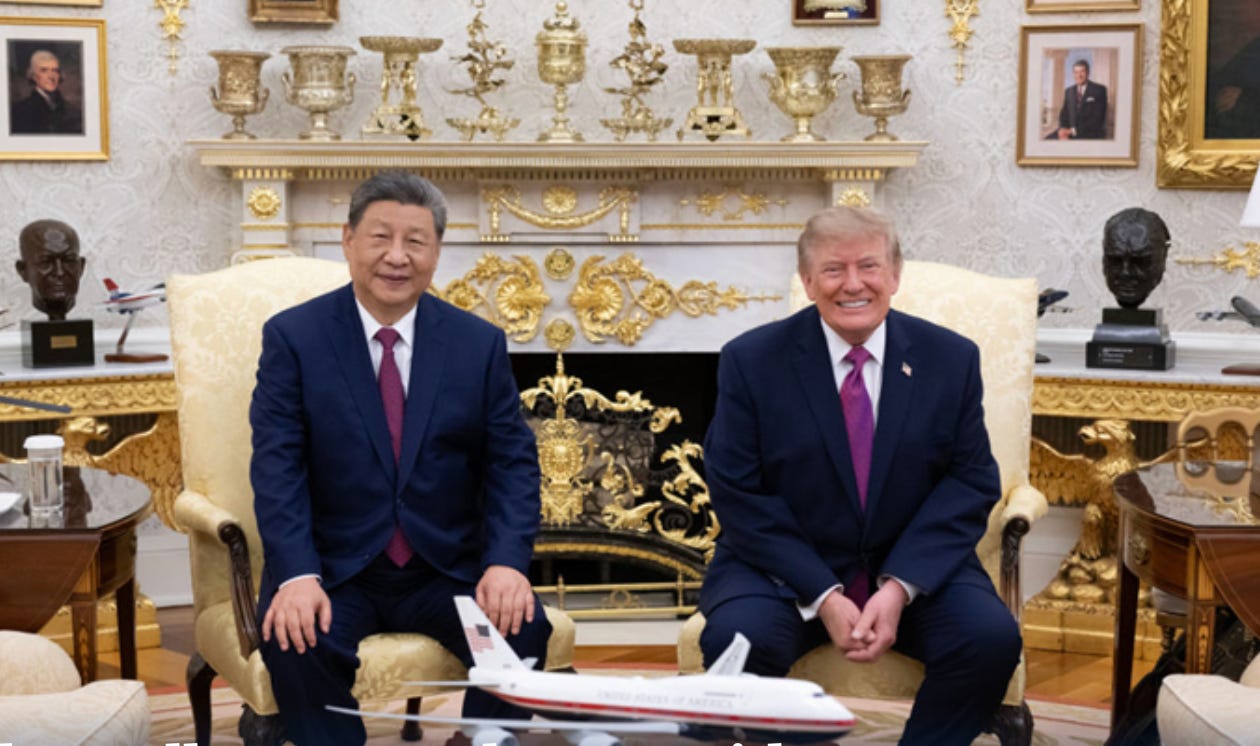
The summit produced no broad settlement of those disputes. A trade truce due to expire in November has been extended by two months while China wants Washington to permanently halt arms sales to Taiwan and loosen restrictions on advanced chips. Trump said the talks would cover security, technology and AI. Both leaders emphasised their personal relationship.
Sources: The Guardian, Associated Press
France will send soldiers, radar and defence systems to Saudi Arabia to protect the Yanbu oil hub on the Red Sea after attacks damaged infrastructure that has become central to keeping Saudi exports moving during the Iran war.
French President Emmanuel Macron said the deployment had been finalised with Saudi authorities and stressed that France was “not getting involved in any conflict”. Yanbu has allowed crude and refined products to avoid the Strait of Hormuz, but a drone attack by pro-Iranian militias in Iraq damaged the East-West pipeline this month, while a Houthi attack forced the Yasref refinery to shut down.
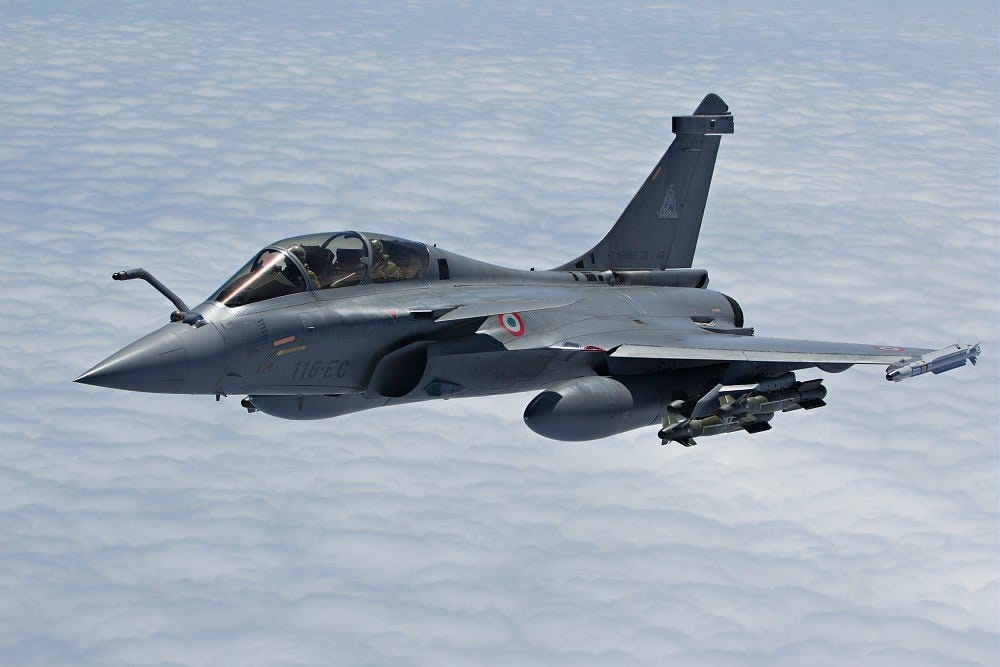
The 750-mile pipeline can carry up to 7 million barrels a day, about 2 million for domestic Saudi refiners and the rest for export. Saudi Arabia is testing the pipeline to restore flows, while Macron said any deployment of Rafale fighters would depend on how the situation evolves.
Sources: Wall Street Journal, Le Monde

Yemen’s internationally recognised government has urged world leaders to help confront the Houthis, warning that their advances along the Red Sea coast have turned control around the Bab el-Mandeb Strait into a risk for global trade. The rebels seized Mokha and key Red Sea islands this month, improving their surveillance of a waterway that normally carries about 12% of world trade.
Yemeni Vice President Abdullah Abdulkader al Alimi-Bawzer told the UN General Assembly that using navigation safety as leverage was “taking hostage the entire global economy”. The Houthis have declared a blockade on Saudi shipping while saying other commercial traffic is not threatened.
Saudi Arabia meanwhile intercepted six Houthi ballistic missiles aimed at Taif and Yanbu. The escalation threatens Saudi oil exports through the Red Sea as Hormuz remains disrupted and the East-West pipeline resumes operations after drone strikes earlier this month.
Sources: Associated Press, Reuters
Danish intelligence has warned of a “low but growing risk” that Russia could launch a limited military attack against a NATO country in the coming months even while the war in Ukraine continues. Possible scenarios include moving small numbers of troops into a neighbouring country or using long-range weapons against infrastructure supporting Ukraine.
Thomas Ahrenkiel, head of the Danish Defence Intelligence Service, said such a deployment could be presented as protecting local Russian minorities, with the aim of dividing NATO. The service expects Russia to intensify hybrid attacks, potentially including destructive cyber attacks and sabotage carrying a high risk of casualties.
However, Danish intelligence said a full-scale Russian invasion of a NATO country remained “highly unlikely” because it would require more than six months of troop build-up. Western security officials also said they had seen no sign that Russia was preparing for conventional war with NATO.
Sources: FT, New York Times
Israeli Prime Minister Benjamin Netanyahu used his UN General Assembly address to defend Israel’s military campaigns in Gaza and Iran, as scores of delegates walked out in protest. He rejected allegations of genocide in Gaza as “the biggest lie of the century” and said attacking Iran was “one of the easiest decisions” he had made.
Netanyahu’s speech came after Palestinian President Mahmoud Abbas addressed the assembly by video after being denied a US visa. Abbas said Israeli policies threatened Palestinian existence and the two-state solution, and accused Israel of waging a “genocidal war” in Gaza.
The confrontation underscored Israel’s growing international isolation as Netanyahu prepares for elections next month. He thanked US President Donald Trump for his leadership over the joint strikes on Iran. His address followed days of criticism from world leaders over Gaza and accusations that Israel had committed genocide and war crimes.
Sources: BBC, Associated Press
If you appreciate this post then please Restack it
Police arrested at least 30 people outside United Nations headquarters in New York as protesters demonstrated against Israeli Prime Minister Benjamin Netanyahu ahead of his General Assembly speech. Oscar-winning actor Susan Sarandon, Emmy winner Hannah Einbinder, Democratic congressional candidate Darializa Avila Chevalier and New York City council member Chi Osse were among those arrested.
Around 200 people joined the rally organised by Jewish Voice for Peace, blocking traffic near the UN. Police ordered demonstrators to leave, and while some moved to the pavement, a core group remained seated and continued chanting before officers removed protesters and escorted them to police buses.
Inside the General Assembly, dozens of delegates also walked out as Netanyahu began speaking. He defended Israel’s actions in the region as the country faces growing international isolation ahead of elections, while criticising Britain and France, which have recently moved to recognise the state of Palestine.
Sources: Reuters, The Guardian

CNN and MS NOW journalists were denied access to cover a White House state dinner for Chinese President Xi Jinping, hours after a federal judge ordered the Trump administration to restore access for them and Politico. The outlets said they had properly submitted reporters’ names for credentials.
US District Judge Timothy Kelly ruled the ban likely violated the outlets’ constitutional due process rights and ordered their press passes restored for 14 days. The three organisations regained access to the White House grounds earlier on Thursday after initially being turned away.
President Donald Trump imposed the ban last week, accusing the outlets of “fake news”. The administration later cited national security but Kelly said the record lacked factual support for that justification. More than 50 media organisations had backed the outlets’ lawsuit, while several television networks withdrew coverage in solidarity.
Sources: BBC, Forbes

US long-dated Treasury yields have climbed to their highest in more than 20 years as a global bond selloff accelerates on concerns that high energy costs, resilient economic growth and government spending will keep inflation elevated. The 30-year Treasury yield reached 5.48% on Thursday, its highest since 2004, while the benchmark 10-year yield hit 5.20%.
The rise is feeding directly into borrowing costs. US 30-year mortgage rates have reached 7%, around their highest in two years and a percentage point above prewar levels. Higher Treasury yields can also weigh on stocks and increase government interest costs.
The move extends beyond the US. Germany’s 10-year Bund yield has risen above 3.6%, its highest in 17 years, while Japan’s 10-year yield reached its highest since 1996.
Recent strong US business activity and rising inflation concerns have also increased expectations that the Federal Reserve could raise rates further.
Sources: Reuters, Associated Press
The Pentagon is investigating how components from an Australian military F-35 stealth fighter ended up in Hong Kong with the Chinese government reported to have taken possession of the parts. The shipment included a cockpit canopy and weapons-bay door that had been sent from Australia to the US for inspection and possible repair or disposal.
The parts were coated with radar-absorbing material that enhances stealth capabilities. The shipment stopped in South Korea before being diverted to Hong Kong although it remains unclear why the diversion occurred or whether it was intentional.
Australian Defence Minister Richard Marles said Australia was examining what occurred at its end, while saying there was a sense of comfort that the equipment was not sensitive. The Pentagon said it was working with US authorities and industry partners to retrieve the components, investigate the incident and introduce safeguards against a recurrence. At least two US congressional committees are also investigating.
Sources: Associated Press, Sydney Morning Herald

Nepal is urging wealthy nations to provide more climate financing after a devastating flood triggered by a high-altitude glacial mountain collapse killed more than 1,400 people with 6,000 still officially classified as missing. Foreign Minister Shisir Khanal said countries least responsible for climate change should not bear its burden alone.
Scientists from World Weather Attribution described the disaster as a “compound crisis”, combining local geological instability with long-term warming that has driven glacier retreat and permafrost thaw. Nepal produces more than 90% of its electricity from hydropower and contributes just 0.1% of global greenhouse gases.
Khanal said rich countries should finance resilient communities rather than only helping after disasters. Nepal estimates the damage at $5 billion and has requested the maximum $20 million from the UN Loss and Damage fund, which has yet to make its first disbursement. The US has announced $31 million in flood recovery support.
Sources: AFP, CNA
Restacking or sharing this publication means more people can read it. Commenting extends the conversation. Liking shows your appreciation.
On this day …
On this day in 1981, Sandra Day O’Connor was sworn in as an associate justice of the United States Supreme Court, becoming the first woman to serve on the country’s highest court. President Ronald Reagan had nominated her earlier that year, fulfilling a campaign commitment to appoint a woman to the court.
O’Connor served for more than two decades before retiring in 2006. Her appointment broke a barrier in an institution that had existed for almost two centuries without a female justice, and women have subsequently become a regular presence on the court.
Institutional barriers can appear permanent until the appointment that demonstrates they are not and leaves us wondering just why there was a barrier in the first place.