


US Prepares New Tariffs on China and Other Economies (Trade)
Houthis Strike Saudi Financial Hub Again (Conflict)
Venezuela Unveils $237.5bn Debt Ahead of Restructuring (South America)
Shanghai Party Chief Faces Corruption Investigation (China)
Huawei Convicted in Landmark US Criminal Trial (US)
Malaysia to Return Thousands of Refugees to Myanmar (Asia)
Global Landmine Casualties Reach Five Year High (World)
WHO Chief Calls for End to US Fuel Blockade on Cuba (Caribbean)
Sarkozy and Bruni to Face Witness Tampering Trial (Europe)
China Launches First Joint International Spaceflight (China)
A succinct daily briefing delivered each weekday to help you stay on top of the stories shaping the world.

The Trump administration is preparing to raise tariffs on China, the European Union and 14 other trading partners following an investigation into excess manufacturing capacity. US Trade Representative Jamieson Greer argues that government subsidies have enabled overseas manufacturers to sell cheaper goods on global markets, undermining American producers.
The proposed duties form part of the administration’s efforts to rebuild its tariff regime after the Supreme Court invalidated its original levies in February. Overall tariff rates are expected to reflect previously negotiated trade agreements, with China facing duties of up to 20% and the EU, Japan and South Korea facing rates of 15% or lower.
The new duties are expected to supplement existing tariffs of 10% to 12.5% imposed over forced labour concerns. Trading partners could secure future reductions by addressing industrial overcapacity. The measures are likely to face legal challenges, while existing forced labour tariffs are already being challenged in court.
Sources: Wall Street Journal, Politico

Yemen’s Houthi rebels have struck the headquarters of Saudi Arabia’s Public Investment Fund (PIF) for the second time in less than a week, injuring 11 people. The attack on the kingdom’s tallest skyscraper in Riyadh’s King Abdullah Financial District follows an earlier strike this month on a building owned by Saudi Aramco.
Major General Turki al-Maliki, spokesman for the Saudi-led coalition in Yemen, warned that the Houthis would face a firm response. The Gulf Cooperation Council condemned the attack, expressing solidarity with Saudi Arabia. The Houthis have also warned that Saudi ports along the Red Sea could become targets.
The repeated attacks highlight the economic consequences for Saudi Arabia of renewed fighting in Yemen. Most international flights to Riyadh have been cancelled and major international sporting events disrupted. Meanwhile, the Houthis have seized substantial territory in Yemen, forcing government-aligned forces into a major retreat this month.
Sources: Al Jazeera, Wall Street Journal

Venezuela has disclosed $237.5bn in public debt as President Delcy Rodríguez’s US-backed government prepares for one of the largest sovereign debt restructurings in history. The finance ministry published updated economic data on Tuesday for the first time in years, although a comprehensive debt sustainability analysis remains outstanding.
The debt includes $110bn in defaulted bonds and unpaid interest, more than $26bn in arbitration awards and $67.3bn in non-financial obligations concentrated within state oil company PDVSA. China and Russia account for nearly $22bn in official creditor claims.
Venezuela’s debt stands at 242% of GDP, while inflation is forecast to exceed 300% by year-end. Bondholders expect substantial reductions in their claims, with the value of restructured debt largely dependent on recovering oil production and revenues. The government forecasts $160bn in oil sector investment over the next decade, while US sanctions continue to restrict direct engagement with creditors.
Sources: FT, Bloomberg

China has opened an investigation into Shanghai Communist Party chief Chen Jining for suspected serious violations of discipline and law. Chen is the fourth of the 24 Politburo members appointed in 2022 to face investigation, following military leaders He Weidong and Zhang Youxia and former Xinjiang party chief Ma Xingrui.
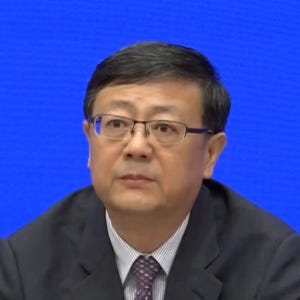
The investigations represent the most extensive Politburo purge in a single term since the aftermath of the Cultural Revolution, leaving the body with just 19 active members, the fewest since 1999. President Xi Jinping has intensified his anti-corruption campaign ahead of next year’s party congress, when he is expected to secure another five years in power.
Chen had been considered a candidate for further promotion within China’s leadership. Eight of the ten Shanghai party chiefs since 1989 have joined the Politburo Standing Committee. Chen had championed Shanghai’s development as a centre for artificial intelligence, semiconductors and biomedicine.
Sources: Bloomberg, South China Morning Post

Chinese technology company Huawei has been convicted on 10 of 12 criminal counts by a jury in New York, including bank fraud, wire fraud, sanctions violations and conspiracy to steal trade secrets. The company was acquitted of conspiracy to obstruct justice and racketeering conspiracy, the most serious charge it faced.
The case centred on allegations that Huawei misled international banks about its business in Iran and conspired to steal intellectual property from American technology companies. The proceedings triggered a diplomatic crisis involving China, Canada and the US following the 2018 arrest of Huawei’s chief financial officer, Meng Wanzhou, who subsequently returned to China after reaching a deferred prosecution agreement.
Huawei’s lead defence lawyer, Brian Heberlig, said the company expected to appeal. Sentencing is scheduled for September 2027. Despite longstanding US restrictions on access to American technology, Huawei has diversified into artificial intelligence and expanded into non-US markets.
Sources: Reuters, South China Morning Post

Malaysia has announced plans to return 6,803 migrants and refugees to Myanmar in December, days after the International Court of Justice (ICJ) ruled that Myanmar had committed genocide against its Rohingya minority. Three Malaysian naval vessels will transport 1,500 people, while another 5,303 will return by air at Myanmar’s expense.
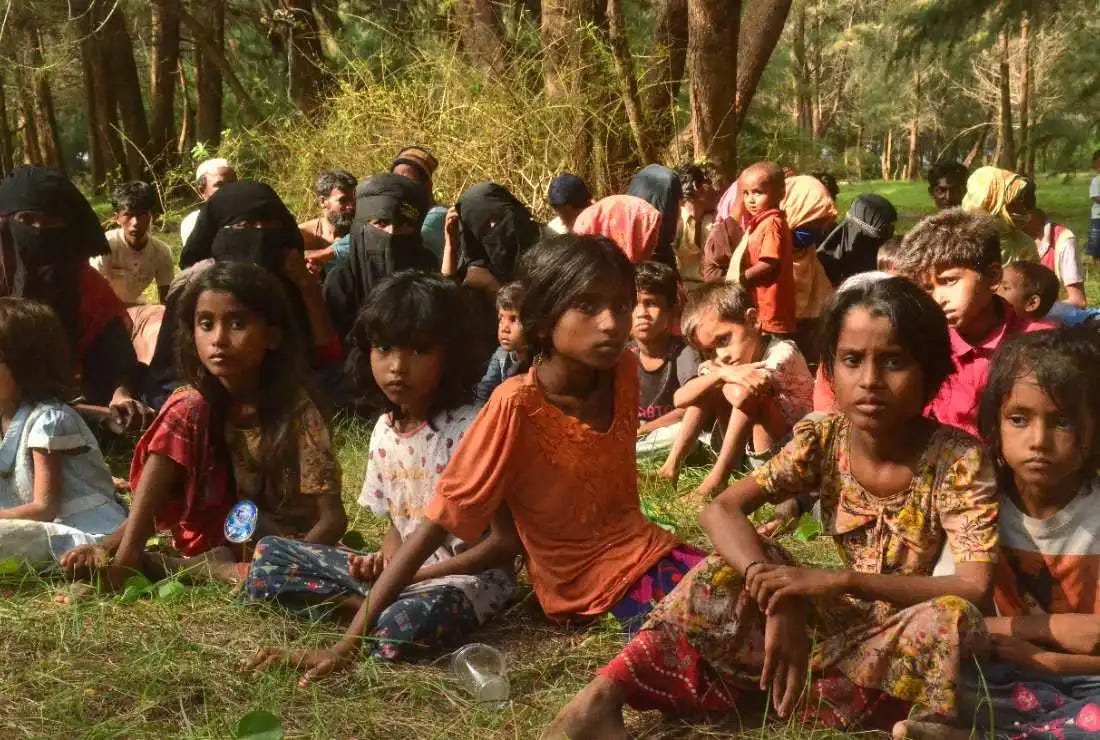
Prime Minister Anwar Ibrahim acknowledged that many asylum seekers had suffered atrocities under Myanmar’s military regime but said Malaysia could no longer afford to accommodate them and efforts to secure resettlement in third countries had failed. Anwar maintained that the repatriations were consistent with the ICJ ruling, which requires Myanmar to facilitate safe, voluntary and dignified returns.
The UN has previously urged Malaysia to halt deportations to Myanmar, citing safety concerns. In October, Malaysia said it would seek clarification over reports that hundreds of migrants returned under an earlier repatriation programme were being held in military detention.
Sources: The Guardian, Al Jazeera

Global casualties from landmines and unexploded ordnance reached their highest level since 2020 last year, with 6,929 people killed or injured, according to the International Campaign to Ban Landmines. Civilians accounted for 84% of casualties, with children representing approximately half of civilian victims.
Myanmar recorded 1,891 casualties, the highest of any country for the third consecutive year. Syria recorded 1,602 casualties, an increase of more than 50% from the previous year, as displaced civilians returned home following the fall of Bashar al-Assad’s government. Landmine contamination continues to obstruct access to agricultural land, water, schools and hospitals, impeding post-war recovery.
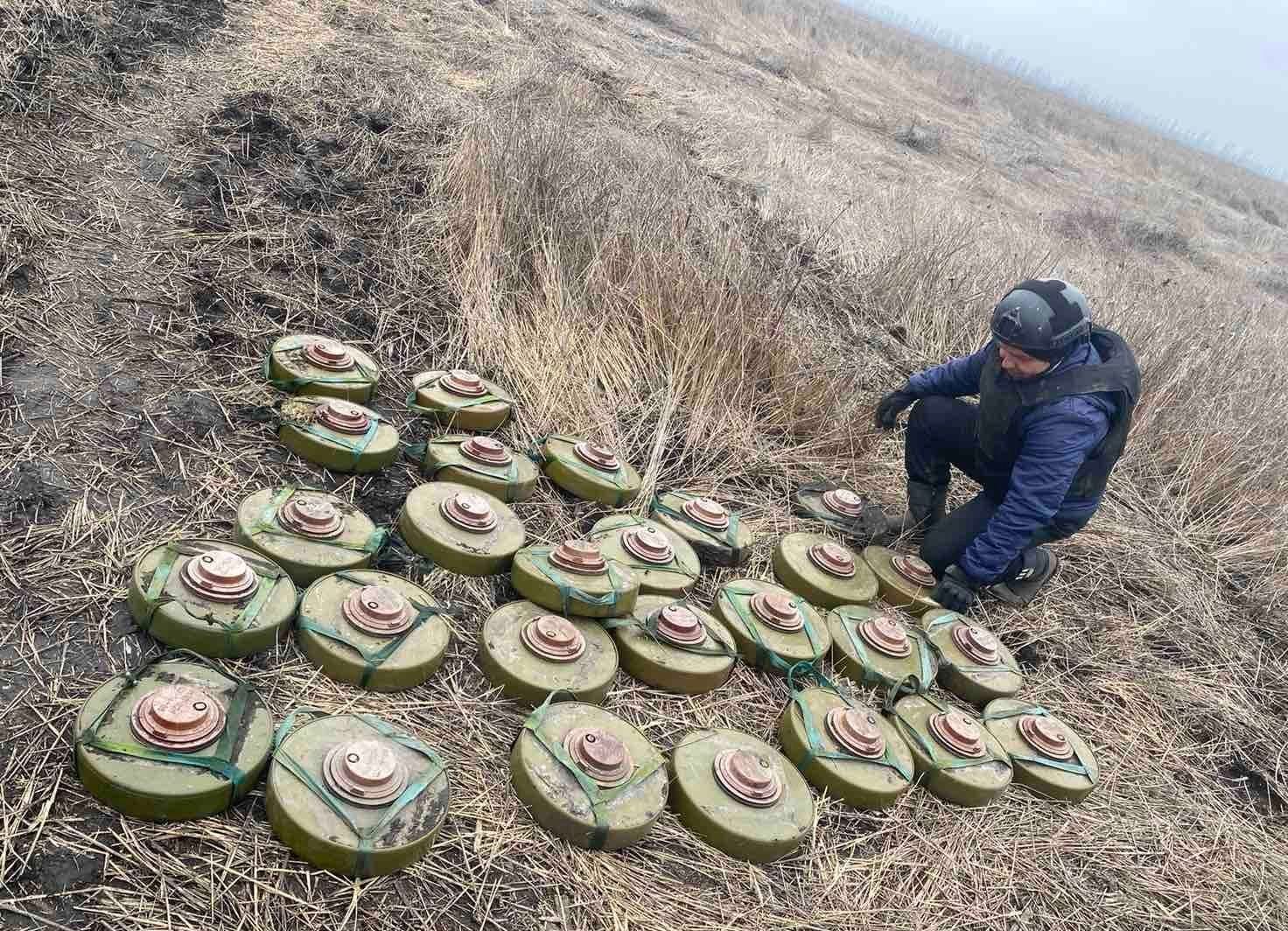
The findings come amid setbacks for the 1997 Mine Ban Treaty. Finland, Estonia, Latvia, Lithuania and Poland have withdrawn, citing regional security concerns, while Ukraine has announced the suspension of its implementation of the treaty. Lebanon, the Marshall Islands and Tonga have joined, bringing membership to 162 countries.
Sources: Arab News, South China Morning Post

World Health Organization (WHO) Director-General Tedros Adhanom Ghebreyesus has called for the immediate lifting of the US fuel blockade on Cuba, warning that intensified sanctions and fuel restrictions are endangering lives, particularly those of children. During a three-day visit, Tedros announced $2m in WHO funding to support Cuba’s immunisation programme and provide essential medical equipment.
Cuba’s government attributes daily power outages lasting 20 hours or more, critical shortages of medicines and surgical supplies, and deteriorating health indicators to US sanctions. Tedros said life expectancy had fallen from 78.8 years in 2020 to 74.4 years in 2025, before the fuel blockade was imposed in January.
Washington maintains that the blockade is intended to encourage political change and that food and medicine exports are subject to legal exemptions. The UN has repeatedly warned of a growing humanitarian crisis, describing the blockade as a violation of international law and human rights.
Sources: Reuters, Al Jazeera

Former French President Nicolas Sarkozy and his wife, Carla Bruni-Sarkozy, are among 11 people ordered to stand trial in Paris at the end of 2027 over an alleged operation to secure the retraction of a key witness in the case concerning Libyan financing of Sarkozy’s 2007 presidential campaign.
Libyan businessman Ziad Takieddine had claimed to possess evidence that Sarkozy’s campaign received funding from Muammar Gaddafi’s government. Investigators allege that intermediaries promised Takieddine several million euros to withdraw his accusations. He publicly retracted his testimony in November 2020 before reverting to his original allegations when questioned by an investigating judge in January 2021.
Sarkozy and Bruni face charges including criminal conspiracy with intent to commit fraud and benefiting from witness tampering. Both deny wrongdoing. Sarkozy was sentenced to five years in prison in the Libyan financing case last year, with the verdict on his appeal expected on 30 November.
Sources: Le Monde, BBC

China launched its Shenzhou-24 spacecraft on Wednesday, carrying two Chinese astronauts and Pakistani astronaut Muhammad Zeeshan Ali, who is set to become the first foreign crew member aboard China’s Tiangong space station. The spacecraft successfully entered orbit following its launch from the Jiuquan Satellite Launch Centre.
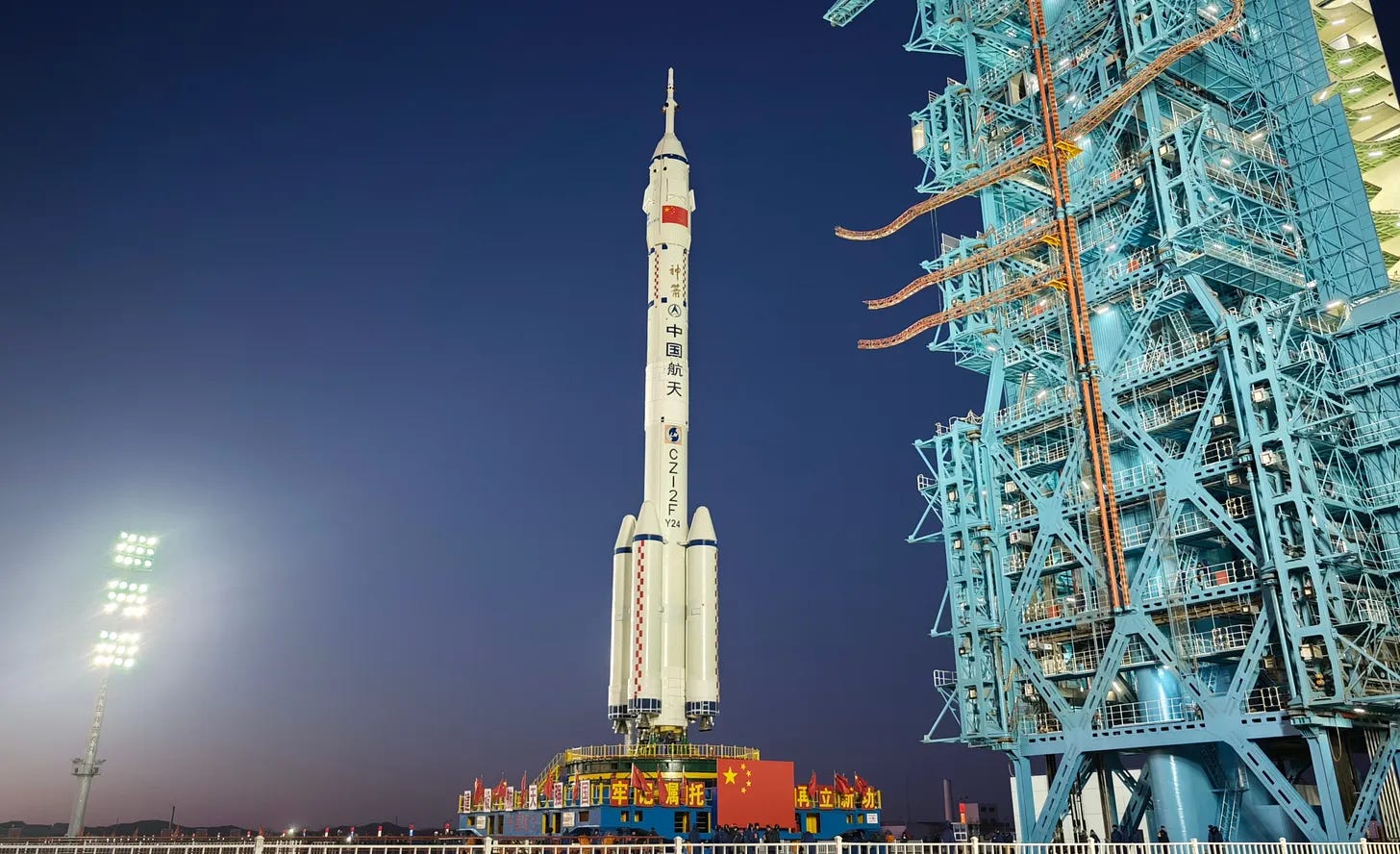
The mission follows a space cooperation agreement signed by China and Pakistan in February 2025. Pakistan’s Minister for Planning, Development and Special Initiatives, Ahsan Iqbal, expressed hope that the mission would lead to greater cooperation. The crew will conduct more than 90 scientific experiments and technology tests, with Ali returning to Earth aboard Shenzhou-23 after a short stay.
Meanwhile, Shenzhou-23 commander Zhu Yangzhu will remain aboard Tiangong for a year to assess how the human body copes with extended spaceflight. China is targeting its first crewed lunar landing by 2030, while the US aims to return astronauts to the Moon in 2028.
Sources: Associated Press, DW
Restacking or sharing this publication means more people can read it. Commenting extends the conversation. Liking shows your appreciation.
On this day …
On this day in 1986, US Attorney General Edwin Meese revealed that proceeds from secret American arms sales to Iran had been diverted to support Contra rebels fighting Nicaragua’s Sandinista government.
The disclosures exposed covert activities undertaken during President Ronald Reagan’s administration, despite restrictions imposed by Congress on assistance to the Contras. The arms transactions were also controversial because Washington had publicly opposed dealing with Iran.
Subsequent investigations examined the roles of senior administration officials and the extent of presidential knowledge.
The Iran-Contra affair became a major test of executive accountability, raising enduring questions about congressional oversight and the limits of presidential authority in foreign policy.