


Trump Slows Push For Interim Iran Agreement (Middle East)
Russia Escalates Kyiv Barrage With Oreshnik Missile (Conflict)
Quetta Train Bombing Exposes Balochistan Strain (Terrorism)
Police Raid Deepens Turkey Opposition Crisis (Politics)
Rubio Tests India Ties Amid Trust Deficit (Diplomacy)
Ebola Cases Pass 900 In Eastern Congo (Health)
Peacekeeping Missions Face Funding Strain (World)
Lebanon Strikes Test Wider Ceasefire Push (Conflict)
China Mine Blast Tests Coal Security Drive (China)
RAF Jet Jammed Near Russian Border (Europe)
A succinct daily briefing delivered each weekday to help you stay on top of the stories shaping the world.

US President Donald Trump said he had instructed US negotiators not to rush into an agreement with Iran, despite earlier comments suggesting a deal was close. Officials from both countries described negotiations as progressing toward a memorandum of understanding that could reopen the Strait of Hormuz and extend a ceasefire while further nuclear talks continue.
US Secretary of State Marco Rubio said a “pretty solid thing” was on the table regarding reopening the strait and launching time-limited negotiations over Iran’s nuclear programme.
The proposed arrangement appears to leave several major issues unresolved, including sanctions relief, Iran’s missile capabilities and the future of its highly enriched uranium stockpile. Critics within Trump’s own party warned the agreement could weaken pressure on Tehran, while Israeli officials signalled concern that the framework may not fully curb Iran’s nuclear ambitions or regional influence.
Sources: BBC, New York Times

Russia launched one of its heaviest aerial attacks on Kyiv and the surrounding region, firing 600 drones and 90 missiles overnight, including a rarely used Oreshnik ballistic missile. Ukrainian President Volodymyr Zelenskyy said the strike hit Bila Tserkva and damaged a water-supply facility, a market, residential buildings and schools. At least four people were killed and scores were injured.
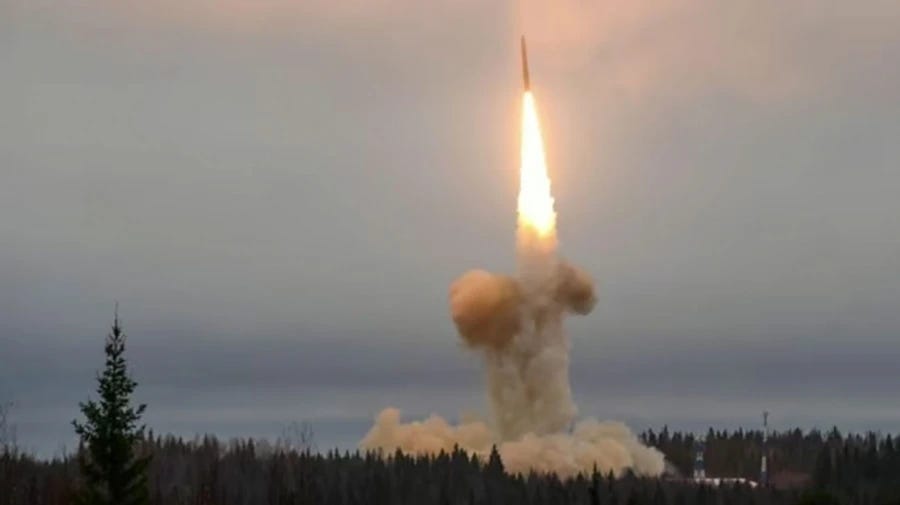
The missile’s use sharpened the political signal behind the assault. Russia’s defence ministry said it had targeted Ukrainian military sites and was retaliating for attacks on Russian territory. Zelenskyy said Kyiv was the primary target and urged that the strike should not pass without consequences.
European leaders condemned the attack, with French President Emmanuel Macron calling the Oreshnik launch a sign of the dead end of Russia’s war and German Chancellor Friedrich Merz describing it as a reckless escalation.
Sources: The Guardian, Wall Street Journal

A bomb attack near a railway station in Quetta killed at least 23 people and injured 71 as a train was passing through Pakistan’s southwestern Balochistan province. Police said preliminary findings suggested a suicide blast, while rescue officials said bodies had been recovered and injured passengers moved to hospitals.
The Baloch Liberation Army, which demands independence from Pakistan’s central government, claimed responsibility. A senior official said the train was carrying military personnel and their relatives, and that an explosive-laden car had hit one of the carriages.
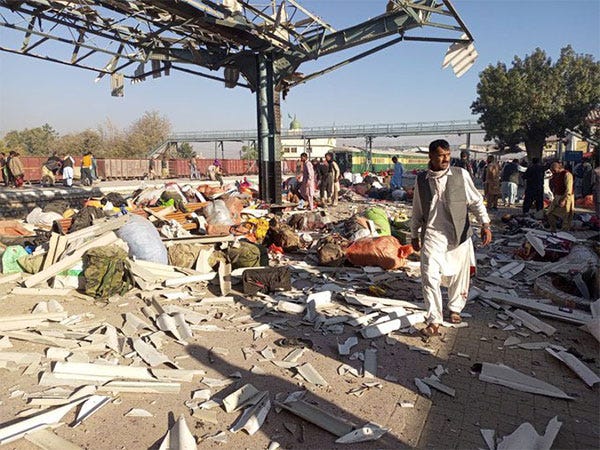
Pakistan’s Prime Minister Shehbaz Sharif condemned the “heinous bomb explosion” and said such attacks could not weaken Pakistan’s resolve. The attack again exposed Balochistan’s long-running separatist violence, rooted in accusations that the province’s gas and mineral resources are exploited without local benefit, and the province’s wider economic marginalisation.
Sources: CNN, South China Morning Post

Turkish riot police forced their way into the main opposition party’s Ankara headquarters, firing tear gas and rubber bullets at supporters and officials who had been inside for three days. The raid followed an appeals court ruling that annulled Ozgur Ozel’s election as party chairperson and reinstated his predecessor, Kemal Kilicdaroglu.
Ozel tore up the court order and later led supporters toward parliament, saying the party would be “on the streets” and “marching towards power”. The opposition described the ruling as a “judicial coup”, while the government said Turkey’s courts were independent.
The confrontation deepens a political crisis before elections due in 2028. Analysts said the ruling could test the balance between democracy and autocracy in Turkey and raise the chances of an early vote if current Turkish President Recep Tayyip Erdogan seeks another term.
Sources: PBS, Reuters

US Secretary of State Marco Rubio used his first official visit to India to reassure New Delhi that Washington remains committed to the strategic partnership, after ties fell to their lowest point in more than two decades. He said the relationship had not lost momentum and that US trade measures were global in scope, not aimed specifically at India.
Indian Minister of External Affairs Subrahmanyam Jaishankar said the partnership rested on a convergence of national interests, while also stressing India’s need for dependable, multiple and cheap energy sources. Both sides linked maritime security and affordable fuel to tensions around the Strait of Hormuz.
The visit exposed a deeper trust deficit. Analysts cited friction over tariffs, immigration, US engagement with Pakistan and China, and India’s concern over American policy predictability, even as shared concerns about China continue to anchor the relationship.
Sources: Associated Press, New York Times
Restacking or sharing this publication means more people can read it. Commenting extends the conversation. Liking shows your appreciation.

Suspected Ebola cases in eastern Democratic Republic of Congo have passed 900, with authorities reporting 904 suspected cases and 119 suspected deaths. The outbreak is centred in Ituri province, where health workers are trying to contain the virus amid insecurity, displacement and fragile healthcare systems.
The World Health Organization said the outbreak poses a very high risk for Congo, though the global risk remains low. Three Red Cross volunteers have died from suspected Ebola after likely infection while managing dead bodies before the outbreak was identified. The strain responsible for the outbreak, the Bundibugyo strain has no approved vaccine or treatment.
The response has been strained by attacks on treatment centres, shortages of protective equipment and testing kits, and anger over burial controls. Authorities have banned funeral wakes and gatherings of more than 50 people as they try to prevent further spread.
Sources: The Guardian, BBC

International peacekeeping operations are under growing strain as funding shortfalls, falling personnel numbers and geopolitical tensions weaken multilateral conflict management. A new report by the Stockholm International Peace Research Institute (SIPRI) said just under 79,000 staff were deployed at the end of 2025, the lowest level in at least 25 years and 49% below 2016.
The report said 58 peacekeeping operations were in place in 2025, with nearly three-quarters of personnel deployed in Central African Republic, South Sudan, Somalia, Democratic Republic of Congo and Lebanon. UN-led missions have been hit particularly hard, with $2 billion missing from a $5.6 billion budget after major donors failed to meet commitments.
SIPRI Director Jair van der Lijn warned that continued pressure could sideline institutions such as the United Nations and lead to more conflicts with graver civilian impacts.
Sources: South China Morning Post, DW

Israeli strikes killed at least six people in southern Lebanon as the Israeli army issued fresh evacuation orders across the area. Lebanon’s National News Agency reported deaths in al-Namiriya, al-Duweir, Abba, Jebchit, Arab Salim and Bazouriyeh, including a paramedic killed while inspecting a recent strike site.
The attacks came despite a ceasefire in the Israel-Hezbollah war and as peace talks between the United States and Iran appeared to be advancing. Israel’s military has continued to strike what it says are Hezbollah targets, while Hezbollah has maintained attacks on Israeli positions in southern Lebanon and across the border.
Naim Qassem, Hezbollah’s secretary-general, expressed hope that Lebanon would be included in any US-Iran agreement. Marco Rubio, the US secretary of state, accused Hezbollah of trying to drag Lebanon back into chaos and destruction.
Sources: Al Jazeera, The Guardian

A gas explosion at the Liushenyu coal mine in Shanxi killed 82 people, making it China’s deadliest mining accident since 2009. Local officials said the initial toll had been inaccurate because the scene was chaotic and the company’s count of underground workers was unclear. Two people remained unaccounted for and 128 were injured and hospitalised.
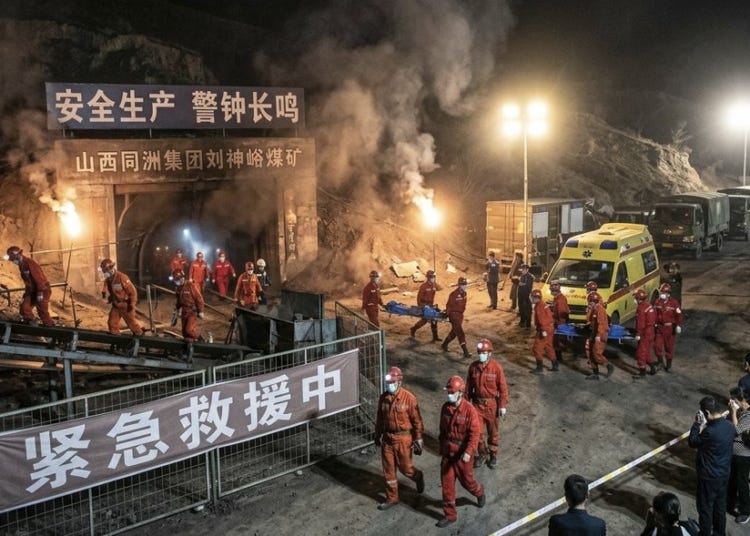
The disaster has prompted a major official response. President Xi Jinping called for authorities to spare no effort in treating the injured and conducting rescue work, and ordered an investigation. Preliminary findings cited serious violations at the mine, while regional authorities began wider safety inspections.
The blast also complicates China’s energy security push. Coal remains the backbone of the power sector, and tighter mine scrutiny could pressure output as the Iran war disrupts oil and gas shipments.
Sources: Bloomberg, Reuters

An RAF jet carrying John Healey, the UK defence secretary, had its GPS signal jammed during a three-hour flight after it flew near the Russian border last week. Healey was returning from Estonia, where he had visited British soldiers and met Hanno Pevkur, Estonia’s defence minister, to discuss long-term defence cooperation.
Russia is believed to have been behind the incident. The aircraft’s GPS was disabled, forcing pilots to use another navigation system, while passengers were told the plane could still operate safely. It is not known whether Healey was deliberately targeted.
The episode followed a separate incident last month in which two Russian jets “repeatedly and dangerously” intercepted an RAF spy plane over the Black Sea. Healey said that incident would not deter the UK from defending Nato, allies and British interests from Russian aggression.
Sources: The Guardian, BBC
Restacking this post will help it reach more readers interested in the world.
On this day …
On this day in 1961, John F. Kennedy told the US Congress that America would land a man on the Moon before the decade ended. The pledge came just weeks after Soviet cosmonaut Yuri Gagarin became the first human in space, intensifying Cold War competition between Washington and Moscow.
The speech transformed the space race from a symbolic contest into a national strategic priority. It accelerated investment in science, engineering and aerospace technology, while helping define the political and cultural ambitions of the 1960s. Eight years later, Apollo 11 fulfilled the goal Kennedy had publicly set.
The contrast with today’s political climate is striking. Kennedy framed scientific ambition as a national mission worthy of long-term public investment, while current debates in the United States increasingly revolve around spending cuts, institutional retrenchment and the rollback of research funding. The question is no longer simply what technology can achieve, but whether governments still see scientific progress as a strategic priority worth sustaining.