


US Sends Iran 15-Point Ceasefire Proposal
Iran Rebuffs US Ceasefire Overture
Pakistan Positions Itself As US-Iran Mediator
Iran Eases Terms For Passage Through Hormuz
Israel Signals Occupation Zone In South Lebanon
UN Expert Alleges Systematic Torture Of Palestinians
Russia Steps Up Drone Attacks On Ukraine
Trump Approval Falls As Iran War Hits Prices
EU Delays Law To Lock In Russian Oil Ban
Frederiksen Wins Vote But Faces Coalition Test

The United States has delivered a 15-point ceasefire proposal to Iran through Pakistani intermediaries as Washington sought an offramp from the widening Middle East war. Pakistan’s army chief emerged as a key interlocutor and offered to host talks, while American officials signalled diplomacy was accelerating despite continuing strikes across the region.
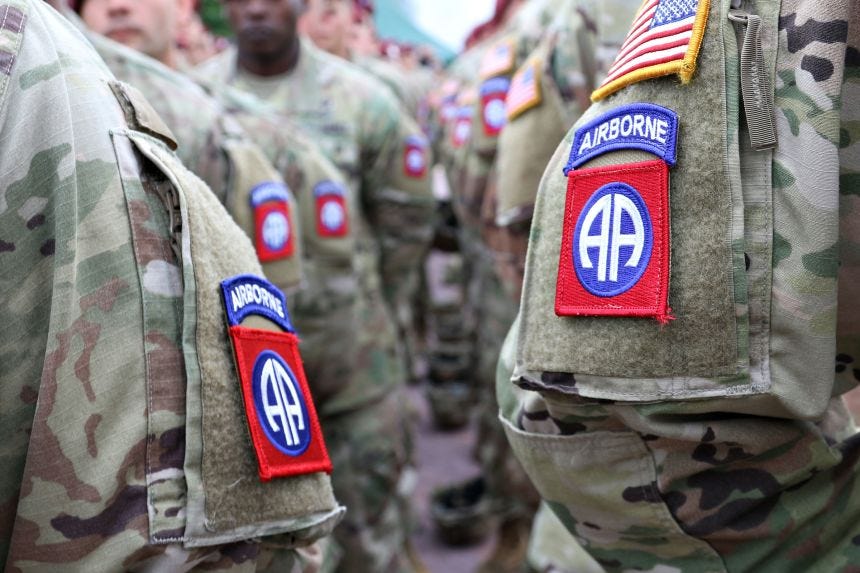
At the same time, the Pentagon prepared to reinforce roughly 50,000 US troops already in the Middle East by sending at least 1,000 soldiers from the 82nd Airborne Division and deploying Marine units expected to add about 5,000 Marines and thousands of sailors. The moves were described as giving President Donald Trump flexibility over his next military decisions.
Iran denied negotiations were underway even as it effectively blocked most Western shipping through the Strait of Hormuz, disrupting energy flows, pushing fuel prices higher and threatening the global economy. Uncertainty over who can authorise diplomacy deepened after an Israeli strike early in the war killed supreme leader Ayatollah Ali Khamenei.
Sources: Associated Press, New York Times

Iran publicly dismissed Washington’s attempt to open a ceasefire track, with a military spokesperson mocking what the United States described as negotiations to end the Middle East war.
The rejection came as air strikes continued against Iran and Iranian missiles and drones targeted Israel and sites across the region. At the same time, the Pentagon was moving ahead with the deployment of two Marine units expected to add about 5,000 Marines and thousands of sailors, a step described as giving Donald Trump greater flexibility over his next move.
The diplomatic push is unfolding under growing economic pressure. Tehran’s chokehold on the Strait of Hormuz has snarled international shipping, sent fuel prices sharply higher and threatened the world economy, while rising prices at the pump have increased pressure on Trump at home to bring the war to an end.
Sources: South China Morning Post, Reuters

Pakistan has offered to host talks between the United States and Iran, moving to position itself as a mediator as efforts to end the war gather pace. Prime Minister Shehbaz Sharif said Pakistan stood ready to facilitate meaningful and conclusive talks, while the country’s army chief, Asim Munir, emerged as a key interlocutor and was said to have delivered a 15-point US plan to Iran.
The diplomatic opening reflects Pakistan’s ties with both sides and the economic pressure it faces from the conflict next door. The country has condemned the strikes on Iran without naming the United States, maintained regular communications with Iranian officials and sought to avoid direct confrontation even as disruption in the Strait of Hormuz has battered its economy.
No formal talks in Islamabad have been confirmed. But Pakistan is being pushed as a possible venue, with officials saying the US and Iran could meet there as early as this week, even as trust remains low and no pathway to negotiations has yet been secured.
Pakistani sources said the US vice-president, JD Vance, was proposed as a probable chief negotiator from the US side if talks went ahead.
Sources: New York Times, The Guardian

Iran has said that “non-hostile” ships may pass safely through the Strait of Hormuz, offering a conditional opening of a waterway whose disruption has driven the biggest global energy crisis in decades. Tehran told the United Nations and the International Maritime Organization that transit would be allowed for vessels that do not support acts of aggression against Iran and that comply with Iranian safety and security regulations.
The announcement came as maritime traffic remained far below pre-war levels. Five vessels were tracked through the strait on Monday, down from an average of 120 daily transits before the conflict that began on February 28. Iran said navigation continues and that maritime traffic has not been suspended, but vessels linked to the United States, Israel and other participants in the aggression would not qualify for innocent or non-hostile passage.
Markets responded quickly. Brent crude fell more than 9 percent on Wednesday after reports that Washington had made overtures to Tehran to end the war, while major Asian stock indexes opened higher.
Sources: The Hill, Al Jazeera

Israel has said it will occupy southern Lebanon up to the Litani River, setting out for the first time an intention to seize territory amounting to nearly a tenth of the country. Defence Minister Israel Katz said Israeli forces would control the remaining bridges and a security zone up to the river, which meets the Mediterranean about 30 kilometres north of Israel’s border.
Hezbollah said it would fight to prevent such a move, calling it an existential threat to the Lebanese state. The announcement followed the destruction of five bridges over the Litani since March 13 and an acceleration in the demolition of homes in villages near the border, actions Israel says are part of its campaign against Hezbollah. Under international law, attacks on civilian infrastructure, including homes and bridges, are generally prohibited.
The plan comes amid a wider human toll. Strikes across Lebanon have killed more than 1,070 people and displaced more than one million, while the United Nations said the rhetoric around occupation was “very much concerning”.
Sources: South China Morning Post, CBC

A United Nations special rapporteur has accused Israel of systematically torturing Palestinians in the occupied territories, saying the practice has effectively become state policy. Francesca Albanese told the UN Human Rights Council that life across the occupied Palestinian territory had become a continuum of physical and mental suffering and that torture extended far beyond prison walls into a wider imposed environment.
Her report said Palestinians in custody since October 7, 2023 had been subjected to exceptionally ruthless physical and psychological abuse. It described brutal beatings, sexual violence, rape, lethal mistreatment, starvation and the systematic deprivation of basic human conditions, and said the scale suggested collective vengeance and destructive intent.
Albanese said she had gathered written submissions including more than 300 testimonies. She also said arrests had escalated dramatically since October 2023, with more than 18,500 people arrested, including at least 1,500 children, around 9,000 still in detention and more than 4,000 subjected to enforced disappearance.
Sources: Le Monde, RFI, OHCHR

Russia launched one of the largest assaults of the war on Ukraine, sending more than 1,000 attack drones across the country in under 24 hours, according to Ukrainian figures. More than 550 drones were used in a rare daytime attack that struck city centres and forced people into shelters during the workday as air-raid alarms sounded around noon.
Ukrainian officials said the strikes killed at least three people and injured at least 40, including five children. In Ivano-Frankivsk, two people were killed and four others injured, while one person was killed in Vinnytsia. Residential buildings, hospitals and a UNESCO World Heritage site in Lviv were among the damaged locations.
Ukraine’s air force said 15 hits were recorded during the daytime assault, while at least 541 drones were shot down or neutralised. President Volodymyr Zelensky said the scale of the attack strongly indicated that Russia had no intention of really ending the war, even as he had been pushing to get peace talks back on track.
Sources: CNN, New York Times

President Donald Trump’s approval rating has fallen to 36 percent in a Reuters/Ipsos poll, down from 40 percent last week, as fuel prices surge and disapproval of the war against Iran grows.
The poll also found that only 29 percent approved of his handling of the economy, while just 25 percent approved of his handling of the cost of living.
The survey found 61 percent disapproved of the US strikes on Iran, up from 59 percent last week, and 46 percent said the war would make the United States less safe in the long run. Gasoline prices have risen by about a dollar a gallon since the war began, as oil shipments from the Middle East were severely curtailed, and 63 percent of Americans now describe the US economy as somewhat weak or very weak.
Sources: The Hill, Reuters

The European Commission has delayed a planned proposal to permanently ban Russian oil imports, pushing back legislation that had been due on April 15. Officials said the proposal had not been cancelled, but no new date was given as current geopolitical developments and rising energy prices fuelled by the war in the Middle East weighed on the timing.
The measure would put into law a full phase-out of Russian oil imports by no later than the end of 2027 and keep the ban in place even if sanctions were later lifted. Brussels wants the legislation to prevent future vetoes and close remaining loopholes, while warning that any return to Russian fossil fuels would be a strategic blunder.
The delay also comes amid a dispute involving Hungary and Slovakia, the only two European Union states still importing Russian oil, and wider tensions over the Druzhba pipeline. The row has already contributed to the paralysis of a 90 billion euro loan for Ukraine.
Sources: Euronews, Reuters

Denmark’s Social Democrats finished first in the general election but failed to secure a majority, leaving Prime Minister Mette Frederiksen facing difficult coalition talks that could determine whether she stays in office for a third term. The party won 21.9 percent of the vote and 38 seats, its weakest result in more than a century, while the left-leaning red bloc secured 84 seats against 77 for the right-leaning blue bloc.
Both blocs fell short of the 90 seats needed for a majority in Denmark’s 179-seat parliament, making the Moderates and their leader, Lars Løkke Rasmussen, central to the outcome. Rasmussen said he favoured a government across the centre, while Frederiksen said she was ready to continue as prime minister and had already been in contact with several party leaders.
The result leaves Frederiksen battered but still in pole position. Yet with rivals ruling out some coalition options and negotiations expected to be fraught, Denmark now faces another period of uncertain dealmaking.
Sources: BBC, Politico Europe
On this day …
On this day in 1957, six European countries signed the Treaty of Rome, establishing the European Economic Community and laying the foundation for today’s European Union.
The agreement aimed to create a common market, reduce trade barriers, and promote economic cooperation as a means of preventing further conflict in post-war Europe.
Over time, it evolved into a broader political and economic union, shaping regulatory standards, monetary policy, and regional integration.
The treaty marked a decisive shift from rivalry to interdependence across Western Europe.
Can economic integration serve as a durable substitute for political unity?