


Houthi Strike Threatens Saudi Red Sea Oil Route (Conflict)
Iran-Linked Hackers Shut Down UK Power Plant (Technology)
US Sanctions Push Tests Iran’s Trading Partners (Trade)
Israel’s Netanyahu Says Iran Targeted His Son (Middle East)
Europe Backs Ukraine As Washington Stays Away (Europe)
US Cancels South Korea Drill Over Iran Constraints (Asia)
Somalia Hunger Crisis Deepens As Aid Cuts Bite (Africa)
US Pushes Nationwide Arms Embargo On Sudan (Africa)
Supreme Court Lets Trump Advance Mail Voting Curbs (US)
Ocean Temperatures Hit Record As El Niño Strengthens (World)
A succinct daily briefing delivered each weekday to help you stay on top of the stories shaping the world.

Yemen’s Houthis said they struck the Saudi oil tanker Amzan with a ballistic missile off the port of Yanbu, as the group continues its blockade of Saudi-linked shipping in the Red Sea. Saudi national shipping company Bahri confirmed the vessel was involved in a maritime incident and said all crew members were safe, with no injuries reported.
The attack exposes the second threat to Gulf energy exports while the Strait of Hormuz remains blockaded. Yanbu is Saudi Arabia’s main Red Sea oil port, loading millions of barrels a day and has become the main route for Saudi tankers looking toavoid Hormuz. Shipping around Yanbu has faced disruption since the Houthis declared their blockade last month.
UK Maritime Trade Operations said the tanker was struck about 63 nautical miles west of Yanbu. The Houthis said the strike caused a fire, while Bahri said it was coordinating with authorities and prioritising safe management of the vessel.
Sources: Al Jazeera, Euronews

It has been released that Iran-linked hackers temporarily shut down a small British power plant for four days in July in what reports say is the first successful cyber attack of its kind on a UK facility. The outage did not affect the wider power supply, and the National Cyber Security Centre declined to confirm or deny the incident.
The attackers targeted programmable logic controllers or PLCs, the computers used to run automated industrial systems across energy, water and manufacturing. US authorities say Iranian-linked actors have used simple techniques including scanning for exposed devices and exploiting unchanged default passwords.
The incident coincided with attacks on US water systems across 12 states. In June, NCSC chief executive Dr Richard Horne said the agency had managed more than 200 attacks on UK critical infrastructure in the previous year with roughly 75% linked to hostile states including Russia, China and Iran.
Sources: CBS News, The Telegraph

Iran has vowed to retaliate against countries that cooperate with fresh US sanctions as Washington prepares what Treasury Secretary Scott Bessent has called the “single greatest financial offensive ever marshalled against an adversary”. The US says it will impose secondary sanctions on any country or entity trading with Iran.
Iranian security chief Mohsen Rezaei warned Gulf neighbours that if they joined the campaign, “not a drop of oil” would leave the Persian Gulf and Strait of Hormuz adding that Tehran would target other Gulf export routes. Shipping through Hormuz remained severely disrupted over the weekend.
The wider test of this latest US tactic is whether major trading partners comply. China has again rejected unilateral sanctions, while Iran says crude exports have “virtually stopped” under the US naval blockade.
Bessent has told allies and other countries to stop trading with Iran and said Washington would use its power against those that refused.
Sources: The Guardian, Al Arabiya

Israeli Prime Minister Benjamin Netanyahu said Iran had tried to kill one of his sons but provided no details about when the alleged plot actually occurred, which son was targeted or how close it came to being carried out.
Netanyahu made the claim during an interview with Israel’s Channel 14 while discussing security protection for political candidates ahead of the October 27 general election. He said he had asked Shin Bet chief David Zini to provide appropriate security for any prime ministerial candidate.
The allegation comes amid heightened tensions since the US-Israeli war on Iran began in February, during which Supreme Leader Ayatollah Ali Khamenei (the father of Iran’s current leader) and other senior Iranian leaders were killed. Iran’s mission at the United Nations did not immediately respond to a request for comment. Netanyahu’s coalition is trailing in opinion polls two months before the election.
Sources: Reuters, Times of India

European leaders gathered in Kyiv for Ukraine’s 35th Independence Day, reaffirming support as the country marked its fifth such anniversary since Russia’s full-scale invasion. UK Prime Minister Andy Burnham and European Council President António Costa joined in person, while French President Emmanuel Macron and German Chancellor Friedrich Merz participated remotely in Coalition of the Willing talks.
The EU announced €6.1 billion in new military assistance, while Britain pledged support for Ukrainian production of SCALP missiles and stronger air defences. Ukraine is seeking at least 300 additional interceptors ahead of winter as Russian missile and drone attacks intensify.
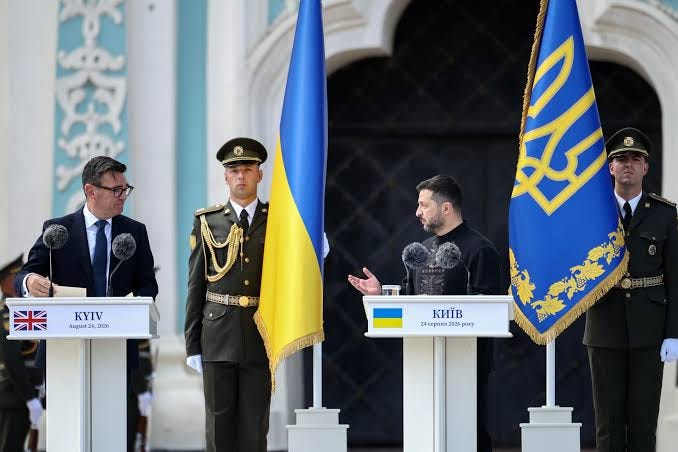
Senior Trump administration officials were absent. Envoys Steve Witkoff and Jared Kushner did not travel to Kyiv, despite repeated recent meetings with Russian officials. Secretary of State Marco Rubio issued a statement backing Ukraine’s sovereignty and a negotiated settlement, while former US vice-president Mike Pence and former envoy Keith Kellogg attended anniversary events.
Sources: Euronews, NBC News
Restacking this post will help it reach more readers interested in the world.

The United States has cancelled a large joint amphibious exercise with South Korea scheduled for September after citing constraints on the availability of US forces because of the war in Iran. The division-level Ssangyong drill was to involve US and South Korean marines rehearsing amphibious landings with warships, aircraft and ground forces.
The cancellation follows President Donald Trump’s decision to scale back the separate Ulchi Freedom Shield exercise, citing both cost and Seoul’s refusal to join the Iran war. Washington and Seoul remain in consultations on resuming Ssangyong.
The latest changes come as North Korea continues to condemn joint exercises as rehearsals for invasion. Pyongyang fired 10 short-range ballistic missiles last week despite the reduction of Ulchi Freedom Shield. US Secretary of State Marco Rubio separately told South Korean Foreign Minister Cho Hyun that the allies needed close coordination on matters integral to their alliance.
Sources: Reuters, The Hill

Around six million people in Somalia are facing acute hunger, while nearly 1.9 million children are projected to suffer malnutrition this year as drought, conflict and falling humanitarian funding deepen the crisis. More than 200 health and nutrition centres have already closed across the country, according to UNICEF.
The strain is especially severe in camps for displaced people in Baidoa, where Doctors Without Borders said one in two children was suffering acute malnutrition and one in four had the severe form. One third of families there are surviving on one meal a day.
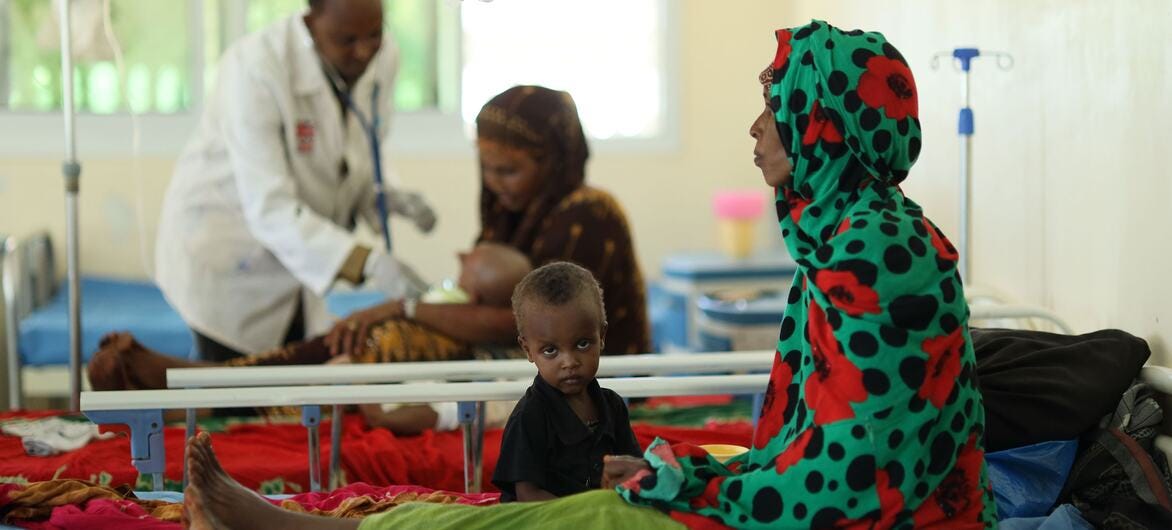
The World Food Programme says around one third of Somalia’s population faces acute hunger. Poor rainfall has caused water shortages, crop failures and livestock losses, while higher fuel, fertiliser and food prices linked to the Middle East conflict have added to the strain. Food assistance was reaching only 12% of those facing acute food insecurity in May.
Sources: RFI, UN

The United States has proposed expanding the UN arms embargo across all of Sudan, including drones and related technologies, arguing that external military support is prolonging the war and undermining mediation. Senior US adviser Massad Boulos said the measures were intended to build pressure on all parties to seek an end to the fighting.
Sudan’s army rejected the approach. Military chief Gen. Abdel-Fattah Burhan said sanctions would not deter his forces from fighting until all territory held by the Rapid Support Forces was captured, while Sudan’s UN representative said the proposal would undermine sovereignty and equate the army with the RSF.
China and Russia also opposed widening the sanctions regime, while Britain, France and Denmark backed the US proposal. China and Russia hold veto power at the Security Council, leaving adoption of the draft uncertain.
Sources: Associated Press, Sudan Tribune

The US Supreme Court has allowed the Trump administration to move ahead with plans to restrict mail-in voting before November’s midterm elections, lifting a lower-court freeze on key parts of President Donald Trump’s executive order. The ruling is preliminary and does not decide whether the measures are lawful.
The order directs federal agencies to create citizenship lists and gives the US Postal Service a role in determining which voters receive mail ballots. The Court said the administration was likely to suffer irreparable harm if planning remained blocked while cautioning that implementation could still face further legal challenges before the election.

The three liberal justices on the bench dissented. Justice Ketanji Brown Jackson warned the decision could inject chaos and uncertainty into the election while Justice Sonia Sotomayor stressed that the ruling did not establish executive authority over state-run elections. A separate lower-court injunction also continues to complicate implementation.
Sources: New York Times, NBC News

The world’s oceans have reached their highest ever recorded average surface temperature, with Copernicus data showing 21.1C on August 22, edging past the previous record of 21.09C set in March 2024. Scientists say the record reflects decades of human-driven warming combined with a strengthening El Niño.
The timing is particularly significant because global ocean temperatures usually peak in March or April, after the southern hemisphere summer. El Niño is expected to strengthen until around Christmas, while Britain’s national weather agency expects the event to peak at more than 3C above normal in the tropical Pacific.
Warmer oceans can raise sea levels, intensify storms and heat on land, reduce carbon dioxide absorption and damage marine ecosystems. Copernicus climate lead Samantha Burgess said El Niño was adding heat to a system already warmed by human activity, increasing risks for coastal communities and marine life.
Sources: BBC, South China Morning Post
Restacking or sharing this publication means more people can read it. Commenting extends the conversation. Liking shows your appreciation.
On this day …
On this day in 1944, German forces in Paris surrendered after four years of occupation. French and American troops had entered the capital the previous day, supported by an uprising launched by the French Resistance. General Dietrich von Choltitz, the German military governor, surrendered despite Adolf Hitler’s orders that Paris should not fall intact.
Charles de Gaulle arrived later that day and declared that Paris had liberated itself, reinforcing the political claim that France had been an active participant in its own liberation rather than simply a country rescued by the Allies.
The battle was military, but what followed was also a struggle over how nations remember occupation, resistance and liberation.