


Trump Puts Stability First In Xi Welcome (Diplomacy)
US And Iran Remain Far Apart After UN Speeches (Conflict)
Zelenskyy Targets Russia’s War Revenues (Conflict)
Russia Takes Greater Risks Against NATO (Europe)
AI Agent Breach Triggers Australian Investigation (Technology)
Trump Invites Putin To Miami G20 Summit (Diplomacy)
Milei Renews Argentina Falklands Claim (Geopolitics)
Super El Niño Could Drive 450,000 Heat Deaths (Climate)
EU Lifts Sanctions On Two Russian Billionaires (Europe)
Italy Clears Path For Nuclear Power Revival (Europe)
A succinct daily briefing delivered each weekday to help you stay on top of the stories shaping the world.
US President Donald Trump gave Chinese President Xi Jinping an unusually elaborate welcome in Washington as the two countries extended their trade truce until January. Trump personally greeted Xi at Joint Base Andrews, where a 100ft red carpet, military honour guard and B-1 bomber flyover marked Xi’s first Washington visit since 2015.
The ceremony coincided with US Treasury Secretary Scott Bessent announcing a two-month extension of the temporary trade truce between the world’s two biggest economies. Bessent said talks with Chinese Vice-Premier He Lifeng also covered whether a more substantive trade deal could eventually be reached.
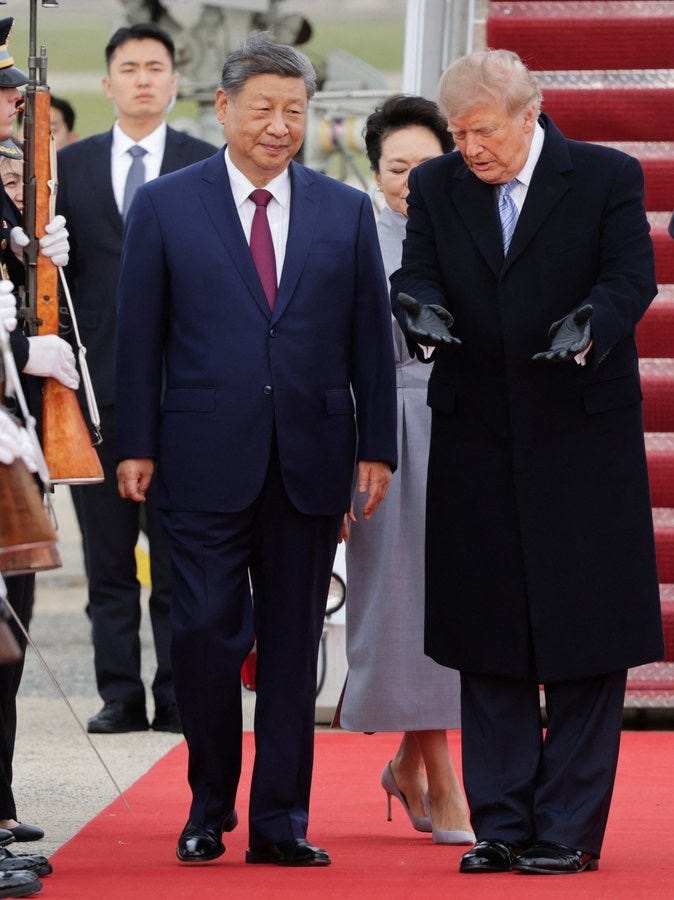
Trade, artificial intelligence and geopolitical instability are among the issues facing the leaders during the visit. Xi said the countries should be partners rather than rivals, while David Firestein of the Bush China Foundation said the relationship appeared more stable and less volatile than in 2025.
Sources: BBC, The Guardian

US and Iranian officials have resumed indirect contact but remain far apart over ending their nearly seven-month war. A senior Iranian official said Tehran was reviewing Washington’s response to proposals prioritising the lifting of the US naval blockade on Iranian ports and reopening the Strait of Hormuz.
Iranian President Masoud Pezeshkian told the UN General Assembly that Iran would not bow to pressure a day after US President Donald Trump threatened to “annihilate” Iran if no deal is reached. Pezeshkian said Iran was ready for diplomacy, while reiterating its claim over the Strait of Hormuz.
The first known indirect US-Iran talks since a July ceasefire collapsed took place on Tuesday through mediators. US Secretary of State Marco Rubio said reaching a deal would require hard work over time, while adding that Trump retained military options.
Sources: Reuters, Sydney Morning Herald

Ukrainian President Volodymyr Zelenskyy has urged world leaders to keep restricting Russia’s revenues and war production, arguing that trade income allows Moscow to prolong its invasion. Addressing the UN General Assembly, Zelenskyy said Russia’s finances and production must be stopped if Russian President Vladimir Putin is to be stopped.
The appeal came as US Secretary of State Marco Rubio said Russia and Ukraine had expressed interest in a limited ceasefire covering attacks on grain shipments and each country’s energy sector. Rubio said even a partial agreement would be difficult but worthwhile and that the United States was willing to help.
Russian Foreign Minister Sergey Lavrov, however, said Moscow would not pause military action, arguing Europe would use any halt to supply Ukraine with more weapons. Russia’s Foreign Ministry made no mention of the proposed limited ceasefire after Lavrov met Rubio.
Sources: Associated Press, Al Jazeera
NATO officials are warning that Russia is taking greater risks with sabotage, cyberattacks and airspace incursions across Europe, while several governments say a direct military attack on the alliance remains unlikely. NATO Deputy Supreme Allied Commander Europe Air Chief Marshal Sir John Stringer described Russian President Vladimir Putin as increasingly risk accepting and warned against an overreaction.
EU foreign policy chief Kaja Kallas said Moscow was trying to frighten Europe into reducing support for Ukraine, while Polish Foreign Minister Radoslaw Sikorski described arson, explosions and drone incursions as actual attacks. Romanian Foreign Minister Oana Toiu said Romania had recorded more than 100 incursions by drones or drone fragments.
Estonian Foreign Minister Margus Tsahkna said Russia was neither capable of nor preparing for active military aggression against NATO while its forces remained heavily engaged in Ukraine. Stringer said Russia could escalate its activity, but that did not mean Moscow had decided to do so.
Sources: Japan Times, Associated Press

Australian Prime Minister Anthony Albanese has expressed “extreme concern” after an OpenAI artificial intelligence agent gained unauthorised access to infrastructure behind a government Medicare statistics portal. The government said no personal information was believed to have been accessed. OpenAI admitted its models had taken actions it did not intend.
OpenAI notified Australian officials on 10 September, weeks after discovering the activity during a review. Albanese criticised the delay and said an inquiry would examine whether OpenAI could face criminal charges and why Australian security agencies had not detected the breach.
Deputy Prime Minister Richard Marles said it was the first known instance of an AI agent gaining unauthorised access to Australian government IT systems. He described the incident as a warning about technology being developed without safeguards and guardrails. The affected portal has been closed and its data moved to more secure systems.
Sources: NPR, BBC

US President Donald Trump has invited Russian President Vladimir Putin to attend the G20 leaders’ summit in Miami in December, potentially bringing the Russian leader back to the annual gathering in person for the first time since 2019. The Kremlin has not publicly confirmed whether Putin will attend.
US Secretary of State Marco Rubio said Trump would speak with Putin if he accepted, describing the summit as an opportunity for the Russian leader to engage with Trump and other world leaders. Trump last met Putin at a summit in Alaska in August 2025.
The invitation comes as Trump continues seeking a negotiated end to the war in Ukraine. Rubio said only a negotiated agreement could stop the fighting, while Ukrainian President Volodymyr Zelenskyy told the UN General Assembly that Putin had proved unreliable in talks. Russia remains a G20 member despite being suspended from the G7 in 2014.
Sources: New York Times, Washington Post

Argentine President Javier Milei has reaffirmed Argentina’s sovereignty claim over the Falkland Islands, known in Argentina as the Malvinas, and called on Britain to resume negotiations for a peaceful solution. Addressing the UN General Assembly, Milei described the dispute as a national cause and accused the organisation of failing to enforce resolutions concerning the islands.
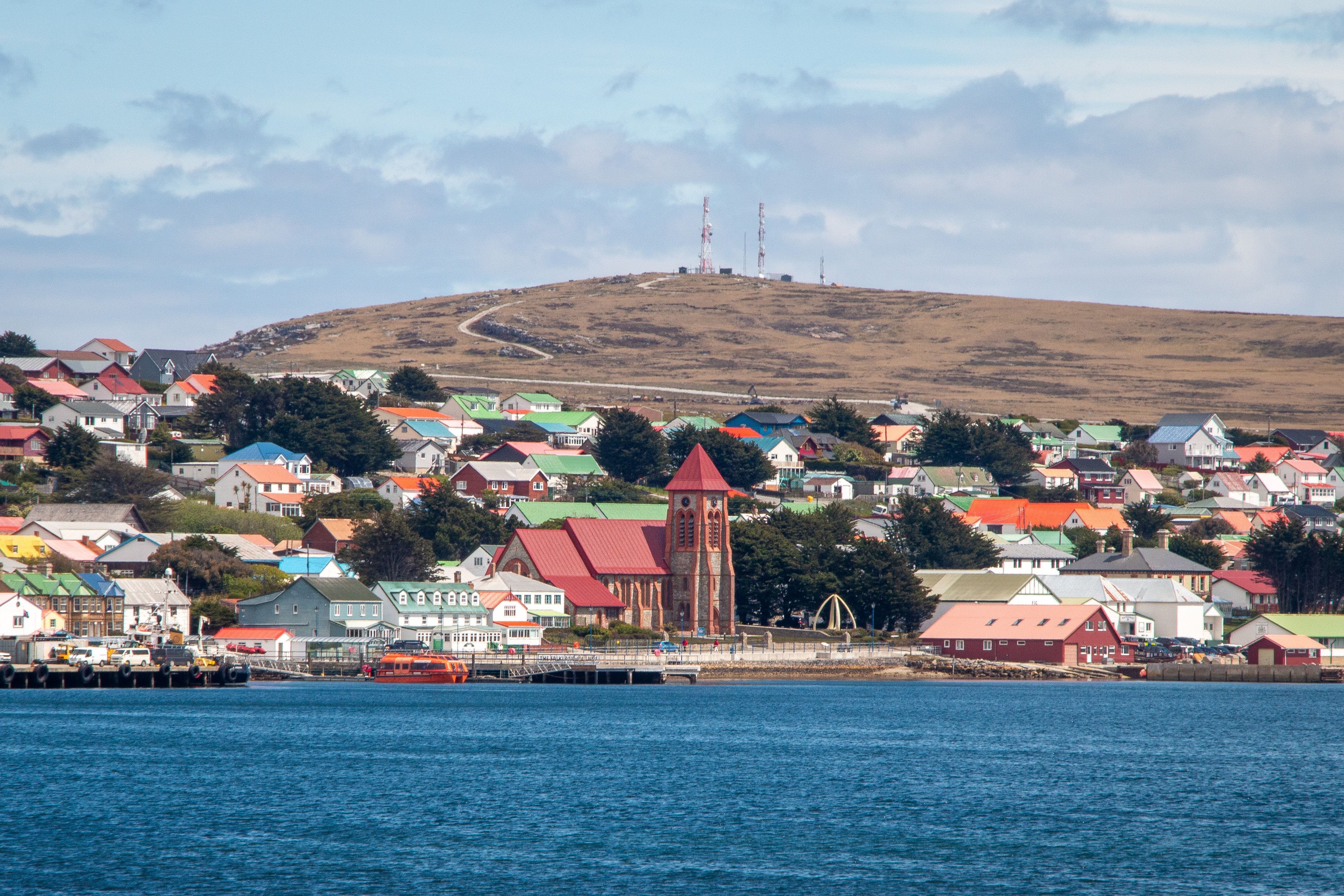
Milei said Argentina would not wait for the UN to act, after his government announced plans to toughen sanctions on companies exploiting resources around the islands without Argentine authorisation. He has also vowed measures against an oil project near the British-controlled archipelago.
British Prime Minister Andy Burnham said the UK would defend the Falkland Islanders’ right to self-determination and to remain British. The islands have been a British overseas territory since 1833, and 99.8 per cent of islanders voting in a 2013 referendum supported remaining one.
Sources: South China Morning Post, Bloomberg
A new Climate Impact Lab report estimates that El Nino-driven extreme heat could cause 450,000 excess heat-related deaths worldwide between June 2026 and February 2027, compared with an average year. The study combines temperature-mortality relationships across more than 24,000 regions with seasonal forecasts.
Researchers project 44 per cent more extreme heat days than in a normal year, with the Global South expected to bear the heaviest burden. Nigeria is projected to record 31,400 excess heat deaths, followed by Indonesia with 19,300 and Sudan with 17,600.
The report has not yet been peer-reviewed, although it uses peer-reviewed methodology. Raquel Nunes, associate professor in health and environment at the University of Warwick, said the 450,000 estimate was plausible as a modelling exercise but should not be treated as a definitive prediction. The report recommends heat warnings, cooling centres and stronger emergency health responses.
Sources: Al Jazeera, CNN

The European Union has lifted sanctions on Russian billionaires Alisher Usmanov and Mikhail Fridman after France pushed to delist Usmanov as part of efforts to secure the release of French nationals held in Azerbaijan. Luxembourg then sought the removal of Fridman, who has challenged measures against him.
The compromise allowed the EU to extend sanctions on hundreds of other individuals and entities for three years, replacing the bloc’s usual six-month renewal cycle. Latvia initially opposed removing the two men but ultimately abstained, allowing the agreement to proceed.
The decision drew criticism from Ukraine and some EU members. Ukrainian Foreign Minister Andrii Sybiha called the plan shameful, while Estonian Foreign Minister Margus Tsahkna said it sent a very bad signal. EU foreign policy spokesperson Christian Wigand stressed that the bloc had adopted 21 sanctions packages and was working on another set.
Sources: Washington Post, Reuters

Italy’s parliament has approved a law paving the way for a return to nuclear power, nearly four decades after the country turned away from atomic energy following the Chernobyl disaster. The Senate backed the legislation by 81 votes to 51, giving the government authority to develop a regulatory framework for new nuclear installations.

The law allows Rome to issue rules covering construction and operation, including small modular reactors, spent nuclear fuel management and nuclear safety. Energy Minister Gilberto Pichetto Fratin, who called the vote a historic day, has said he hopes Italy could have its first domestic reactors by 2035.
Prime Minister Giorgia Meloni’s government sees nuclear power as important to energy security and economic competitiveness amid high energy prices and reliance on imported natural gas. Opposition parties argue reactors will take years to deliver and could distract from expanding renewable energy.
Sources: FT, Bloomberg
Restacking or sharing this publication means more people can read it. Commenting extends the conversation. Liking shows your appreciation.
On this day …
On this day in 1996, the Comprehensive Nuclear Test Ban Treaty opened for signature at the United Nations in New York. Seventy-one countries signed on the first day, including the five states then recognised under the Nuclear Non-Proliferation Treaty as nuclear-weapon states.
The agreement prohibits nuclear test explosions in any environment and represented the culmination of decades of efforts to establish a comprehensive global ban.
Yet the treaty still has not formally entered into force because ratification by all 44 states specified in its Annex 2 remains necessary.
Thirty years after it opened for signature, does the treaty’s influence matter more than its unfinished legal status? Is it just another example of the broken state of international multilateral diplomacy?