


US Puts Saudi Nuclear Deal In Doubt (Geopolitics)
Trump Weighs Wider Iran War (Conflict)
Houthis Open New Red Sea Front (Conflict)
Ukraine’s Army Reset Tests Wartime Reform (Europe)
Rubio And Lavrov Test Ukraine Middle Ground (Diplomacy)
Venezuela Faces $50 Billion Quake Bill (South America)
France Wildfires Force Mass Evacuations (Europe)
EU Freezes Russia Oil Cap (Europe)
Trump Rebuilds Tariff Wall (Economy)
China Recasts AI As Soft Power (China)
A succinct daily briefing delivered each weekday to help you stay on top of the stories shaping the world.

President Donald Trump has put a just signed US-Saudi civilian nuclear agreement in doubt, saying Saudi Arabia must first normalise relations with Israel before receiving the American technology it has long sought.
The condition, announced less than 24 hours after Energy Secretary Chris Wright and his Saudi counterpart signed the deal, could stall an accord already criticised over nuclear proliferation risks. The agreement would allow Saudi Arabia to build nuclear power plants using US technology and study whether enrichment on Saudi soil is feasible and necessary, while the White House now says any deal is subject to Saudi Arabia joining the Abraham Accords.
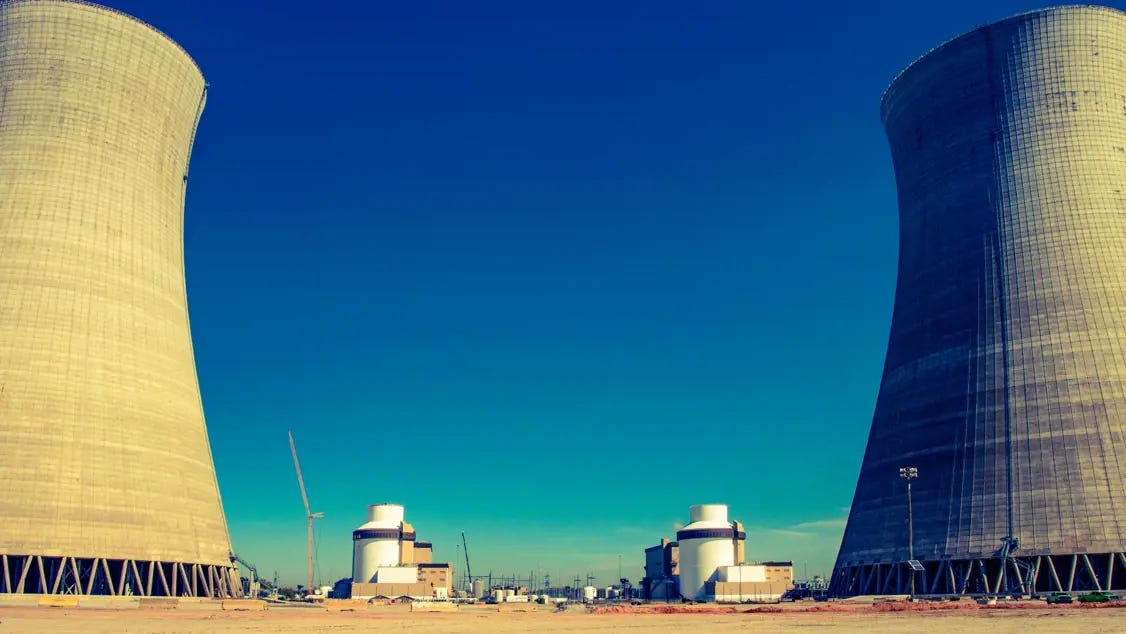
The reversal exposes the tension between commercial nuclear cooperation, nonproliferation concerns and Middle East diplomacy. Saudi leaders have resisted normalisation of the Israeli relationship without guarantees of an eventual Palestinian state, while Israel opposes any Saudi enrichment pathway because of fears it could trigger a regional arms race.
Sources: Washington Post, CNN

President Donald Trump said he is close to deciding whether to launch a “massive attack” on Iran, which would be larger than previous strikes in the conflict, as the United States escalates operations around the Strait of Hormuz.
Trump said he was considering an attack and that Israel “would join in two minutes” if asked, though he said no final decision had been made. Hours later, the US carried out a 13th consecutive night of strikes on Iran, while oil prices rose above $100 a barrel again.
The threat follows Houthi attacks on two Saudi oil tankers in the Red Sea, widening disruption across a second major maritime route.
In response, United Nations secretary general António Guterres warned the Middle East was being pushed to the “edge of the unimaginable”, saying one crisis feeds another and one escalation triggers the next as the region is pulled into a widening confrontation.
Sources: Axios, The Guardian

The Houthis have opened a second maritime front in the US-Iran war, threatening Saudi oil shipments through the Red Sea and raising the pressure on one of the world’s key trade routes.
The Iran-backed Yemeni group said it struck two Saudi oil tankers, the Encelia and the Layla, with missiles and drones after announcing a blockade of Saudi-linked shipping. The attacks target Bab al-Mandeb, the key strait connecting the Red Sea to the Gulf of Aden and the Indian Ocean, while the Strait of Hormuz has already been disrupted by the war.
The escalation adds economic and military risk to a conflict already pulling in regional powers. Brent crude has risen above $100 a barrel, at least five tankers have changed course. United Nations envoy Hans Grundberg warned that further confrontation could drag Yemen back towards full-scale war.
Sources: Wall Street Journal, Al Jazeera

Ukraine’s new army chief has been tasked with pushing the armed forces beyond old & outdated Soviet-era command structures after protests forced a wartime leadership reset in Kyiv.
President Volodymyr Zelenskyy replaced Gen Oleksandr Syrskiy with Major General Mykhailo Drapatiy, a 43-year-old commander who has been praised by soldiers for resisting bureaucratic malaise and prioritising troops’ lives. The shake-up followed rare wartime protests over the dismissal of defence minister Mykhailo Fedorov, who said on Thursday he would accept no government post except his former job.
The crisis comes as Ukraine seeks momentum in the war against Russia with long-range strikes inside Russia while facing battlefield assaults, air attacks and manpower shortages. Drapatiy is expected to accelerate drone and unmanned vehicle integration, loosen rigid decision-making and rebuild ties between army command and the defence ministry. Retired Lieutenant General Ihor Romanenko, a former Deputy Chief of Staff of the Ukraine Army warned that the system itself must change.
Sources: Reuters, Wall Street Journal

US Secretary of State Marco Rubio said Washington remains prepared to play a constructive role in ending the war in Ukraine after meeting Russian Foreign Minister Sergei Lavrov on the sidelines of an ASEAN gathering in Manila.
Rubio said President Trump was ready to help facilitate an end to what he called a “senseless war” if the opportunity arose, but added that the challenge remained finding a settlement both Russia and Ukraine could accept. Lavrov reaffirmed Russia’s readiness for a political and diplomatic settlement, while Moscow said that he also warned that further US arms sales to Kyiv were “unacceptable”.
The talks came as the war’s military activity continued. Ukrainian President Volodymyr Zelenskyy said three people were killed in Pavlohrad after a Russian aerial bomb attack and Ukraine’s air force said Russia launched 168 attack drones overnight.
Sources: Reuters, Euronews
Restacking this post will help it reach more readers interested in the world.

The two earthquakes that struck northern Venezuela on June 24 caused $19.6 billion in direct physical damage, the World Bank said, warning that reconstruction could cost close to $50 billion once debris removal and stronger rebuilding are included.
The 7.2 and 7.5 magnitude quakes killed more than 5,000 people so far, injured nearly 17,000 and left nearly 18,000 homeless, making them Venezuela’s deadliest earthquakes since 1812. The damage was experienced in residential buildings, infrastructure and in non-residential buildings, with La Guaira state and the Capital District accounting for roughly half the total impact.
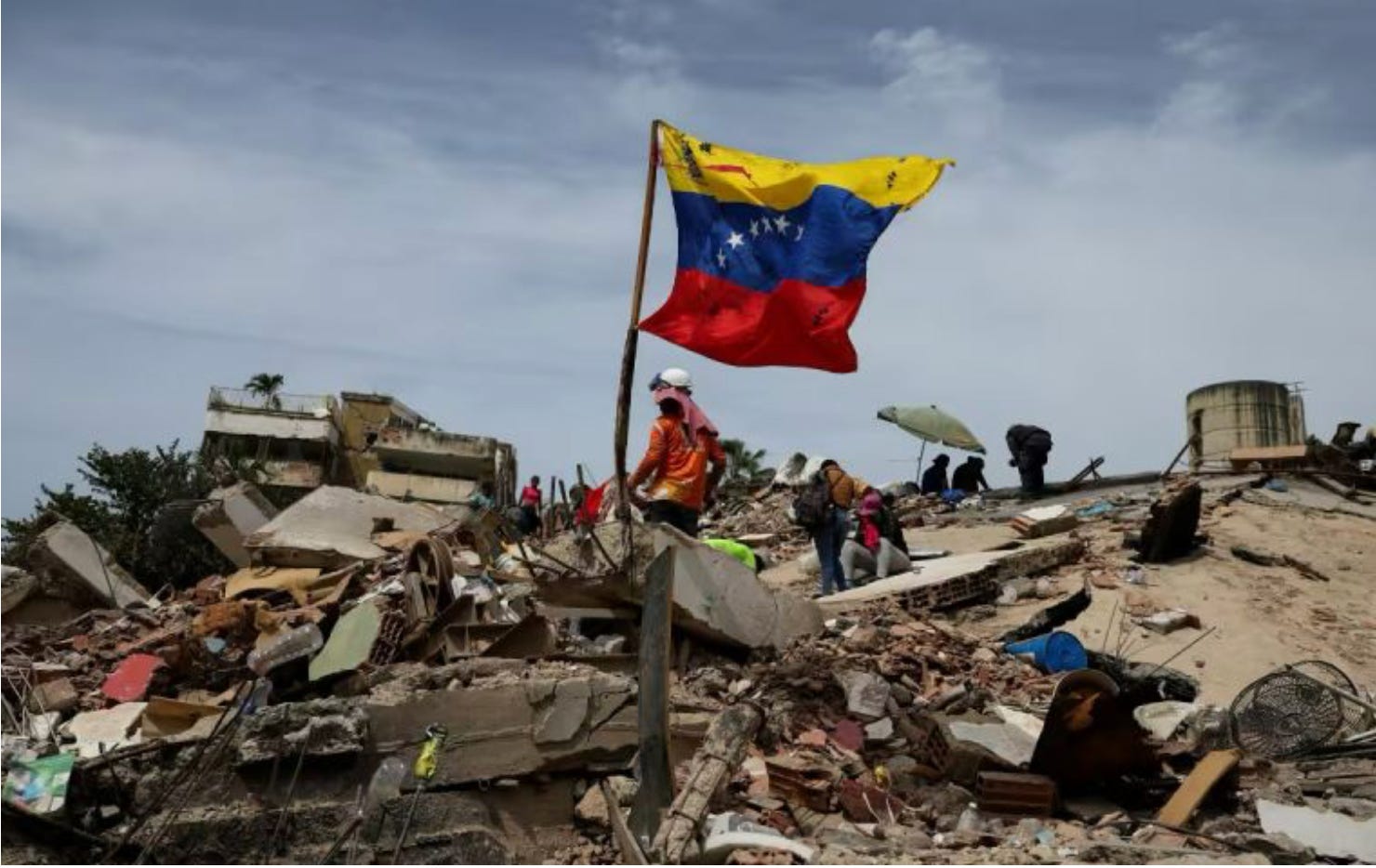
The disaster struck an already fragile economy, with poverty impacting more than 76% of the population and 7.9 million people having left the country since 2015. World Bank Vice-President Susana Cordeiro Guerra said the damage demands a coordinated response, while the bank warned that without higher investment, GDP could remain below pre-quake levels until at least 2036.
Sources: Mercopress, Reuters

More than 20,000 residents and holidaymakers have fled wildfires in southwest France as a fast-moving blaze near the Atlantic coast tore through dense pine forest west of Bordeaux.
About 800 firefighters, backed by hundreds of gendarmes and soldiers, were battling the fire around Lege-Cap-Ferret, a tourist area known for dunes, cycle paths and oyster shacks. The blaze began near Saumos before advancing towards the town, scorching 3,400 hectares, damaging three houses and destroying a caravan, though no casualties have been reported so far.
The European Union sent three water-bombing aircraft after France sought help. Mayor Philippe de Gonneville said the weather was not on the town’s side, with temperatures above 30C and strong shifting winds.
Successive heatwaves across Europe have intensified drought, strained water supplies, left vegetation tinder-dry and helped wildfires burn more land than the recent annual average.
Sources: Al Jazeera, Reuters

The European Union has agreed its 21st sanctions package against Russia, freezing the price cap on Russian oil for a year and extending widespread pressure on energy, banking, crypto currencies and trade.
The deal followed several weeks of negotiations in which some member states sought exemptions to protect national interests. Greece again secured a one-year carve-out allowing operators to continue transporting Russian liquefied natural gas to third countries for contracts dating to 2022. The agreement blocks new contracts and adds 32 Russian banks to the EU transaction ban list.
European Commission President Ursula von der Leyen said the measures would keep weakening the economic foundations of Russia’s war effort. EU foreign policy chief Kaja Kallas described the package as the bloc’s largest in four years, targeting 218 individuals and entities, more than 40 shadow-fleet vessels, several oil refineries and military-industrial actors involved in producing long-range drones.
Sources: DW, Washington Post

President Donald Trump has imposed new tariffs of between 10% and 12.5% on 60 trading partners, covering 99% of US imports, as temporary 10% worldwide levies expire today.
The White House says the duties target countries that failed to impose or effectively enforce bans on goods produced with forced labour. US Trade Representative Jamieson Greer said the action would address both a human rights abuse and a distortive trade practice. The US has turned to Section 301 of the Trade Act of 1974 after the Supreme Court struck down earlier tariffs imposed under emergency powers.
The move extends Trump’s trade strategy and has triggered criticism from partners. Brazil called the measure arbitrary and unjustified and said it would respond under its reciprocity law, while other critics warned that companies importing goods into the United States are likely to pass tariff costs on to consumers.
Sources: Associated Press, BBC

China is using open-source artificial intelligence as a diplomatic tool, presenting low-cost technology as an alternative to closed and more expensive US systems.
President Xi Jinping said open-source AI was a “rare and historical opportunity” to spread the technology’s benefits worldwide, and pledged 5,000 training and seminar programmes for students and workers in developing countries over five years. Beijing also established the World Artificial Intelligence Cooperation Organisation. Chinese companies including DeepSeek, Moonshot AI, Z.ai and Alibaba have championed open-source AI to lower costs and accelerate adoption.
The push deepens the contest with the United States. US companies including OpenAI, Anthropic and Google keep their systems closed. US Treasury Secretary Scott Bessent warned that open source is not “open season on American IP”.
Analysts say China’s offer could bind Global South countries more closely to its technology standards and strategic vision.
Sources: New York Times, FT
Restacking or sharing this publication means more people can read it. Commenting extends the conversation. Liking shows your appreciation.
On this day …
On this day in 1911, American explorer Hiram Bingham brought international attention to the Inca citadel of Machu Picchu after being guided to the site by local residents in Peru.
His expedition introduced one of the world’s most remarkable archaeological sites to a global audience and sparked decades of research into the Inca civilisation.
The discovery also prompted continuing debates over cultural heritage, archaeological stewardship and the return of artefacts removed for study abroad.
Machu Picchu remains both a symbol of human achievement and a reminder of the responsibility to preserve the past for future generations.