


Iran Calls US Desperate (Middle East)
Houthis Disrupt Saudi Arabia’s Oil Workaround (Middle East)
Syria And Israel Reopen Security Talks (Geopolitics)
US Envoy Walks Back Golan Heights Comments (Geopolitics)
US Canada Trade Talks Collapse Into Tariff Fight (Trade)
Russia Plans New Troop Draft Zelensky Says (Conflict)
Wartime Election Would Split Ukraine (Politics)
Ukraine Allies Gather In Kyiv Ahead Of Independence Day (Diplomacy)
Mecca Pact Could Expand Beyond Founding Three (Diplomacy)
DR Congo And M23 Set Roadmap For Peace Talks (Africa)
A succinct daily briefing delivered each weekday to help you stay on top of the stories shaping the world.

As Washington is preparing what U.S. Treasury Secretary Scott Bessent has called “the toughest sanctions in history” against Iran, shifting the campaign towards economic measures after nearly six months of war, Iranian Foreign Minister Abbas Araqchi called the move desperate and said previous U.S. blockades and military actions had failed.
Iran nevertheless faces severe economic strain. President Masoud Pezeshkian acknowledged inflation, livelihood problems and unemployment, while Tehran continues to impede tanker traffic through the Strait of Hormuz, pushing up global oil prices.
The confrontation has also widened well beyond Iran. Supreme National Security Council leader Mohsen Rezaei warned neighbouring countries against joining U.S. economic measures, threatening alternative Gulf oil-shipping routes as well as American commercial interests.
China has criticised Washington’s sanctions initiative whereas the United Arab Emirates has suspended trade and financial transactions with Tehran. Pakistan’s army chief Asim Munir is due in Tehran shortly as part of efforts to restore regional peace and security.
Sources: Reuters, The Guardian

Saudi Arabia is rerouting oil shipments around Africa as Houthi threats make its Red Sea export route increasingly difficult to use. The kingdom had relied on west-coast facilities to blunt the impact of Iran’s effective shutdown of the Strait of Hormuz but attacks and threats around the Bab el-Mandeb are now complicating that alternative.
Tankers collecting crude from Yanbu have increasingly sailed north through the Suez Canal to Egypt’s Sidi Kerir, forcing Asia-bound cargoes onto journeys of roughly 17,000 miles around Africa. Some Asian refiners have resisted collecting directly from Yanbu because of difficulty securing willing ships, while Saudi Arabia has begun offering Chinese customers cargoes from the Gulf of Oman.
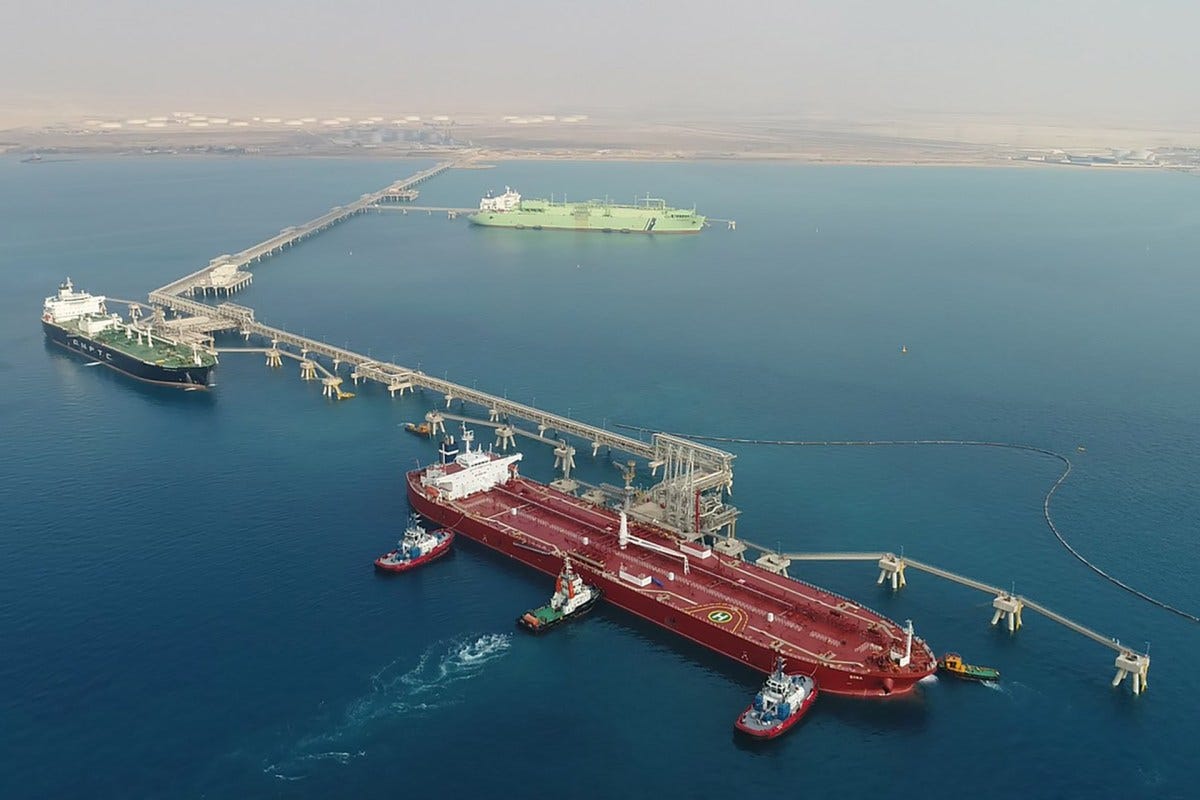
The disruption is raising delivery costs and keeping Saudi exports below pre-war levels. Japanese and South Korean refiners are still expected to take September cargoes from Sidi Kerir on the Mediterranean coast of Egypt, reflecting energy-security concerns despite the higher expense.
Sources: Bloomberg, FT

Syria and Israel have resumed high-level contact under U.S. mediation, with delegations meeting in Jordan to pursue de-escalation after recent Israeli strikes & rising tensions in southern Syria. Syrian Foreign Minister Asaad al-Shaibani said negotiations on a security agreement should resume soon, although Damascus currently does not trust Israel.
Syria says its immediate priority is to halt Israeli attacks, arrests and targeting operations. It also wants Israeli forces to withdraw to positions held before December 8, 2024, and to see the 1974 Disengagement Agreement fully implemented.

The talks are intended to revive negotiations towards a security agreement that could underpin a broader future accord. Damascus insists any arrangement must respect Syrian sovereignty, territorial integrity and its right to determine alliances, while maintaining that the Golan Heights remain Syrian territory. Shaibani said Syria is open to diplomacy but has not seen Israeli willingness to implement an agreement.
Sources: Anadolu Agency, Reuters

U.S. special envoy to Syria and ambassador to Turkey Tom Barrack has walked back comments that Israel “still” occupies the Golan Heights in violation of U.N. resolutions, saying he was describing the territory’s historical status rather than endorsing the U.N. position.
Barrack said U.S. policy remains unchanged from President Donald Trump’s 2019 recognition of Israeli sovereignty over the Golan, which reversed decades of American policy. Israel captured the territory from Syria in 1967 and annexed it in 1981, a move not recognised by the United Nations or most of the international community.
His clarification followed criticism in Washington, including from Republican Senator Rick Scott. Barrack also rejected suggestions that earlier remarks meant Iran and Hezbollah should join U.S.-backed Israel-Lebanon negotiations, stressing that Washington does not negotiate with Hezbollah and that he had been describing the difficulty posed by Iranian financing and weapons.
Sources: South China Morning Post, Washington Post

US President Donald Trump has accused Canada of wanting “the benefits of being a State, without being one” after trade talks collapsed and new 50% US tariffs took effect on about $20 billion of Canadian goods.
Canadian Prime Minister Mark Carney called the measures an attack and said Canada would impose dollar-for-dollar countertariffs from September 8 on goods including steel, dairy and appliances. He said the US had demanded terms that were unfair and would compromise Canadian sovereignty, including restrictions on Canada’s ability to strike trade deals with other countries.
The breakdown has deepened a dispute between neighbours with a nearly $900 billion-a-year trading relationship and renewed uncertainty over the USMCA - the agreement that replaced NAFTA. US Trade Representative Jamieson Greer blamed Canada for making new demands while Carney said Washington changed terms at the last minute.
No plans have been announced to resume talks.
Sources: BBC, Wall Street Journal
Restacking this post will help it reach more readers interested in the world.

Ukrainian President Volodymyr Zelensky says Russia plans to draft another 300,000 troops after parliamentary elections in September, with further mobilisation possible in 2027 as Moscow seeks to sustain its offensive in eastern Ukraine.
Russian forces are pressing to capture the remaining Ukrainian-held parts of the Donbas including the fortress belt of eastern cities. Zelensky said Moscow was suffering heavy losses around Kostiantynivka and could ultimately seek an additional 500,000 troops through what he described as “peripheral mobilisation” focused on Russia’s regions.
Ukraine is simultaneously facing growing air-defence constraints. Zelensky said Kyiv expected only 264 Patriot interceptors in 2026, down from 364 in 2025 and 675 in 2023, while Russia is seeking capacity to produce up to 1,300 ballistic missiles annually. He also said Ukraine faces a $27 billion defence funding gap this year.
Sources: South China Morning Post, The Telegraph

Ukrainian President Volodymyr Zelensky says holding an election while fighting with Russia continues would risk splitting the country, rejecting a proposal from former Defence Minister Mykhailo Fedorov for a wartime vote.
Elections are prohibited during war under Ukrainian law, while millions of Ukrainians are abroad, under Russian occupation or serving at the front. An August 5 poll by the Kyiv International Institute of Sociology found that 57% of Ukrainians want elections only after fighting ends.
Zelensky said a wartime election might be possible if Ukraine’s partners could guarantee conditions for a safe, legitimate and democratic vote, including participation by military personnel, people in frontline areas and citizens abroad. No such plan has been proposed.
He said his strategy is instead to steer Ukraine towards ending the war while preserving an independent and sovereign state, rather than risk dividing the country during active fighting.
Sources: Reuters, The Guardian

Western leaders have gathered in Kyiv ahead of Ukraine’s Independence Day, with Nordic and Baltic partners joining meetings focused on defence cooperation and air protection as the war continues.
Ukrainian President Volodymyr Zelensky met Finnish President Alexander Stubb for talks on defence-industry cooperation, including agreements covering drones, uncrewed naval systems and unmanned ground vehicles.
Leaders and representatives from Denmark, Estonia, Finland, Latvia, Lithuania and Norway were also in Kyiv ahead of a Coalition of the Willing meeting.
Zelensky separately highlighted Ukraine’s continuing shortage of air-defence interceptors, saying Kyiv wants 300 US-made Patriot missiles for a winter package and would seek access to 5% to 10% of US stockpiles. Ukraine has received 264 Patriot interceptors so far this year.
The diplomatic gatherings therefore combine political solidarity with negotiations over the military capabilities Kyiv says it still needs.
Sources: Euronews, Kyiv Independent

Saudi Arabia, Turkey and Pakistan have reportedly invited Iran to join their new Mecca Agreement for Mutual Defense, while Bangladesh has also signalled a positive approach towards possible membership.
The pact, signed on August 7, treats an attack on one member as an attack on all three and is already developing mechanisms for diplomatic and military coordination. Turkish Foreign Minister Hakan Fidan has compared the arrangement to NATO’s Article 5 while stressing that it is not directed against Iran or any specific country.
Iranian official Mehdi Rahimi said Tehran had received an invitation and was reviewing it, although neither Iran nor the three members has officially confirmed the offer. Bangladesh’s state ministers for foreign affairs said Dhaka would consider joining according to its national interests. Turkey has also said the alliance could expand further, with Egypt publicly mentioned as a possible candidate.
Sources: Times of India, Jerusalem Post

The Democratic Republic of Congo and the M23 rebel group have agreed a roadmap for peace talks after five days of negotiations in Switzerland, setting out sequenced steps and timelines under the Doha framework signed last year.
The two sides also agreed to establish a mechanism to monitor ceasefire violations and address problems implementing existing commitments. A first verification mission is due on Monday in Minembwe, South Kivu, where fighting has continued despite repeated ceasefire pledges.
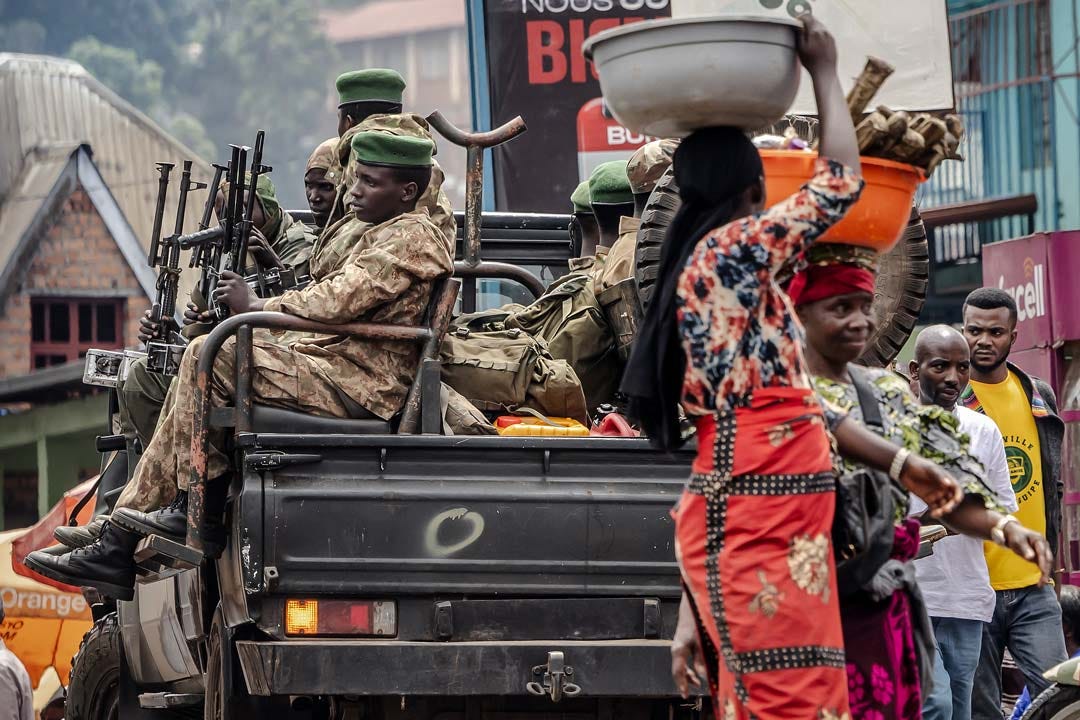
Major differences remain over sanctions against M23, the release of detainees and the timing of political reforms. The security situation in eastern Congo also remains fragile, with the government and M23 continuing to accuse each other of violations.
The conflict has killed thousands and displaced millions, while tensions between Congo and neighbouring Rwanda continue to shape the wider dispute despite a separate US-brokered agreement between the two countries last year.
Sources: Al Jazeera, BBC
Restacking or sharing this publication means more people can read it. Commenting extends the conversation. Liking shows your appreciation.
On this day …
On this day in 1991, Ukraine’s parliament declared the country independent from the Soviet Union, days after the failed coup against Mikhail Gorbachev in Moscow. The decision was overwhelmingly endorsed in a referendum that December, when more than 90 per cent of voters backed independence. Within weeks, the Soviet Union itself ceased to exist.
Thirty-five years later, the consequences of that decision remain at the centre of European security.
Russia’s full-scale invasion in 2022 turned Ukraine’s sovereignty and territorial integrity into the central issue of Europe’s largest war since 1945. The independence declared in 1991 is now being defended on the battlefield.