


Trump Uses UN Stage To Put Power Before Process (Geopolitics)
Macron Uses UN Farewell To Defend Multilateralism (Diplomacy)
Zelensky Warns Russia Could Widen The War (Conflict)
UN Reform Push Targets Security Council Power (Diplomacy)
Guterres Warns Superpowers Cannot Go It Alone (Diplomacy)
Trump Backs Diesel Export Ban As Prices Surge (US)
Saudi Pipeline Restart Eases Oil Supply Fears (Middle East)
Houthis Battle For Heights Above Bab Al Mandeb (Conflict)
China Urges Germany To Help Avert EU Trade Clash (Trade)
Rodríguez Builds US Ties As Election Talks Loom (South America)
A succinct daily briefing delivered each weekday to help you stay on top of the stories shaping the world.

President Donald Trump used his UN General Assembly (UNGA) address to defend an approach centred on US military and economic power, threatening to “annihilate the Islamic Republic” if Iran did not reach a deal to end the nearly seven-month war.
The threat came alongside apparent attempts at diplomacy. Trump said envoys Steve Witkoff and Jared Kushner met Iranian officials for about three hours through mediators on the sidelines of the UN General Assembly. Secretary of State Marco Rubio said Trump remained open to meeting Iranian President Masoud Pezeshkian. Trump also called on Iran to reopen the Strait of Hormuz and return to negotiations.
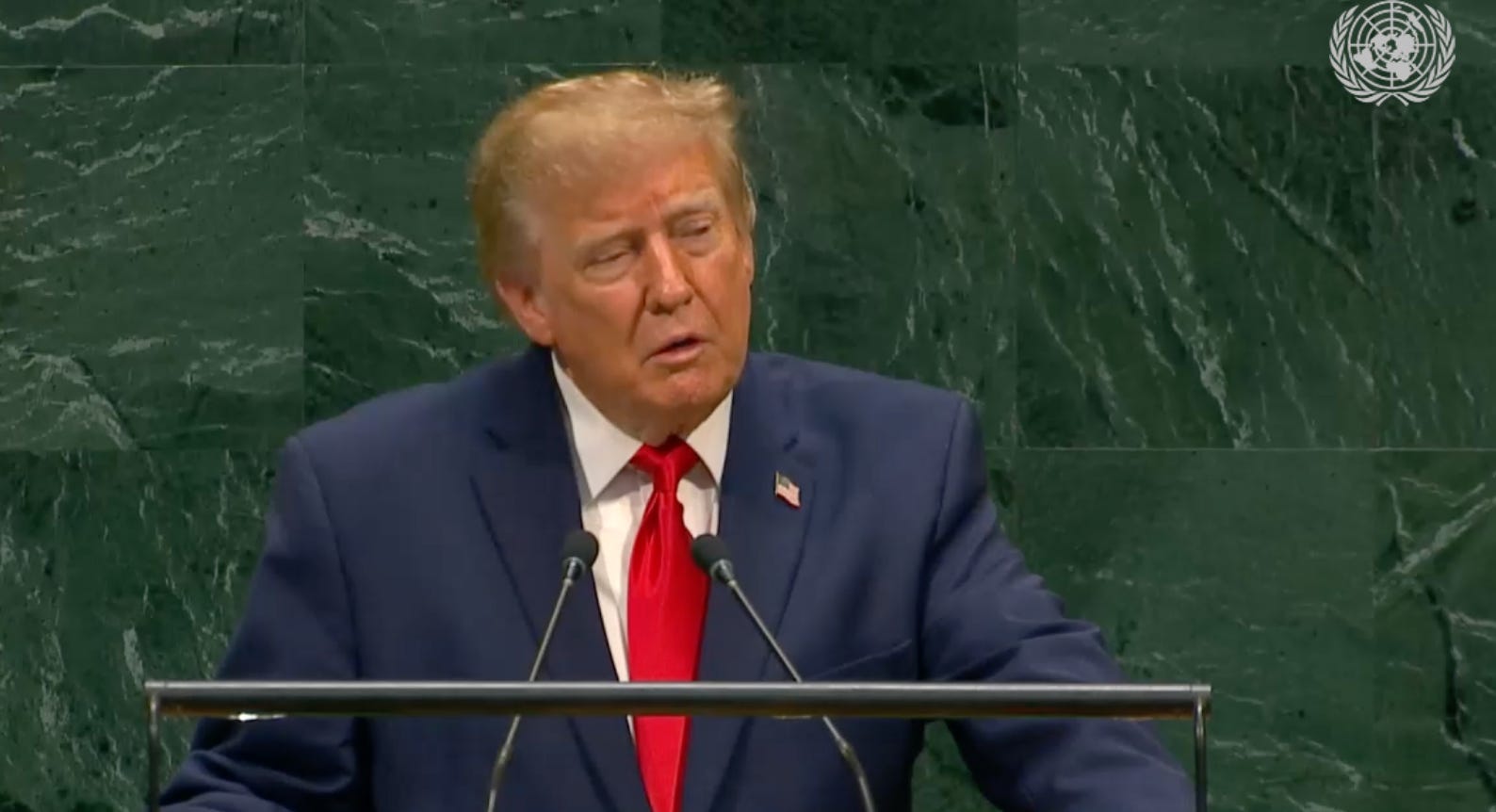
The wider speech extended the same approach beyond Iran. Trump celebrated the operation that removed Nicolás Maduro, defended US claims on Venezuelan oil, called the International Criminal Court a “rogue institution” and urged its members to resign.
Sources: New York Times, The Hill

French President Emmanuel Macron used his final UN General Assembly address before leaving office next year to urge countries to defend international law against what he called a return to the “law of the jungle”.
Macron challenged claims that peace had been secured in Gaza, saying humanitarian access had not reopened. He also warned that developments in the West Bank were making a project based on the Palestinian people’s right to exist increasingly impossible.
The White House responded that President Donald Trump had ended the Israel-Hamas war and was leading implementation of his 20-Point Plan for Peace in Gaza.
Macron also proposed moratoriums on strikes against civilian and energy infrastructure in the Russia-Ukraine war and attacks on commercial shipping in the Black Sea. On artificial intelligence, he called for countries to build an open-source frontier model independent of China and the United States, arguing they should not become dependent on either power.
Sources: France 24, Reuters

Ukrainian President Volodymyr Zelensky warned that Russia could attack another country bordering Russia or Belarus with drones, missiles or a ground operation, arguing Moscow could seek to fracture European unity and weaken support for Ukraine.
Zelensky said Russian President Vladimir Putin was not winning in Ukraine and needed an outcome he could portray domestically as a victory. He pointed to cross-border incidents involving Moldova, Romania and Poland, and disruptions at airports in Germany and Nordic countries, saying Russia would continue such activity.
Separately, Zelensky said intelligence indicated Russia was preparing a new massive attack on Ukraine. He said Kyiv remained in constant communication with allies over new air defences and rejected easing sanctions while Ukrainians remained under threat from missile and drone attacks. Russian forces have altered tactics in recent weeks, launching barrages throughout the day rather than at night. The traditional “front line” has changed little in months.
Sources: Kyiv Post, Reuters
Calls to reform the UN Security Council are gaining new attention as world leaders argue that its five permanent members no longer reflect the distribution of global power or the organisation’s membership.
Turkish President Recep Tayyip Erdoğan said a system allowing five countries to override more than 190 was neither fair nor capable of establishing trust. UN Secretary-General António Guterres said the permanent membership lacked legitimacy without Latin American or African representation, while Brazilian President Luiz Inácio Lula da Silva blamed Security Council inaction for weakening the UN’s credibility amid rising armed conflict.
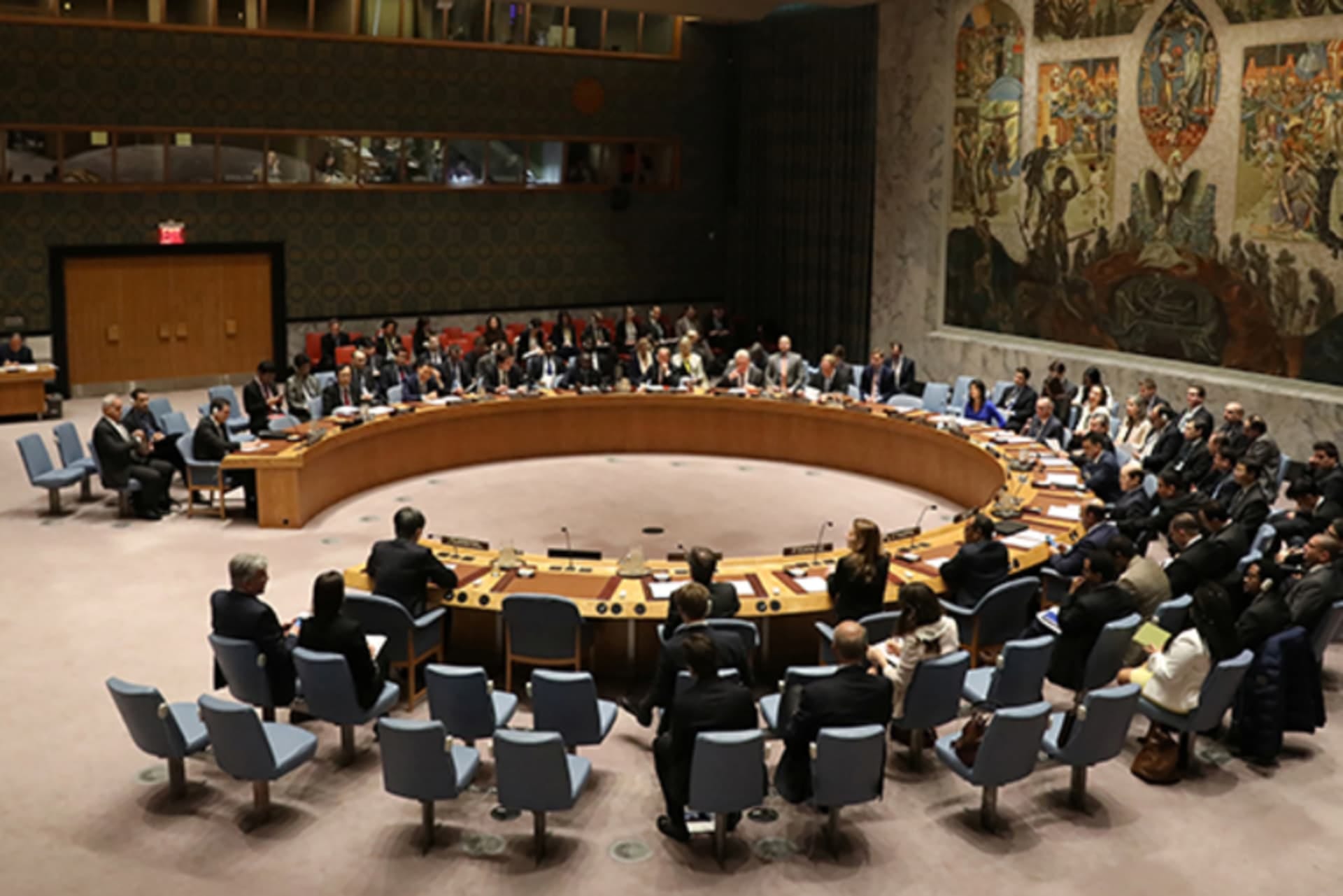
The debate is also shaping the race to succeed Guterres. Rebeca Grynspan, a former Costa Rican vice president, has won two of three secret ballots so far, but any permanent member can veto the wider membership’s selection.
Despite widespread calls for reform, the five permanent members have shown no interest in relinquishing their power.
Sources: Bloomberg, Wall Street Journal
United Nations Secretary-General António Guterres used his final General Assembly address to warn that widening geopolitical divisions were colliding with wars, inequality, climate change and artificial intelligence, while mechanisms for collective action were under growing strain.
Guterres argued that recent events had exposed the limits of superpower influence, saying military power alone could not secure peace, economic power could not command stability and technological power could not guarantee security. He warned against a world divided into rival economic, technological and security blocs and called for a more representative multilateral system.
His proposals ranged from stronger AI safeguards to government plans for transitioning away from fossil fuels. Guterres also described permanent African exclusion from the Security Council as unjust and indefensible, and urged countries to defend the UN Charter without double standards. He said the world needed a stronger United Nations capable of confronting current challenges.
Sources: The Guardian, New York Times
US President Donald Trump backed a ban on diesel exports as prices reached record highs, while administration officials assessed whether a full or partial restriction could work without disrupting refinery operations.
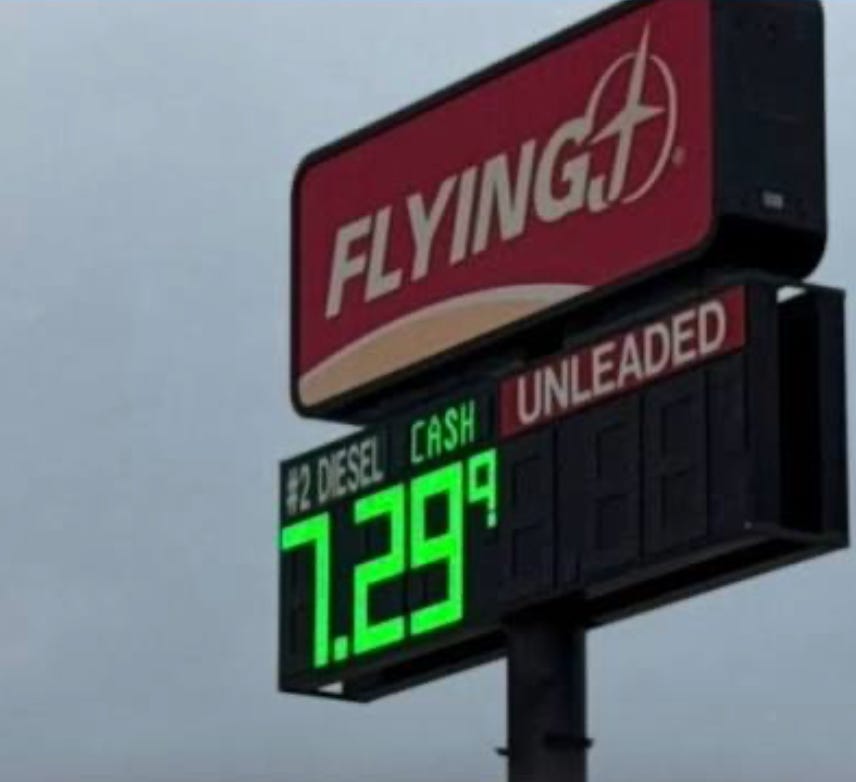
The proposal comes as wars in Iran and Ukraine have sharply reduced exports from major producers including Russia, Saudi Arabia and the United Arab Emirates. US diesel prices surpassed $6.50 a gallon on Tuesday. Several Republican candidates have urged restrictions ahead of November’s midterm elections, with affordability among voters’ leading concerns.
Trump’s position conflicts with warnings from his energy officials. Energy Secretary Chris Wright said export barriers could cause Gulf Coast refiners to cut production, reducing fuel supply, while Interior Secretary Doug Burgum said a ban was unlikely to lower petroleum prices and could trigger retaliation. Europe, already structurally short of diesel and heavily reliant on US exports, would face tighter supplies if shipments were restricted.
Sources: Reuters, BBC

Saudi Arabia has restarted its East-West Pipeline at a low rate after drone attacks damaged three pumping stations, restoring a crucial alternative route for crude exports while flows through the Strait of Hormuz remain disrupted.
The kingdom had been rerouting around 4 million barrels per day, equivalent to about 4% of global supply, through the pipeline to the Red Sea port of Yanbu after the US-Israeli war on Iran disrupted Gulf oil flows through Hormuz. One cargo bound for China was scheduled to load at Yanbu on Tuesday.
A full recovery will take longer. Saudi Aramco is seeking to restore flows to 4 million barrels per day but sources said full pumping rates could take up to six to eight weeks to achieve.
Brent crude fell more than $2 towards $97 after the restart, while traders prepared for renewed Saudi loadings and expectations increased that Middle Eastern oil exports could rise.
Sources: Reuters, Turkiye Today

Houthi forces are battling Saudi-backed government troops for control of the Kahboub Mountains after seizing much of Yemen’s Red Sea coast, including Mocha and Mayyun Island. Control of the heights would further cut Aden from the western coast and complicate future government counterattacks.
The fighting has wider strategic consequences after the Houthis gained control over the Bab al-Mandeb strait, a shipping lane carrying 10% of global maritime traffic. Saudi Arabia has launched hundreds of strikes with little success and sought US military involvement. President Donald Trump reportedly considered strikes against the Houthis but called them off at the last minute.
The humanitarian toll is also growing. At least 674 people have been killed since August 6 and more than 158,000 displaced this month. Yemen already faces acute food shortages affecting more than 18 million people, while about 22 million require humanitarian assistance.
Sources: Al Jazeera, The Guardian

Chinese Foreign Minister Wang Yi urged Germany to help prevent a trade confrontation between China and the European Union as an October deadline approaches for progress on disputes between the two sides.
Wang told German Foreign Minister Johann Wadephul that China and the EU should not fight a trade war, calling for open cooperation, dialogue and consultation. EU leaders are due to meet in mid-October to assess the bloc’s trade deficit with China and consider new policy tools, after China’s trade surplus with Europe reached a record high in the first half of 2026.
The appeal comes as Beijing manages trade disputes on multiple fronts. Chinese President Xi Jinping is heading to the US this week seeking an extension to a trade war ceasefire with President Donald Trump. Germany, meanwhile, said stable global trade was in everyone’s interest but that trade relations required fair rules and a genuine level playing field.
Sources: South China Morning Post, Bloomberg

Venezuelan interim President Delcy Rodríguez is in New York for her first US trip since taking office after US forces captured Nicolás Maduro, with a meeting with US President Donald Trump scheduled alongside talks on debt, energy and financing.
Washington controls the sale of Venezuelan oil outside the country and has created approved and barred categories for spending oil revenues. The US has also taken a 35% stake in North American Blue Energy Partners and will receive 20% of its oil production at cost. Trump has publicly praised Rodríguez, while saying Venezuela is not yet ready for elections.
Rodríguez has retained military support and sidelined some rivals, while Venezuela’s government and opposition negotiate over when to hold elections. Opposition figures fear favourable US access to resources could make her indispensable to Trump, while analysts say the relationship could increase her capacity to delay elections.
Sources: FT, Reuters
Restacking or sharing this publication means more people can read it. Commenting extends the conversation. Liking shows your appreciation.
On this day …
On this day in 1932, the unification of territories conquered and consolidated by Abdulaziz ibn Saud was formally proclaimed under a new name: the Kingdom of Saudi Arabia. The announcement was the culmination of a process stretching back to Abdulaziz’s recapture of Riyadh in 1902 and established the political entity that exists today.
The kingdom would subsequently become increasingly important to the global economy and international politics, particularly as its petroleum resources were developed. September 23 is now observed annually as Saudi National Day.
Few states demonstrate as clearly how events within one generation can acquire consequences extending far beyond their own borders.