


Hormuz Attacks Rise As Oil Keeps Flowing (Conflict)
France Restricts Protests As Unrest Deepens (France)
Student Protests Spread Across Europe (Europe)
Italy’s Fuel Protests Halt Mozzarella Production (Italy)
Israel Election Tests Longstanding Political Loyalties (Politics)
Europe Honours ICC As US Sanctions Threaten Operations (Europe)
Ukrainian Strikes Threaten Russia’s AI Ambitions (Conflict)
Palantir Denies NATO AI Has Kill Switch (Technology)
European Summer Heat Linked to 50,000 Deaths (Climate)
Trump Invokes Defence Powers to Boost US Oil Capacity (US)
A succinct daily briefing delivered each weekday to help you stay on top of the stories shaping the world.

Iran says seven oil tankers were damaged in the Strait of Hormuz overnight, four during oil transfers and three after striking mines. The Islamic Revolutionary Guard Corps warned it could attack US bases across the region if American forces continue helping commercial vessels through the waterway.
Shipping has nevertheless continued under US military protection. Lloyd’s List Intelligence reports 28 attacks on ships in October, while operators use night-time voyages through a protected lane near Oman before transferring cargo offshore. The system has restored Gulf oil shipments to roughly prewar levels but tanker charter rates have climbed into the hundreds of thousands of dollars daily.
US President Donald Trump accused Iran of inventing incidents to raise oil prices before November’s midterm elections. Washington disputes the mine claims, while Iran continues to assert control over the strait. Indirect diplomatic discussions continue, alongside an expanding American military deployment.
Sources: Al Jazeera, Associated Press

French President Emmanuel Macron said “illegitimate” demonstrations would be banned following riots and looting during nationwide protests last weekend. Authorities have prohibited Saturday’s planned marches in Marseille and Lyon, while approved demonstrations, including those organised by unions, may be diverted away from businesses. Justice Minister Gerald Darmanin has proposed suspending voting rights for people who defy protest bans.
More than half a million people joined last Saturday’s demonstrations over living costs and school conditions. Darmanin said at least 2,700 people had been detained following the unrest. Macron blamed “seditious” ultra-left groups, while opposition figures disputed the government’s response. Further rallies are planned despite the restrictions.
The unrest is also unsettling financial markets. The premium on French government borrowing over German bonds reached a 15-year high on Thursday, while France’s 10-year bond yield rose to 5.14%, its highest since July 2002. Union representatives said talks with Prime Minister Sébastien Lecornu produced no concrete proposals.
Sources: Reuters, Al Jazeera

Youth-led protests over education costs and living standards are spreading across Europe, with German organisers calling for demonstrations in 21 cities on October 31. The movement, Gen Z regelt, is protesting school conditions, austerity, social inequality, military conscription and climate change. It has explicitly rejected violence following riots during demonstrations in France.
In Greece, students have marched in Athens and Thessaloniki demanding affordable housing and greater education funding, while teachers in Athens have joined strikes. Portuguese university students have protested plans to increase tuition fees frozen since 2020. Demonstrations have also reached Albania and Italy, where unrest has included violence and looting.
German police say they will protect the right to protest but have warned against extremist involvement. Andreas Roßkopf, head of the German Federal Police’s GdP union, promised a firm response to disorder. In Milan, authorities have decided to deploy 500 troops during forthcoming weekend protests.
Sources: DW, SBS

A truckers’ strike over soaring diesel prices has halted buffalo mozzarella production around Naples, as blockades disrupt deliveries across southern Italy. The increases are linked to the Iran war. Pier Maria Saccani, director of the Mozzarella di Bufala Campana consortium, said around one million litres of milk went unprocessed on Wednesday, costing producers an estimated €3 million in a day.

Mozzarella production rules require milk to be processed within 60 hours, leaving farmers little time or storage capacity when deliveries stop. Pasta manufacturers have suspended or reduced output, tomatoes have gone unharvested, and supermarkets and petrol stations face shortages. The consortium says its production costs have already risen about 30%.
Prime Minister Giorgia Meloni’s government approved additional tax credits for truckers and farmers on Thursday. Some drivers in Sicily have resumed work but blockades continue elsewhere, including around Naples, despite government warnings and plans to escort non-striking lorries.
Sources: FT, Associated Press

Israel’s October 27 election is shaping up as a contest between Prime Minister Benjamin Netanyahu and former military chief Gadi Eisenkot, whose Yashar party leads in the polls. Neither candidate’s bloc is projected to secure the 61 seats needed for a parliamentary majority, leaving smaller parties decisive in coalition negotiations.
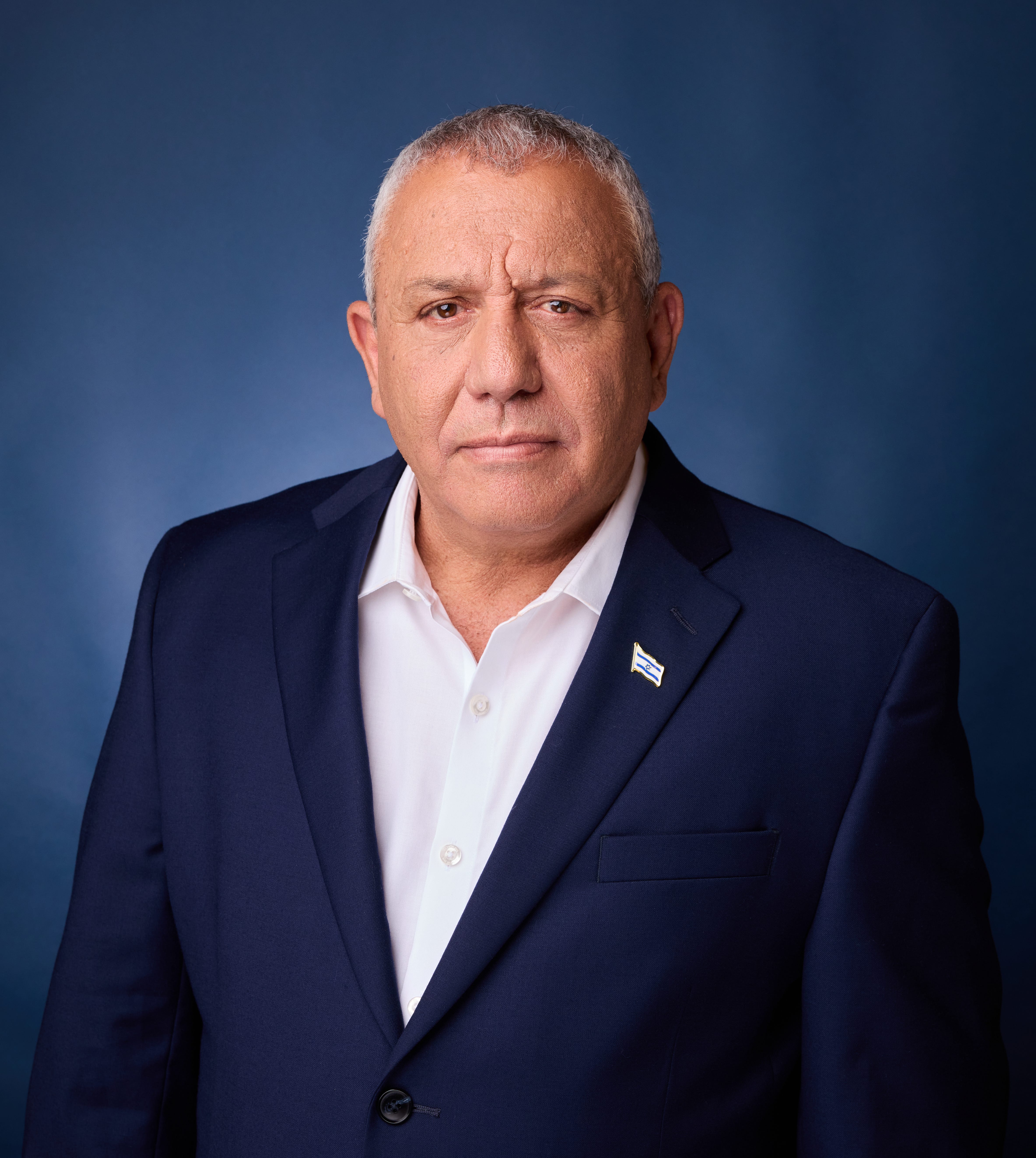
A central question is whether Eisenkot can attract Mizrahi voters, Jews descended from communities in the Middle East and North Africa who comprise more than half of Israel’s Jewish population. Traditionally a foundation of Netanyahu’s Likud support, some moderate Mizrahim may consider Eisenkot, the son of Moroccan immigrants, although others distrust his allies.
Eisenkot is campaigning on accountability for the October 7 attacks and universal military or civilian service. Exemptions for ultraorthodox communities have strained Netanyahu’s coalition, which depends on ultraorthodox parties.
With weeks of coalition negotiations possible following the ballot, the outcome may hinge on voters willing to cross established political lines.
Sources: ABC News, Wall Street Journal

The European Parliament has awarded its Sakharov human rights prize to the International Criminal Court, days after the United States announced sweeping financial sanctions against the tribunal. European Parliament President Roberta Metsola said the award recognised the court’s work upholding international law, while ICC President Tomoko Akane described unprecedented challenges facing its staff.
The American measures restrict the court’s access to US financial services, technology companies and dollar transactions. Washington has given US businesses six months to end dealings with the court, which prosecutes genocide, war crimes and crimes against humanity.
EU leaders have urged Washington to reverse the sanctions and instructed the European Commission to protect the court and companies serving it. They are considering further measures, including legislation that could prevent European firms from complying with US restrictions. The award therefore accompanies a practical dispute over whether the court can continue operating under American sanctions.
Sources: New York Times, Fortune

Ukrainian drone strikes have damaged five major Russian data centres this month, including three belonging to technology company Yandex and facilities serving Sberbank and VKontakte. The attacks disrupted banking, online shopping, taxi services and cloud computing, while some arbitration courts reportedly postponed hearings after losing database access.
The damage extends beyond everyday services. Yandex operates three supercomputers used to develop artificial intelligence models, with two housed at its Sasovo facility, struck on October 8. Although the company has restored most essential cloud services, experts warn that replacing damaged computing equipment could take months or years. Restrictions on advanced chip exports to Russia complicate repairs.
The attacks also expose a vulnerability in Moscow’s digital sovereignty policy, which requires domestic data storage. Ukraine, by contrast, has placed critical information on servers in allied European countries. The strikes threaten Russia’s longer-term AI development as well as its immediate digital infrastructure.
Sources: Fortune, Associated Press

Palantir has assured European NATO allies that neither the company nor Washington can remotely disable its Maven military artificial intelligence system. Louis Mosley, Palantir’s executive vice president for the UK and Europe, said customers retain full operational control. His reassurance follows disruptions to Ukraine’s US-operated Starshield military communications network, which Kyiv accused Washington of deliberately slowing.
NATO awarded Palantir a €480 million contract in 2025 to provide Maven, which processes battlefield information to support military decisions. However, France and Germany have declined to adopt the system, citing concerns about foreign control over sensitive defence data.
Mosley acknowledged that Europe must accept some dependence on American technology, at least temporarily. Meanwhile, the European Commission is developing legislation that would restrict sensitive government data to EU-controlled technology providers. France has also developed its own military data platform, Arcadia, reflecting growing European efforts to maintain technological sovereignty.
Sources: Euronews, Bloomberg

An estimated 50,391 people died from heat across 854 European towns and cities this summer, according to new peer-reviewed research. Scientists calculated that human-caused warming accounted for roughly two-thirds of the deaths, about 32,000 people. The estimated toll was the highest since 2000, substantially exceeding the previous peaks in 2022 and 2003.
The researchers examined urban areas across 30 countries, covering roughly 40% of their combined population. Italy, France, Spain, Germany and Britain recorded the largest estimated death tolls, while people aged over 85 accounted for almost half of fatalities. In Naples, the hardest-hit city, the age-standardised rate reached 815 deaths per million.
The findings are modelled estimates rather than official death counts. They combine temperature records with established relationships between heat and mortality, without using actual summer 2026 death records. Researchers cautioned that the results cannot simply be extended to Europe’s entire population.
Sources: The Guardian, New York Times

US President Donald Trump has invoked the Cold War-era Defense Production Act to support oil production, refining and transport, declaring petroleum infrastructure essential to national defence. His presidential memorandum allows financial incentives for projects involving pipelines, storage and marine terminals, without identifying recipients.
The move follows a surge in crude and diesel prices since US and Israeli strikes on Iran in February disrupted global energy shipments. Ukrainian attacks on Russian refineries have compounded shortages. Trump said financing constraints, development timelines, permitting and infrastructure bottlenecks were limiting America’s ability to expand capacity.

The decision comes ahead of November’s congressional elections, with Republicans seeking to retain control of both chambers. A recent poll found just 36% of Americans approved of Trump’s handling of the economy. The administration has already identified a Texas refinery expansion as a potential use of the Act.
Sources: Reuters, Anadolu Agency
Restacking or sharing this publication means more people can read it. Commenting extends the conversation. Liking shows your appreciation.
On this day …
On this day in 1983, suicide bombers attacked American and French military barracks in Beirut, killing 241 US service personnel and 58 French paratroopers.
Both contingents were serving in a multinational peacekeeping force deployed during Lebanon’s civil war. The coordinated attacks, widely attributed to militants linked to Hezbollah and supported by Iran, exposed the vulnerability of foreign forces operating amid complex regional conflicts.
The United States subsequently withdrew its troops from Lebanon in early 1984.
The bombings became a defining episode in the development of modern suicide terrorism and raised enduring questions about the effectiveness of international military interventions where peacekeepers become participants in the conflict they are intended to contain.