


Starmer Exit Puts Fiscal Credibility In Focus (UK)
US Eases Iran Oil Sanctions After Talks (Middle East)
Ukraine Signals Ceasefire Offer May Shift (Conflict)
Ukraine Hits Russian Missile Electronics Plant (Conflict)
Czech NATO Row Exposes Defence Divide (Europe)
California Drivers Sue Over AI Gas Pricing (US)
Australia Poll Shows Deepening Unease (Australia)
Greenspan Dies With Fed Legacy Contested (US)
Mexico Seeks Cuba Oil Restart (Geopolitics)
China Platform Renews Shoal Fears (Asia)
A succinct daily briefing delivered each weekday to help you stay on top of the stories shaping the world.

An emotional Sir Keir Starmer has said he will quit as Labour leader and remain prime minister until a successor is chosen, opening a contest that is expected to put Andy Burnham within reach of Downing Street. Starmer said he was not best placed to lead Labour into the next general election and had asked the party’s governing body to set a timetable.
Nominations are due to open on 9 July and close on 16 July, with a new leader expected before Parliament returns in September if there is a contest. Burnham confirmed he would stand after winning the Makerfield by-election, while Wes Streeting backed him rather than running.
Sterling and gilt markets initially recovered after the announcement, reflecting some relief after months of speculation. Analysts warned, however, that UK assets could face renewed pressure if the next leader shifts towards more expansive fiscal policy.
Sources: BBC, Wall Street Journal

The United States has issued a 60-day sanctions waiver allowing the production, delivery and sale of Iranian oil, after talks with Tehran in Switzerland were described as productive and encouraging. US Treasury Secretary Scott Bessent said Iran had committed to free and open transit through the Strait of Hormuz and to permit International Atomic Energy Agency inspectors into the country.
The move follows a memorandum of understanding signed by Washington and Tehran on 17 June and could give Iran greater access to US dollars after years of restricted oil sales. Oil prices fell on the announcement, with Brent crude dropping more than 3.5 percent to $77.7 a barrel.
US Vice President JD Vance said the talks had laid a good foundation for a final deal, but Iranian Foreign Ministry spokesperson Esmaeil Baghaei said Tehran had made no new nuclear commitments.
Sources: Al Jazeera, New York Times

Ukraine has warned that it may revise its offer of a ceasefire along the de facto frontline if the UN Security Council fails to urge a full and unconditional end to hostilities. Ukraine’s ambassador to the United Nations, Andrii Melnyk, said Kyiv was ready for direct negotiations with Russia, but that its patience was not endless.
Melnyk said a ceasefire along the current frontline was already a major compromise and gave no further details on how the offer could change. He also said Ukraine had changed the dynamic of the war with recent strikes, adding that about 40 percent of Russia’s oil refineries had been damaged.
The warning came during a Security Council meeting requested by Kyiv after Russian attacks on Ukrainian cities, civilians and cultural landmarks, including the historic Kyiv-Pechersk Lavra monastery.
Sources: Reuters, Kyiv Post

Ukraine’s military said it struck a plant producing electronics for missiles in Russia’s Voronezh region, describing the facility as a critical component in Russian defence production. It said air-launched cruise missiles were used, while Voronezh governor Alexander Gusev said a production plant was damaged and three people were injured.
Ukraine also said it struck the Dubna satellite communications centre in the Moscow region, where heavy smoke was observed and damage was being assessed. The centre confirmed an attack to Russian state media but said operations were continuing as usual.
Russian authorities said 301 drones were downed overnight, including in Russian-occupied areas of Ukraine, while Moscow’s airports temporarily suspended flights. The raids followed a drone attack last week on Moscow’s only oil refinery, one of the biggest air attacks on the city since Russia’s full-scale invasion in 2022.
Sources: Al Jazeera, Moscow Times

Czech Prime Minister Andrej Babis has said President Petr Pavel will not be part of the country’s delegation to next month’s NATO summit in Ankara, breaking with tradition and escalating a months-long dispute inside the country’s top leadership.
Babis said the government had responsibility to defend its position, including low defence spending. The Czech Republic missed NATO’s 2 percent of GDP benchmark last year and is set to miss it again this year, after the government cut the defence budget from proposed levels. Babis has said the target should be met from 2027.
Pavel, a former senior NATO official and head of NATO’s military committee from 2015 to 2018, has insisted on attending. He has said exclusion would be an attempt to limit his powers abroad and that he would take the matter to the Constitutional Court.
Sources: Bloomberg, Reuters
Restacking this post will help it reach more readers interested in the world.
California drivers have sued gas station operators including BP, Circle K, Marathon, 7-Eleven, Walmart and Albertsons, accusing them of using artificial intelligence to inflate fuel prices. The proposed class action says the companies used a Kalibrate pricing tool drawing on data from competing stations to coordinate high prices.
The lawsuit, filed in federal court in Sacramento, says the alleged scheme violated California’s Cartwright Act and AB 325, a law that took effect on 1 January to crack down on algorithmic price fixing. Kalibrate is also named as a defendant.
Drivers allege petrol prices rose by as much as 30 cents a gallon in areas where many stations used the tool, with each penny costing California drivers an extra $134 million a year. The defendants operate more than 1,700 gas stations in the state.
Sources: The Guardian, Bloomberg

Australians have become more pessimistic about the world, the economy and social change, with the Lowy Institute’s 2026 poll recording a historic fall in support for multiculturalism. The share saying cultural diversity has been good for the country fell from 90 percent in 2024 to 73 percent this year, the largest movement on any societal question in the poll’s history.
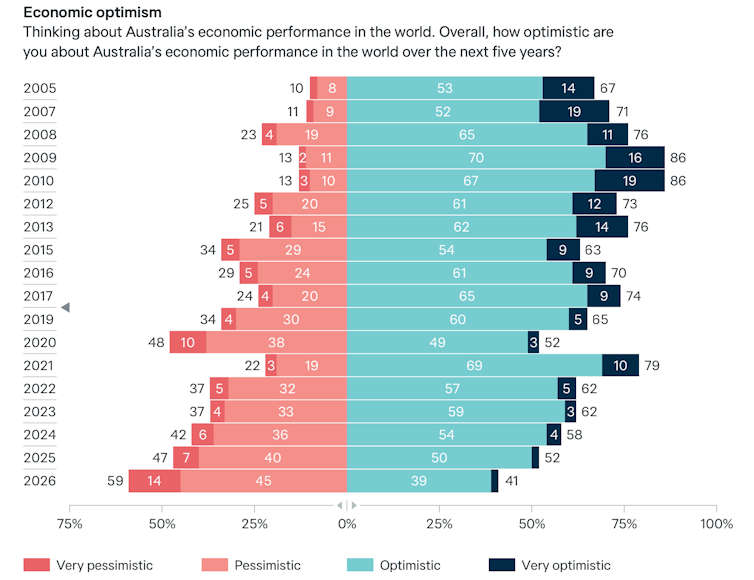
The survey also found 59 percent are pessimistic about Australia’s economic performance over the next five years, while 53 percent feel unsafe or very unsafe in the world. Nearly two-thirds believe the risks of artificial intelligence outweigh the benefits.
Trust in the United States to act responsibly fell to a record low 31 percent, while trust in China rose to 28 percent. Support for the US alliance remained strong at 73 percent, despite low confidence in US President Donald Trump.
Sources: The Conversation, The Guardian
Alan Greenspan, the former US Federal Reserve chair who dominated global markets during a near two-decade tenure, has died aged 100. His wife, NBC News chief Washington correspondent Andrea Mitchell, said he died at home in Washington from complications of Parkinson’s disease.
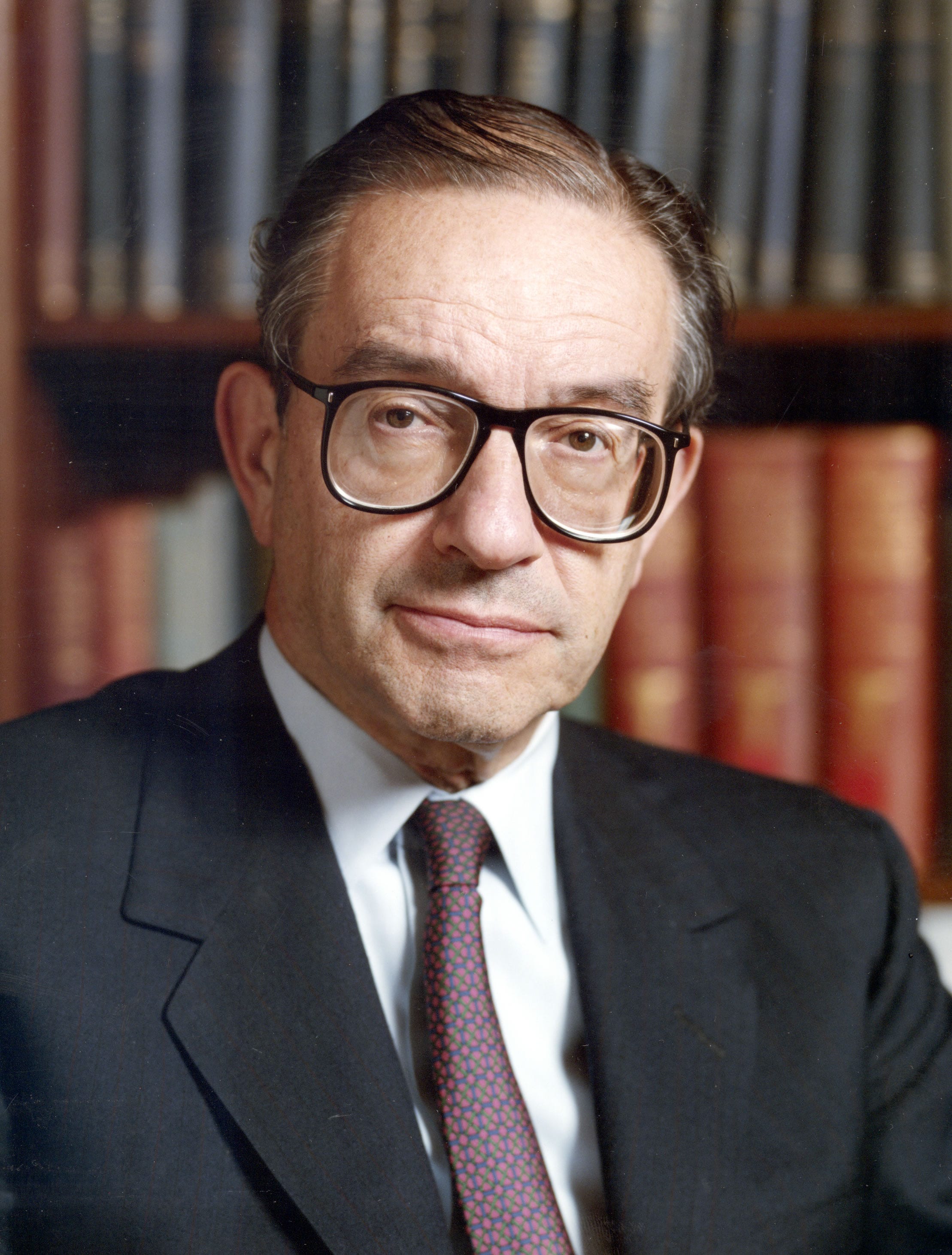
Greenspan led the Fed from 1987 until early 2006, steering the economy through the 1987 stock market crash, the Asian financial crisis, Russia’s 1998 debt default and the collapse of Long-Term Capital Management. His tenure coincided with a stock market boom, low unemployment and a long US expansion, helping build his reputation as a crisis manager.
That legacy was later reassessed after the 2008 financial crisis. Critics said his hands-off approach to financial markets and regulation helped lay the groundwork for the meltdown, while Greenspan told lawmakers in 2008 that his free-market ideology may have been flawed.
Sources: Bloomberg, FT

Mexican President Claudia Sheinbaum said Mexico wants to restart oil shipments to Cuba soon, seeking to provide relief as the island’s fuel crisis deepens. She said the shipments would be sent through commercial and privately owned firms rather than state-owned companies, and that Mexico would continue sending humanitarian aid.
Mexico had become a key fuel supplier after the US attack on Venezuela in January halted critical oil shipments, but deliveries were suspended after US President Donald Trump threatened tariffs on any country providing or selling oil to Cuba. Since then, only one Russian tanker carrying 730,000 barrels has reached Cuba, with the oil used up in one month.
Cuba produces only 40 percent of the petroleum it needs, worsening power outages, reduced work hours, water shortages, suspended surgeries, spoiled food and disruption to schools.
Sources: Associated Press, New York Times

A floating Chinese platform at Scarborough Shoal has renewed concern that Beijing is tightening control over one of the South China Sea’s most contested reefs. Philippine officials said the structure was more than 300 square feet, appeared to have an antenna and Chinese nationals onboard, and was at times accompanied by two Chinese vessels.
Oceanographers at the state-controlled Chinese Academy of Sciences said the platform was a temporary research facility studying coral reefs. Philippine officials said it had now been removed, but Philippine Defence Secretary Gilberto Teodoro Jr. said it would be worrying if it was a precursor to a more permanent presence.
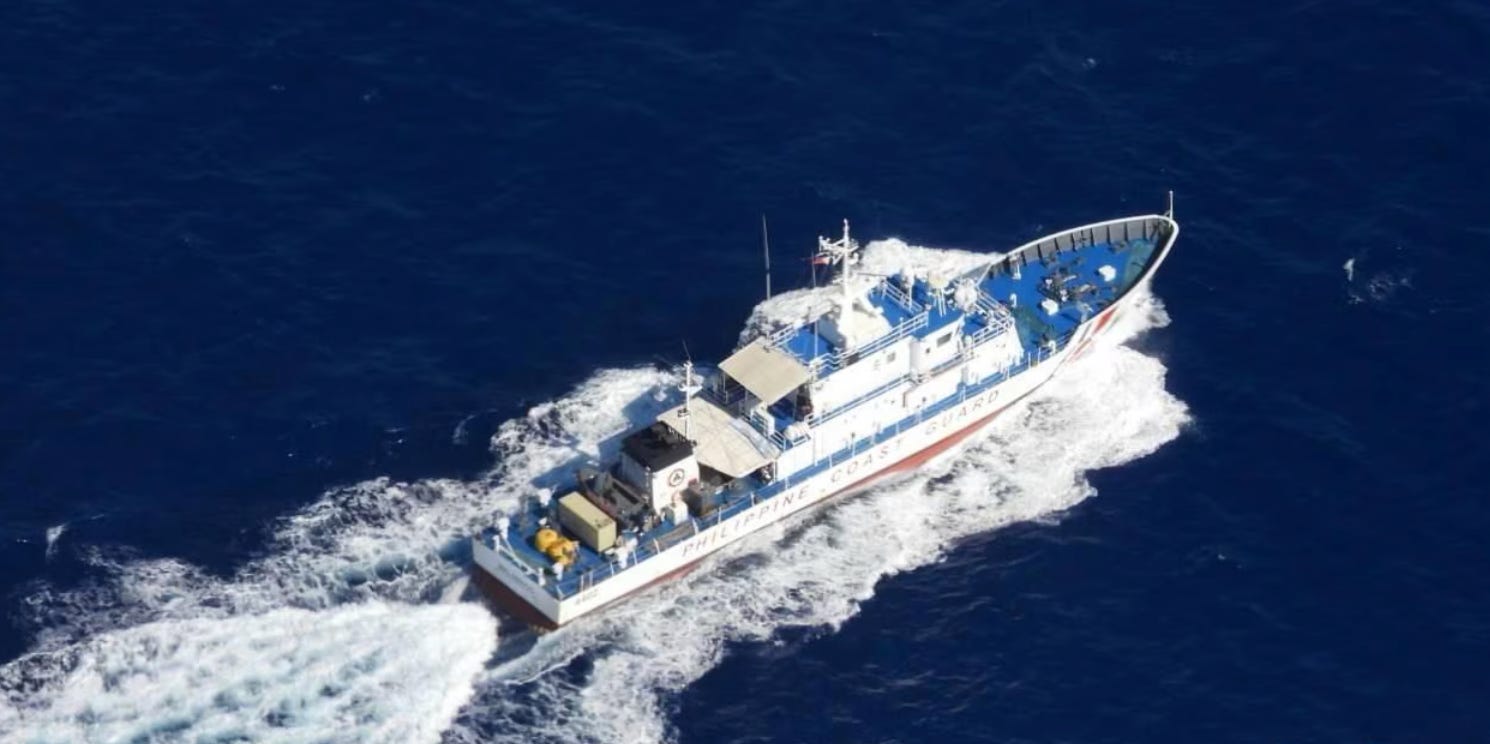
The Philippine Coast Guard also said it had challenged a Chinese coast guard vessel loitering off Luzon inside the Philippines’ exclusive economic zone, and vowed to maintain patrols to uphold maritime rights.
Sources: Wall Street Journal, ABS-CBN
Restacking or sharing this publication means more people can read it. Commenting extends the conversation. Liking shows your appreciation.
On this day …
On this day in 2016, voters in the United Kingdom backed leaving the European Union, with 51.9 per cent supporting Brexit.
The result ended more than four decades of British membership in the European project and triggered years of political upheaval, leadership changes and complex negotiations with Brussels.
Brexit also revived debates about sovereignty, globalisation and national identity, while influencing political movements across Europe and beyond.
A decade later, the referendum remains one of the most consequential democratic decisions of the twenty-first century. The effects of major political choices often unfold over many years.