


Iran Seizes Ships As Hormuz Standoff Deepens
US Widens Tanker Pressure Beyond Hormuz
Pentagon Warns Hormuz Mines Could Linger
Navy Shake-Up Exposes Pentagon Tensions
Lebanon Condemns Strike That Killed Journalist
Oil Restart Clears EU Loan for Kyiv
G7 Sidesteps Climate to Preserve Unity
Britain Warns State Cyber Threat Is Rising
Trump Team Reportedly Grades NATO Allies
Trump Claims Virginia Vote Was Rigged

Iranian forces seized two container ships in the Strait of Hormuz hours after Donald Trump extended an existing ceasefire indefinitely to allow Iran’s leadership time to produce a unified proposal to end the war. The Islamic Revolutionary Guard Corps Navy said it had taken the MSC Francesca and the Epaminondas to the Iranian coastline after accusing them of operating without permits and tampering with navigation systems.
The seizures followed earlier attacks on commercial vessels and coincided with Tehran’s decision not to attend a second round of negotiations in Islamabad. Vice President JD Vance’s planned participation was put on hold as the United States maintained its naval blockade despite the ceasefire extension. Foreign Ministry spokesman Esmaeil Baqaei cited “contradictory” messages from Washington.
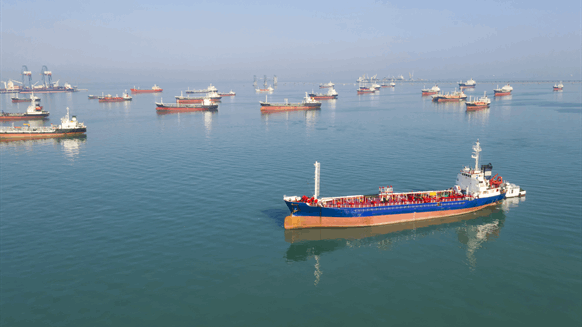
Traffic through the strait has been near halt for seven weeks, triggering fuel shortages and price spikes worldwide as both sides use control of the waterway to increase leverage during stalled diplomacy.
Sources: Washington Post, Bloomberg

The United States has intercepted at least three Iranian-flagged oil tankers in Asian waters and redirected them away from positions near India, Malaysia and Sri Lanka, expanding maritime pressure beyond the Strait of Hormuz. The vessels were identified as the “Deep Sea”, the “Sevin and the “Dorena”, while some shipping sources said U.S. forces may also have intercepted the “Derya”.
The move comes during an uneasy ceasefire with little sign of peace talks resuming. Washington has imposed a blockade on Iran’s trade by sea, while Iran has fired on ships and seized two container vessels in Hormuz after attacking them and another ship. U.S. Central Command said the “Dorena” was under escort by a U.S. Navy destroyer in the Indian Ocean after attempting to violate the blockade.
U.S. forces have directed 29 vessels to turn around or return to port since the blockade began, as the closure of Hormuz continues to disrupt oil and gas supply and deepen the global energy crisis.
Sources: Reuters, South China Morning Post

The Pentagon has told Congress it could take up to six months to fully clear the Strait of Hormuz of mines believed to have been deployed by Iran, pointing to disruption that could continue well beyond any ceasefire. Lawmakers were told in a classified briefing that Iran may have emplaced 20 or more mines in and around the waterway, some floated remotely using GPS technology and others laid by small boats.
The assessment suggests the economic consequences of the war may last far longer than any immediate diplomatic pause. Before the conflict, about 20 percent of the world’s oil moved through the strait. On Wednesday, the average cost of a gallon of gas in the United States was $4.02, up from $2.98 just before the war began in February.
The Pentagon said the reported six-month timeline was inaccurate, but the wider uncertainty has reinforced concern that shipping disruption and higher energy prices could persist deep into the year.
Sources: Washington Post, The Independent

Navy Secretary John Phelan was fired on Wednesday and will leave the administration effective immediately, ending months of infighting with senior Pentagon leaders over shipbuilding, personnel and the future direction of the Navy. Pentagon spokesman Sean Parnell announced the departure, while Undersecretary Hung Cao was named acting Navy secretary.
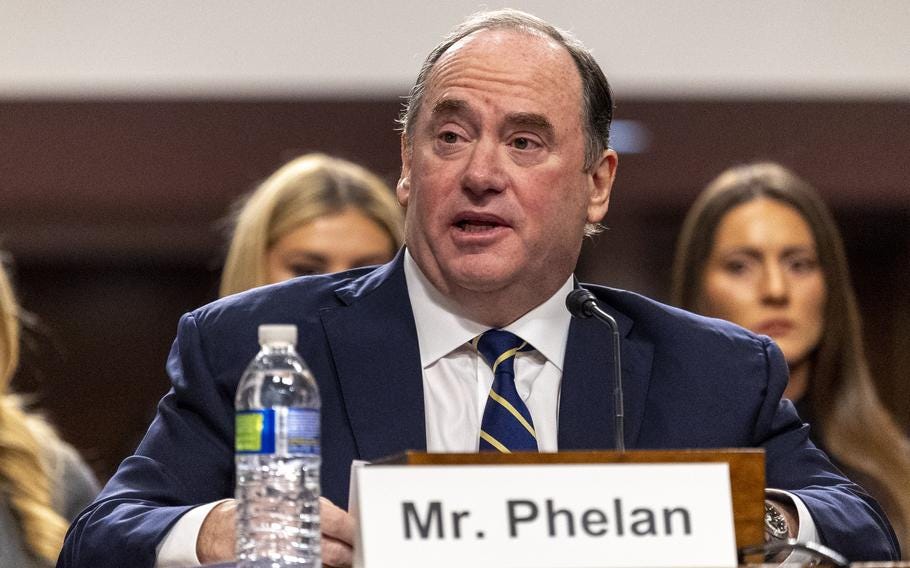
Phelan had championed the “Golden Fleet” and a new class of “Trump-class battleships”, but clashed with Secretary of Defense Pete Hegseth and Deputy Secretary Stephen Feinberg over the speed and handling of the shipbuilding programme. Feinberg had taken some decision-making on shipbuilding away from him, according to officials cited in the source material.
The dismissal comes as the Navy remains engaged in operations linked to the Iran war, including the blockade around Iranian ports and activity tied to the Strait of Hormuz. Senator Jack Reed said the abrupt removal sent the wrong signal at a moment when naval forces were stretched across multiple theatres.
Sources: New York Times, NBC News

An Israeli strike in southern Lebanon killed journalist Amal Khalil on Wednesday after rescuers were blocked from reaching the building where she was buried under rubble, according to Lebanese authorities and witnesses. Khalil had been covering developments near al-Tayri with photographer Zeinab Faraj when a strike hit the vehicle in front of them. They ran into a nearby house, which was then also struck.
Faraj was retrieved with a head wound, but Lebanese authorities said emergency workers were obstructed by further Israeli fire, including a sound grenade and live ammunition. Khalil was later pulled dead from the rubble by civil defence. Lebanon’s prime minister, Nawaf Salam, said the targeting of journalists and obstruction of rescue teams constituted “war crimes”.

Israel’s military said it had received reports that two journalists were injured, denied preventing rescue teams from reaching the area, and said it does not target journalists. The strike came during a fragile ceasefire, with further talks due on Thursday.
Sources: The Guardian, CNN

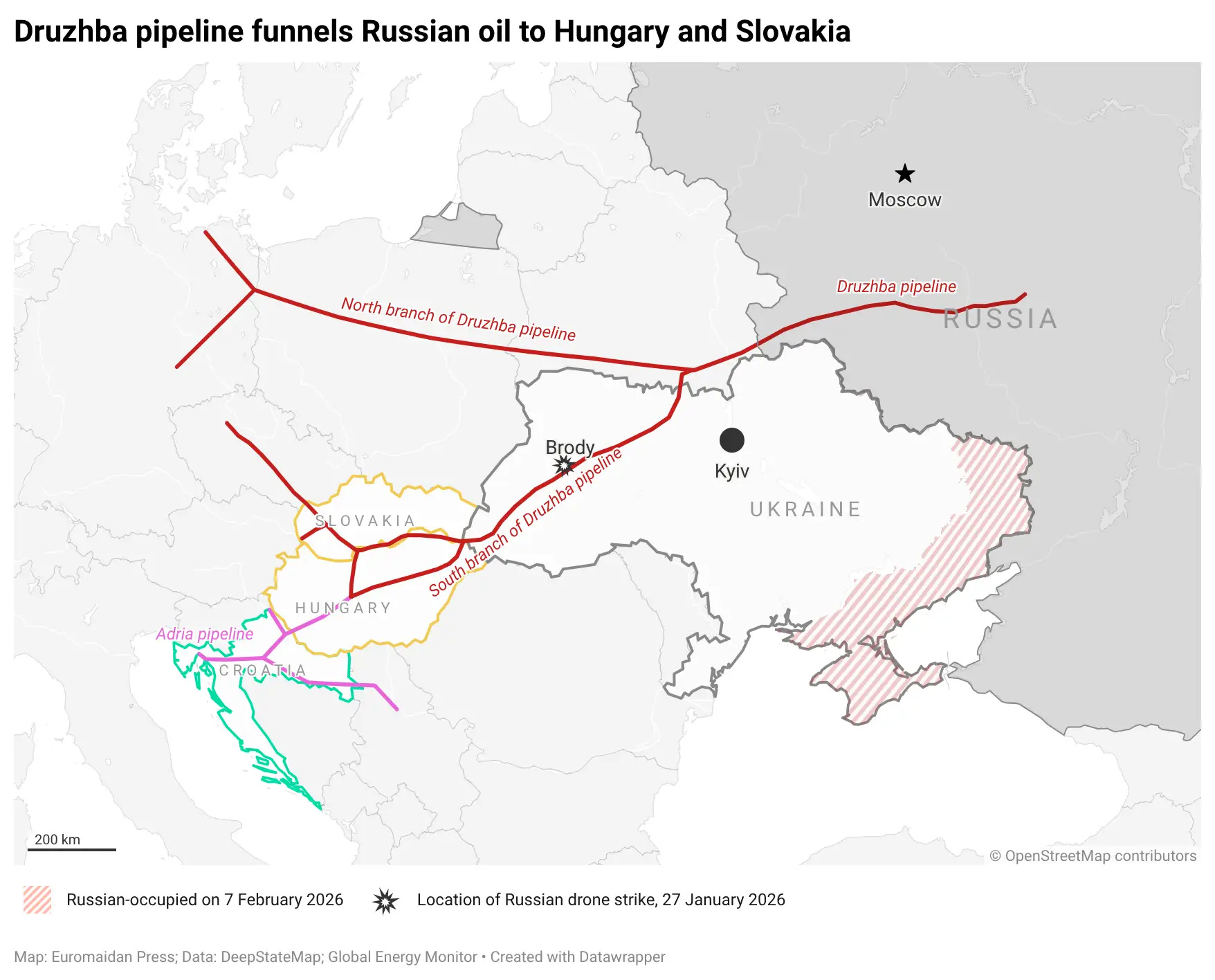
Russian oil resumed flowing through the Ukrainian section of the Druzhba pipeline on Wednesday after a halt lasting months, easing one of the most politically charged disputes in Europe’s war economy. The restart allowed Hungary to lift its veto on a 90 billion euro loan urgently needed by Ukraine, with EU ambassadors approving the package shortly after pumping resumed.
Hungary and Slovakia had blocked the loan while accusing Kyiv of delaying repairs to the pipeline after damage caused by a Russian strike, a charge Ukraine denied. Ukrainian pipeline operator Ukrtransnafta informed Hungary’s state oil company MOL that deliveries had resumed, and MOL said the first shipments should reach Hungary and Slovakia by Thursday.
The political backdrop had already shifted after Viktor Orban lost Hungary’s parliamentary election on April 12. Volodymyr Zelenskiy said the EU decision was “the right signal under the current circumstances”, adding that pressure on Russia and support for Ukraine had to remain sufficient.
Sources: Reuters, Washington Post

G7 environment ministers meet in Paris on Thursday with climate change deliberately left off the agenda in an effort to avoid a dispute with the United States. France’s ecology ministry said the two-day meeting would instead focus on “less contentious issues” and that the choice reflected Washington’s well-known position on climate since Donald Trump returned to office in 2025.
The meeting will bring together ministers from France, Italy, Canada, Japan, Germany and the United Kingdom, while the United States will be represented by Usha-Maria Turner from the Environmental Protection Agency. Discussions are set to cover ocean conservation, biodiversity funding, desertification, water pollution and forests.
The decision drew criticism from activists, who said it weakened collective action at a time of mounting environmental strain. The talks also come days before more than 50 countries gather in Colombia for the first global conference dedicated to phasing out fossil fuels.
Sources: Japan Times, France 24

Britain’s cyber authorities warned on Wednesday that the most serious cyberattacks against the U.K. are now being carried out by hostile states including Russia, Iran and China, as officials described a widening threat to businesses, infrastructure and private networks. Richard Horne, head of the National Cyber Security Centre, said the country could be targeted “at scale” if it became involved in an international conflict.
Horne said the centre now handles around four nationally significant cyber incidents a week, while Security Minister Dan Jarvis said more than 200 such incidents were handled last year, more than double the year before. Officials also said around 100 countries are believed to have procured cyber intrusion software capable of hacking British systems.
The warning comes as authorities argue that state-linked cyber operations are becoming more sophisticated, with artificial intelligence accelerating the discovery and exploitation of vulnerabilities and lowering the barrier for hostile actors to scale attacks.
Sources: Associated Press, Politico Europe

The Trump administration has reportedly drawn up a “naughty and nice” list of NATO allies, grading members according to how Washington views their defence contributions and support for U.S. priorities during the Iran war. The reported framework was prepared ahead of NATO Secretary General Mark Rutte’s visit to Washington and appears to extend Pete Hegseth’s earlier warning that “model allies” would receive “special favor” while others could face consequences.
The White House has not confirmed the list, but officials cited in the source material said possible actions could include shifting U.S. troops or blocking defence technology sales. Poland and Romania were described as likely to receive positive marks because of defence spending and support linked to the Iran war.
Donald Trump has repeatedly criticised NATO allies for not doing more to support the U.S. war effort, saying the alliance was not there when it was needed and that the United States would remember.
Sources: The Independent, Hindustan Times

Donald Trump alleged without evidence on Wednesday that Virginia’s vote to redraw its congressional map had been “rigged”, after voters approved a referendum that could help Democrats flip as many as four Republican-held U.S. House seats and improve their chances of taking control of the chamber in November. He blamed mail-in ballots for the outcome in a social media post.
The referendum was already under legal challenge. While the Supreme Court of Virginia allowed it to proceed, a county judge on Wednesday blocked the new map in a separate case brought by the Republican National Committee, ruling that lawmakers had not followed the rules required for the constitutional amendment behind the redraw.
Virginia Attorney General Jay Jones said he would ask the state’s Court of Appeals to overturn the order, which called the ballot language “flagrantly misleading” and blocked certification of Tuesday’s referendum results.
Sources: Reuters, France 24
On this day …
On this day in 2005, the first video was uploaded to the newly launched platform YouTube, marking the beginning of a transformation in how information, entertainment, and political communication were distributed worldwide.
Over the following years, online video became a central channel for journalism, activism, education, and public debate, reshaping the relationship between audiences and traditional media institutions.
The platform helped accelerate the shift toward user-generated content and algorithm-driven visibility, influencing elections, social movements, and cultural exchange across borders.
Did platforms like YouTube strengthen public participation in media, or fundamentally change who controls the flow of information?