


Saudi Airport Attack Prompts US Diplomatic Withdrawal (Middle East)
Arab Turnout Could Decide Israel’s Election (Politics)
Gulf Oil Exports Recover Despite Rising Attacks (Middle East)
Israeli Air Exercise Raises Risk Of Renewed Iran War (Middle East)
US And Israel Plan Fresh Iran Strikes After Elections (Conflict)
Putin Frees American As US-Russia Ties Warm (Diplomacy)
Russian Missiles Strike Kyiv As Peace Talks Resume (Conflict)
Haitian Gangs Seize Four Salvadoran Security Personnel (Caribbean)
UN Warns Climate Targets Are Slipping Further (Climate)
Meta Ordered To Pay $25 Billion Over Privacy Claims (Technology)
A succinct daily briefing delivered each weekday to help you stay on top of the stories shaping the world.

An attack on King Fahd International Airport in Dammam killed one person and injured eight on Wednesday, as Houthi attacks continued across Saudi Arabia. The country’s civil aviation authority said the wounded were taken to hospital. Saudi authorities blamed the Houthis, although the group had not immediately claimed responsibility.
The attack followed strikes on Riyadh’s King Khalid International Airport earlier this month. An October 10 attack killed at least 12 people and injured hundreds, while another on October 11 killed one and injured 11. Saudi officials also reported intercepting drones in the east, including one targeting the Shaybah oilfield, where two people were killed.
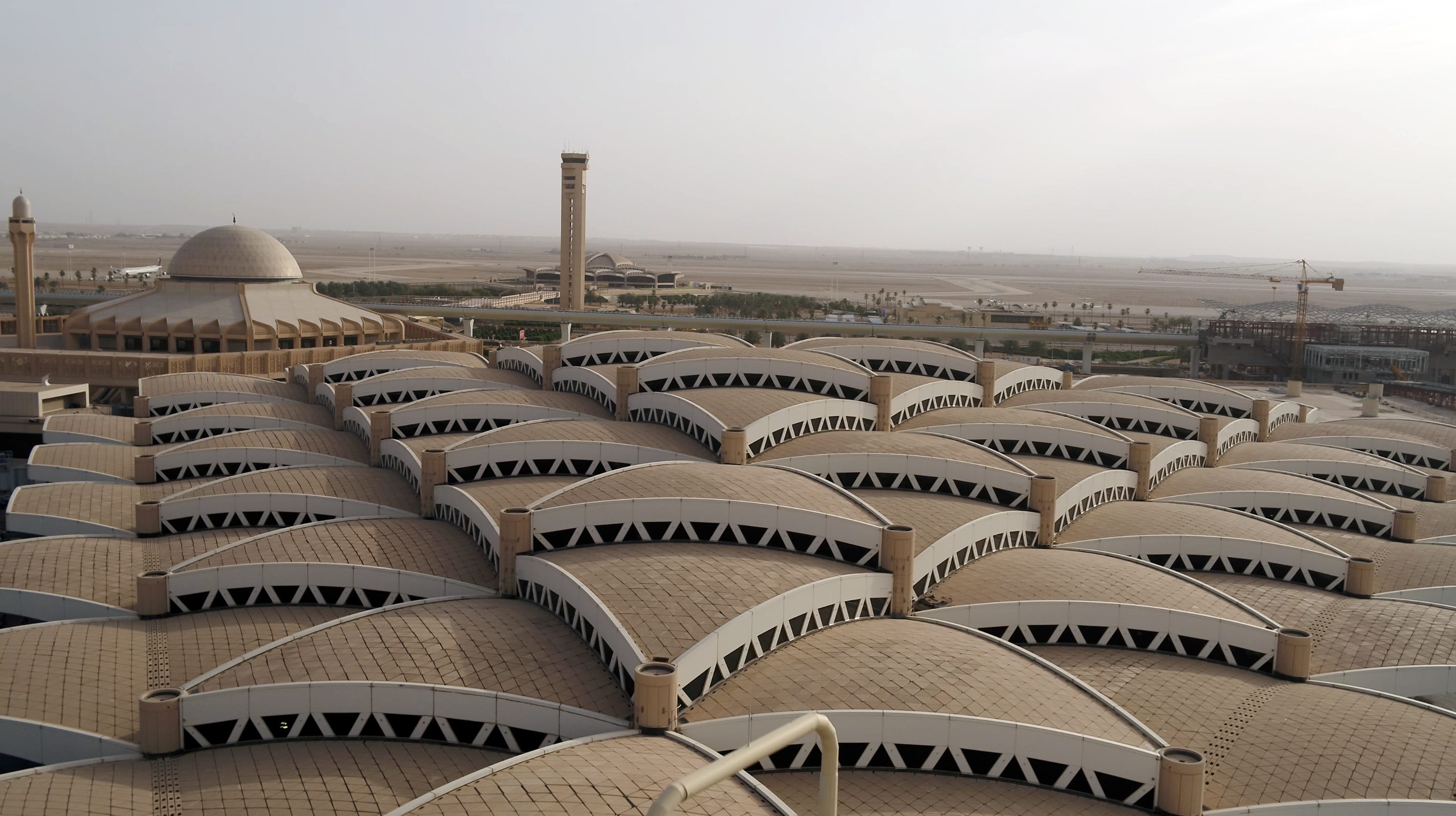
The US State Department ordered nonemergency government employees and their families to leave Saudi Arabia, citing attacks on airports and critical infrastructure. The US embassy warned of further possible attacks. The Houthis have also threatened shipping near the Bab al-Mandeb Strait and attacked Saudi oil pipelines.
Sources: Al Jazeera, Wall Street Journal

Israel’s October 27th election could hinge on Arab voters, whose turnout may determine whether Prime Minister Benjamin Netanyahu remains in power. Pollsters expect participation among Arab citizens to reach 63%, up from 56% in 2022. Their parties could hold the balance of power, with neither major bloc projected to secure the 61 seats needed for a majority.
Opposition leader Gadi Eisenkot has ruled out governing with Arab parties, although Ra’am leader Mansour Abbas hopes electoral arithmetic will force a reconsideration. The Joint List has indicated it could support an alternative government from outside a coalition. Failure to form a government could leave Netanyahu in office pending another election.
Palestinians in Gaza and the West Bank, who cannot vote, are also hoping for change. Eisenkot opposes Palestinian statehood but promises to curb settler violence and engage with plans to rebuild Gaza. Many Palestinians expect limited improvements rather than a fundamental change in Israeli policy as a result of the election and regardless of who wins power.
Sources: New York Times, Times of Israel

Middle Eastern oil exports have rebounded towards prewar levels despite increasingly frequent attacks on shipping, as producers adapt their routes to keep crude moving. Kpler estimates shipments from Gulf producers excluding Iran averaged 24.6mn barrels daily in the week to October 18, exceeding the prewar average of 23.3mn. Rival Vortexa data shows a smaller recovery, highlighting difficulties tracking vessels operating without positioning signals.
Saudi Arabia has diverted substantial volumes through its Red Sea port of Yanbu, while producers are using tanker convoys and ship-to-ship transfers to bypass dangerous waters. Shipments through the Strait of Hormuz remain more than a third below prewar levels.
The recovery remains precarious. Maritime authorities report a sharp increase in attacks during October, including strikes on two vessels near Iraq and Oman this week.
Meanwhile, Brent crude reached its highest level since May on Tuesday, despite the apparent recovery in regional exports.
Sources: Bloomberg, FT

Dozens of Israeli fighter jets flew towards Iran’s border on Monday in an exercise described to Washington as a show of force intended to deter Iranian attacks before Israel’s October 27 election. The aircraft, accompanied by refuelling planes, crossed Syrian and Iraqi airspace before turning back. Israel notified the US beforehand, according to Israeli and American officials.
Some US sources believed Israel hoped Iran would fire on the aircraft, providing a justification for renewed strikes. Other officials described the sortie as routine, although they acknowledged the risk of miscalculation. Iran’s Revolutionary Guard-linked Fars News Agency subsequently reported that Tehran was assuming a US-Israeli attack was certain.
On Wednesday, Israeli Prime Minister Benjamin Netanyahu accused Iran’s supreme leader Mojtaba Khamenei of permitting renewed nuclear weapons development and said he had instructed security agencies to overthrow Iran’s government. President Donald Trump had earlier declined Netanyahu’s proposal for another military operation before the elections.
Sources: Axios, Jerusalem Post

The US and Israeli militaries are preparing plans for renewed strikes against Iran after the American midterm elections, although President Donald Trump has repeatedly rejected proposals to resume major combat. Defence Secretary Pete Hegseth discussed potential operations with Israeli Prime Minister Benjamin Netanyahu this week, while both militaries increased exercises over Iraq.
Possible targets include nuclear facilities, missile and drone arsenals and energy infrastructure. American forces are assembling additional assets for early November, and some planners believe a three-day campaign could force Iranian concessions. Other officials question whether renewed attacks would succeed where earlier operations and sanctions have failed.
Iran has warned that retaliation could extend to data centres and underwater internet cables, and that fighting would not be brief. Tehran has resisted concessions on its nuclear programme, while Washington continues diplomatic negotiations over that issue and the Strait of Hormuz. Trump’s decision on further strikes remains uncertain.
Sources: New York Times, Anadolu Agency
Please Restack this post - it will help it reach more readers interested in the world.

Russia released jailed American Stephen Hubbard during talks between President Vladimir Putin and US envoy Steve Witkoff in St Petersburg on Wednesday. President Donald Trump said he had personally requested the 74-year-old former teacher’s freedom and that no prisoner exchange was required. Witkoff praised Putin as a humanitarian and thanked him for an agreement restoring Russian diesel exports to the US.
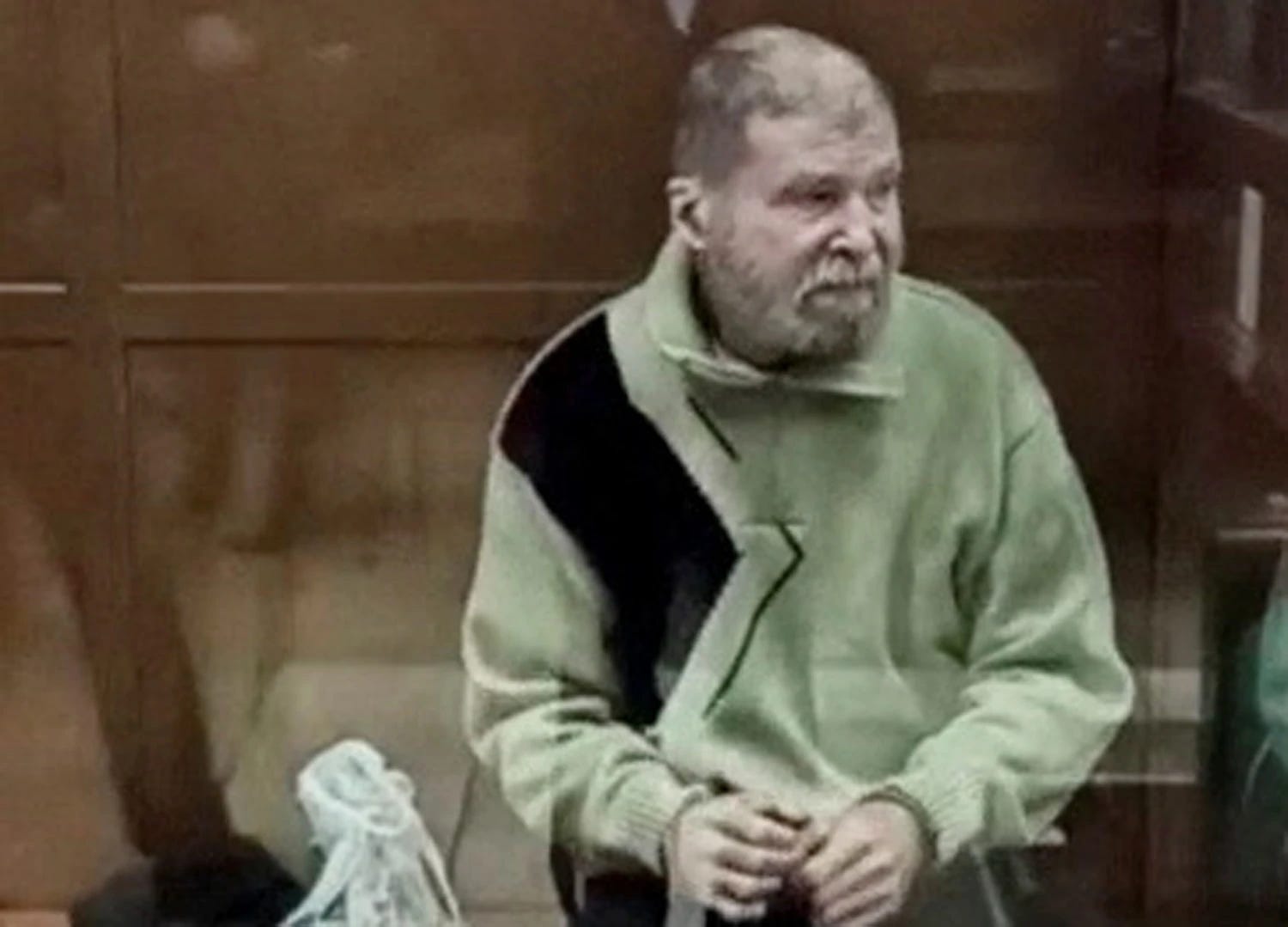
The meeting followed Washington’s decision to ease Russian sanctions and growing tensions with Kyiv over restrictions on intelligence-sharing and Ukraine’s access to Starshield satellite communications. Ukrainian President Volodymyr Zelenskyy said missile warnings had resumed, but Starshield restrictions remained.
Witkoff described the talks as constructive and said further discussions on security guarantees would follow. Russia agreed in principle, although Moscow has shown little willingness to halt attacks or abandon its demand for full control of Donetsk. The diplomatic warmth has yet to produce a breakthrough for Ukraine.
Sources: BBC, The Guardian

Russian missiles struck Kyiv overnight, injuring six people hours after Moscow said it was willing in principle to resume US-mediated peace talks. Four of the injured required hospital treatment. US President Donald Trump described negotiations as the closest yet to ending the war, following envoy Steve Witkoff’s meeting with Russian President Vladimir Putin in St Petersburg.
Kremlin aide Yuri Ushakov suggested trilateral talks could resume around mid-November, focused on postwar security guarantees, but dismissed Ukrainian and European proposals as lacking substance. Ukrainian President Volodymyr Zelenskyy said Kyiv supported renewed talks and would accept a ceasefire freezing the current front line, with security guarantees discussed afterwards.
The diplomatic exchanges came amid deteriorating US-Ukrainian relations over Russian diesel sanctions, intelligence-sharing and satellite internet restrictions. Zelenskyy said intelligence sharing had resumed. Russia continues its strikes on Ukrainian cities, while Moscow maintains its territorial demands in eastern Ukraine.
Sources: BBC, France 24

El Salvador has launched a military operation to rescue four aviation technicians from a UN-backed security force whom Haitian gangs are holding hostage. President Nayib Bukele said the men must be returned unharmed after they disappeared on Sunday when armed gangs ambushed their vehicle outside Port-au-Prince. The vehicle caught fire, forcing its occupants to flee.
Bukele said the Salvadorans were pilots and technical personnel responsible for medical evacuations rather than combat operations. He warned gang leaders of further consequences unless all four were released alive. Fighting during rescue efforts has already injured four members of the international force.
The abduction exposes the difficulties confronting Haiti’s Gang Suppression Force, which has about 2,000 personnel against a planned strength of 5,500. Gangs control much of the capital, while the force has struggled to expand and contain violence. Its representative reported hostile incidents rising from two to 15 in a month.
Sources: New York Times, Arab News

UN projections now put global warming at 2.6C above pre-industrial levels by 2100 even if countries fulfil their climate pledges, up from last year’s forecast. The UN Environment Programme says exceeding the Paris Agreement’s 1.5C limit is now unavoidable, with current policies pointing to 2.8C of warming.
The report attributes the deteriorating outlook partly to the United States’ withdrawal from the Paris Agreement and rising American emissions. US emissions increased by 133 million tonnes of CO2 equivalent in 2025, driven by electricity demand and renewed coal generation. Global emissions remained broadly unchanged at 58.4 billion tonnes.
Returning temperatures towards 1.5C would require emissions cuts of 18% by 2030 and 69% by 2040, alongside large-scale carbon removal. The report warns those removal methods are costly and risky. Solar expansion has exceeded expectations but fossil fuels still supply most of the world’s energy.
Sources: Associated Press, RFI

A New Mexico judge has ordered Meta to pay $25 billion for misleading Facebook users about control of their personal data. The ruling follows a jury finding that the company committed 43 million violations of state consumer protection law following the Cambridge Analytica scandal. Judge Francis Mathew said the deception was deliberate over years.

The penalty, reduced from an initial calculation of $219 billion, is Meta’s largest to date. New Mexico will direct the award to a public education fund. Meta disputes the ruling and plans to appeal, arguing that the case seeks to impose restrictions on online speech.
The decision adds to a series of legal setbacks for the owner of Facebook, Instagram and WhatsApp. New Mexico has also secured penalties over child safety, while Meta reached a multistate settlement this year. The case shows how consumer protection laws are used to challenge technology companies over their treatment of users.
Sources: New York Times, BBC
Restacking or sharing this publication means more people can read it. Commenting extends the conversation. Liking shows your appreciation.
On this day …
On this day in 1962, US President John F. Kennedy addressed the nation, revealing that the Soviet Union was installing nuclear missiles in Cuba, just 150 kilometres from the American mainland.
Kennedy announced a naval quarantine to prevent further missile deliveries and demanded the removal of existing weapons.
The confrontation brought the two superpowers closer to nuclear war than at any other point during the Cold War.
After six days of intense diplomacy, Soviet leader Nikita Khrushchev agreed to withdraw the missiles in exchange for American assurances concerning Cuba and a secret agreement to remove US missiles from Turkey.
The crisis demonstrated how nuclear deterrence depends as much on communication and restraint as military strength.
Would we trust the leaders of Russia and the USA to act in such a mature way today or would the result be very different?