


US Iran Talks Link Hormuz And Lebanon (Diplomacy)
Israel Says Troops Will Stay In Lebanon (Conflict)
Trump Intervention Deepens Starmer Crisis (UK)
Crimea Halts Civilian Fuel Sales (Conflict)
Tusk Warns Poland Ukraine Rift Is Strategic Error (Europe)
China Targets US Defence And Rare Earth Firms (China)
Trump Backed Outsider Wins Colombia Presidency (Politics)
France Restricts Alcohol As Heatwave Builds (Climate)
Sánchez Faces New Pressure As Wife Faces Trial (Europe)
Australia Seizes Record Cocaine Haul (Australia)
A succinct daily briefing delivered each weekday to help you stay on top of the stories shaping the world.
US and Iranian negotiators entered a second day of talks in Switzerland after Qatar and Pakistan said a communication line had been formed to avoid incidents and enable safe passage for commercial vessels through the Strait of Hormuz.
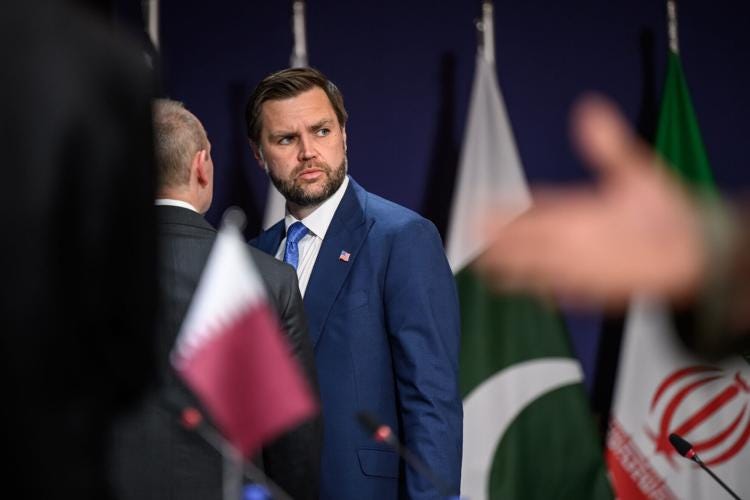
The mediation followed a volatile opening day. President Donald Trump threatened Iran over its support for Hezbollah in Lebanon, prompting Iranian state media to say the delegation paused talks and left the negotiation venue. Vice President JD Vance later said progress had been made, while technical talks were set to continue for the rest of the week at Bürgenstock.
The talks now link Hormuz, Lebanon and Iran’s nuclear programme. The preliminary deal signed last week opens the strait, sets up 60 days of nuclear talks and calls for an end to fighting in Lebanon. Iran says wider talks will not advance unless that war ends.
Sources: Wall Street Journal, The Hill

Israeli Defence Minister Israel Katz said soldiers were free to act without restriction to eliminate threats in Lebanon, and that troops would remain in all positions in what Israel calls a security zone extending about 10km into southern Lebanon. Prime Minister Benjamin Netanyahu said forces would remain there as long as necessary to protect northern Israeli communities.
A ceasefire with Iran-backed Hezbollah took effect on Friday after months of escalating violence, but Israeli strikes on Saturday killed at least 20 people in Lebanon, according to Lebanon’s state news agency. Israel said the strikes responded to projectiles fired at its troops, while a Hezbollah official said the group remained committed if Israel adhered to the truce.
Lebanon is now a focal point in US-Iran peace talks in Switzerland, after Washington and Tehran signed a framework to halt their war. The dispute leaves the ceasefire dependent on forces that remain outside the talks.
Sources: Reuters, RTE
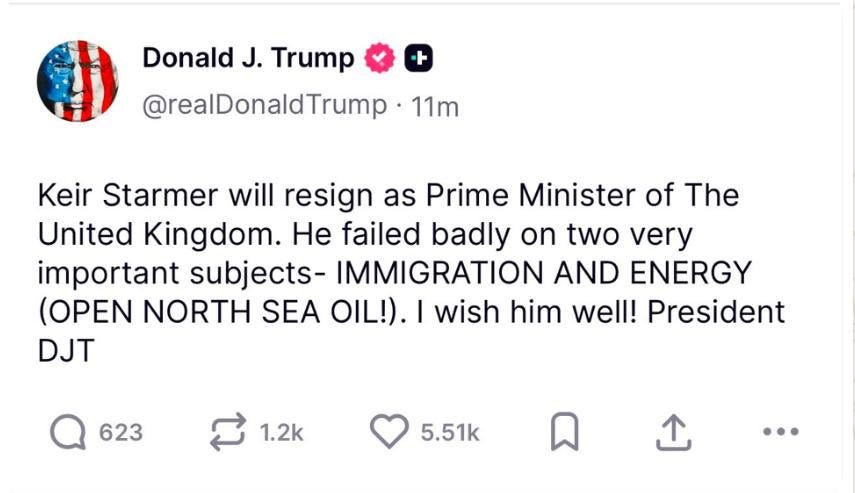
Expectation built that Prime Minister Keir Starmer could set out a resignation timetable as soon as Monday, after U.S. President Donald Trump posted that he would resign before any announcement from Downing Street.
Trump said Starmer had failed on immigration and energy policy, an intervention that stunned some British observers and raised questions because Downing Street said the two leaders had not spoken over the weekend. Starmer’s office declined to comment on resignation reports, while Business Secretary Peter Kyle said Starmer was reflecting on political realities, challenges and opportunities.
The pressure follows Labour’s heavy local election losses in May and Andy Burnham’s victory in a special election for Parliament. Burnham is due to be sworn in on Monday, while Wes Streeting has said he would run if there is a contest. If Starmer leaves, Britain would face another premature premiership change.
Sources: Washington Post, Associated Press
Officials in Russia-occupied Crimea suspended civilian gasoline sales Sunday after Ukrainian attacks on fuel supplies across the Black Sea peninsula. At the end of May, authorities had already restricted sales to 20 litres per vehicle owner per week, using prepaid coupons, and motorists queued for hours to refuel.
Kremlin-appointed governor Sergey Aksyonov said overnight Ukrainian strikes killed four people and wounded 28, and later said fuel would be sold only to government agencies. Ukrainian President Volodymyr Zelenskyy said a Crimean oil depot and an oil transport facility in Russia’s Krasnodar region were among the targets, describing the attacks as long-range sanctions against Russia’s energy infrastructure.
Crimea had already faced periodic shortages, but the current crisis is the worst since Russia annexed the peninsula in 2014. The disruption underscores Ukraine’s ability to damage Russian logistics while Moscow’s recent advances have slowed and talks on ending the war remain frozen.
Sources: NPR, France 24
Polish Prime Minister Donald Tusk warned that a worsening political dispute with Ukraine was a strategic mistake that would harm both countries, after an escalating row over the commemoration of World War II-era fighters. The clash intensified when President Karol Nawrocki stripped President Volodymyr Zelenskyy of Poland’s highest state honour, which Zelenskyy returned.
Tusk said he was trying to minimise losses and reduce tensions, while warning that the conflict would damage both sides economically, geopolitically and reputationally. Zelenskyy said Ukraine and Poland could only be partners and friends and warned that political struggles could lead to dangerous escalation.
The dispute threatens to overshadow the Ukraine Recovery Conference in Gdansk, where companies, donors and officials are due to discuss reconstruction. Relations have already cooled despite Poland remaining the main hub for western military assistance to Ukraine.
Sources: Bloomberg, Reuters
Restacking this post will help it reach more readers interested in the world.
China imposed export controls on 10 US companies involved in defence and rare earths, and barred government procurement agencies from buying products made by 46 American firms, escalating tensions between the world’s two largest economies.
China’s commerce ministry said the export controls were a direct response to Washington’s expansion of its military-linked company list and were aimed at safeguarding national security. The targeted firms include Aveox, Oshkosh Defense, MP Materials and USA Rare Earth. The procurement ban includes Lockheed Martin, Raytheon and Boeing’s defence division, although US-invested enterprises operating in China are exempt.
The measures follow a US blacklist update that added Chinese companies including Alibaba, Baidu and BYD. Beijing has repeatedly accused Washington of using national security concerns to suppress Chinese firms, while the dispute now extends beyond tariffs and technology into defence supply chains and strategic minerals.
Sources: Times of India, Wall Street Journal
Trump-backed lawyer Abelardo de la Espriella narrowly won Colombia’s presidential run-off, taking 49.66 per cent of the vote against left-wing Senator Ivan Cepeda’s 48.70 per cent with almost all polling centres reporting.
De la Espriella, who has never held public office, promised an iron fist approach against criminal groups after a campaign marked by guerrilla bomb attacks and the murder of a leading conservative presidential candidate. He told supporters that a new era was beginning, but also said he would govern for all Colombians and respect freedom and institutional order.
The result swings Colombia back to the right after four years under President Gustavo Petro and is expected to improve strained relations with Washington. Cepeda stopped short of conceding, saying he would wait for validation, while protests by his supporters broke out in Cali and Bogotá.
Sources: South China Morning Post, The Guardian
France restricted public drinking and cancelled trains, concerts and sports events as an exceptional heatwave spread across parts of Europe. About a third of France was under red alert on Sunday, with temperatures reaching 40C in some areas, while Monday’s forecast was hotter.
The government banned alcohol consumption in public spaces in red-alert departments and ordered organisers of music events to limit drinking during France’s annual Fête de la Musique. Health Minister Stéphanie Rist said alcohol and high temperatures do not mix well. Authorities also ordered 845 schools to close Monday, mobilised emergency services and military forces for wildfire readiness, and tightened surveillance of water supplies to nuclear reactors.
The heatwave also affected Spain, Italy, Germany and the UK, where warnings were issued for southern England and parts of Wales. Multiple drownings were reported as people sought relief from the heat.
Sources: PBS, Le Monde
Begoña Gómez, wife of Spanish Prime Minister Pedro Sánchez, will stand trial on charges of corruption and influence peddling after a judge ruled there was enough evidence for the case to proceed.
Judge Juan Carlos Peinado charged Gómez with embezzlement, corruption, misappropriation of funds and influence peddling, ordered her to surrender her passport and required her to report to court every 15 days. Gómez and Sánchez have denied wrongdoing, while Sánchez has described the case as politically motivated.
The ruling deepens pressure on Sánchez, whose Socialist Party headquarters was searched last month and whose allies and relatives have been drawn into separate investigations. Opposition figures called for an early election or resignation, while the cases have weakened Sánchez’s fragile minority coalition. Spain’s next election is due by August next year, but commentators expect the coalition to collapse before then.
Sources: New York Times, CNN
Australian police seized 2.7 tonnes of cocaine from an underground bunker system in western Sydney, the country’s largest such bust, with an estimated street value of A$816 million.
The drugs were found Friday in compartments concealed beneath false floors in three shipping containers at a property in Londonderry. Two men aged 21 and 25 were arrested at the scene after allegedly trying to flee and were charged with possessing a commercial quantity of an unlawfully imported border-controlled drug. They face life in prison if convicted.
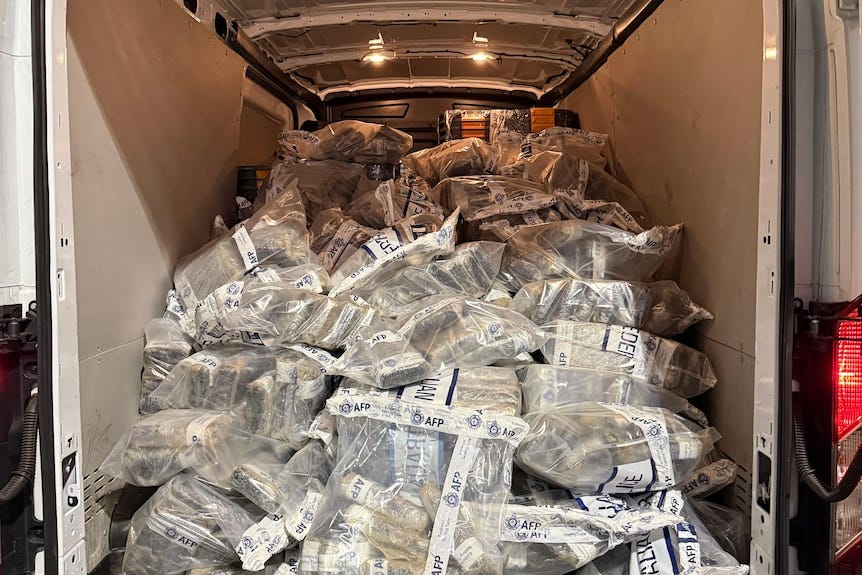
Police said the cocaine was smuggled into Australia via Midge Point in North Queensland on the orders of an organised crime group. The raid was part of Operation Minjiang, launched after 40kg of cocaine was found floating off a boat ramp. An alleged mother vessel has been detained in Solomon Islands.
Sources: BBC, ABC
Restacking or sharing this publication means more people can read it. Commenting extends the conversation. Liking shows your appreciation.
On this day …
On this day in 1986, Argentina defeated England 2-1 in the World Cup quarter-final in Mexico City in a match remembered for Diego Maradona’s two extraordinary goals.
One, later known as the “Hand of God”, was scored with his hand and escaped the attention of officials.
The second, completed after a run from inside his own half, is widely regarded as one of the greatest goals in football history.
Coming four years after the Falklands War, the match carried political and emotional significance beyond sport and became part of the national narratives of both countries.
Some sporting moments become part of history itself.