


US Extends Iran Air Campaign Into 11th Night (Conflict)
Zelenskyy Reshuffles Military After Protests (Europe)
India Student Protests Open Political Space (India)
Israel Builds Barrier Dividing Gaza Territory (Middle East)
Trump Approves Saudi Nuclear Deal (Middle East)
France Approves Social Media Ban For Under 15s (Technology)
Rubio To Meet China’s Wang At ASEAN Talks (Geopolitics)
Ozel Launches Breakaway Party After Ouster (Politics)
Healthy Diet Out Of Reach For Billions (World)
Burnham Moves Fast In First Day As PM (Politics)
US Extends Iran Air Campaign Into 11th Night
The United States completed an 11th consecutive night of strikes on Iran early Wednesday, targeting aircraft hangars, drone storage sites, military operations centres, maritime capabilities and logistics infrastructure as the conflict continued to overshadow diplomatic efforts. US Central Command said the attacks were intended to further degrade Iran’s ability to threaten commercial shipping in the Strait of Hormuz.

Diplomatic efforts also appeared to stall. Iranian Interior Minister Eskandar Momeni travelled to Pakistan, which helped broker last month’s interim agreement, while President Donald Trump said the United States had “no interest in meeting” until Iran was prepared for meaningful talks. Trump also indicated further strikes could target an area near a major Iranian nuclear enrichment site.
The conflict continued to disrupt regional shipping and energy markets. CENTCOM said Iran had attacked more than 30 commercial vessels in the Strait of Hormuz, while crude oil traded above US$92 a barrel.
Sources: Reuters. Associated Press
Zelenskyy Reshuffles Military After Protests
Volodymyr Zelenskyy has fired Ukraine’s commander-in-chief Oleksandr Syrskyi and appointed Mykhailo Drapatyi to lead the armed forces, in a move aimed at defusing a political crisis triggered by nationwide protests. The unrest followed the removal of defence minister Mykhailo Fedorov, whose clash with Syrskyi over military reform and technology had exposed divisions within Ukraine’s leadership.
Zelenskyy said Drapatyi would oversee a reorganisation of the army and help “reset” the defence against Russia, while continuing long-range drone strikes on Russian infrastructure. He credited Syrskyi with leading the defence of Kyiv and operations inside Russia but acknowledged the need to address friction, mobilisation challenges and front-line management.
The president has also offered Fedorov a prominent government role to unify Ukraine’s technology sector, though it remains unclear if he will accept. The reshuffle seeks to stabilise leadership as protests demand accountability and a more effective war strategy.
Sources: The Guardian, Al Jazeera
India Student Protests Open Political Space
Student protests over exam paper leaks and corruption have drawn tens of thousands on to the streets of New Delhi, exposing youth anger and creating a rare political opening for India’s opposition. Demonstrators were met with batons and tear gas as they marched on parliament, with dozens injured and detained, but thousands returned the next day, vowing to continue.
Opposition parties, including Congress leaders Rahul Gandhi and Priyanka Gandhi Vadra, have rallied behind the movement, calling for the resignation of education minister Dharmendra Pradhan. Gandhi said “an attack on students is an attack on every Indian family”, while analysts say the protests could help opposition groups attract young voters frustrated by unemployment and exam failures.
The Cockroach Janta Party, which sparked the movement, insists it is not political, even as it seeks opposition support. Analysts warn that political involvement risks overshadowing student demands, but may also provide resources and national visibility as elections approach.
Sources: Reuters, New York Times
Israel Builds Barrier Dividing Gaza Territory
Israel is constructing a more than 23 kilometre earthen barrier across Gaza, separating the over half of the territory it controls from the rest, according to satellite imagery confirmed by the military. The barrier follows the so-called yellow line set under the October ceasefire, originally intended as a temporary division pending a broader withdrawal.
Construction has accelerated in recent months, with sections extending rapidly through demolished Palestinian communities and linking stretches from southern Gaza towards the north. The military said the barrier forms part of a “security zone” designed to prevent infiltration and protect Israeli forces and nearby communities, while declining to detail its full route or scope.
As ceasefire talks stall, Palestinians fear the line is becoming a permanent border. Israeli operations have levelled large areas east of the line, while most of Gaza’s population is concentrated in crowded coastal zones, dependent on aid.
Sources: Associated Press, Jerusalem Post
Trump Approves Saudi Nuclear Deal
Donald Trump has approved a 30-year nuclear agreement with Saudi Arabia that would establish a civilian nuclear programme and potentially allow uranium enrichment on Saudi soil. The deal, worth tens of billions of dollars, is designed to give American companies a central role in building the kingdom’s nuclear infrastructure while excluding foreign competitors.
Under the accord, U.S. firms would construct reactors and could build an enrichment facility if a joint study deems it necessary, with safeguards intended to prevent military use. The agreement is expected to be submitted to Congress, though blocking it would require a two-thirds majority.
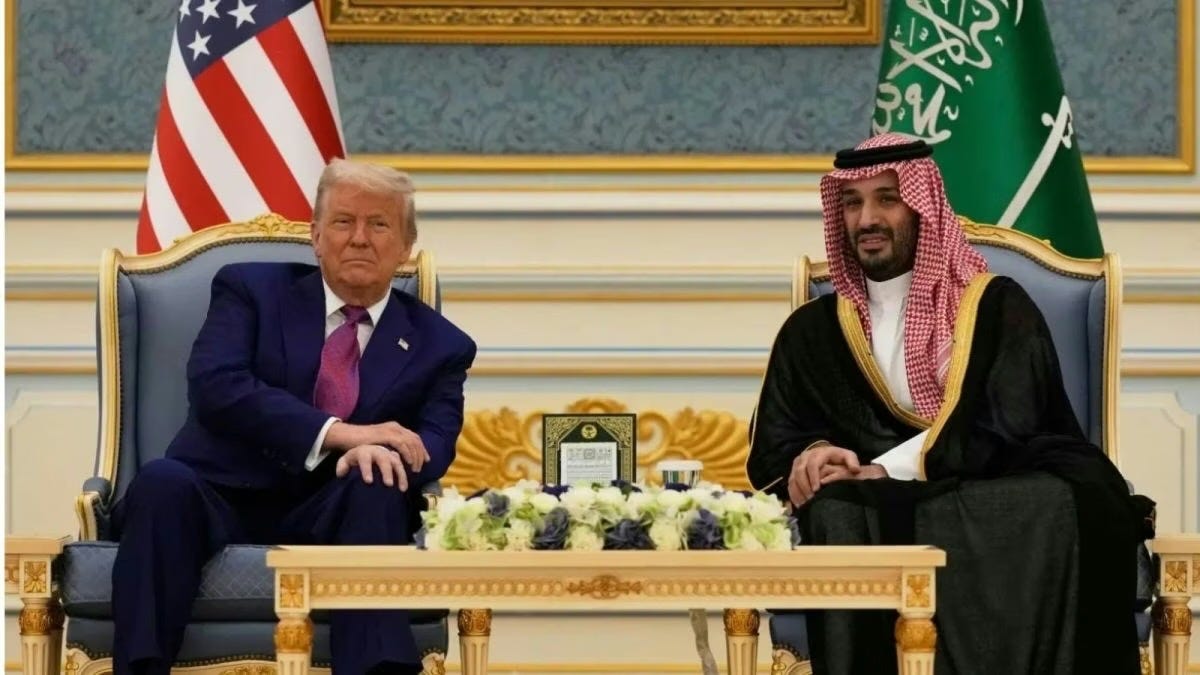
Supporters argue the deal will strengthen U.S.-Saudi ties and bolster the American nuclear industry, while critics warn it could accelerate nuclear proliferation in the Middle East. The agreement proceeds without requiring Saudi recognition of Israel, separating it from earlier diplomatic frameworks.
Sources: Wall Street Journal, New York Times
France Approves Social Media Ban For Under 15s
France’s parliament has approved a law banning social media access for children under 15, positioning the country at the forefront of efforts in Europe to regulate platforms. President Emmanuel Macron hailed the measure as a “major step forward” and said it would be enforced from September, pending a ruling by the Constitutional Council.
The legislation will be introduced in stages, with under-15s blocked from opening new accounts from September and the ban extended to existing accounts from January 2027. Digital Minister Anne Le Henanff said platforms would be required to implement age verification, adding that tools already exist to enforce the rule.
The move reflects growing concern over the impact of social media on young people, including links to reduced self-esteem and exposure to harmful content. Critics have raised concerns about privacy, enforcement and the risk of circumvention, as similar measures are considered across Europe.
Rubio To Meet China’s Wang At ASEAN Talks
U.S. Secretary of State Marco Rubio will meet Chinese Foreign Minister Wang Yi on the sidelines of an ASEAN-led gathering in Manila, with discussions expected to include a possible September summit between U.S. President Donald Trump and Chinese President Xi Jinping. The talks come amid a fragile truce between the two powers, complicated by recent U.S. accusations of Chinese election interference, which Beijing has denied.
The wider meeting is taking place against a backdrop of heightened geopolitical tension, including renewed conflict in the Middle East and rising friction in the South China Sea. Rubio warned that Iran could not be allowed to control the Strait of Hormuz, while also criticising Beijing’s actions, saying regional waters could fall under the control of a power willing to use commerce as a geopolitical weapon.
ASEAN ministers have expressed concern over the impact of Middle East hostilities on energy supply and regional stability.
Ozel Launches Breakaway Party After Ouster
Deposed Turkish opposition leader Ozgur Ozel has announced plans to form a new political party after a court removed him as head of the Republican People’s Party, in a move that could reshape the country’s opposition. Ozel said the project marked “the hope of a new beginning” as he seeks to challenge President Recep Tayyip Erdogan.
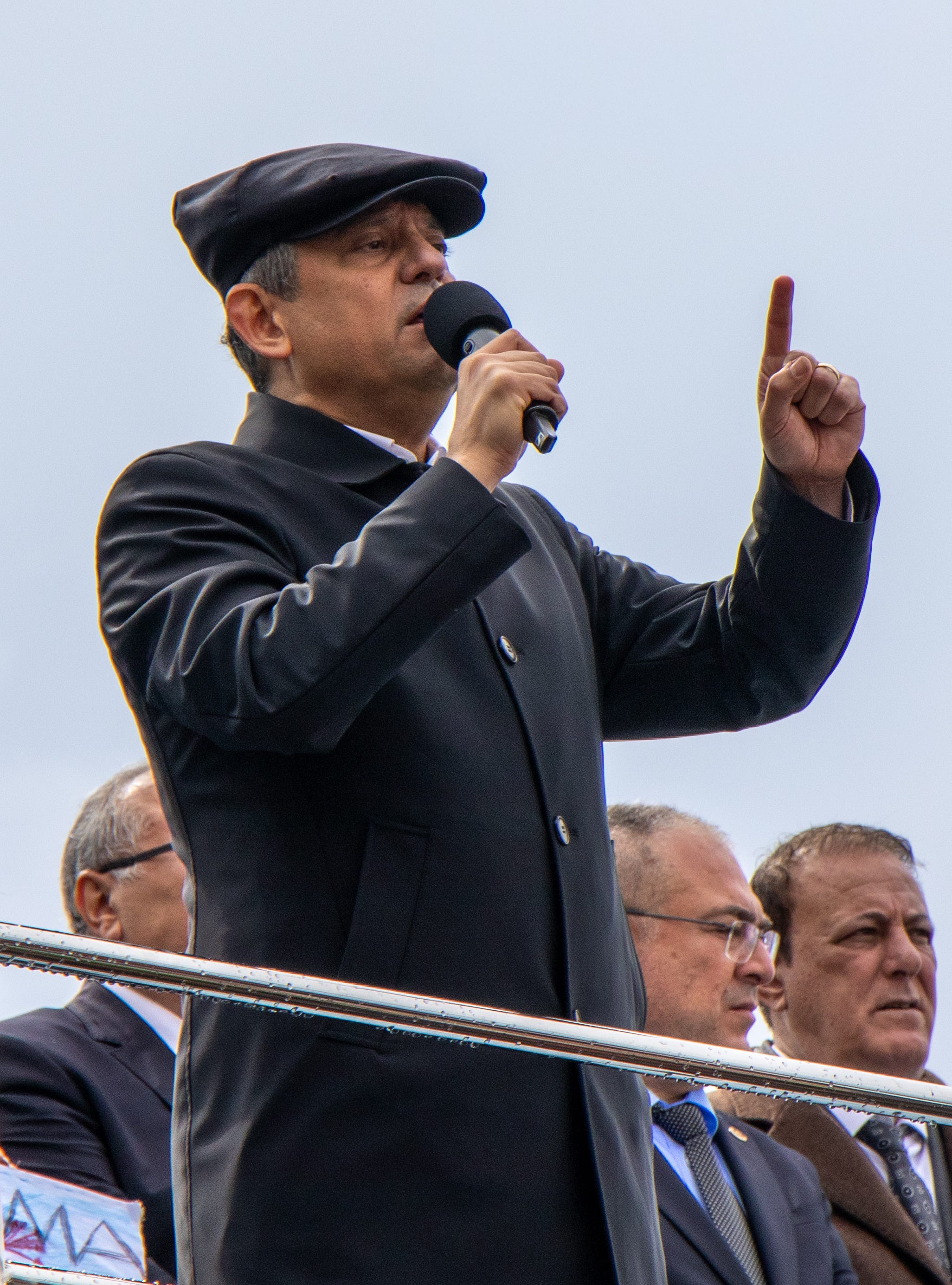
The decision follows a May ruling that annulled the party’s 2023 congress over alleged irregularities, reinstating former leader Kemal Kilicdaroglu. Ozel and his allies have described the move as a politically motivated crackdown, while the government insists the judiciary acts independently.
Many of the CHP’s 135 lawmakers are expected to defect to the new party, which Ozel said could become parliament’s main opposition. Analysts warn the split may instead weaken opposition unity, potentially benefiting Erdogan despite growing dissatisfaction with the government.
Sources: Al Jazeera, FT
Healthy Diet Out Of Reach For Billions
A UN report has found that 2.69 billion people cannot afford a healthy diet, with costs remaining “extremely high” despite a third consecutive year of declining global hunger. The report, compiled by five UN agencies, estimated the cost of a healthy diet at 4.28 purchasing power parity dollars per day, significantly above the extreme poverty line.
While global hunger fell to 7.8% of the population in 2025, structural issues continue to limit access to nutritious food. Maximo Torero, chief economist at the Food and Agriculture Organization, said policy focus on subsidising cereals and starchy staples had prioritised calories over dietary diversity.

The report highlights rising obesity and health risks linked to poor diets, alongside regional disparities, with 66.6% of Africa’s population unable to afford a healthy diet. Experts are calling for investment in supply chains, research and policies to reduce the cost of fruit, vegetables and dairy.
Sources: The Guardian, Politico Europe, WHO
Burnham Moves Fast In First Day As PM
Andy Burnham has moved quickly in his first 24 hours as UK prime minister, reshuffling the cabinet, appointing John Healey as chancellor and announcing a cut in VAT on energy bills. The changes included the removal of several allies of former prime minister Keir Starmer, signalling a rapid break with the previous leadership.
Healey’s appointment came as a surprise and places a former defence secretary committed to higher military spending in charge of economic policy. Burnham also brought back figures who had resigned under Starmer, including Wes Streeting and Miatta Fahnbulleh, as part of a broader reset of the cabinet.
The new government has pledged to address the cost of living while maintaining fiscal discipline, though markets remain sensitive to policy signals. Analysts say Burnham faces a choice between consolidating power or calling a snap election to secure a mandate for further reforms.
On this day …
On this day in 2011, Norway suffered its deadliest attack since the Second World War when a car bomb exploded in Oslo before a mass shooting at a youth camp on the island of Utøya.
Seventy-seven people were killed in an attack carried out by a lone far-right extremist. Norway responded by reaffirming its democratic values while also reassessing national security and the threat posed by domestic violent extremism.
The attacks reshaped conversations across Europe about radicalisation, online extremism and the protection of open societies.
Democracies continue to face the challenge of safeguarding both security and the freedoms they seek to defend.