


Trump Extends Iran Ceasefire As Talks Stall
Iran Withdraws From Talks After Ceasefire Extension
Trump Claims Ship Carried Chinese ‘Gift’ For Iran
US Missile Strain Raises Stakes Around Iran Ceasefire
NATO Scrambles Jets As Russian Bombers Fly Baltic Route
El Salvador Opens Mass Trial Of 486 Alleged MS-13 Members
US Weighs Sending Afghan Allies In Qatar To Congo
Trump Pressures Firms Over Tariff Refund Claims
UK Approves Smoking Ban For People Born After 2008
EU Court Says Hungary’s Anti-LGBTQ Law Broke EU Rules

President Donald Trump extended the US ceasefire with Iran one day before its expiry after mediation requests from Pakistan’s army chief Asim Munir and Prime Minister Shehbaz Sharif, while saying Washington would wait for a “unified proposal” from Tehran. Planned negotiations stalled as Vice-President JD Vance’s trip to Islamabad was put on hold and both sides accused each other of violating the truce.
The United States continued deploying additional forces to the Middle East, including another carrier strike group, while maintaining its blockade of Iranian shipping linked to the Strait of Hormuz dispute. Iranian officials warned negotiations could not resume unless the blockade ended, even as both sides threatened renewed attacks.
Brent crude briefly rose above $100 a barrel before easing, reflecting persistent market uncertainty as diplomacy remained fragile after eight weeks of war.
Sources: Associated Press, FT

Iran said it had made a “final decision” to withdraw from peace talks with the United States that were due to take place in Islamabad on Wednesday, blaming the US naval blockade of Iranian ports for the collapse in negotiations. Iranian state media also said Tehran had not requested the extension of the temporary ceasefire announced by President Donald Trump.
Tehran instead framed the ceasefire extension as a delaying tactic. Mahdi Mohammadi, an adviser to top negotiator Mohammad Baqer Qalibaf, said the move was “a ploy to buy time” for a surprise strike and warned the continuation of the US blockade was “no different from bombardment”.
Trump had earlier said he expected to resume bombing if a peace deal was not reached, before later delaying strikes at Pakistan’s request while awaiting a “unified proposal”.
Sources: The Telegraph, Reuters

President Donald Trump said the United States intercepted a ship carrying a possible “gift” from China to Iran, suggesting it may have contained lethal military supplies that would test a US red line on aiding Tehran during the war. He said he had believed there was an understanding with President Xi Jinping that China would not provide weapons to Iran.
China rejected any association with the vessel. Foreign ministry spokesperson Guo Jiakun said the seized ship was a foreign container vessel and denied speculation linking Beijing to missile-related shipments, while the Chinese embassy in Washington said China handles the export of military products “prudently and responsibly”.
US intelligence had earlier indicated China was preparing to deliver a new air defence system to Iran, including shoulder-fired anti-air missile systems, although Chinese officials have repeatedly denied sending weapons.
Sources: Bloomberg, Times of Israel

The United States has sharply reduced its stockpile of several key missiles during seven weeks of war with Iran, according to defence analysts and people familiar with recent Pentagon assessments, raising concern about how long it could sustain another major conflict.
A CSIS analysis said the US had used at least 45% of its Precision Strike Missiles, about half of its THAAD interceptors and nearly 50% of its Patriot air defence missiles.
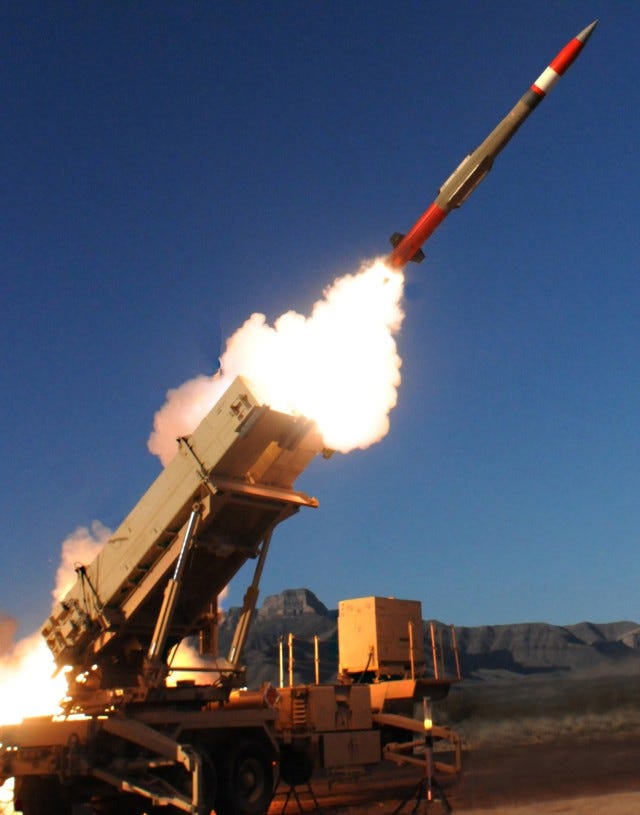
The report said the US likely still has enough weapons to continue combat operations against Iran if the shaky ceasefire collapses. But it warned remaining inventories may be insufficient for a separate conflict against a near-peer adversary such as China, with some systems taking one to five years to replenish.
The findings contrasted with Donald Trump’s claim that the US was not running short of weaponry, even as he sought additional funding for missiles.
Sources: Times of India, CNN

NATO intercepted Russian strategic bombers and fighter jets that flew over the Baltic Sea on Monday, bringing a multi-country response on the alliance’s eastern flank. French Rafale fighters deployed from Lithuania joined jets from Sweden, Finland, Poland, Denmark and Romania to inspect and monitor the Russian mission, which included two Tu-22M3 “Backfire” bombers and about 10 escort fighters.
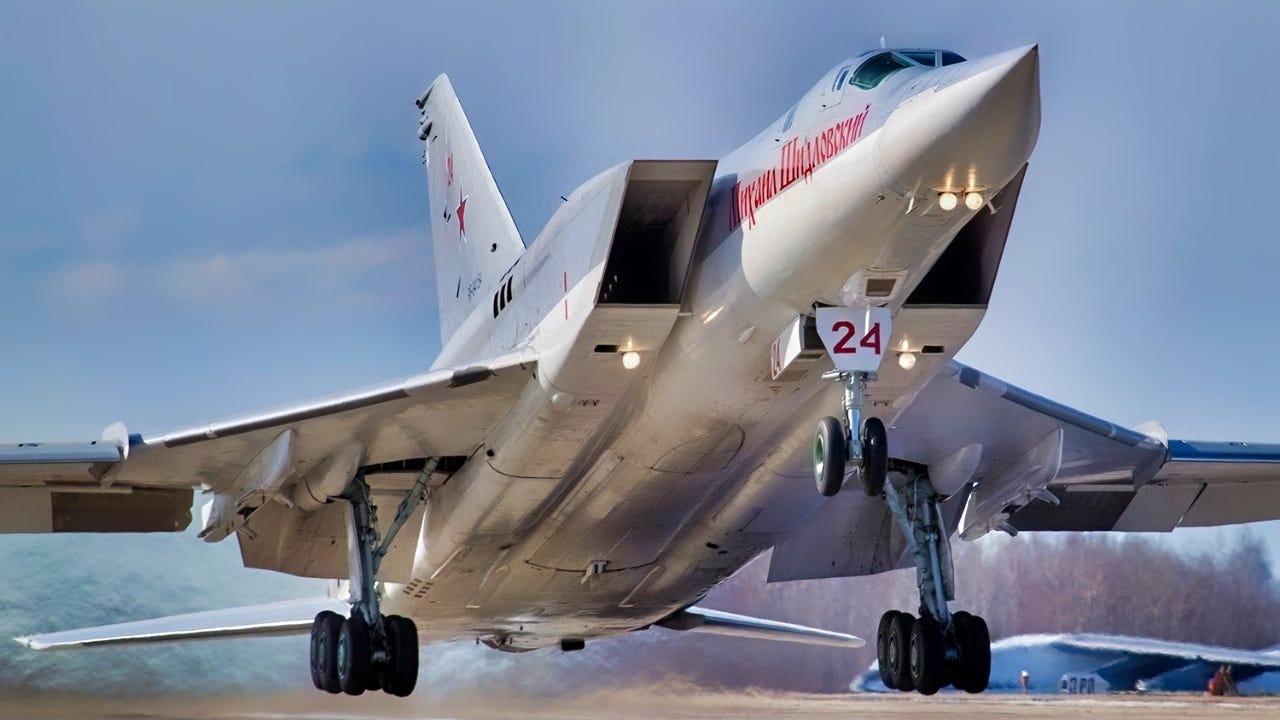
Russia said the flight was scheduled and took place over the neutral waters of the Baltic Sea, lasting more than four hours. The defence ministry said its aircraft complied with international airspace rules and acknowledged that foreign fighters accompanied the bombers at certain stages of the route.
NATO routinely scrambles aircraft when Russian warplanes approach or fly near allied airspace, and says intercepted planes often fail to use transponders, communicate with controllers or file a flight plan.
Sources: Associated Press,Euronews

A mass trial of 486 suspected MS-13 members has begun in El Salvador, with prosecutors accusing the group of 47,000 crimes committed between 2012 and 2022, including murder, extortion, drug and arms trafficking. The attorney general’s office said the defendants include members of the gang’s national leadership, street-level leaders, programme coordinators and founders, and said it had ample evidence to seek maximum penalties.
The case is one of the most far-reaching proceedings yet under President Nayib Bukele’s anti-gang crackdown, launched after 87 people were killed in a single weekend in March 2022. Bukele then declared a state of emergency that remains in force and has led to mass arrests.
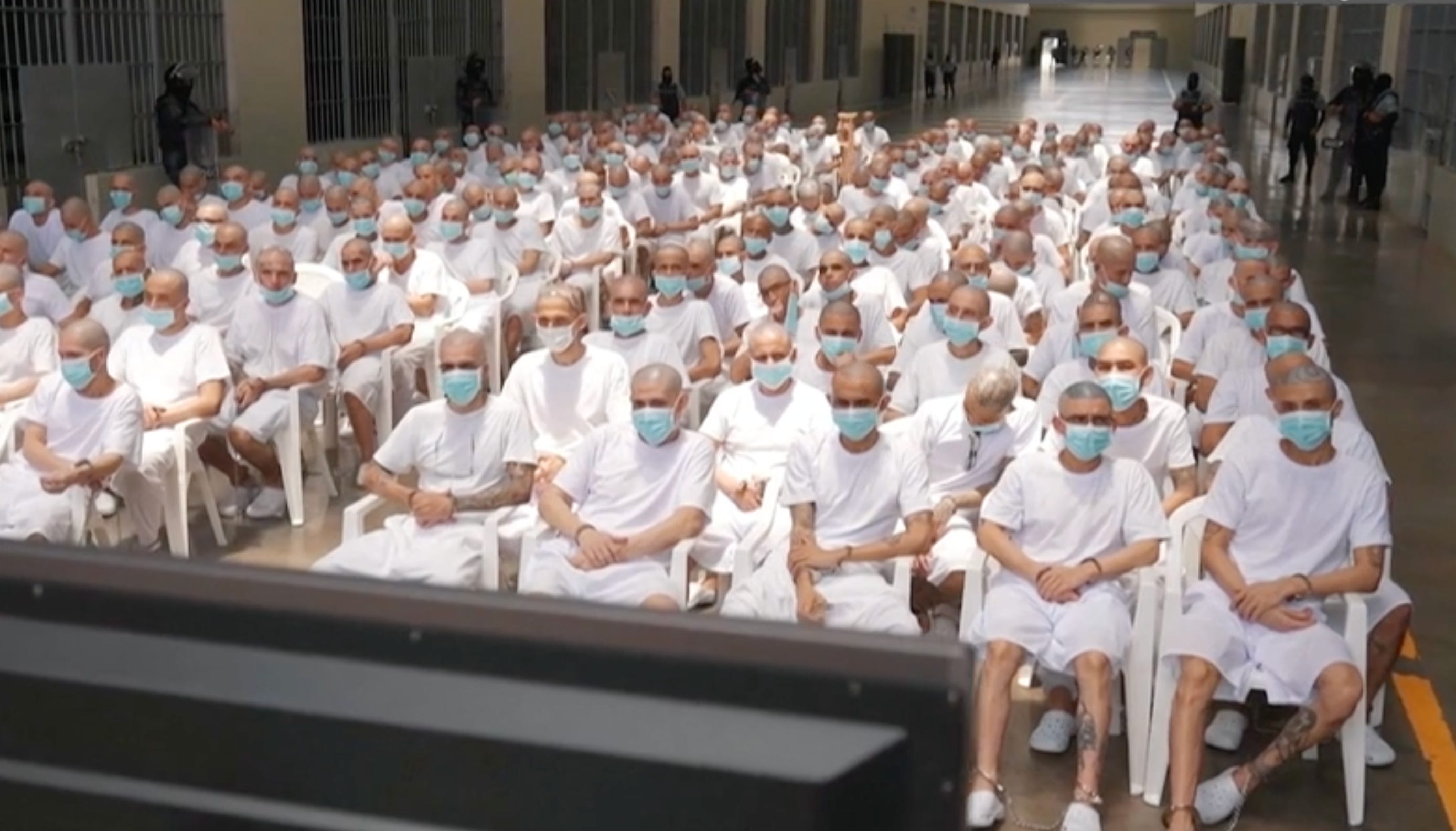
Supporters say the campaign has sharply reduced crime, but United Nations experts, Human Rights Watch and Cristosal, a regional human rights group, have warned that mass trials undermine defence rights and risk punishing innocent people alongside the guilty.
Sources: BBC, CBS News

The Trump administration is in discussions to send as many as 1,100 Afghans who aided US forces during the war in Afghanistan to the Democratic Republic of Congo after halting a resettlement pathway to the United States.
The group, stranded in Qatar for more than a year, includes interpreters, former Afghan special operations personnel, relatives of US service members and more than 400 children.
According to Shawn VanDiver of AfghanEvac, the Afghans could be offered a choice between relocation to Congo and returning to Taliban-ruled Afghanistan. State Department officials said they were continuing to identify options for voluntary resettlement and that those at Camp As Sayliyah do not currently have a viable pathway to the United States.
The discussions have drawn criticism because Congo is already facing a severe displacement crisis, while aid advocates argue Afghans who supported US forces remain at grave risk if returned.
Sources: New York Times, The Guardian

President Donald Trump said he would “remember” companies that do not seek refunds for tariffs later ruled illegal by the Supreme Court, as US Customs and Border Protection began accepting applications through a new electronic portal. He said he was pleased that some large companies, including Apple and Amazon, had not yet sought refunds, though he did not say how they might benefit by holding back.
The dispute centres on about $166 billion collected under tariffs imposed last year using a 1977 emergency powers law. Trump criticised the court for striking them down and appeared to characterise companies pursuing refunds as the “enemy”.
Judge Richard Eaton has since ordered the government to issue refunds, although he later issued a temporary stay and requested a progress report on the first phase of processing by April 28. Refund payments are not expected for 60 to 90 days after submissions are accepted.
Sources: Reuters, CNBC

Parliament has approved legislation that will permanently ban anyone born on or after 1 January 2009 from buying tobacco in the UK, in what ministers say is an effort to create a smoke-free generation. The Tobacco and Vapes Bill has now cleared both the Commons and Lords and is expected to become law when it receives royal assent next week.

The measure will also give ministers powers to regulate tobacco, vaping and nicotine products, including flavours and packaging, and to expand smoke-free rules. Vaping will be banned in cars carrying children, in playgrounds and outside schools and hospitals. Ministers said the legislation would save lives and reduce pressure on the NHS, while health groups welcomed it as a major public health step.
Some vaping firms, however, warned that tighter restrictions on flavours and product availability could push former smokers back towards tobacco or unregulated markets.
Sources: BBC, The Guardian

The European Union’s top court ruled that Hungary’s anti-LGBTQ legislation breached EU law and violated Article 2 of the bloc’s treaty, which sets out its fundamental values. Judges found the 2021 law, which was amended to ban the “promotion of homosexuality” to under-18s, infringed rights including human dignity, equality and respect for human rights, as well as rules on services and data protection.
The ruling lands during a political transition in Budapest after Viktor Orban’s electoral defeat and before the expected formation of a new government under Péter Magyar in May. Orban defended the outgoing administration’s position, saying it had protected children from “aggressive LGBTQ propaganda”.
The judgment could now become an early test of whether Hungary’s incoming leadership will move to repeal legislation that critics say stigmatized LGBTQ+ people and underpinned restrictions including the ban on Pride marches.
Sources: Reuters, Le Monde
On this day …
On this day in 2016, world leaders gathered at the United Nations headquarters in New York to sign the Paris Climate Agreement, committing their countries to coordinated action aimed at limiting global temperature increases.
The agreement represented the first broadly supported international framework bringing developed and developing economies into a shared climate strategy, while recognising national differences in responsibility and capacity.
Although implementation remained uneven and politically contested in several countries, the agreement established a lasting reference point for global climate policy and international cooperation on emissions reduction.
Has the Paris Agreement become a durable framework for cooperation, or mainly a somewhat ineffectual signal of shared intent?