


Trump Pushes Kyiv As Envoy Takes Proposal To Putin (Geopolitics)
European Protests Expose Widening Public Discontent (Europe)
Britain Sends Fighters As Saudi Attacks Intensify (UK)
Ebola Reaches Nigeria As Outbreak Spreads Across Africa (Medical)
Iran Draws Out Talks Ahead Of US Midterms (Middle East)
Musk Ordered Starlink Restrictions Disrupt Ukraine’s Defences (Europe)
Nato Reinforces Black Sea After Attacks On Shipping (Europe)
Alberta Rejects Path To Independence Vote (North America)
Rwandan Government Critic Found Beheaded In Uganda (Africa)
Lula Seeks Bolsonaro Disqualification Over Meta Claims (South America)
A succinct daily briefing delivered each weekday to help you stay on top of the stories shaping the world.

Washington is seeking a new peace framework for Ukraine as President Donald Trump urges Kyiv to settle while offering concessions to Moscow. US envoy Steve Witkoff will present Russian President Vladimir Putin with an updated proposal on Wednesday, following talks with Ukrainian President Volodymyr Zelensky and European leaders in Oslo.
A US official described meaningful progress on security guarantees, post-war economic arrangements and European security. Zelensky wants direct talks with Putin and Trump, a format Moscow has rejected. He also offered to suspend strikes on Russian oil refineries if Russia reciprocates.
The diplomatic initiative follows Trump’s decision to lift sanctions on Russian diesel and waive further restrictions. Meanwhile, Russian attacks have disrupted electricity across Ukraine. Kyiv says vital US military support and intelligence have been withheld. Although Zelensky reported restored missile warnings, questions remain over Patriot interceptor deliveries and restrictions affecting Starlink. Trump has publicly questioned Kyiv’s willingness to negotiate.
Sources: Axios, Reuters

Protests over living costs, housing and deteriorating public services have spread across Europe, with demonstrations turning violent in several countries. In France, authorities estimated 550,000 people marched on Saturday, while unrest brought looting, fires and more than 2,400 arrests. The government imposed partial curfews after clashes with police.
Housing affordability has driven demonstrations in Spain and Portugal. Spanish Prime Minister Pedro Sánchez called an early election after parliament rejected housing measures. In Portugal, police dismantled protest camps in Lisbon and Porto, where activists say wages have failed to keep pace with rents.
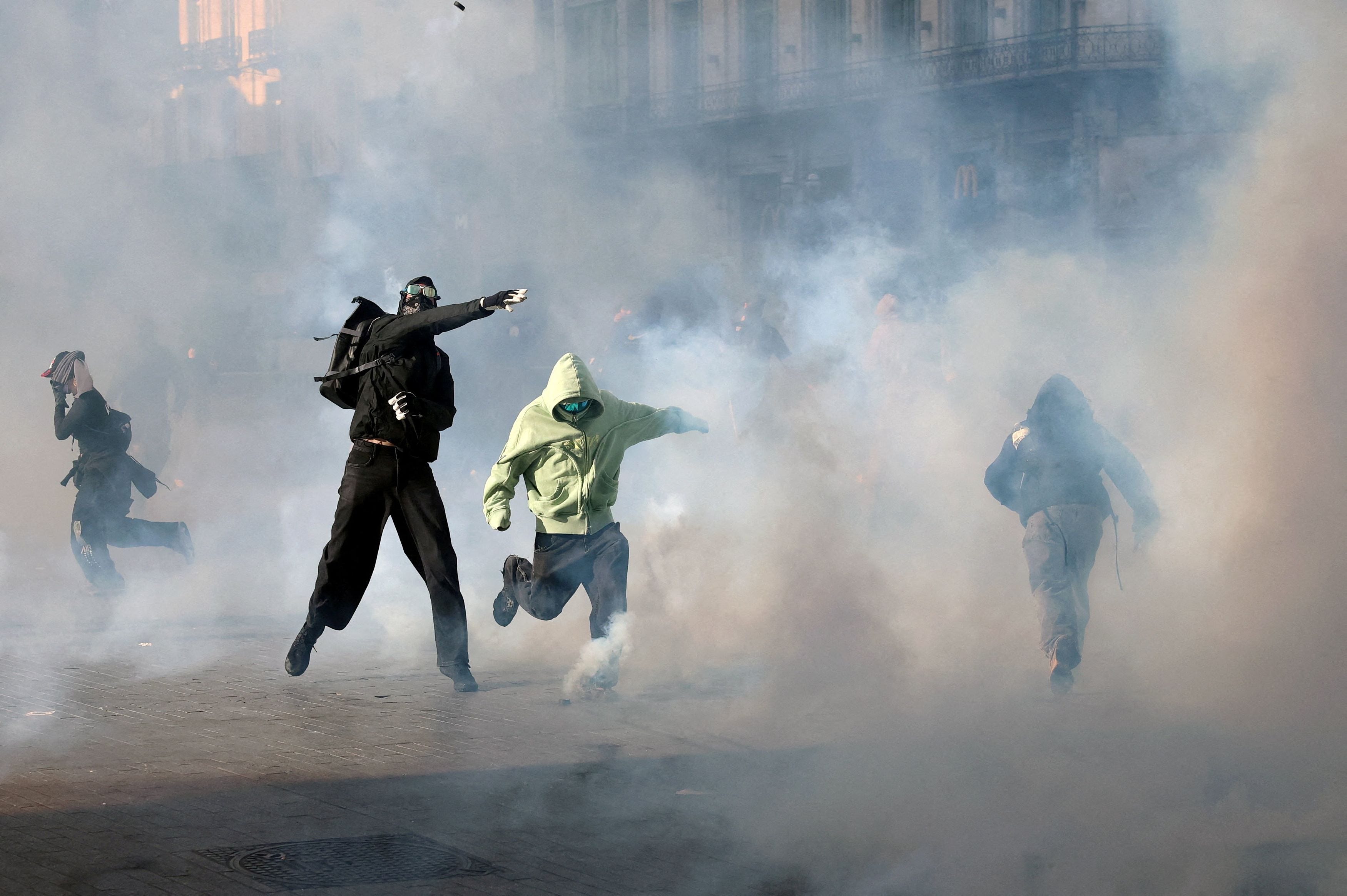
Italy has seen marches over wages and public services followed by riots, while students have joined anti-corruption protests demanding Albanian Prime Minister Edi Rama’s resignation. In Serbia, student activists are challenging Aleksandar Vučić’s party ahead of parliamentary elections.
The unrest spans different grievances but exposes mounting dissatisfaction with living standards and public institutions.
Sources: The Independent, Associated Press

Britain will deploy Royal Air Force Typhoon fighters to defend Saudi Arabia against escalating Houthi missile and drone attacks, extending its support beyond refuelling and air defence equipment. The aircraft will protect cities and infrastructure but will not conduct strikes inside Yemen, according to the UK government. Defence Secretary Wes Streeting condemned attacks on Riyadh’s airport, where one strike killed 13 people and wounded more than 300.
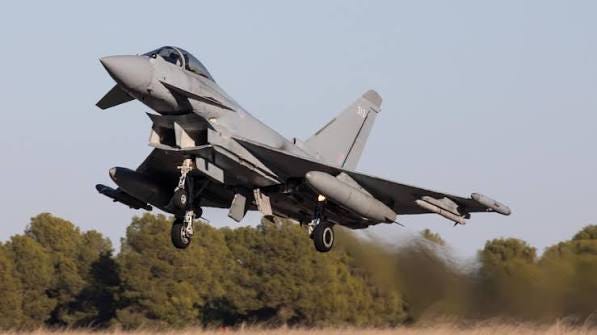
The deployment follows attacks on Saudi oil facilities, a pipeline and airports. France has supplied defensive equipment, while American advisers are providing intelligence and targeting support. Saudi requests for direct US military intervention have so far been unsuccessful.
The Houthis have retained key territory in Yemen despite a Saudi-backed counteroffensive, including positions around the Bab al-Mandeb maritime chokepoint.
British fighter patrols can intercept drones and cruise missiles, but are ineffective against faster ballistic missiles, leaving a significant gap in the kingdom’s defences.
Sources: CNN, Bloomberg

Nigeria has confirmed its first Ebola case in the current outbreak after a woman arriving from Uganda tested positive in Abuja. She developed symptoms on 7 October and entered hospital four days later but was diagnosed only after treatment had begun. Authorities have identified 44 contacts and isolated her. Uganda says she had travelled to eastern Congo and transited through Uganda; where she became infected remains unknown.
The outbreak began in Congo in May and has spread to Kenya, which has recorded nine cases. More than 9,500 infections and 4,600 deaths have been reported, while Uganda says it has no active cases. Africa CDC director general Dr Jean Kaseya described the Bundibugyo outbreak as the most geographically extensive on record, with a fatality rate approaching 50%.
Nigeria is tracing contacts. Health experts say isolated cases can be contained through prompt identification and infection control, although delayed diagnosis risks exposing medical workers.
Sources: The Guardian, New York Times

Iranian officials say Tehran is deliberately prolonging negotiations with Washington to deny US President Donald Trump a political victory before the 3 November midterm elections. Three senior officials and an insider say Iran expects renewed American and Israeli attacks despite continuing diplomatic contacts. The eight-month war began with US and Israeli strikes in February.
Tehran has offered to reopen the Strait of Hormuz within seven days under Iranian control, provided Washington lifts its maritime blockade, eases oil restrictions, releases frozen assets and ends hostilities. The US wants Iran’s nuclear programme addressed from the outset, while Tehran insists on its conditions first.
The stalemate carries costs for both sides. Disrupted shipping has contributed to high US fuel prices, while Iran’s annual inflation reached 73.6% in September and its currency has weakened sharply. Iranian officials see little prospect of an agreement before the elections, with distrust of Washington reinforcing their reluctance to compromise.
Sources: Reuters, Times of Israel

Elon Musk ordered restrictions on the military-grade Starlink service used by Ukraine, according to US officials cited in a report, disrupting Ukrainian attack drones and air defences. The slowdown began on 14 October, limiting connections for fast-moving drones. Ukrainian President Volodymyr Zelensky warned that lives were at risk and sought an explanation from Washington and SpaceX.

The report says Musk discussed the restrictions with US President Donald Trump, although accounts differ over whether they spoke before the decision. Trump denied knowing who ordered the slowdown, while US Defence Secretary Pete Hegseth said Washington had issued no directive. Musk attributed service limits to the US military and president.
The dispute follows Trump’s demands that Ukraine stop striking Russian oil refineries amid high diesel prices. Ukrainian officials say restrictions remain unresolved, exposing Kyiv’s dependence on privately controlled satellite communications as relations with Washington deteriorate.
Sources: Wall Street Journal, Arab News

Nato is sending additional patrol aircraft, radar systems, drones and intelligence personnel to the Black Sea following deadly attacks on merchant vessels near Romania and Bulgaria. Russia said it struck five cargo ships on Tuesday, including three in Ukraine’s port of Reni and two travelling towards Odesa. The alliance has not formally attributed recent attacks near its members’ coasts to Moscow.
At least five cargo vessels have been hit near Romania and Bulgaria in the past two weeks, with 23 sailors reported dead or missing. Romania has recorded 35 unauthorised drone incursions this year, compared with nine in 2025, and has recently shot down two suspected Russian drones.
The attacks threaten routes used for Ukrainian agricultural exports and have driven up shipping insurance costs. Nato says its additional deployment will focus on surveillance and intelligence, as concerns grow over the war reaching the alliance’s borders.
Sources: The Guardian, Al Jazeera

Voters in Alberta have overwhelmingly rejected beginning the constitutional process for a referendum on independence from Canada. With 86% of votes counted, 75.5% supported remaining in Canada and 24.5% backed another vote on separation. Official results are expected on Thursday. The ballot did not directly ask whether the oil-rich province should become independent.
Canadian Prime Minister Mark Carney welcomed the result as a vote for unity. Alberta Premier Danielle Smith, who introduced the question, said previously that a rejection would rule out another separation referendum during her tenure. Separatist campaigners nevertheless pledged to continue their efforts.

The movement reflects longstanding disputes over provincial powers and the sharing of oil wealth, alongside opposition to federal environmental policies. Business groups and former premiers campaigned to remain, while economic studies warned of substantial costs from secession.
The result strengthens Carney’s efforts to promote Canadian unity amid tensions with the United States.
Sources: Mercopress, New York Times

A former Rwandan soldier who became an outspoken critic of President Paul Kagame has been found beheaded in Uganda. Robert Kabera, 50, had lived in exile since 2020 and recently posted a video expressing fears for his life. Police discovered his body near Kampala on Saturday and have opened a murder investigation. His head remains missing.
Human rights organisations say the killing resembles previous attacks on Rwandan dissidents living abroad, although responsibility for Kabera’s death has not been established. Kabera had received asylum and security protection in Uganda, but Human Rights Watch reported that he had previously been assaulted twice while in hiding.
Other prominent Rwandan government critics have been killed in South Africa and Mozambique. Amnesty International researcher Lane Hartill said efforts to silence dissent had extended beyond Rwanda’s borders. Rwandan authorities have denied involvement in previous killings and disputed allegations of targeting political opponents.
Sources: New York Times, South China Morning Post

Brazilian President Luiz Inacio Lula da Silva’s campaign is preparing to seek the disqualification of presidential rival Flavio Bolsonaro over alleged interference by Meta ahead of Sunday’s runoff. The campaign accuses the technology company of suppressing Lula’s content while favouring Bolsonaro, who won 47% of the first-round vote against Lula’s 45%. Polls suggest a close contest.
Brazil’s Superior Electoral Court has ordered Meta to demonstrate equal treatment of both candidates, doubling the daily fine for noncompliance to about $200,000. Lula’s campaign alleges restrictions on Instagram visibility and uneven moderation across Meta’s platforms. Meta denies favouring either candidate but acknowledges that technical errors temporarily disabled some Lula advertisements.
The dispute places social media oversight at the centre of a closely fought election. Civil society organisations have supported complaints of unequal treatment, while Meta says it has implemented measures to comply with the court’s ruling.
Sources: France 24, Al Jazeera
Restacking or sharing this publication means more people can read it. Commenting extends the conversation. Liking shows your appreciation.
On this day …
On this day in 1879, Thomas Edison and his team successfully tested an incandescent electric lamp using a carbon filament that burned for more than 13 hours.
Edison was not the first to develop electric lighting, but his work helped make it commercially practical.
Combined with advances in electricity generation and distribution, the incandescent bulb transformed homes, factories and cities, extending productive activity beyond daylight hours.
Electric lighting became one of the foundations of modern industrial society, changing patterns of work, urban development and everyday life.
The breakthrough illustrates how technological progress often depends less on a single invention than on building the infrastructure needed to make it useful.