


Trump Presses NATO Deal as Greenland Dispute Widens
Greenland Urges Preparedness as Trump Pressure Grows
Macron Urges EU Trade Bazooka Against Trump Threats
Carney Warns Of Rupture as Trump Pressures Allies
Canada Models Response to Hypothetical US Invasion
Israel Bulldozes UNRWA Compound In East Jerusalem
Life Sentence for Killer of Japan’s Ex-PM Abe
Looming Global Water Bankruptcy Warns UN Report
Taiwan Defence Budget Stalls Amid Political Impasse
Australia Passes Gun And Hate Speech Laws After Sydney Attack

President Donald Trump said the United States and NATO would reach an agreement over Greenland that would satisfy both sides, arguing the territory was needed for security purposes and that the alliance would not be very strong without the United States. Earlier in the day he said there was “no going back” on his goal of controlling the island and did not rule out the use of force.
Speaking later at the White House, Trump repeated that Greenland was “imperative” and said of his approach, “You’ll find out.” He added that NATO would be happy with the outcome, while questioning whether the alliance would come to the United States’ aid if required.
The comments drew pushback from European leaders meeting in Davos. European Commission president Ursula von der Leyen said the European Union stood in “full solidarity” with Greenland and Denmark and that their sovereignty was “non-negotiable”. Canada’s prime minister said his country’s commitment to NATO’s Article 5 was “unwavering”, while Greenland’s resources minister said residents did not want to become Americans.
Sources: Reuters, BBC

Greenland’s prime minister said the island’s population and authorities need to start preparing for a possible military invasion, even if it remains unlikely, as President Donald Trump continues to threaten taking over the territory. Jens-Frederik Nielsen said, “It’s not likely there will be a military conflict, but it can’t be ruled out.”

Nielsen said the government will form a task force of relevant local authorities and is working on new guidelines, including a recommendation to store enough food for five days. Denmark has in recent days deployed more troops in Greenland, and last week Denmark and seven other Nato countries deployed a handful of officers as part of Operation Arctic Endurance.
Trump has threatened new tariffs from February 1 on eight NATO allies sending military personnel. Denmark’s prime minister warned Europe would have to respond if tariffs are implemented, saying a response would be forced.
Sources: South China Morning Post, Bloomberg

Emmanuel Macron urged the European Union to hit back against President Donald Trump’s threats, warning in Davos that Europe must respond over Greenland or “passively accept … vassalisation and bloc politics”. He called for using the EU’s anti-coercion mechanism and said it was “crazy” that Europe could face deploying it “for the very first time, vis-a-vis the US”.
Trump has threatened tariffs on European countries that last week sent troops to Greenland, and leaders awoke to a new threat of a 200 per cent tariff on French wines and champagnes after Macron declined an invitation to join a US-backed “Board of Peace”. Macron said Europe preferred “respect to bullies” and “rule of law to brutality”.
European Commission president Ursula von der Leyen said the EU response would be “unflinching, united and proportional”. The anti-coercion instrument must be triggered by the Commission and approved by a qualified majority, with powers including tariffs, quotas and market bans.
Sources: The Independent, South China Morning Post

Canadian Prime Minister Mark Carney said the “old order is not coming back” and urged middle powers to act together at the World Economic Forum in Davos. He said the world was “in the midst of a rupture, not a transition” and argued that “great powers” were using economic coercion, with “tariffs as leverage” and supply chains as vulnerabilities.
Carney affirmed Canada’s support for Greenland, Denmark and the NATO alliance, saying Canada supports Greenland’s “unique right to determine Greenland’s future”. He added that Canada’s commitment to Article Five was “unwavering”.
He warned that geography and historic alliances no longer guaranteed security or prosperity and said Canada was now focused on engaging with other countries and building “different coalitions for different issues based on common values and interests”. He pitched Canada as a “stable and reliable” partner as Trump prepared to deliver his own Davos speech.
Sources: BBC, The Guardian

Canada’s military has modelled how it would respond to an American invasion after President Donald Trump publicly referred to the country as a potential “51st state”, according to reports citing government officials. The officials stressed they consider such a scenario to be highly unlikely.
The defence plan would include tactics similar to those used in Afghanistan against Russian and later US-led forces, including “hit-and-run” attacks using improvised explosive devices. Officials said the model assumes an attack from the south that would overcome Canadian positions on land and at sea within a week, or in as little as two days.
The reports come as Trump has posted an image showing Canada and Greenland covered by the American flag. Canada’s foreign minister said the country is bolstering its Arctic presence, plans to spend 2% of GDP on defence this fiscal year and aims to meet Nato’s 5% target by 2035.
Sources: Bloomberg, The Independent

Israeli crews began bulldozing the UN agency for Palestinian refugees’ headquarters compound in East Jerusalem, and teargas was fired at a UN vocational school in Qalandia in the West Bank. UNRWA said demolition crews accompanied by police arrived in the early hours and expelled private security guards.
Israel accuses UNRWA of collaborating with Hamas, which the agency denies, and last year banned it from operating on its territory. Israel’s foreign ministry said UNRWA had already ceased operations at the site and that the compound “does not enjoy any immunity”.
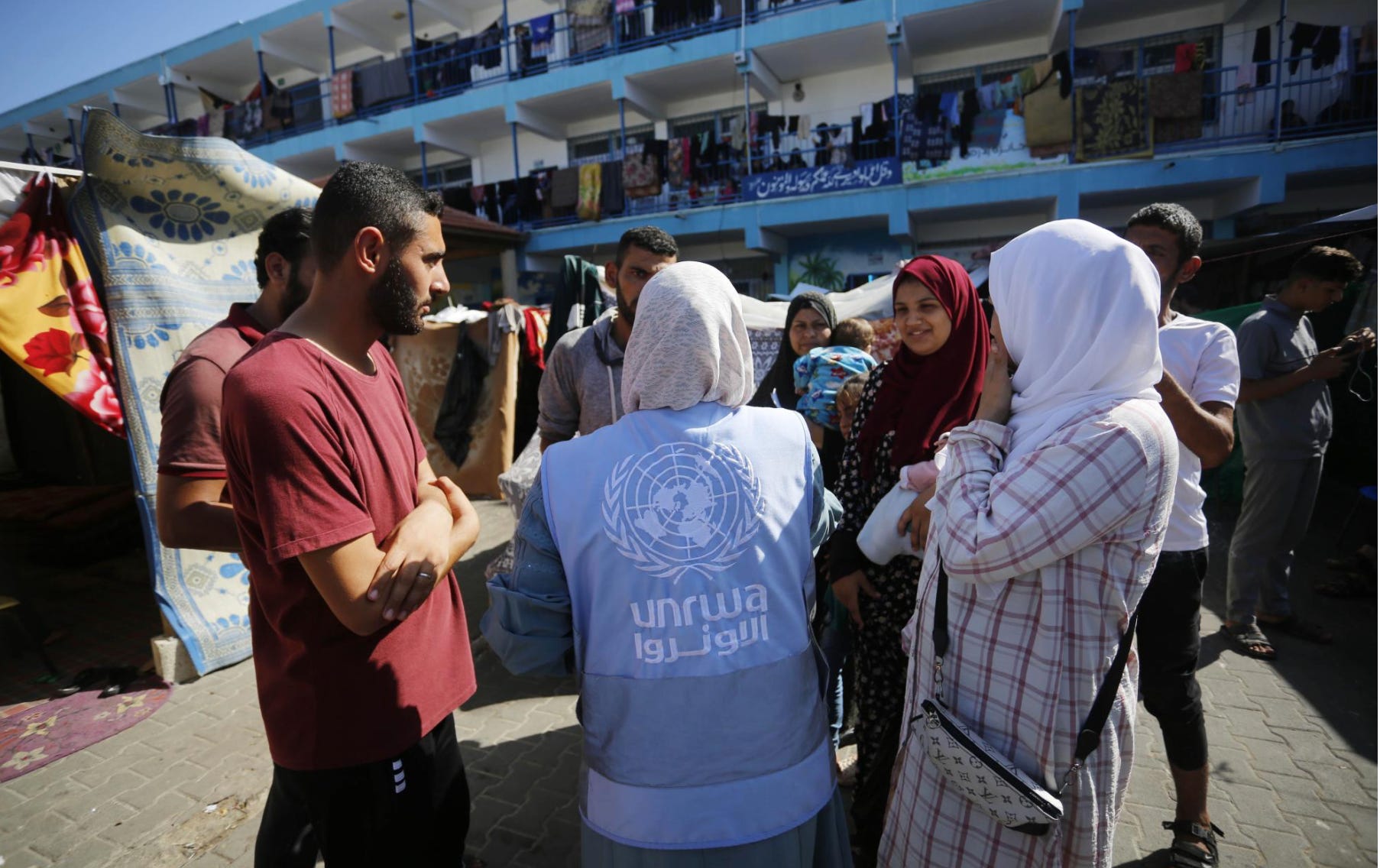
UNRWA’s West Bank director called the demolition a violation of international law, and UNRWA’s commissioner general warned it was “an unprecedented attack” and “a wake-up call”. Israel’s national security minister Itamar Ben-Gvir called it “a historic day”.
Sources: The Guardian, The Independent

Tetsuya Yamagami was sentenced to life in prison on Wednesday for killing former Japanese prime minister Shinzo Abe at a campaign event in Nara in 2022. The 45-year-old pleaded guilty at the opening of his trial, and prosecutors said the crime was a “grave act”.
Yamagami told the court he targeted Abe because of his ties to the Unification Church, which he said bankrupted his family through donations made by his mother. His lawyers sought a sentence of no more than 20 years, arguing he was a victim of “religious abuse”. Hundreds attended the hearing.
Abe’s death prompted investigations into the church’s fund-raising practices and links with politicians from the ruling Liberal Democratic Party, and led to the resignations of several cabinet ministers. Abe, Japan’s longest-serving prime minister, was shot with a homemade gun while giving a speech in broad daylight.
Sources: New York Times, BBC

The world is facing irreversible water “bankruptcy” after decades of overuse and shrinking supplies from lakes, rivers, glaciers and wetlands, UN researchers said. Nearly three-quarters of the global population live in countries classed as water insecure or critically water insecure, and four billion people face severe scarcity at least one month each year.
Lead author Kaveh Madani said many regions were living beyond their hydrological means and critical systems were already bankrupt. The report said water supplies were in a post-crisis state after unsustainable extraction drew down “savings” in aquifers, glaciers, soils, wetlands and river ecosystems, with pollution also degrading reserves.
More than 170 million hectares of irrigated cropland are under high or very high stress, and economic damage from land degradation, groundwater depletion and climate change exceeds $300 billion a year. Researchers said the priority was a new global water agenda to minimise damage.
Sources: Reuters, UN News

President Lai Ching-te’s plan to sharply increase military spending has stalled as opposition lawmakers who dominate Taiwan’s legislature block a proposed $40 billion, eight-year package. The impasse comes as President Donald Trump presses the island to pay more for its own defence against China’s campaign to bring Taiwan under its control.
The defence ministry held a closed-door briefing on a controversial NT$1.25 trillion (US$39.5 billion) special budget after the opposition blocked referral of the bill eight times. Lai has pledged to lift military and security outlays to more than 3 percent of Taiwan’s economy this year to mollify the United States, the island’s chief security backer against Beijing.
The dispute is tied up in budgetary and legal fights. Lai’s premier refused to sign a law shifting tax revenues to local administrations, and opposition lawmakers called that move unconstitutional. The government says the opposition is trying to paralyse the administration by holding up defence spending.
Sources: New York Times, South China Morning Post

Australia’s parliament has passed new gun control and anti-hate speech laws following a deadly attack at a Jewish festival in Sydney last month, in which two shooters killed 15 people during Hanukkah celebrations at Bondi Beach. Authorities said the assault was inspired by the Islamic State group, and Prime Minister Anthony Albanese said the government acted “with urgency and with unity”.
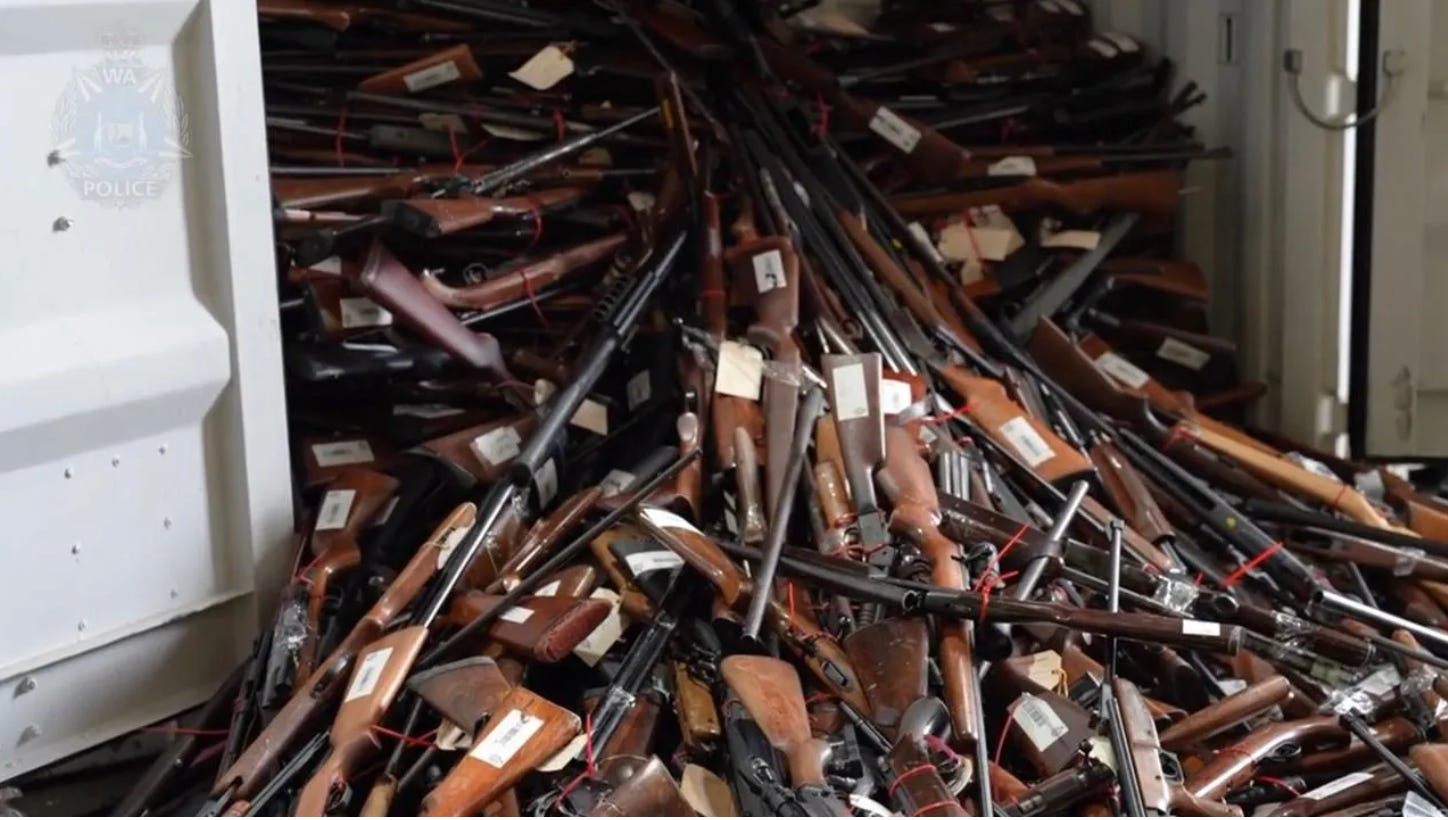
The legislation was split into two bills and passed through the Senate with the Greens supporting gun reform and the opposition Liberal Party backing the hate speech measures. The gun laws introduce tighter ownership rules and a government-funded buyback scheme, while the hate speech legislation allows certain groups to be outlawed even if they are not formally designated terrorist organisations.
Officials said the father of the alleged attackers legally owned the weapons used, and the new laws would have barred both suspects from possessing firearms.
Sources: ABC News, New York Times
On this day …..
On this day in 1976, Concorde began scheduled passenger flights between Europe and the United States, cutting transatlantic journey times to just over three hours.
The aircraft was the product of a rare industrial partnership between Britain and France, combining advanced aerodynamics with powerful engines and heavy state backing.
While commercially limited by high costs, noise restrictions, and fuel consumption, Concorde demonstrated that civilian supersonic travel was technically viable. Its service life became a symbol of both technological ambition and the constraints of operating at the frontier of aviation, where engineering success does not always translate into economic viability.