


US Seeks $200 Billion For Iran War Funding
Trump Rules Out Iran Troops But Leaves Wriggle Room
Trump Rebuke Exposes Israel Rift On Energy Strikes
Iran Strikes Cripple Qatar LNG For Years
US Weighs Releasing Iranian Oil To Cool Prices
Trump Pearl Harbor Joke Jolts Japan Meeting
WTO Warns War May Drag Global Trade Lower
EU Rift Deepens Over Blocked Ukraine Loan
US General Says No Cuba Invasion Under Way
World Happiness Report Links Social Media To Youth Decline
The Pentagon has requested $200 billion in additional funding for the Iran war, a figure that would require congressional approval and could significantly expand US defence spending. The request, which has not yet been formally submitted to Congress, comes on top of more than $800 billion already approved for the current fiscal year and additional defence funding passed last year.
The proposal has triggered immediate political resistance. Lawmakers from both parties have questioned the scale of the request, citing existing military funding, rising national debt, and limited public support for the war.
Congress has also not formally authorised the conflict, and lawmakers are demanding greater clarity on objectives, costs, and strategy before considering further funding.
Sources: Associated Press, Reuters

President Donald Trump said on Thursday that he was not putting troops into Iran, but he left open the possibility of a reversal, saying that if he were, he would not say so publicly. The remarks came as he insisted the conflict would be over soon, even while acknowledging that oil prices could rise and the economy might go down a little bit.
The mixed message landed as the Pentagon sought $200 billion to support the war effort, a request expected to face resistance on Capitol Hill. Fighting has escalated for nearly three weeks, including strikes on energy infrastructure that shook global markets.
Officials said the first six days alone cost more than $11.3 billion, suggesting the requested sum could sustain operations for months.
Sources: New York Times, The Independent

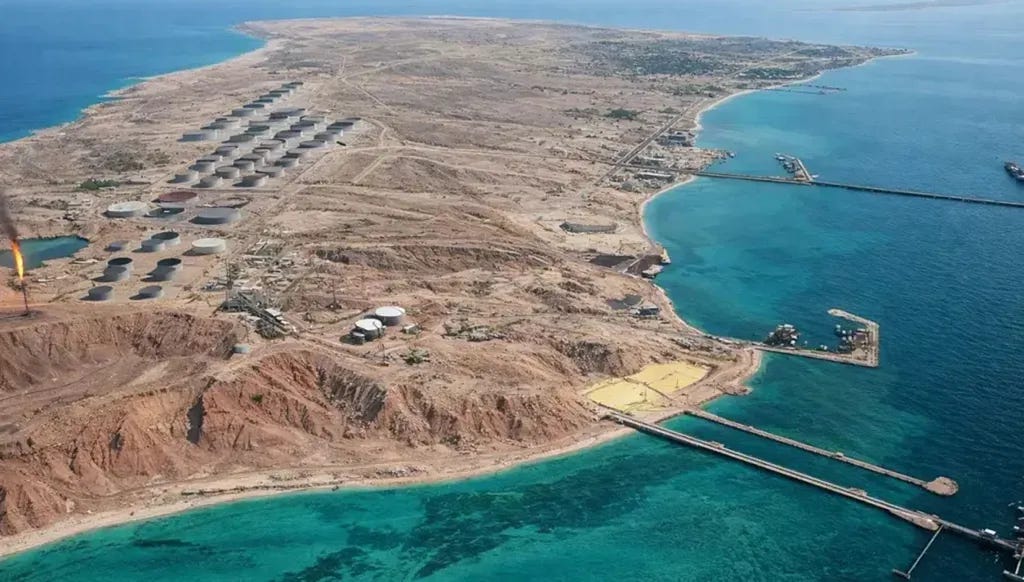
Trump said he had told Benjamin Netanyahu not to repeat attacks on Iranian natural gas infrastructure after tit-for-tat strikes on energy sites sent prices spiralling and deepened the war’s economic fallout. He said he told the Israeli prime minister, “Don’t do that,” and that he would not do it again.
But the episode exposed gaps between Washington’s public messaging and the conduct of the war. Trump said the United States had not known about the strike on South Pars, while Israeli officials said the operation had taken place in consultation with the United States. Nearly three weeks into the conflict, there is no end in sight.
Iran’s response damaged Qatar’s Ras Laffan Industrial City, widening fears of a global oil shock and reinforcing how attacks on energy infrastructure are shaping both military escalation and market instability.
Sources: New York Times, Reuters

Iranian attacks have knocked out 17% of Qatar’s liquefied natural gas export capacity, damaging two of the country’s 14 LNG trains and one of its two gas-to-liquids facilities, according to QatarEnergy’s chief executive. Saad al-Kaabi said the disruption would sideline 12.8 million tons a year of LNG for three to five years and force majeure may be declared on long-term contracts to Italy, Belgium, South Korea and China.
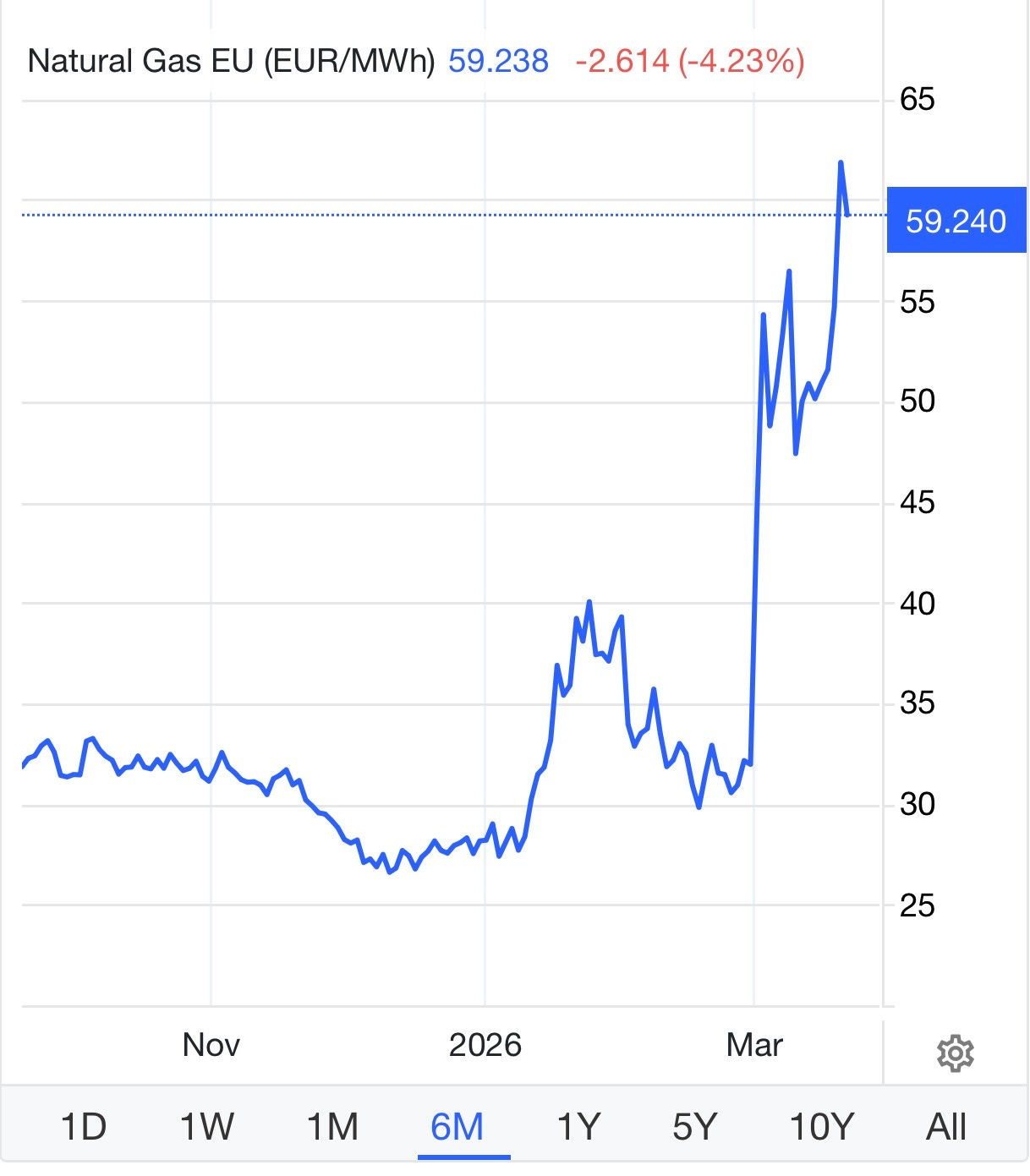
The damage threatens supplies to Europe and Asia and has already jolted markets. European benchmark gas futures jumped as much as 35% on Thursday, while analysts warned the disruption could keep prices higher for longer.
Kaabi said the attacks would cost Qatar about $20 billion in annual revenue and set the region back 10 to 20 years.
Sources: Reuters, Bloomberg
The United States is considering lifting sanctions on Iranian oil stranded on tankers at sea in an effort to increase supply and ease rising prices after Iran closed the Strait of Hormuz. Treasury Secretary Scott Bessent said around 140 million barrels could be released, equivalent to roughly 10 days to two weeks of supply.
The proposal is designed as a short-term measure to stabilise markets as oil prices have remained above $100 per barrel for much of the past two weeks. Officials said the move could redirect crude originally destined for China into wider global markets, while the government also considers releasing additional reserves to offset supply disruptions.
Experts cautioned that the approach may have limited long-term impact and could allow Iran to generate additional revenue during the conflict, raising questions over the broader strategic trade-offs.
Sources: The Guardian, CNBC
Trump invoked Pearl Harbor during an Oval Office meeting with Japan’s prime minister, Sanae Takaichi, breaking with the long US practice of publicly avoiding harsh references to the 1941 attack in meetings with Japanese leaders. Responding to a question about why allies were given no advance notice of the US-Israeli assault on Iran, he said: “Who knows better about surprise than Japan, OK? Why didn’t you tell me about Pearl Harbour, OK?”
The Japanese Prime Minister later described Trump’s comments as “unusual - a shock”.
The remark came as Trump pressed allies for help safeguarding the Strait of Hormuz saying “I think it’s appropriate that people step up in the case of Japan. I hear they get more than 90 per cent of their oil through the strait. So that’s a big reason to step up:”
He also delivered more mixed messages on the Iran war. He said he was not putting more troops into the region, even as reports said 2,500 Marines were on their way and planners were considering more.
Sources: New York Times, The Times
The World Trade Organization warned that the Middle East war could drag global trade lower this year as high energy prices and disrupted transport routes add pressure to an already slowing outlook. It forecast merchandise trade growth of 1.9% in 2026, down from 4.6% in 2025, but said that if crude oil and liquefied natural gas prices remain high, growth could fall further to 1.4%.
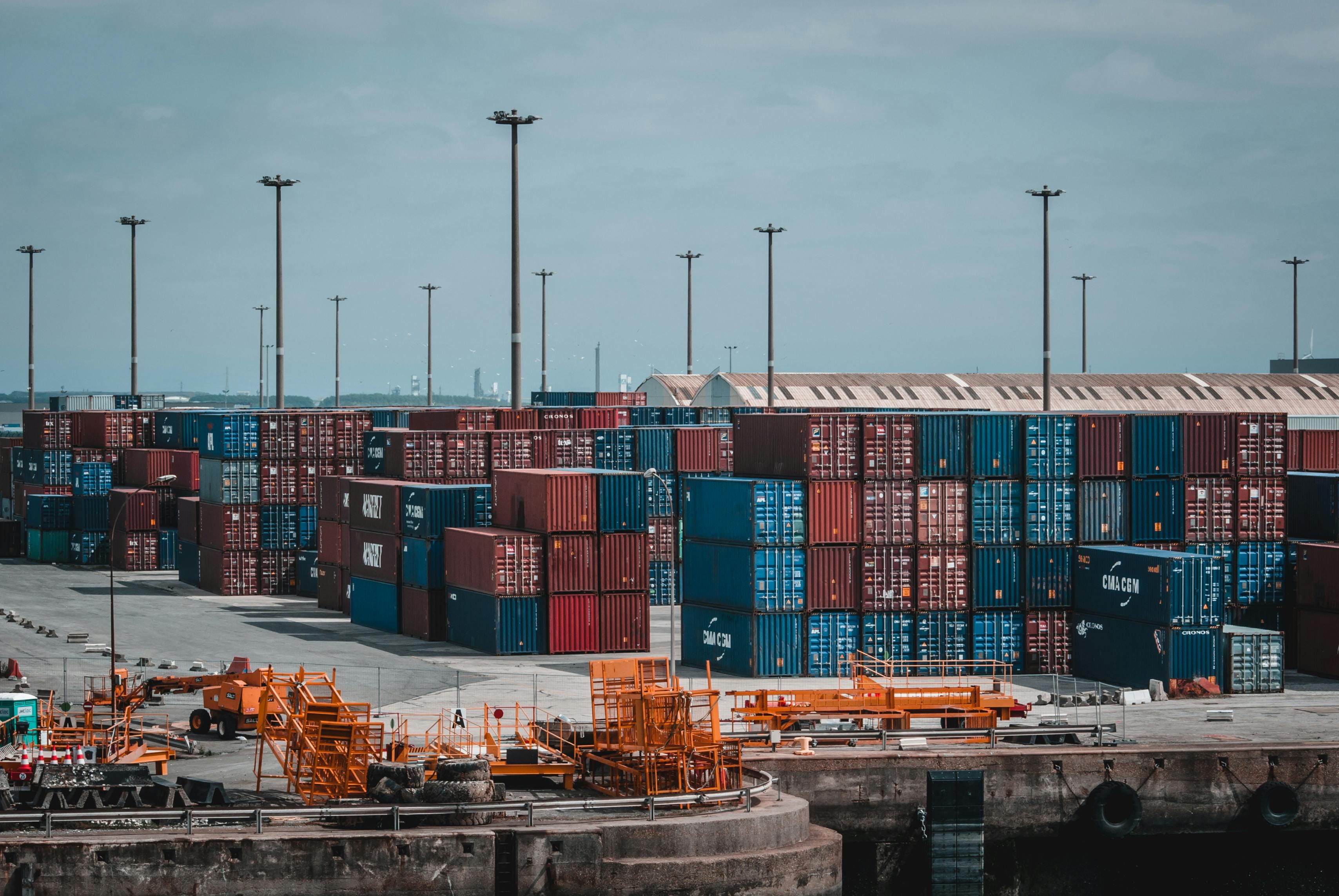
The WTO said the conflict is threatening critical transport corridors and has nearly halted shipping through the Strait of Hormuz. It also warned of spillovers for food security, higher costs for consumers and businesses, and slower services trade growth of 4.1% instead of 4.8%.
Fuel-importing regions in Asia and Europe would face the sharpest hit if elevated energy prices persist through the year.
Sources: France 24, Reuters

EU leaders failed to persuade Viktor Orban to lift Hungary’s blockade of a €90bn loan for Ukraine, exposing a deep rift over support for Kyiv as the war enters its fifth year. The loan, agreed in December, is intended to fund urgent military aid and government support, but one implementation step requires unanimity among all 27 member states. Orban has linked his opposition to a dispute over oil supplies through the Druzhba pipeline.
Leaders in Brussels accused Orban of breaking his word and damaging the EU’s credibility. Friedrich Merz called it a “gross act of disloyalty”, while António Costa said nobody could blackmail the European institutions. EU officials warned Kyiv could run short of money within weeks, and the European Commission was asked to examine whether the loan could be implemented without Hungary.
Sources: South China Morning Post, The Guardian

The top US general overseeing forces in Latin America told lawmakers that the military is neither rehearsing for an invasion of Cuba nor actively preparing to take over the island. General Francis Donovan said US Southern Command was not conducting operations involving seizing, occupying or otherwise asserting control over Cuba, and said he knew of no other US military command doing so.
His remarks came after President Donald Trump said this week that he expected to take Cuba “in some form” and amid broader concern over Washington’s increasingly forceful posture in Latin America. Donovan said the military was nonetheless ready to defend the US embassy in Havana, protect the base at Guantánamo Bay and support the government in any mass migration event from the island. He also said Guantánamo had suffered storm damage and was down to one working pier and one refuelling pier.
Sources: Reuters, The Guardian

The World Happiness Report 2026 said heavy social media use is linked to a sharp decline in well-being among young people, with the effect described as especially concerning among teenage girls in English-speaking countries and Western Europe. Among under-25s in those countries, life evaluations have dropped by almost one point over the past decade, while those using social media for less than one hour a day reported the highest well-being.

The report also ranked Finland as the happiest country in the world for the ninth year in a row, with other Nordic countries again near the top. Researchers said the strongest performers combine wealth, equal distribution, welfare protection and healthy life expectancy. The study drew on about 100,000 responses across 140 countries and territories.
The least happy countries were Afghanistan, Sierra Leone and Malawi.
Sources: DW, Associated Press, World Happiness Report - 2026
On this day …
On this day in 1995, members of the Japanese cult Aum Shinrikyo released sarin gas on multiple lines of the Tokyo subway during the morning rush hour. The coordinated attack killed 13 people and injured thousands, exposing commuters and emergency responders to the highly toxic nerve agent.
The incident shocked Japan and demonstrated that a non-state group could carry out a large-scale chemical attack in a modern city.
Authorities later dismantled the cult’s leadership and prosecuted those responsible, while the attack prompted stronger counterterrorism and chemical weapons controls.
The event remains a stark example of how unconventional weapons can be used by extremist groups far from traditional battlefields.