


US Seizes Iranian Ship As Hormuz Standoff Deepens
Iran Retaliates After US Ship Seizure Near Hormuz
Hormuz Traffic Halts As Iran Tightens Restrictions
Houthi Threat To Second Shipping Front
London Arson Probe Turns to Suspected Iran Proxies
Radev Heads for Clear Bulgarian Election Victory
IMF Meetings Expose Limits of Economic Firefighting
Spain Pushes EU Toward Break With Israel
Australia and Japan Deepen Warship Partnership
Eight Children Killed In Louisiana Domestic Shooting

US forces seized an Iranian-flagged cargo vessel in the Gulf of Oman after it ignored repeated warnings from a guided-missile destroyer enforcing Washington’s naval blockade near the Strait of Hormuz. President Donald Trump said the vessel, Touska, had attempted to bypass the blockade and was disabled after rounds were fired into its engine room before US Marines boarded and took control.
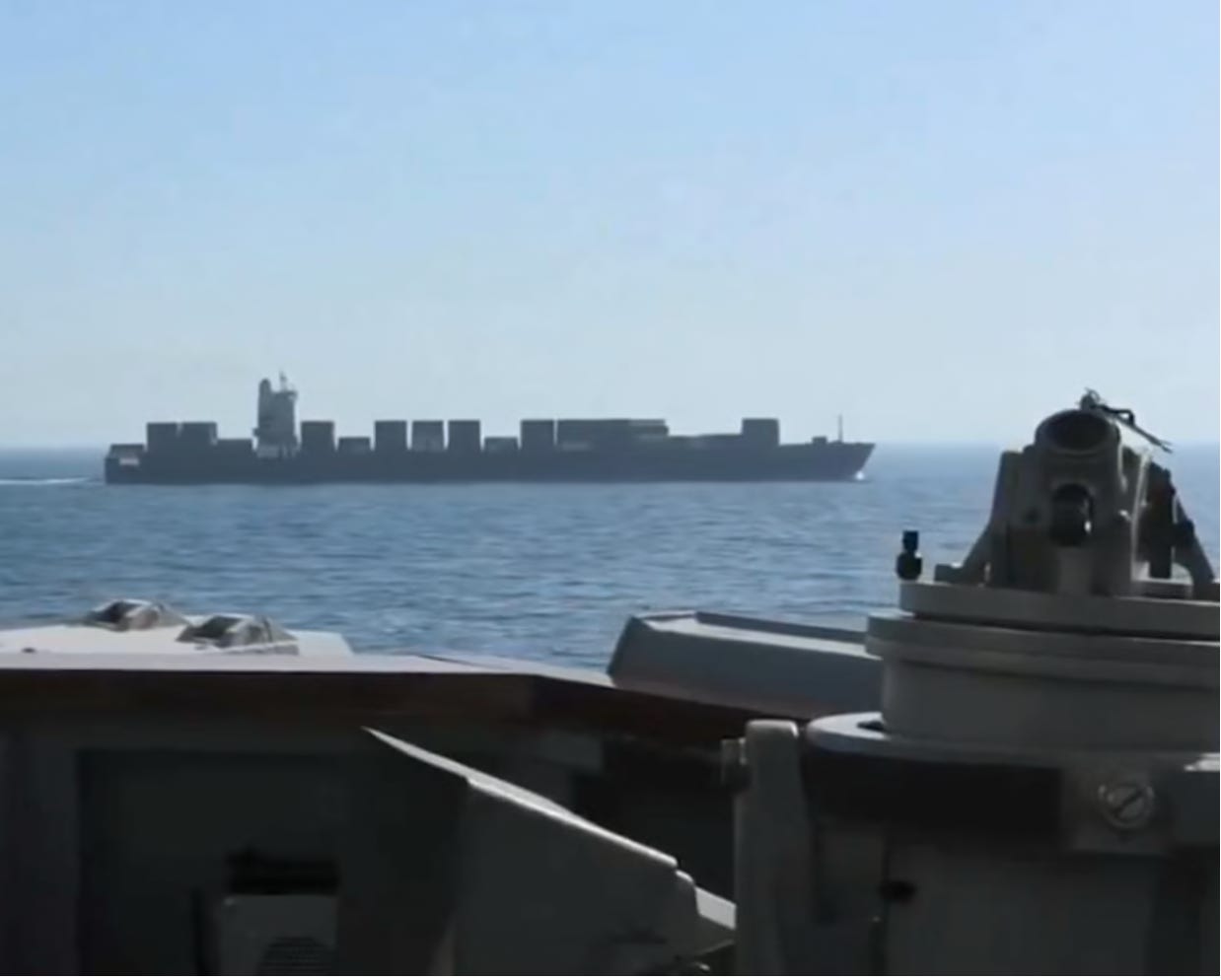
Iran accused the United States of violating a ceasefire and warned its armed forces would respond. The seizure followed renewed disruption to shipping through the Strait of Hormuz, through which about a fifth of global oil flows, as confusion over transit rules halted nearly all traffic again and Brent crude rose more than 7 percent.
Conflicting statements from both sides also cast doubt on planned talks in Islamabad before the fragile ceasefire expires.
Sources: Al Jazeera, Bloomberg

Iran launched drone attacks targeting US military vessels in the Sea of Oman after American forces fired on and seized an Iranian cargo ship near the Strait of Hormuz, according to Iran’s semi-official Tasnim news agency.
The reported strikes were described as retaliation for the earlier interception of the Iranian-flagged vessel Touska, which President Donald Trump said had tried to breach a US-imposed naval blockade.
The seizure and reported retaliation added to doubts over whether the fragile two-week ceasefire will hold until its scheduled end. Iran accused Washington of violating the ceasefire and said it would not join a second round of proposed talks with the United States, citing the ongoing blockade, excessive demands and shifting positions by Washington. Pakistan was preparing security arrangements in Islamabad for the planned meeting.
Sources: India Today, Iran International

Commercial shipping through the Strait of Hormuz ground to a halt after a brief surge in crossings collapsed under renewed gunfire, Iranian restrictions and the continuing US naval blockade of Iranian vessels.
No crossings were seen on Sunday, while at least 13 oil tankers turned back on Saturday after earlier attempts to leave the Persian Gulf following comments by Abbas Araghchi that the strait was open.
Iran then shut the waterway again after the United States refused to lift its blockade, trapping millions of barrels of oil and large quantities of liquefied natural gas inside the Gulf. The disruption followed reports from the UK Maritime Trade Operations that Iranian gunboats fired at a tanker off Oman and that a container ship was hit by an unknown projectile.
The renewed closure deepened the energy crunch and left Gulf producers still dependent on steady tanker flows and unrestricted passage to restore normal export operations.
Sources: Bloomberg, Reuters

Yemen’s Houthi movement threatened to close the Bab el-Mandeb Strait as Iran launched drone attacks on US Navy vessels after diplomatic efforts to contain the war appeared to falter. The warning raised the prospect of simultaneous disruption at two critical maritime chokepoints after Iran reclosed the Strait of Hormuz and the Houthis signalled pressure on the Red Sea gateway.
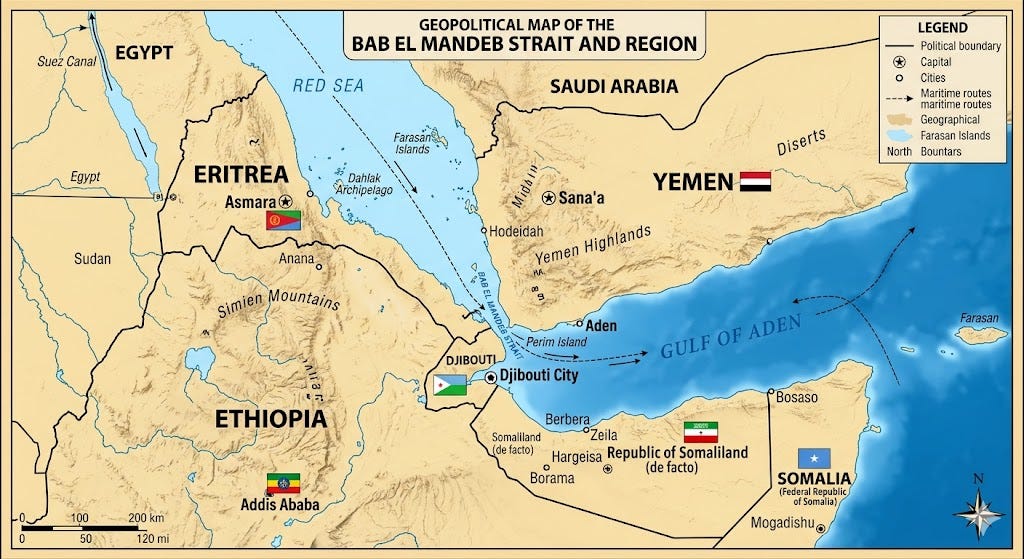
A closure of Bab el-Mandeb would sever Saudi Arabia’s only remaining oil export route. The kingdom has been shipping up to 7 million barrels of crude a day through Yanbu since the Iran conflict shut Ras Tanura, its main Gulf export terminal.
Iran’s Tasnim news agency said Tehran’s target list now included the pipeline carrying Saudi oil to Yanbu, the UAE’s export terminal at Fujairah and a full closure of Bab el-Mandeb. Tehran also denied agreeing to a second round of talks in Islamabad.
Sources: South China Morning Post, Times of India

British counterterror police are investigating whether a series of arson attacks on Jewish sites in London was carried out by Iranian proxies, after fires damaged synagogues, Jewish charity property and sites linked to the community. No injuries were reported in the latest attack, which caused minor smoke damage at Kenton United Synagogue in Harrow on Saturday night.
Deputy Assistant Commissioner Vicki Evans said investigators were examining claims by a group calling itself Harakat Ashab al-Yamin al-Islamia, which has claimed responsibility for several incidents and may have links to Iran.
Police have increased patrols in northwest London after attacks within a few kilometres of each other, including the torching of four ambulances belonging to a Jewish charity in Golders Green last month. Chief Rabbi Ephraim Mirvis described the attacks as a sustained campaign of violence and intimidation, while Prime Minister Keir Starmer called them abhorrent.
Sources: NPR, CBS News

Rumen Radev’s Progressive Bulgaria party was headed for a decisive win in Bulgaria’s parliamentary election, with more than 60% of votes counted showing it on about 45% and well ahead of its main rivals. The result in the country’s eighth general election in five years could ease a period of instability marked by weak coalitions and repeated returns to the polls.
Radev, a former president who stepped down in January to form the new movement, campaigned on corruption, stable government and domestic renewal after protests brought down the previous administration.
He said Bulgaria should build “a strong Bulgaria in a strong Europe” and continue on its European path, while remaining critical of military support for Ukraine and of EU sanctions on Russia. Although his party’s performance was one of the strongest by a single force in a generation, he said on Sunday evening that he was looking for coalition partners.
Sources: BBC, Reuters

Finance officials at the IMF and World Bank spring meetings confronted how little they could do to shield economies from the latest geopolitical shock, as war-related disruption in the Gulf darkened the global outlook. Optimism briefly rose when it appeared the Strait of Hormuz might reopen, but that faded after new attacks on shipping, leaving officials again focused on energy prices, supply disruption and the risk of wider recession.
The IMF and World Bank pledged up to $150 billion in new financing for developing countries hit hardest by the energy shock, while warning against oil hoarding and broad fuel subsidies.
Yet participants acknowledged the decisive developments were unfolding outside Washington. The IMF said its 2026 global growth forecast of 3.1% was already outdated and that the world economy was drifting towards a more adverse 2.5% scenario, with prolonged war carrying recession risk.
Sources: Reuters, Wall Street Journal

Spain will ask the European Union on Tuesday to terminate its association agreement with Israel, in one of Prime Minister Pedro Sánchez’s sharpest escalations yet against Benjamin Netanyahu’s government.
Speaking at a rally in Andalusia, Sánchez said Madrid would take the proposal to a meeting of EU foreign ministers in Luxembourg, arguing that a government violating international law or the principles of the EU cannot remain a partner.
The move follows earlier Spanish calls to suspend the agreement and comes as Sánchez presses other European countries to support tougher action. The proposal does not start in isolation, with several member states having backed similar initiatives, but its path remains difficult.
Ending the agreement would require unanimity among the EU’s 27 member countries, and opposition is expected from a bloc led by Germany.
Sources: Euronews, Politico Europe

Australia and Japan have signed contracts for the first three of 11 next-generation warships for the Australian navy, deepening defence cooperation between two close US allies in the Asia-Pacific. Defence ministers Richard Marles and Koizumi Shinjiro signed the agreement in Melbourne, where both sides also backed closer industrial cooperation under a pact known as the Mogami Memorandum.
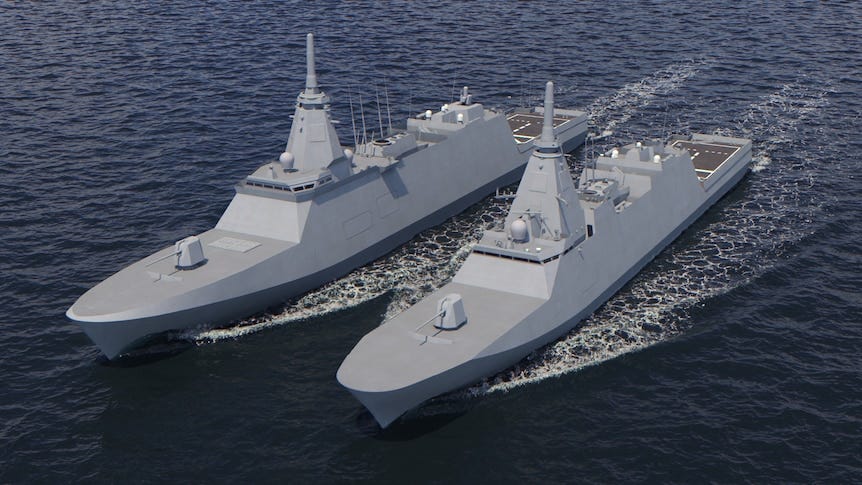
Mitsubishi Heavy Industries will build the first three frigates in Japan, while Austal will construct the remaining eight in Western Australia. The first vessel is scheduled for delivery in December 2029 and is expected to enter service in 2030. Marles said the ships would help secure Australia’s maritime trade routes and northern approaches, while Koizumi said closer coordination was becoming more important in an increasingly severe security environment.
The deal adds to a broader expansion of military cooperation between Canberra and Tokyo amid shared concerns over the regional security landscape.
Sources: Al Jazeera, ABC News

Eight children were killed in a domestic shooting in Shreveport, Louisiana, and the suspect later died after police pursued a carjacked vehicle into neighbouring Bossier Parish. Authorities identified the gunman as Shamar Elkins and said seven of the children killed were his, while the eighth was a cousin. The children were aged 3 to 11, according to the Caddo Parish Coroner’s Office.
Police said two women were seriously wounded and that the violence unfolded across multiple locations early on Sunday. Officers responded just after 6 a.m., and investigators said the shooting was domestic in nature, with Elkins believed to be the only person who fired.
Shreveport Mayor Tom Arceneaux described the attack as maybe the worst tragic situation the city has ever had, while police said they had not identified a motive. Louisiana State Police are investigating the suspect’s death after officers opened fire.
Sources:NBC, Washington Post
On this day …
On this day in 1999, two students carried out a mass shooting at Columbine High School in Colorado, killing 13 people before taking their own lives.
At the time, the attack shocked the United States and dominated global headlines, shaping debate about school security, youth violence, and firearm access for years afterward.
A generation later, however, the tragedy is also remembered as an early marker of a pattern that would become disturbingly familiar. With mass shootings now recorded regularly each year and hundreds of firearm incidents reported on school property in recent statistics, the sense of exceptional shock that followed Columbine has gradually faded.
How is it that we seem to have become accustomed to this sort of event?