


Nepal Rescue Effort Focuses On Hydropower Tunnels (Asia)
Russia’s Jet Drones Force Ukraine To Adapt (Conflict)
U.S.-Iran Fighting Returns To Strait Of Hormuz (Conflict)
China’s Leverage Grows Around Russia And Iran (China)
China’s Taiwan Warning Tests Pacific Forum (China)
Trump Reopens G20 Door To Russia (US)
India Rejects Indus Treaty Ruling (Asia)
AI Risks Move Into Financial Stability (Technology)
Congo Ebola Outbreak Surpasses 6,000 Cases (Africa)
Messi Ends Argentina Career After 21 Years (Sport)
A succinct daily briefing delivered each weekday to help you stay on top of the stories shaping the world.

Hundreds of workers are feared trapped in mud-filled hydropower tunnels after the recent catastrophic flooding along the Nepal-Tibet border. Nepal’s disaster authority said 939 people had died and 3,925 were missing, including 592 foreign nationals. More than 600 workers were believed trapped in tunnels while Prime Minister Balendra Shah said 279 people had already been rescued from hydropower sites.
Rescuers used explosives to blast into hillsides and pumped air into tunnels as families waited for news. An international operation involving Chinese and Nepalese military personnel, with experts from India, Korea and Australia, was trying to reach sites where access points had been buried or destroyed.
The floods began with a glacial collapse high in the Himalayas where collapsing bedrock and glacier ice generated a magnitude 5.2 seismic event. At least 11 hydropower projects, completed or under construction, were damaged.
Sources: Associated Press, BBC

Russia’s growing use of jet-powered Shahed drones is forcing Ukraine to redesign its air defences as faster weapons sustain prolonged daytime attacks. President Volodymyr Zelenskyy said almost 1,500 drones were fired at Ukraine over four days, about 800 of them jet-powered, and that combat aircraft are currently being used to shoot them down.
The new drones cruise at roughly 250mph, around twice the speed of older piston-engine Shaheds and beyond the capability of Ukraine’s cheaper interceptors. Serhii Beskrestnov, an adviser to Zelenskyy on defence technology, said at least 2,500 jet drones were launched in August, up from 1,500 in July.
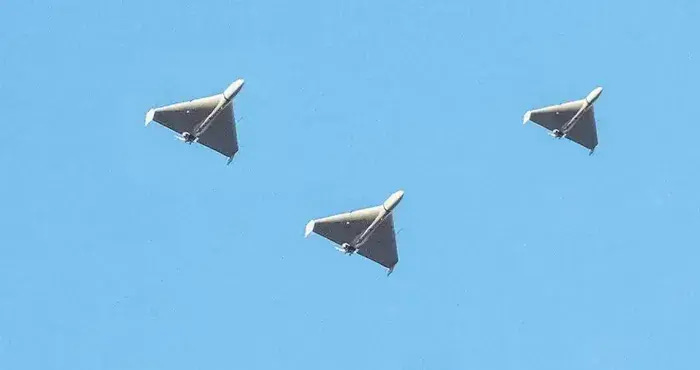
Ukraine is now racing to field faster interceptors. Zelenskyy said four companies had developed relevant systems, while Defence Minister Evgeniy Khmara said field trials had begun and the aim was to scale production to thousands of units.
Sources: CNN, The Guardian

The United States and Iran exchanged strikes for the first time in a month after U.S. forces hit two rocket launchers on Iran’s Larak Island in the Strait of Hormuz. U.S. Central Command said the action targeted Iranian minelaying forces posing an imminent threat, while the IRGC retaliated against U.S. military bases in Jordan and launched drones at an air base in the United Arab Emirates.
President Donald Trump said there would be a response and warned, “We’re going to hit them hard,” although he later described the planned military response as “very limited”.
The renewed fighting comes with the Strait of Hormuz still largely closed and the U.S. maintaining a blockade of Iranian ports. Both main crude contracts rose Tuesday, extending gains of more than 2% from the previous day as fears of renewed escalation returned.
Sources: NBC News, France 24

Chinese President Xi Jinping used the Shanghai Cooperation Organisation (SCO) summit in Bishkek to reaffirm ties with Russian President Vladimir Putin as wars and sanctions deepen Beijing’s leverage over both Moscow and Tehran. Xi said China-Russia relations had grown “more solid” despite increased uncertainty while Putin said cooperation was developing on all fronts.
China has become critical to sustaining both the Russian and Iranian economies using its position as the world’s largest crude importer and consumer-goods exporter to blunt Western economic pressure. Western sanctions have made Russia increasingly dependent on China, while Beijing is also the biggest importer of Russian and Iranian crude.
The relationship with Moscow is increasingly one-sided in Beijing’s favour. Sanctions have allowed China to stockpile discounted Russian oil.
The SCO has expanded to include Iran and Belarus, strengthening its role as a counterpoint to Western-led groupings.
Sources: Al Jazeera, New York Times

China’s warning of “consequences” over Taiwan’s presence at the Pacific Islands Forum has sharpened tensions over who gets to shape the region’s agenda. Chinese envoy Qian Bo objected to Taiwan attending the opening ceremony in Palau, while Australian Prime Minister Anthony Albanese said the forum decides what happens at its meetings, not outside countries.
New Zealand Foreign Minister Winston Peters similarly said the group does not take instructions from non-members. Taiwan attended as a development partner, while China is one of the forum’s dialogue partners.
The dispute reflects a wider contest for influence across the Pacific involving China, the United States, Australia, New Zealand and Taiwan.
Palau President Surangel Whipps Jr. said the Pacific was “our home, not a theater for geopolitical competition”, as members face growing difficulty maintaining consensus amid competing external interests.
Sources: Reuters, Associated Press
Restacking this post will help it reach more readers interested in the world.

The Trump administration invited Russian Finance Minister Anton Siluanov to attend the G20 finance ministers’ meeting in Asheville, his first in-person appearance at the forum since Russia’s full-scale invasion of Ukraine. European officials objected with German Finance Minister Lars Klingbeil calling the signal “quite troubling” and refusing to join a group photograph with Siluanov.
President Donald Trump defended the invitation, saying, “We like getting along with everybody.” Treasury Undersecretary Erin Browne said Russia was invited because it remains a G20 member and that dialogue was important even during conflict.
Treasury Secretary Scott Bessent also met Siluanov and said the war needed to end. The invitation marked a sharp change from the U.S. approach after the 2022 invasion, when American and European officials publicly protested Russian participation in international economic forums. Siluanov was ultimately excluded from the traditional group photograph after European objections.
Sources: Washington Post, Politico

India has rejected a ruling by the Permanent Court of Arbitration ordering it to uphold the 1960 Indus Waters Treaty with Pakistan and limit construction at the Ratle Hydro-Electric Plant in Kashmir. The tribunal said the treaty remains fully in force and that India had no justification for ending or suspending it.
India suspended the agreement in April last year after identifying two of three assailants as Pakistani in an attack that killed 26 people at a Kashmir tourist destination. Pakistan denied involvement and later took legal action after India began work to increase reservoir capacity at two hydroelectric projects.
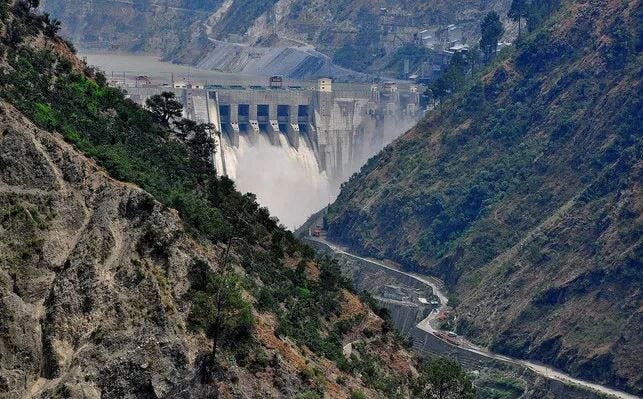
India’s Ministry of External Affairs said the court had “no jurisdiction whatsoever” over its sovereign decisions and that the ruling would not affect its actions. The tribunal said restrictions on Ratle should remain until 90 days after a World Bank-appointed neutral expert issues a decision expected by July 2027.
Sources: South China Morning Post, Al Jazeera

Bank of England Governor Andrew Bailey has warned G20 finance ministers that artificial intelligence could trigger a global economic downturn and create significant cyber risks for financial systems. Writing as chair of the Financial Stability Board, Bailey said frontier models were developing increasingly sophisticated autonomy, problem-solving abilities and threat capabilities.
He said highly valued markets, rising investor borrowing and the concentration of money in major technology companies could amplify a future market correction. Bailey also warned that frontier AI could materially alter the speed, scale and economics of cyber-risk, allowing disruption to spread across jurisdictions and undermine confidence in highly interconnected financial systems.
Bailey called for global steps to support safe and responsible model release and deployment. He said many jurisdictions still lack protocols to manage advanced frontier AI, increasing risks for the financial sector and beyond.
Sources: BBC, The Guardian

Congo’s Ebola outbreak has surpassed 6,000 confirmed cases and 2,911 deaths, becoming the fastest-spreading Ebola epidemic ever recorded. Authorities said 1,366 people had recovered. The outbreak has expanded from three health zones to nearly 60 and most cases and deaths are occurring outside monitored contacts and within communities.
The response is being complicated by insecurity, displacement, a health workers’ strike and intense population movements in eastern Congo. The World Health Organization has said the outbreak remains out of control and risks surpassing the 2014-2016 West Africa epidemic, which killed more than 11,000 people.
The outbreak is caused by the Bundibugyo virus, for which there is no approved vaccine or treatment. Congo has begun vaccinating frontline workers with Ervebo, effective against the different Zaire strain, while clinical trials seek a licensed Bundibugyo vaccine.
WHO says the risk of further cross-border spread remains.
Sources: Associated Press, Al Jazeera

Argentina captain Lionel Messi has retired from international football, ending a 21-year career in which he became the country’s most-capped player and all-time leading scorer. The 39-year-old played 207 matches and scored 125 goals, appearing at six World Cups and winning the tournament in Qatar in 2022.
Messi also helped Argentina end a 28-year trophy drought by winning the Copa América in 2021 before retaining the title in 2024. He had previously retired from international duty in 2016 after three consecutive final defeats, but reversed that decision and later led Argentina to its third World Cup title.

Messi said the decision “hurt - and still hurts deeply” but that “the time has come”. He wrote his retirement letter on July 21, two days after Argentina lost the 2026 World Cup final to Spain, and published it after the death of his father, Jorge Messi, on August 8.
Sources: ESPN, Sydney Morning Herald
Restacking or sharing this publication means more people can read it. Commenting extends the conversation. Liking shows your appreciation.
On this day …
On this day in 1951, Australia, New Zealand and the United States signed the ANZUS Treaty in San Francisco. Forged in the aftermath of the Second World War and as the Cold War intensified in Asia, the agreement committed the three countries to consult when their security in the Pacific was threatened.
ANZUS became a foundation of Australia’s post-war security relationship with the United States, although the three-way arrangement weakened after Washington suspended its treaty obligations to New Zealand in the 1980s over nuclear policy.
More than seven decades after it was signed, the treaty remains central to the architecture of Australian security although the question must remain as to how enthusiastically the US would come to the defence of Australia if push comes to shove?
Alliances endure when the interests behind them endure.