


UK Links Iran to RAF Fairford Incident (UK)
Russia Raises Nuclear Stakes Over Kaliningrad (Europe)
France’s Student Protests Spread and Turn Violent (Europe)
Burnham Opens Door to Britain Rejoining EU (UK)
US Ends Its Military Mission in Iraq (Middle East)
US Response Keeps Iran Talks Alive (Geopolitics)
Brazil Beef Hits China’s 67% Tariff Wall (Trade)
EU and Canada Deepen Strategic Partnership (Diplomacy)
Swiss Glaciers Lose Another 5.5% of Their Ice (Environment)
Oceans Undergo Profound Change as Warming Accelerates (Environment)
A succinct daily briefing delivered each weekday to help you stay on top of the stories shaping the world.
UK Prime Minister Andy Burnham says there are “strong indications” Iran played a part in an alleged security incident at RAF Fairford, marking the first time a British official has publicly linked Tehran to the case. Five British men in their 20s were arrested near the US-used airbase on Sunday and released on bail a day later.
Burnham provided no details about the suspected plan or why the government believes Iran was involved, stressing that the police investigation remains ongoing, complex and serious. Police found a quantity of petrol in vehicles near the base but no explosives.
Iranian Foreign Minister Abbas Araghchi strongly denied involvement, saying Burnham was “barking up the wrong tree”. President Donald Trump criticised the decision to grant bail, while British counterterror policing chief Laurence Taylor said it was grounded in “experience and strategy” and the suspects remain under investigation.
Sources: BBC, Al Jazeera
Russia has warned NATO it could use nuclear weapons if alliance members attempt to isolate Kaliningrad from the rest of Russia, escalating tensions around the heavily militarised Baltic exclave between Poland and Lithuania. A document sent to NATO accused the alliance of pursuing a “dangerous and reckless course” carrying high risks of direct armed conflict.
NATO Secretary-General Mark Rutte said the alliance had responded by stressing that it is defensive and that its exercises pose no threat to Russian territory. NATO also urged Moscow to stop its nuclear threats and increasingly reckless behaviour towards allies.

Russia says NATO is preparing an air and naval blockade of Kaliningrad, while European governments have accused Moscow of escalating sabotage and other hybrid activity, which Russia denies. Nuclear analyst Nikolai Sokov warned that Russia and Europe risk mutual miscalculation as Western support for Ukraine and military activity around the Baltic continue.
Sources: Associated Press, Reuters

France’s student protests have spread beyond Paris as anger over teacher shortages, overcrowded classrooms and poor learning conditions increasingly collides with violence. Security forces detained more than 600 people on Wednesday, while Interior Minister Laurent Nunez said 83 police officers and gendarmes and 32 teachers and pupils were injured across 356 affected schools.
The movement began around Paris last week before spreading to other regions, with students blockading schools. A student union says pupils face staff shortages, dilapidated buildings and overcrowded schedules and classrooms, while teachers’ unions have backed their demands but condemned the violence.
President Emmanuel Macron said students’ concerns were legitimate but could not justify attacks on police and teachers. Macron and Nunez accused far-left groups of inciting violence, while opposition leader Jean-Luc Melenchon has criticised the government’s response. France’s largest student union has called for further blockades and a national youth demonstration.
Sources: DW, New York Times
Prime Minister Andy Burnham has put EU membership back among Britain’s options, saying the government will review whether to maintain current arrangements, pursue a customs union or single-market membership or rejoin entirely. Downing Street officials are also consulting thinktanks and pollsters about public support for reversing Brexit.
French President Emmanuel Macron welcomed the prospect, saying “Welcome back”, while the EU said it remained open to options proposed by Britain. But officials caution that rejoining could require concessions previously avoided by the UK, including accepting freedom of movement and renegotiating its budget rebate.
A former Labour official said losing the rebate could cost Britain roughly £5 billion annually, while another said rejoining or entering a customs union would require voiding post-Brexit free trade agreements. For now, next month’s summit is expected to focus on carbon markets, food & agriculture trade and youth mobility.
Sources: Bloomberg, The Guardian
The US-led coalition has formally ended its military mission in Iraq, 12 years after returning to fight Islamic State and two years after Washington and Baghdad agreed a phased withdrawal. The Pentagon said Iraqi authorities now bear primary responsibility for remaining security challenges, although Washington will continue targeted training and intelligence support.
President Donald Trump called the withdrawal “a great day for America” and a victory for Iraq and over IS. Iraqi Prime Minister Ali al-Zaidi said it marked a new phase defined by sovereignty and the readiness of Iraqi forces, with his government declaring 1 October Sovereignty Day.
The departure also shifts responsibility for containing remaining IS cells and Iran-aligned armed groups towards Baghdad. Some analysts question whether Iraqi forces are sufficiently prepared, while the government hopes the coalition’s exit will weaken a key justification used by Iran-backed factions for retaining weapons outside state control.
Sources: The Guardian, RFI
If you are enjoying today’s newsletter then please Restack it - it helps us a lot

Iranian officials say Tehran has received an official US response to its latest proposal to end the seven-month war, despite President Donald Trump publicly rejecting the offer days earlier. The response was presented by Foreign Minister Abbas Araghchi to President Masoud Pezeshkian, but officials did not disclose its contents or say whether Washington had rejected the proposal.
An official briefed on the talks said the sides largely agree on the steps required but remain divided over their sequence. Pezeshkian said Iran would work to bring an agreement to fruition and that any deal must follow a “win-win strategy”.
Iran has offered to reopen the Strait of Hormuz within a week if Washington lifts its blockade of Iranian ports, releases frozen assets and waives sanctions on Iranian oil sales, among other conditions. Mediators continued talks after Trump’s public rejection, while shipping through the strait remains substantially disrupted.
Sources: Associated Press, Times of Israel
Brazilian beef shipments to China face an additional 55% tariff after the world’s largest beef exporter exhausted its annual import quota. Brazil filled its roughly 1.1-million-tonne allowance by September 29, with the surcharge taking effect on October 1 and lifting the total tariff on above-quota beef to 67%.
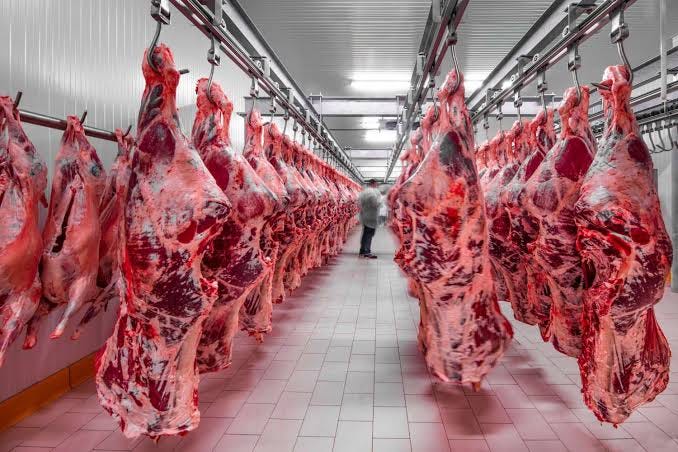
The restriction threatens access to Brazil’s biggest beef market. China bought 1.68 million tonnes of Brazilian beef last year, accounting for 48% of Brazil’s exports, while the industry estimates this year’s quota covers only about 65% of its 2025 shipments.
Brazil had sought access to unused quota from Uruguay but China has not approved the transfer. Brazilian exporters had accelerated shipments earlier this year before volumes collapsed to about 16,100 tonnes in August. Plants are now preparing for a fresh quota of roughly 1.13 million tonnes from January.
Sources: Bloomberg, South China Morning Post
The EU and Canada plan to announce an expansive new partnership at their October summit, extending cooperation across energy, critical minerals, technology and supply chains. The proposed “Alliance for the Future” includes studying new subsea cables linking Europe, Canada and Asia and the long-term feasibility of Canadian LNG exports to Europe.
The two sides also plan to coordinate investment in critical minerals, explore stockpiling resources against market fluctuations and geopolitical impacts, and identify commitments for Canadian mineral exports to Europe. The European Investment Bank and Canada have completed negotiations to facilitate investment in Canadian projects across both regions.
The partnership comes as both seek to reduce dependence on the US and China. Plans also include negotiations for Canada to join EU programmes covering students, research and satellites, alongside the joint purchase of 50 Canadian-made firefighting aircraft for use from 2030.
Sources: Politico Europe, Bloomberg

Switzerland’s glaciers lost 5.5% of their ice in 2026, extending a rapid decline that has removed about 20% of the country’s glacial ice since 2021. The loss was slightly below the record 6% recorded in 2022 because winter brought somewhat more snow, although major glaciers including the Rhône and Aletsch suffered record losses.

The retreat has consequences beyond the Alps. Glaciers store winter snow and release water during spring and summer into waterways including the Rhine and Danube, supporting food production, freight transport and power generation. This summer, low river levels halted freight traffic and temporarily shut nuclear power stations that rely on river water for cooling.
Around 1,200 smaller glaciers have disappeared over the past 50 years. Matthias Huss, head of Switzerland’s GLAMOS monitoring network, said that if current warming continues, its projections show all Swiss glaciers disappearing by the end of the century.
Sources: NPR, Washington Post

The world’s oceans are warming at an accelerating rate with more than 120 scientists warning of profound changes across marine systems. Oceans absorb about 90% of excess heat from human-caused greenhouse gas emissions, The rate of warming has doubled over the past 20 years and sea surface temperatures reached record highs in 2023, 2024 and 2026.
The changes extend beyond temperature. Global mean sea level rose about 3.8mm annually between 1999 and 2025, accelerating to 4.2mm from 2012, while oceans became about 17% more acidic between 1985 and 2025. Marine heatwaves in the Mediterranean and Black Seas in 2024 lasted more than 30 days in some cases.
The Arctic has also warmed rapidly, with sea and sea-ice surface temperatures rising about 4.2C over four decades. Scientists say Antarctic sea-ice loss is already affecting penguin populations and reshaping biodiversity.
The report said the impact of storm surges and extreme wave events was expected to intensify because of the accelerating sea level rise.
Sources: CNN, FT
Restacking or sharing this publication means more people can read it. Commenting extends the conversation. Liking shows your appreciation.
On this day …
On this day in 1949, Mao Zedong proclaimed the establishment of the People’s Republic of China from Tiananmen in Beijing, marking the Communist Party’s victory in the long struggle for control of mainland China.
The proclamation followed decades of upheaval encompassing civil war, Japanese invasion and renewed conflict between Mao’s Communist forces and Chiang Kai-shek’s Nationalists. The defeated Nationalist government withdrew to Taiwan, creating a political division that remains unresolved.
The new state was poor, overwhelmingly rural and emerging from decades of conflict. Seventy-seven years later, the country established that day is a nuclear power, the world’s second-largest economy and one of the central forces shaping the international order.