


Trump Claims Iran War Ended Before Deadline (Politics)
Iran War Cost Estimate Nears $50 Billion (Conflict)
Trump Reviews US Troop Cuts Across Europe (Europe)
Guterres Says US Funding Debt Non-Negotiable (Diplomacy)
UK Raises Terror Threat After Golders Green Attack (Security)
Aung San Suu Kyi Moved To House Arrest (Politics)
Brazil Cuts Bolsonaro Coup Sentence (Politics)
Trump Ends Longest DHS Funding Shutdown (Politics)
Yen Surges After Japan Intervention Reports (Markets)
Ukraine Oil Strikes Trigger Tuapse Disaster (Conflict)
A succinct daily briefing delivered each weekday to help you stay on top of the stories shaping the world.

The Trump administration said the Iran war had effectively ended because a ceasefire that began in early April halted exchanges of fire, a position that would let the White House avoid seeking congressional authorisation after 60 days of hostilities. Defence Secretary Pete Hegseth told senators the administration considered the war powers clock paused during the ceasefire, but critics said the argument had no legal basis.
The claim comes despite continuing pressure around the Strait of Hormuz. Iran maintains its chokehold on the waterway, while the US Navy maintains a blockade preventing Iranian oil tankers from getting out to sea.
Senator Susan Collins said further military action must have a clear mission, achievable goals and a defined strategy for bringing the conflict to a close. Katherine Yon Ebright from the Brenner Center for Justice said nothing in the War Powers Resolution suggests the 60-day clock can be paused or terminated.
Sources: Washington Post, The Guardian

US officials said the cost of the Iran war is closer to $50 billion, roughly double the $25 billion estimate the Pentagon cited in congressional testimony this week, with internal assessments pointing to higher spending on munitions, damaged equipment and installations not fully captured in earlier figures.
The revised estimate emerged as Defence Secretary Pete Hegseth and Joint Chiefs chair General Dan Caine appeared before lawmakers defending the Pentagon’s $1.5 trillion budget request.
Officials said losses including 24 MQ-9 Reaper drones costing $30 million or more each contributed to the higher total, while replacement of expended munitions is expected to take several years. Senator Angus King said the higher estimate suggested the conflict has cost about $1 billion a day after passing 60 days, with additional repair needed at American facilities damaged by Iran.
Sources: CBS News, The Hill

President Donald Trump said the United States is reviewing whether to reduce the thousands of troops stationed in Germany and indicated he would probably also consider withdrawing forces from Italy and Spain, citing their response to the war in Iran. He said a decision on troop numbers in Germany would be made over the next short period of time. When asked if he would consider pulling troops out of Italy and Spain he replied “probably”.
The United States has more than 36,000 active duty troops assigned to bases in Germany and just over 68,000 personnel permanently stationed across Europe. Trump criticised NATO allies for not sending their navies to help open the Strait of Hormuz and said Italy had not been of any help while Spain had been “horrible”.
German Chancellor Friedrich Merz stressed the importance of NATO’s defensive alliance and transatlantic solidarity after criticising the US approach to the Iran war earlier this week.
Sources: Reuters, BBC

UN Secretary-General Antonio Guterres said billions of dollars owed by the United States are non-negotiable, after reports that Washington had placed conditions on releasing more funds. He said assessed contributions are an obligation of member states, while the world body would keep working to become more effective and cost-effective.
The reported US conditions included nine quick-hit reforms, further cost-cutting and moves to counter China’s influence. They also included overhauling the pension system, ending some long-distance business-class travel, cutting senior ranks and reducing long-running and ineffective peacekeeping missions by 10%.
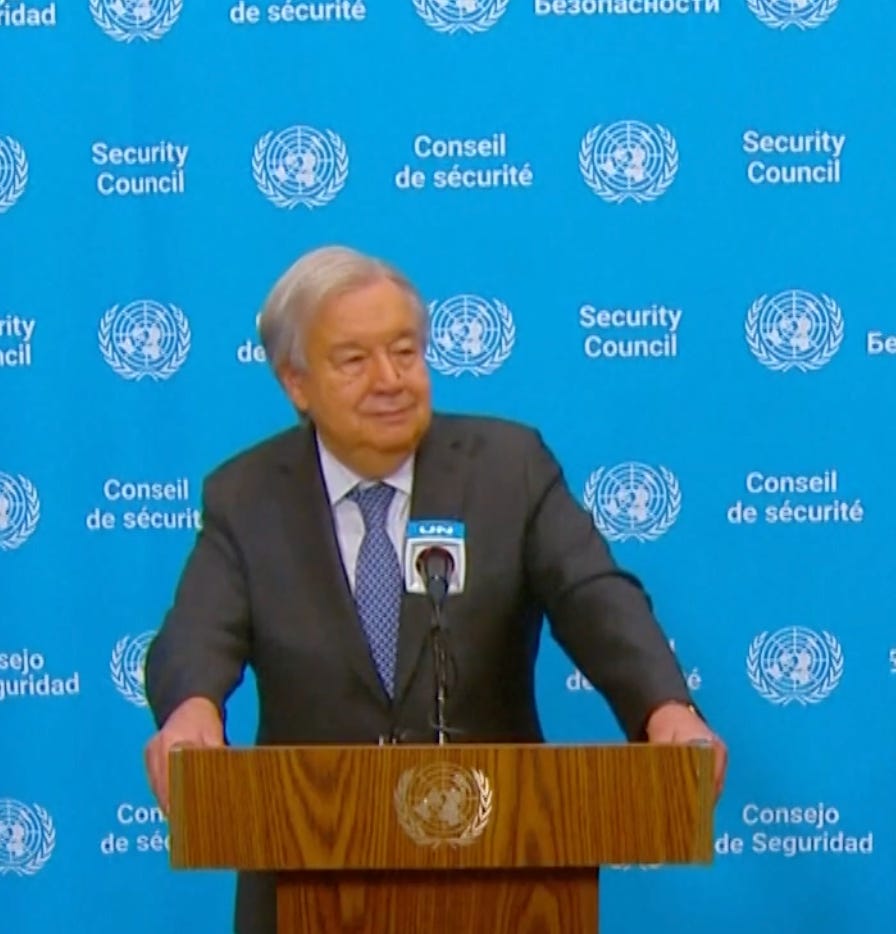
The dispute follows earlier warnings from Guterres that the organisation faced imminent financial collapse because of unpaid fees, most owed by the United States. In February, the United Nations said Washington had paid about $160 million of the more than $4 billion it owed, after cutting millions of dollars in funding last year.
Sources: Reuters, Global Banking and Finance Review

The UK terrorism threat level was raised from substantial to severe after Wednesday’s double stabbing of two Jewish men in Golders Green, meaning an attack is considered highly likely in the next six months. Security minister Dan Jarvis said the move was not solely the result of that attack, but was also driven by broader Islamist and extreme right-wing threats.
Assistant Commissioner Laurence Taylor said police were seeing an elevated threat to Jewish and Israeli individuals and institutions, alongside physical threats by state-linked actors. Home Secretary Shabana Mahmood urged the public to be vigilant and said the increase would concern many, particularly the Jewish community.
Prime Minister Sir Keir Starmer promised a bigger fight against antisemitism and said the government was considering stronger powers to shut down charities promoting antisemitism and prevent hate preachers from entering the country.
Sources: BBC, The Times
Restacking or sharing this publication means more people can read it. Commenting extends the conversation. Liking shows your appreciation.

Myanmar’s detained former leader Aung San Suu Kyi has been moved to house arrest, state media reported, more than five years after the military ousted the civilian government she led and imprisoned her. State-run MRTV said the remaining portion of her sentence had been commuted to be served at a designated residence.
State media also broadcast the first public image of the 80-year-old Nobel laureate in years, but her son Kim Aris said the announcement did little to dispel fears about her condition or confirm she was still alive. Her legal team said it had received no direct notification.

The move followed a wider prisoner amnesty tied to a Buddhist religious holiday. A spokesman for UN Secretary General Antonio Guterres called the commutation a meaningful step towards conditions conducive to a credible political process and repeated the call for all political prisoners to be released.
Sources: South China Morning Post, Al Jazeera

Brazil’s congress overturned President Luiz Inácio Lula da Silva’s veto of a bill reducing the prison sentence of former president Jair Bolsonaro, who was convicted last year of attempting a coup. The lower house backed the move by 318 votes, above the 257 required, before the senate followed by 49 votes, with 41 needed.
If confirmed by a supreme court justice, Bolsonaro’s sentence would fall from 27 years and three months to 22 years and one month. Legal experts estimate his time in a closed regime could drop from four to six years to between two and four, allowing him to move to an open regime as early as 2028.
The vote also reduces sentences for about 280 others convicted over the attempted coup and marks another congressional blow for Lula before October’s expected re-election race against Flávio Bolsonaro.
Sources: The Guardian, France 24

Trump signed bipartisan legislation funding most of the Department of Homeland Security, ending a record partial shutdown that had left the department without routine funds since February 14. The bill funds key agencies through September 30, including FEMA, the Coast Guard, the Transportation Security Administration and the Secret Service, but excludes new money for Immigration and Customs Enforcement and Border Patrol.
The dispute began after Democrats refused to fund immigration enforcement without changes to those operations, while Republicans rejected conditions on the agencies. Some DHS workers had risked missed paychecks in May as temporary funds used to pay TSA and other personnel neared exhaustion.
Republican leaders unlocked the broader bill after moving immigration enforcement funding onto a separate budget track, with lawmakers expected to draft a $70 billion ICE and Border Patrol funding bill.
Sources: South China Morning Post, Associated Press

Japan’s yen surged after reports that Tokyo intervened in foreign exchange markets following a final warning to speculators selling the currency. The yen gained more than 2.5% against the dollar in a few hours on Thursday, after touching more than ¥160, and later traded around 157.10 in Asia on Friday.
A person familiar with the matter said intervention had taken place, while Nikkei cited a government official saying Japan bought yen and sold dollars. US economic officials were notified ahead of the action, in line with a Group-of-Seven agreement to alert counterparts and act only when excess volatility is a risk.
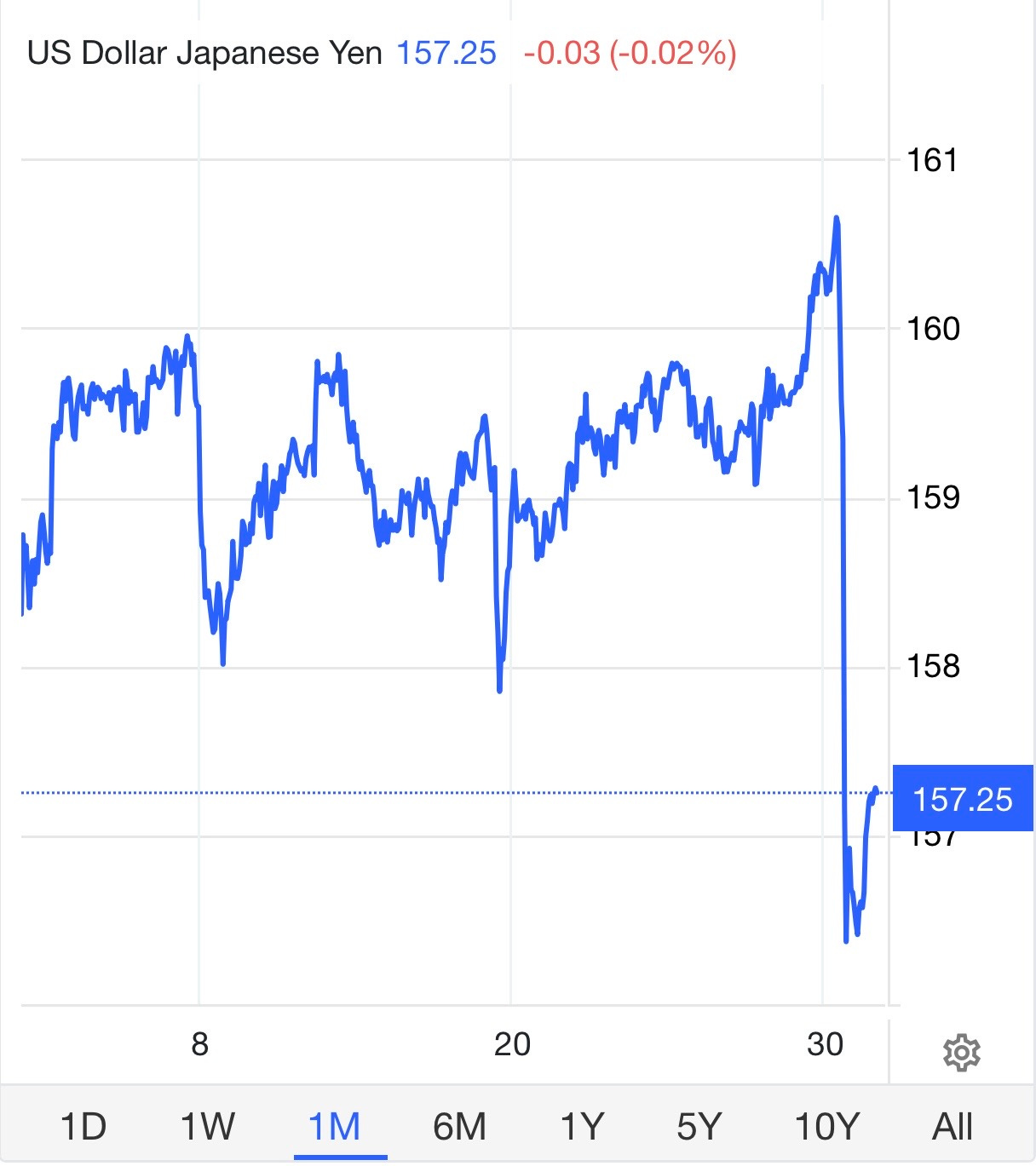
The move came as yen weakness threatened to raise import costs, including already soaring oil, with Brent crude above $126 per barrel and Japan heavily reliant on fuel from the Middle East. Japanese authorities spent about $100 billion buying yen in 2024.
Sources: Bloomberg, FT

Ukrainian drone strikes on Russia’s Tuapse refinery have triggered fires, oil spills and polluted rain along the Black Sea coast, raising fears of lasting environmental damage. The site, one of Russia’s largest refineries, was hit three times in two weeks, including an April 20 strike that burned for five days and left at least eight storage tanks destroyed.
Smoke released poisonous chemicals, with benzene, xylene and soot measured at three times safe levels, while spilled petroleum leaked into the Tuapse River and spread into the Black Sea. Volunteers reported oil-covered animals and beaches within a 20-kilometre radius, as authorities deployed boats, booms and emergency crews.
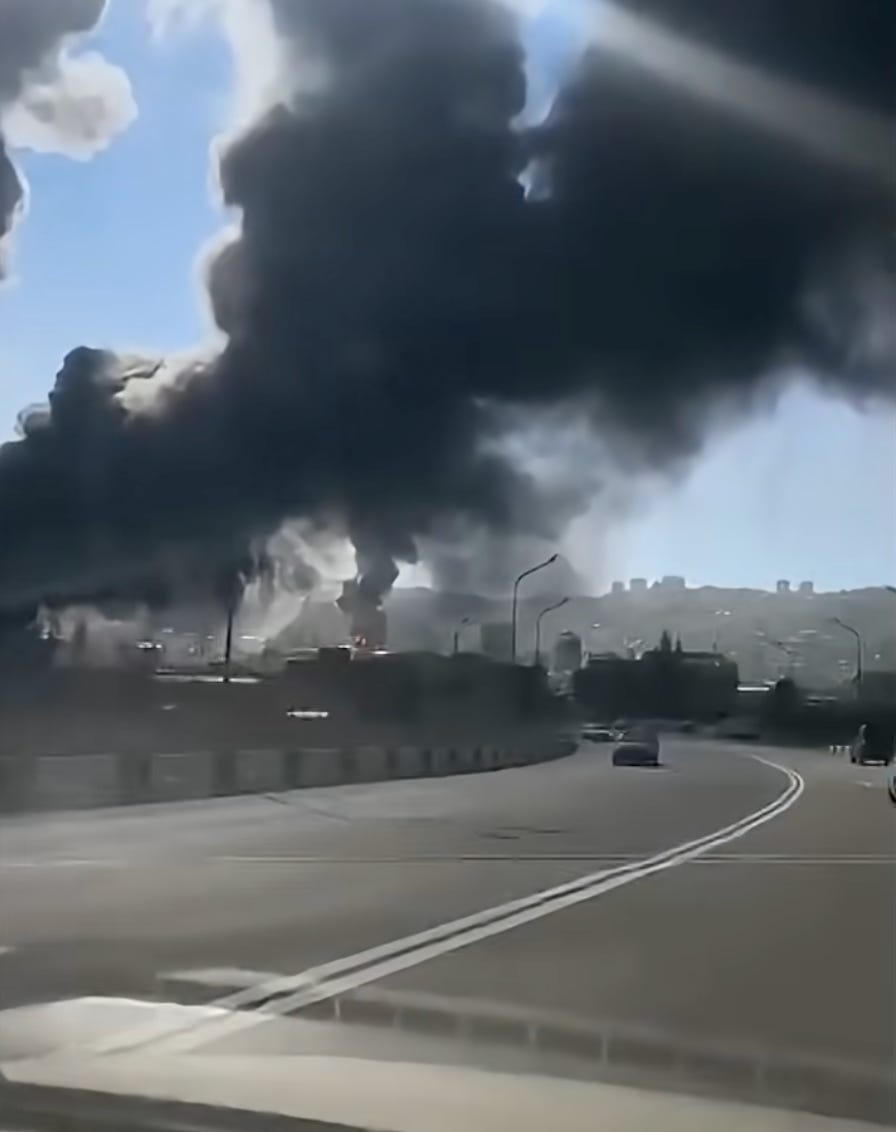
Ukraine carried out at least 21 strikes on Russian oil assets in April, the highest monthly level since December, cutting refinery runs to 4.69 million barrels a day, the lowest since December 2009.
Sources: Bloomberg, Al Jazeera
Restack this post to help it reach more readers interested in the world.
On this day …
On this day in 2011, U.S. special forces killed Osama bin Laden in Abbottabad, Pakistan, ending a decade-long manhunt following the attacks of 11 September 2001.
The operation demonstrated the reach of U.S. intelligence and special operations capabilities, while also raising questions about sovereignty, counter-terrorism strategy, and the evolving nature of non-state threats.
Although the raid marked a symbolic turning point in the global campaign against al-Qaeda, it did not end the wider landscape of transnational militant networks that had emerged during the preceding decade.
Did the operation represent the conclusion of one era of counter-terrorism, or the beginning of another?