


Doha Talks Resume Without Direct US-Iran Meeting (Middle East)
Iran Clerics Threaten Trump As Talks Stall (Middle East)
Russia Fuel Crisis Deepens As Imports Loom (Russia)
Pakistan Warns India Over Indus Water Pressure (Geopolitics)
Netanyahu Signals Lebanon Pullback Will Stay Limited (Middle East)
Ocean Heat Hits Seasonal Record As Risks Build (Climate)
Trump Disclosure Shows Crypto At Core Of Empire (US)
Taliban Strikes Deepen Pakistan Border Escalation (Conflict)
Satellite Data Suggests Far Wider Venezuela Damage (South America)
China Gains Edge From Hormuz Shock (China)
A succinct daily briefing delivered each weekday to help you stay on top of the stories shaping the world.

US envoys Steve Witkoff and Jared Kushner arrived in Doha for talks with Qatari mediators on the US-Iran negotiations, but Qatari foreign ministry spokesman Majed al-Ansari said no direct meetings with Iranian officials were scheduled in the coming days.
The visit follows renewed clashes over the Strait of Hormuz that threatened a preliminary agreement to end the four-month war and opened a 60-day negotiating period on Iran’s nuclear programme, US sanctions and a permanent truce.

Qatari and US officials said technical talks between lower-level representatives were continuing, while a senior Trump administration official described recent discussions with regional leaders as very positive. Major issues remain unresolved, including the release of Iranian assets frozen under US sanctions and future management of the strait, which before the war handled about a fifth of global oil and liquefied natural gas supplies.
Sources: BBC, Bloomberg

Iran said it would not meet top US envoys Steve Witkoff and Jared Kushner in Doha, with Iranian Foreign Ministry spokesperson Esmaeil Baghaei saying no negotiating session at any level was planned with the American side. Qatari officials said the pair would meet mediators, while lower-level technical talks were due to begin, underscoring how far apart the sides remain on the ceasefire terms agreed two weeks ago.
The strain widened after Iran’s Assembly of Experts called the killing of US President Donald Trump and Israeli Prime Minister Benjamin Netanyahu a religious duty, though the body’s secretariat later distanced itself.
The interim framework links the reopening of the Strait of Hormuz to financial incentives and gives the sides 60 days to negotiate a permanent peace deal, but Iranian officials insist traffic arrangements will be determined by Iran and Oman and say tolls will be imposed in mid-August.
Sources: Sydney Morning Herald, The Telegraph

The Kremlin said Russia is in talks to import gasoline from abroad after Ukrainian drone strikes disrupted oil refineries and energy infrastructure, an extraordinary step for one of the world’s largest oil exporters.
Kremlin spokesperson Dmitry Peskov said discussions were actively being held, while President Vladimir Putin acknowledged a fuel shortage and said national gasoline reserves had fallen to 1.7 million metric tons, about 4 percent lower than a year ago.
The pressure is already visible inside Russia. Fuel rationing has been introduced in many regions, including occupied Crimea, and queues have formed at petrol stations as supplies tighten. A count found more than 50 reported Ukrainian attacks on refineries, depots, terminals and other oil infrastructure in Russia and the illegally annexed Crimean Peninsula since late March, helping drive Russian fuel processing in June to its lowest level in more than two decades.
Sources: Politico Europe, Associated Press

Pakistan warned that any attempt by India to deprive it of water under the Indus Waters Treaty would amount to the weaponisation of water and could have serious consequences for regional peace and security. Foreign Minister Ishaq Dar said shared waters must never be weaponised, while calling India’s decision to suspend participation in the 1960 treaty illegal and saying Pakistan still considered the agreement valid and legally binding.
The warning keeps alive one of the most dangerous aftershocks of the April 2025 Kashmir attack, which triggered a sharp deterioration in ties, tit-for-tat missile strikes and a ceasefire announced by US President Donald Trump.
Pakistani officials also alleged that India reduced flows in the Chenab River in recent months in violation of the treaty, though there was no immediate comment from New Delhi.
Sources: South China Morning Post, Washington Post

Israeli Prime Minister Benjamin Netanyahu told troops in occupied southern Lebanon that Israeli forces would not withdraw as long as Hezbollah remained armed and threatening Israel, despite a US-mediated security agreement reached last week that envisages a phased pullback.
His visit was the first since Israel and Lebanon agreed that Israeli forces would hand over two areas to the Lebanese army under a pilot arrangement whose implementation remains unclear.
The remarks underline how tightly any Israeli withdrawal remains tied to Israel’s own assessment of the Hezbollah threat. Israel says it has created a buffer zone about 10 kilometres into Lebanon, while violence has persisted despite a June 19 ceasefire agreed under US pressure. Netanyahu also said Hezbollah still had around 12,000 rockets and missiles, and that the Israeli military had killed 9,000 militants in Lebanon since the conflict escalated on March 2.
Sources: Times of India, Reuters

Global sea surface temperatures reached 21.0C on 21 June, the highest ever recorded for this time of year, according to Copernicus data. The reading beat previous records for the same period set in 2023 and 2024, while the first half of 2026 was marked by persistently elevated temperatures and widespread marine heatwaves across much of the global ocean.

Scientists said the onset of El Nino has contributed to the rise but described it as part of a longer-term trend driven by climate change. Copernicus climate director Carlo Buontempo said current conditions could mark the beginning of a new phase leading once more to uncharted territory, with more records likely in the coming months.
Warmer oceans can contribute to sea level rise, heavier rainfall and flooding, and more frequent and intense marine heatwaves.
Sources: Euronews, Al Jazeera

President Donald Trump reported more than $1.4 billion in income from cryptocurrency ventures in 2025, according to a 927-page financial disclosure released Tuesday, with more than $635 million tied to a licensing agreement for meme coins bearing his name.
The filing also showed nearly $600 million in income from Trump family-backed World Liberty Financial, underscoring how central digital assets have become to his business empire during his first year back in office.
The scale of the earnings is likely to intensify scrutiny of possible conflicts of interest as Trump pushes crypto-friendly policy from the White House. White House spokesperson Anna Kelly said neither Trump nor his family had engaged or would engage in conflicts of interest, while Democrats and some crypto executives and lobbyists have voiced alarm. The disclosures also listed more than $80 million from legal settlements with media and technology companies.
Sources: NBC News, Politico

Afghanistan’s Taliban regime said it had carried out strikes on targets along the border with Pakistan, with several people reportedly injured in Pakistan’s southwestern Balochistan province. Pakistan’s military said it shot down four rudimentary drones and warned that any further provocation would receive a befitting response, after the BBC said it could not independently confirm the attack.
The exchange follows Pakistani air strikes on Afghanistan on Sunday that killed 28 civilians, according to the UN, reigniting tensions after months of relative calm. The two countries had agreed to a ceasefire in October following weeks of deadly clashes, but both sides continue to accuse the other of cross-border aggression.
Pakistan says it targets militants, while the Taliban government says Pakistani attacks hit civilians and has warned it will target every location that poses a threat to Afghan security.
Sources: BBC, The Tribune

NASA-backed satellite analysis suggests about 58,870 buildings were likely damaged or destroyed in last week’s twin earthquakes in Venezuela, far above the government’s latest official figure of 855 damaged buildings, including 189 collapses.
The estimate, based on Sentinel-1 radar data gathered on 25 June by researchers Corey Scher and Jamon Van Den Hoek of Oregon State University, was described as a rapid, preliminary assessment showing abrupt surface changes consistent with damage.
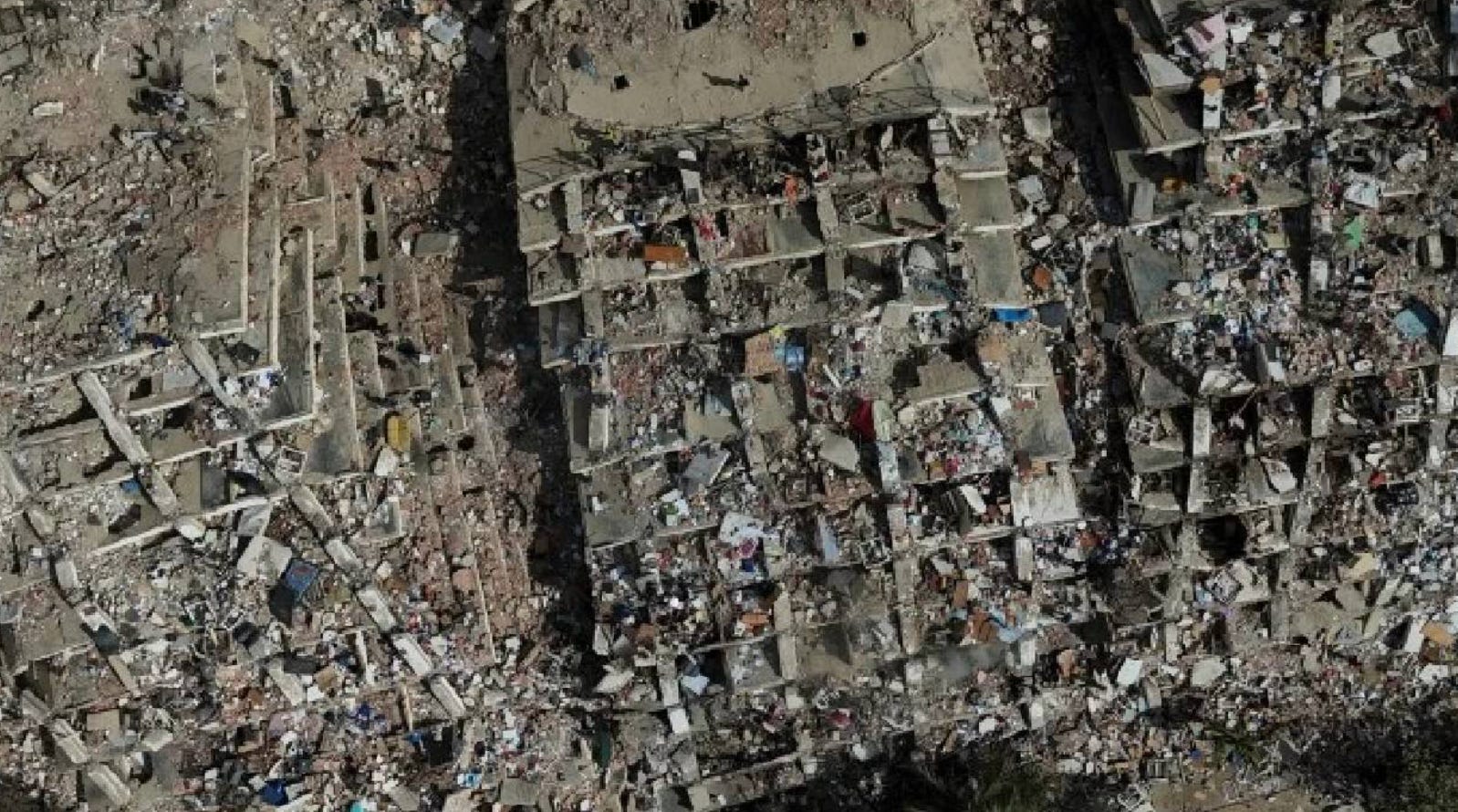
The gap in estimates points to continued uncertainty over the true scale of the disaster. National Assembly President Jorge Rodriguez said the death toll had reached 1,719 and that 5,034 people were injured. The US Geological Survey said magnitudes 7.2 and 7.5 quakes struck Venezuela on 24 June, 39 seconds apart, both in Yaracuy state.
Sources: Anadolu Agency, The Guardian
China has emerged from the Strait of Hormuz crisis in a stronger position than other major Asian economies, according to a report by The Asia Group, which said Beijing had weathered the global commodities shock better than any regional peer.
The report said China’s large oil stockpiles and rapidly expanding renewable energy capacity helped it avoid the worst effects of the disruption, while global demand for solar panels, batteries and electric vehicles also accelerated.
The assessment points to a wider geopolitical dividend for Beijing from a crisis triggered by US and Israeli strikes on Iran and the resulting disruption to the strait. The report said China had enough crude in reserve to cover 90-110 days of imports and already had 1.4 terawatts of renewable capacity online. It also said the crisis allowed Beijing to cast the United States as the destabilising actor whose Middle East entanglements impose costs on the world.
Sources: The Guardian, New York Times
Restacking or sharing this publication means more people can read it. Commenting extends the conversation. Liking shows your appreciation.
On this day …
On this day in 2002, the International Criminal Court formally began operations after the Rome Statute entered into force.
It became the world’s first permanent international court with jurisdiction to prosecute individuals accused of genocide, crimes against humanity and war crimes when national authorities were unwilling or unable to do so.
Supporters saw the court as a major step towards ending impunity for the world’s gravest crimes, while critics questioned its effectiveness and political independence.
More than two decades later, the ICC remains one of the most influential - and contested - institutions in international law.
Can justice ever be separated from geopolitics?