


Xi Uses Shenzhen Summit To Showcase China’s Tech Rise (China)
Russian Bombers Return To Vietnam Amid Regional Tensions (Asia)
Iran Widens Gulf Attacks As US Blockade Continues (Conflict)
Israeli Forces Cross Gaza Ceasefire Boundary (Conflict)
EU Proposes €45 Billion Loan To Support Ukraine (Europe)
Ukrainian Strikes Devastate Russia’s Fuel Supply (Conflict)
Trump Frustrated By Vance Criticism Of Iran War (Politics)
Musk Distances Himself From Republicans After Election Losses (US)
Ethiopia And Eritrea Mass Troops Along Border (Africa)
Islam Projected To Become Largest Religion By 2035 (Society)
A succinct daily briefing delivered each weekday to help you stay on top of the stories shaping the world.

Chinese President Xi Jinping is hosting US President Donald Trump and Russian President Vladimir Putin in Shenzhen for rare three-way talks alongside the APEC summit. The choice of venue highlights China’s technological ambitions as the leaders prepare to discuss nuclear weapons, trade and other international disputes.

Shenzhen, home to Huawei, BYD and major drone manufacturers, has become a centre of China’s drive for technological self-reliance. Its exports rose nearly 20% in the first nine months of 2026, while its economy grew 6%, outpacing national growth. Huawei plans to release two new AI chips next year as it seeks to challenge Nvidia.
The summit comes amid tensions over advanced American chips reaching China, with Washington introducing new restrictions on remote access. Trump has also signalled discussions on Iran, Ukraine and Taiwan, while the US-China tariff truce expires on 10 January.
Sources: CBS News, Wall Street Journal

Two Russian Tu-95 strategic bombers and two refuelling aircraft landed in Vietnam after flights near Taiwan and Japan prompted security concerns. The aircraft remained at Danang airport on Wednesday, ahead of a summit involving Russian President Vladimir Putin, Chinese President Xi Jinping and US President Donald Trump.
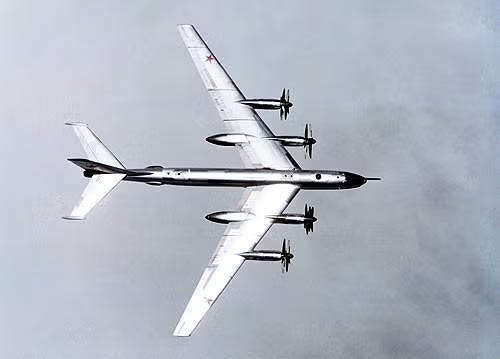
The deployment is believed to be Russia’s most significant demonstration of strategic airpower in East Asia in more than a decade. Security analyst Ian Storey said it showed Moscow could still project military power into Southeast Asia despite its war in Ukraine. Taiwan’s military described the flights as a threat to regional stability.
Vietnam remains heavily dependent on Russian military equipment and technical support, despite efforts to diversify suppliers. Analysts suggested Hanoi’s decision to accommodate the aircraft could also signal to China that its defence relationship with Moscow remains strong, amid territorial disputes in the South China Sea.
Sources: Reuters, Modern Diplomacy

Iran launched fresh strikes against Kuwait and Bahrain on Wednesday, expanding its attacks on US allies as fighting intensifies around the Strait of Hormuz. Kuwait reported intercepting incoming drones, while Bahrain sounded missile alerts and activated air defences. Neither country immediately reported damage from the latest attacks.
The strikes followed an American attack on an Iranian missile launch site on Qeshm Island, part of continuing exchanges between US and Iranian forces. Tehran also attacked tankers transiting the strait, leaving one crew member missing and 11 injured aboard a vessel operated by Abu Dhabi’s state-owned oil company.
The escalation comes as US naval escorts help restore tanker traffic amid Washington’s continuing blockade of Iran. President Donald Trump has halted proposed direct talks, while Tehran is demanding sanctions relief and access to frozen funds before making concessions. Qatar says diplomatic efforts remain underway.
Sources: Wall Street Journal, PBS

Israeli ground forces entered Hamas-controlled central Gaza on Wednesday, crossing the Yellow Line that separates territory held by Israel from the remainder of the enclave. Tanks advanced near Nuseirat refugee camp onto Gaza’s main north-south road, prompting evacuation orders and forcing displaced Palestinian families to flee their shelters.
The Israeli military said the operation targeted a tunnel posing an immediate threat to its troops and was consistent with the ceasefire agreement. Hamas condemned the incursion as a violation of the October 2025 truce. Palestinian authorities reported three deaths in separate Israeli strikes on Wednesday.
The operation follows a warning from the US-backed Board of Peace that both sides have failed to honour ceasefire commitments. More than 1,600 Palestinians have been killed since the truce began, while 90% of Gaza’s population remains displaced. Reconstruction has yet to begin, with Hamas’s disarmament and Israeli withdrawal still unresolved.
Sources: BBC, The Guardian

The European Commission has proposed a €45 billion loan to Ukraine to help cover a €70 billion funding shortfall in 2027. Commission President Ursula von der Leyen said Kyiv would only repay the money after Russia paid reparations for damage caused by the war. The proposal requires approval from EU member states.
Up to €25 billion would fund military assistance, with €20 billion allocated to general budget support. Brussels would borrow on international markets, while seeking contributions from other partners to cover the remaining shortfall. The Commission also plans to use future profits from frozen Russian assets to service the loan.
The proposal follows a €90 billion EU financing package agreed last year. However, securing unanimous support may prove difficult, with several countries signalling opposition to further commitments. Ukrainian President Volodymyr Zelenskiy welcomed the plan, which comes amid intensified Russian attacks on critical infrastructure and disrupted trade.
Sources: Reuters, FT
Restacking this post will help it reach more readers interested in the world.

Ukrainian attacks have knocked out approximately half of Russia’s oil refining output over the past two and a half weeks, threatening renewed fuel shortages as the country’s economic outlook deteriorates. Energy analyst Sergey Vakulenko said drones had struck more than 55% of Russian refining capacity, with output falling below levels recorded during July’s fuel crisis.
The disruption contrasts with Russian President Vladimir Putin’s optimistic assessment at the APEC summit in China, where he claimed Russia had overcome Western sanctions and was outperforming Europe. Russia’s own forecast puts economic growth at just 0.4% this year, amid inflation, high interest rates and weakening investment.
Putin also criticised Europe’s decision to abandon Russian energy, claiming it had damaged living standards. However, European Commission forecasts put eurozone growth at 1.2% this year, compared with 0.6% for Russia. The escalating refinery attacks further complicate Moscow’s economic position.
Sources: Washington Post, Reuters

US President Donald Trump has grown increasingly frustrated with Vice President JD Vance over his assessment that the Iran war caused Republicans’ heavy midterm election losses, according to people familiar with the president’s private comments. Vance wrote after Democrats captured both houses of Congress that the war was the reason Republicans lost.
Trump initially acknowledged the criticism but subsequently complained that Vance should also have defended the decision to attack Iran. Meanwhile, the president has privately praised Secretary of State Marco Rubio, who has publicly defended the war as necessary for American national security.
The disagreement comes as Vance considers a possible presidential campaign in 2028, with Rubio another potential Republican contender. Vance has since insisted there is no disagreement within the administration, while Trump has withdrawn him from proposed peace talks with Iran. The dispute highlights growing tensions over the war’s political consequences and the party’s future direction.
Sources: New York Times, The Independent

Elon Musk has expressed regret over spending more than $445 million supporting Republican candidates in the US midterm elections, after Democrats secured major victories. Speaking at the New York Times DealBook Summit, the Tesla and SpaceX chief executive said he felt foolish about the expenditure and would have spent less if given another opportunity.
Musk also distanced himself from President Donald Trump’s Make America Great Again movement, declaring that he was not MAGA and describing his political views as moderate. The remarks contrast with his enthusiastic support for Trump during the 2024 presidential campaign, when he donated at least $250 million.
Much of Musk’s midterm spending supported unsuccessful candidates, including approximately $229 million directed towards Ken Paxton’s failed Texas Senate campaign. Democratic leaders have meanwhile signalled plans for greater scrutiny of Musk’s businesses, including proposed investigations and challenges to government subsidies.
Sources: The Guardian, Straits Times

Ethiopia and Eritrea have massed troops along their shared border, raising fears of renewed war as fighting involving rebels in Ethiopia’s Tigray region intensifies. Conflict monitor ACLED reported artillery exchanges and clashes near the disputed town of Badme, including suspected Ethiopian drone strikes on Eritrean positions. The reported direct clashes have not been independently confirmed.
The neighbouring countries fought a border war from 1998 to 2000 that killed tens of thousands. They signed a peace agreement in 2018 and subsequently fought together against Tigrayan forces but relations have deteriorated amid renewed conflict in the region.
Eritrea denies intervening in Ethiopia and accuses Addis Ababa of seeking a pretext for invasion. Ethiopian Prime Minister Abiy Ahmed says his landlocked country will pursue sea access peacefully, although Eritrea views the ambition as threatening. Analysts warn that continued fighting near the border could draw both armies into a wider conflict.
Sources: Reuters, Japan Times

Islam is projected to overtake Christianity as the world’s largest religion by 2035, according to new demographic research from the Pew Research Center. The study forecasts 2.57 billion Muslims and 2.52 billion Christians by that year, compared with 2.02 billion and 2.27 billion respectively in 2020.
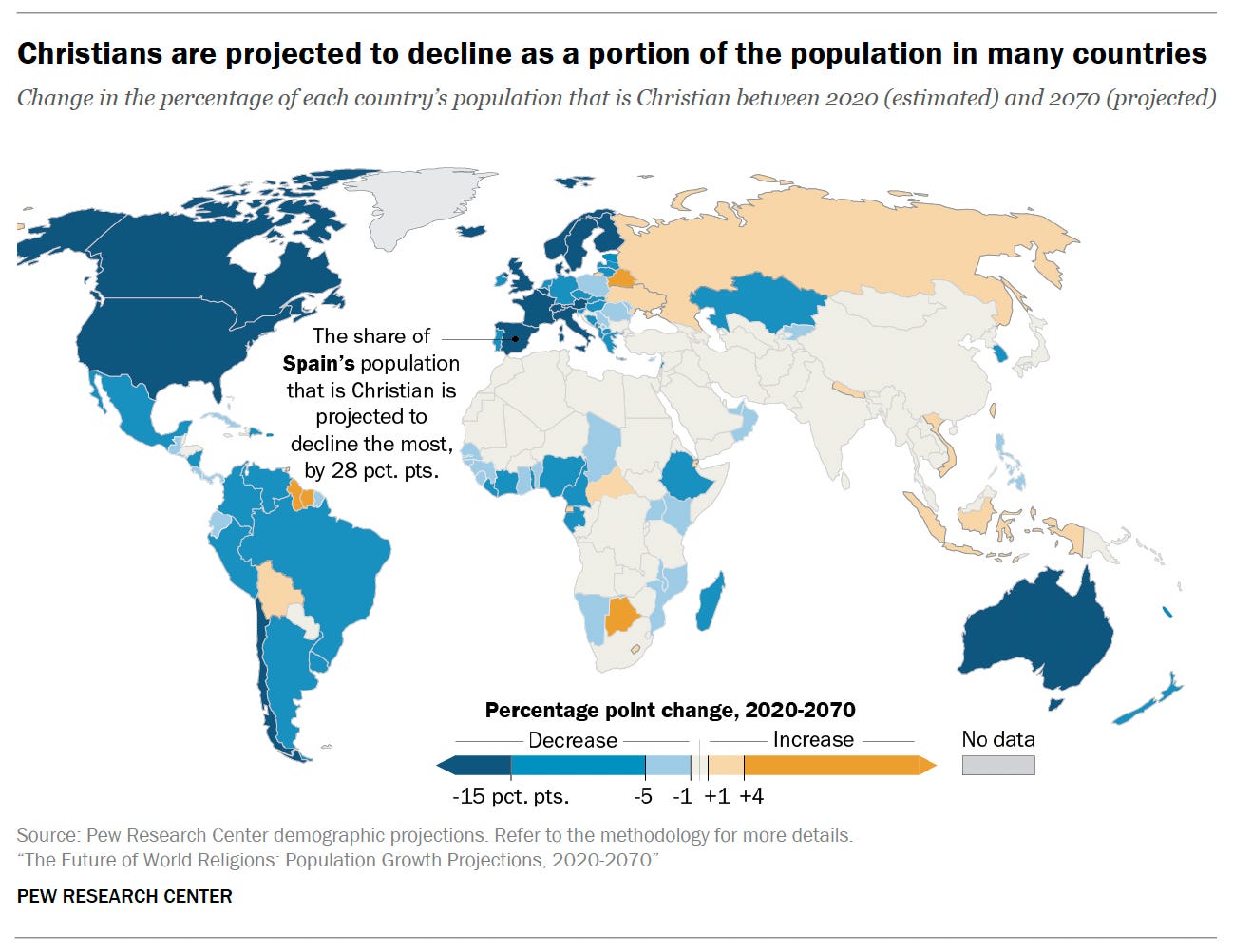
The change is driven primarily by differences in birth rates rather than religious conversion. Between 2020 and 2025, Muslim women had an average of 3.1 children, compared with 2.5 among Christian women and 1.6 among women from other religious groups. Both religions are expected to grow in absolute numbers through 2070.
The research also projects significant geographical changes. More than half of Christians are expected to live in sub-Saharan Africa by 2070, while Pakistan is forecast to overtake Indonesia as the country with the largest Muslim population. Pew emphasised that these projections reflect demographic trends rather than predetermined outcomes.
Sources: Al Jazeera, PBS, Pew Research
Restacking or sharing this publication means more people can read it. Commenting extends the conversation. Liking shows your appreciation.
On this day …
On this day in 19 1977, Egyptian President Anwar Sadat arrived in Israel, becoming the first Arab head of state to make an official visit to the country.
The visit marked a major departure from decades of hostility following successive Arab-Israeli wars. Sadat met Israeli Prime Minister Menachem Begin and addressed the Israeli parliament the following day, calling for a negotiated peace.
His initiative opened the diplomatic process that produced the Camp David Accords in 1978 and the Egypt-Israel peace treaty in 1979.
Egypt became the first Arab country to recognise Israel, fundamentally altering regional diplomacy, although the agreement also led to Egypt’s temporary isolation within the Arab world.