


Trump Delays Iran Strike Amid Gulf Pressure (Geopolitics)
Executions Hit Highest Level Since 1981 (World)
Oil Inventories Shrink As Supply Pressure Builds (Economy)
US Extends Russian Oil Waiver Amid Supply Shock (Economy)
Lebanon Death Toll Passes 3000 Under Fragile Truce (Conflict)
Cuba Warns US Attack Would Bring Bloodbath (Geopolitics)
Israeli Bases In Iraq Expose Sovereignty Strain (Middle East)
Israel Intercepts Gaza Flotilla Off Cyprus (Middle East)
Musk Loses OpenAI Lawsuit Over Filing Deadline (Technology)
Ukraine Slows Russia But Putin Holds Course (Conflict)
A succinct daily briefing delivered each weekday to help you stay on top of the stories shaping the world.

Donald Trump said he had postponed a planned new military strike on Iran after Gulf leaders requested more time for negotiations over Tehran’s nuclear programme. Trump said Qatar, Saudi Arabia and the United Arab Emirates believed an agreement acceptable to the United States could still be reached, while warning that Washington remained prepared for a “full, large scale assault” if talks failed.
The reversal highlighted the uncertain trajectory of a war that has entered its third month despite earlier expectations of a shorter campaign. US officials said Iran had adapted militarily during the ceasefire, repositioning missile launchers, studying American flight patterns and restoring access to buried ballistic missile sites.
Meanwhile back home in the US the conflict has also become increasingly unpopular domestically, with polling showing most voters now oppose the decision to go to war.
Sources: New York Times, BBC

Global executions reached the highest recorded level since 1981 in 2025, with at least 2,707 people put to death across 17 countries, according to Amnesty International. The total excludes thousands of executions believed to have taken place in China, where official secrecy prevented verification.
Iran drove most of the increase, executing at least 2,159 people, more than double its 2024 figure. Saudi Arabia recorded at least 356 executions, while Kuwait almost tripled its total and Egypt, Singapore and the United States nearly doubled theirs. Four countries also resumed executions: Japan, South Sudan, Taiwan and the United Arab Emirates.
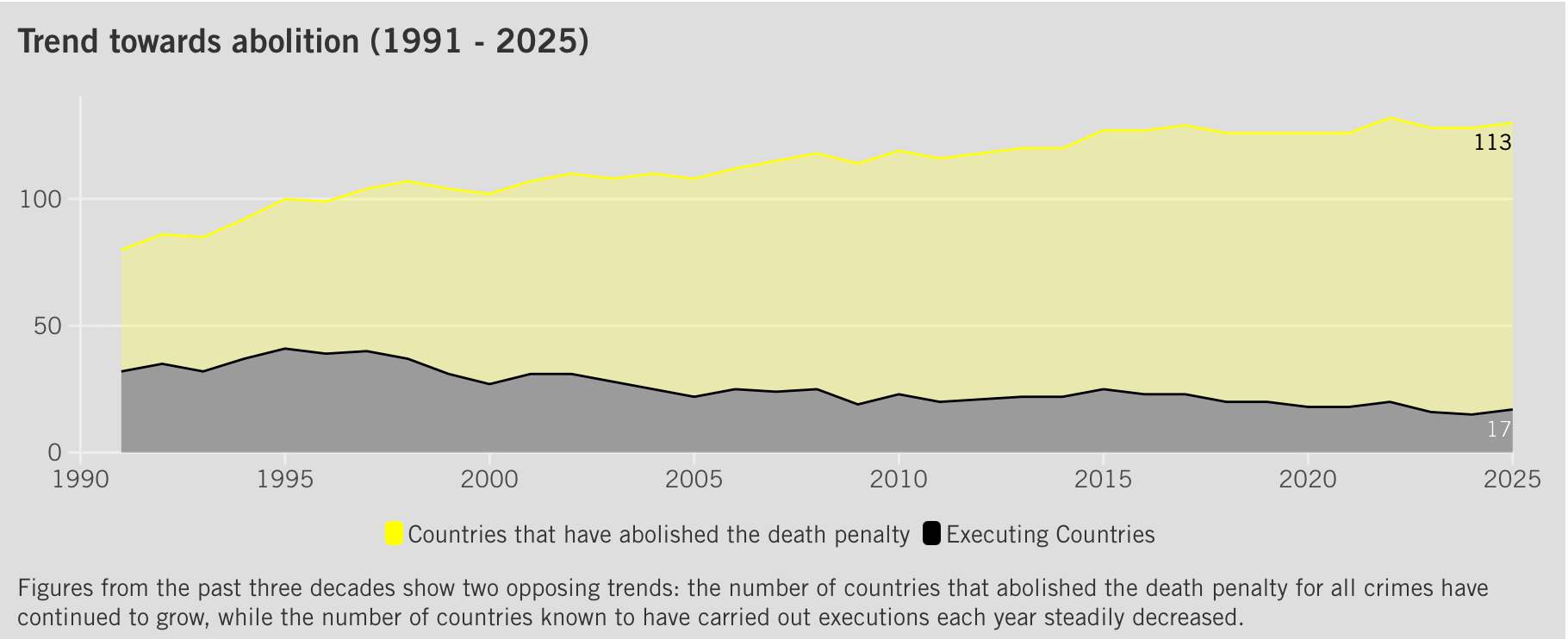
Amnesty International Secretary General Agnès Callamard said a small group of states was using the death penalty to instil fear, crush dissent and punish marginalised communities. The rise came despite the wider global trend towards abolition, with more than two-thirds of countries abolitionist in law or practice.
Sources: CBS News, Amnesty International

IEA Chief Fatih Birol warned that commercial oil inventories were depleting rapidly, with only several weeks left, after the Iran war and the closure of the Strait of Hormuz disrupted shipping. He said strategic reserve releases had added 2.5 million barrels a day to the market, but cautioned that those reserves were not endless.
The pressure is rising as northern hemisphere travel and planting seasons begin, lifting demand for diesel, fertiliser, jet fuel and gasoline. Birol said the market was facing a perception gap between physical and financial oil markets.
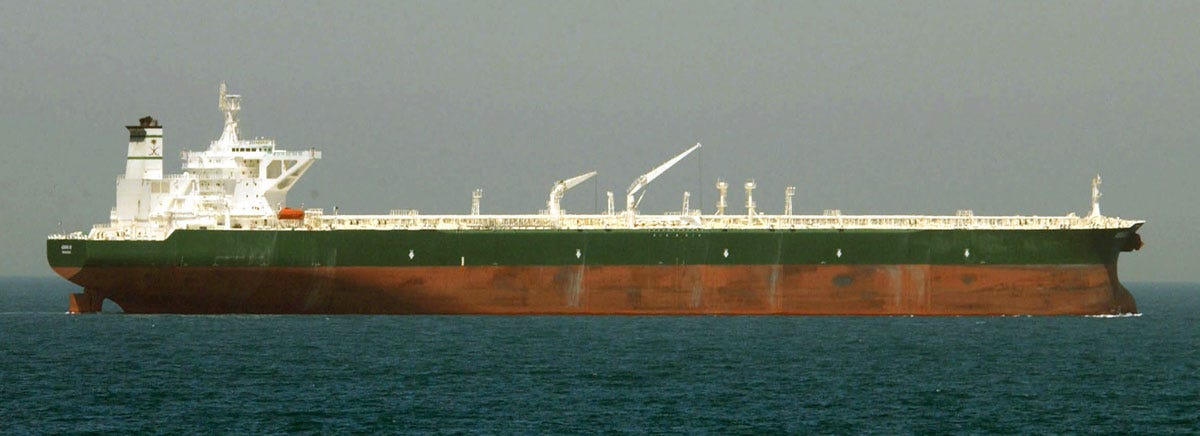
The agency said observed global oil inventories fell by 246 million barrels in March and April, the fastest pace on record. It now expects global oil supply to fall short of demand this year, after previously forecasting a surplus.
Sources: Bloomberg, Reuters

The United States extended by 30 days a sanctions waiver allowing purchases of Russian seaborne oil, as the Iran war and the closure of the Strait of Hormuz tightened global energy supply. US Treasury Secretary Scott Bessent said the measure would help energy-vulnerable countries access Russian oil stranded on tankers and stabilise the physical crude market.
The extension reverses Bessent’s earlier position that no further waiver would be granted. Officials said vulnerable countries requested the move because Gulf shipments had been disrupted during the conflict. Benchmark Brent crude prices rose above US$112 a barrel on Monday amid concerns about tightening supply.
The decision exposed growing tension between sanctions policy and energy security. Democratic senators Jeanne Shaheen and Elizabeth Warren called the waiver an “indefensible gift” to Vladimir Putin, arguing it would help finance Russia’s war in Ukraine without reducing fuel prices or stabilising energy markets.
Sources: Reuters, South China Morning Post
Lebanon’s health ministry said Israeli strikes had killed 3,020 people since fighting with Hezbollah escalated in early March, including 292 women and 211 children. The toll has continued to rise despite a ceasefire that began on 17 April and was extended by 45 days on Friday.
More than 400 deaths have been recorded since the ceasefire took effect, with repeated violations on both sides. Israeli strikes have continued across southern Lebanon and the Bekaa Valley, while Hezbollah said its fighters targeted northern Israel with attack drones.
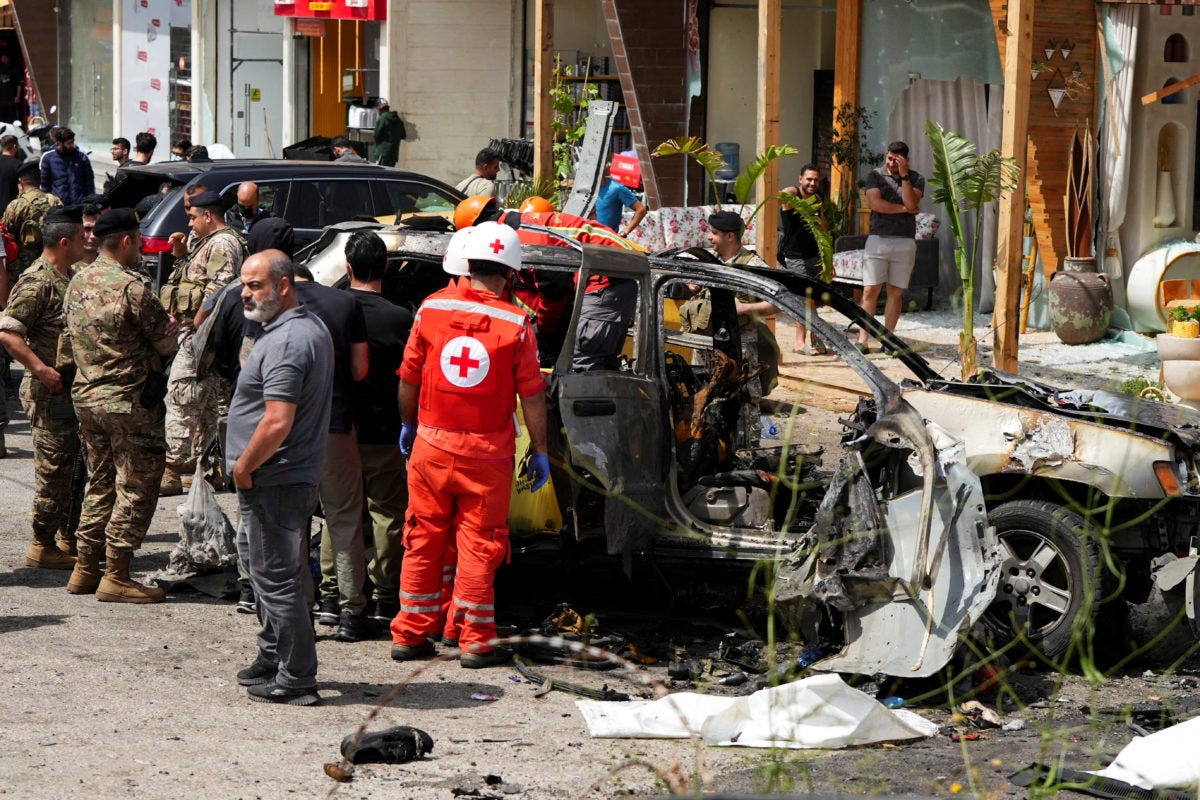
The fighting has displaced more than a million people in Lebanon and left Israeli forces occupying large areas of southern Lebanon. Negotiations continue over a possible security agreement or armistice, troop withdrawal and efforts to disarm Hezbollah, but the truce has not stopped daily attacks.
Sources: BBC, PBS
Restacking or sharing this publication means more people can read it. Commenting extends the conversation. Liking shows your appreciation.

Cuban President Miguel Díaz-Canel warned that any US military action against Cuba would cause a “bloodbath” with incalculable consequences for regional peace and stability, after a report said Havana had acquired more than 300 military drones. Díaz-Canel said Cuba did not represent a threat and had no aggressive plans against any country.
The report said the drones could be used against the US naval base at Guantánamo Bay, US military vessels or Key West, while acknowledging uncertainty over Cuba’s operational plans. Havana said Washington was fabricating a case to justify possible intervention.
The exchange follows rising tension since the United States cut off Cuba’s energy supplies in January, worsening fuel shortages and blackouts. It also came days after CIA director John Ratcliffe held closed-door meetings in Havana, and after Cuba accepted US humanitarian aid channelled through the Catholic Church.
Sources: Reuters, Mercopress

Israel operated at least two covert military outposts in Iraq’s western desert to support operations against Iran, according to Iraqi and regional officials. One base near al-Nukhaib predated the current war and was used during the 12-day conflict with Iran in June 2025.
The site was reportedly discovered by Awad al-Shammari, a 29-year-old shepherd, who contacted Iraq’s regional military command after seeing soldiers, helicopters and tents around a landing strip. His family said he was later killed by Israeli forces, while a subsequent Iraqi reconnaissance mission came under fire, leaving one soldier dead and two wounded.
The revelations raise difficult questions for Baghdad and Washington. Iraqi officials said the United States may have known of the Israeli presence since June 2025 or earlier, while Iraqi lawmaker Waad al-Kadu called it a blatant disregard for Iraqi sovereignty.
Sources: New York Times, The Independent

Israeli forces intercepted a Gaza-bound aid flotilla in international waters off Cyprus on Monday, boarding vessels from the Global Sumud Flotilla as they tried to challenge the naval blockade. Organisers said more than 50 vessels had sailed from Marmaris, Turkey, and that at least 31 boats were intercepted by Monday evening.
The boats were stopped about 250 nautical miles from Gaza, well outside Cypriot territorial waters. Footage showed activists wearing life jackets and raising their hands as Israeli troops approached, while organisers said crews were detained and expected to be taken to Ashdod.
Israel said it would not allow a breach of the blockade, which it says prevents Hamas from arming itself. Turkiye condemned the operation as piracy, and several governments sought assurances over detained nationals.
Sources: Associated Press, Al Jazeera

A federal jury sided with OpenAI and its top executives on Monday, rejecting Elon Musk’s lawsuit over claims that the company had betrayed its founding nonprofit mission. The nine-person jury unanimously found that Musk waited too long to file his claims and had missed the statute of limitations.
US District Judge Yvonne Gonzalez Rogers accepted the advisory verdict and dismissed the claims, saying there was substantial evidence to support the jury’s findings. Musk said he would appeal, arguing the decision rested on a timing issue rather than the merits of his allegation that OpenAI had been misappropriated.
The verdict removes a major legal threat to one of the world’s most influential AI companies. Musk had sought more than $100 billion in damages for OpenAI’s nonprofit arm, along with the removal of OpenAi’s CEO Sam Altman and its President Greg Brockman.
Sources: LA Times, BBC
Ukraine has slowed Russia’s battlefield advance to its weakest pace in two years, helped by improved drone tactics, local counterattacks and strikes on logistics behind the front line. Ukrainian Defense Minister Mykhailo Fedorov said Kyiv was increasing pressure and making every metre of Ukrainian land costly.
Russia’s monthly casualties have been estimated at up to 35,000 killed or wounded, while analysts say its forces are no longer growing because losses have matched recruitment since late 2025. Ukraine has also expanded midrange drone strikes against Russian logistics, command posts, air defences and warehouses, making front-line support harder.
Yet analysts warned against calling the war at an inflection point. Vladimir Putin has shown no sign of reducing his aims, while Russia still controls just under one-fifth of Ukrainian territory and continues to demand land, neutrality and sanctions relief.
Sources: Wall Street Journal, Japan Times
Restacking this post will help it reach more readers interested in the world.
On this day …
On this day in 1897, Oscar Wilde was released from prison after serving two years of hard labour for gross indecency. Once among the most celebrated writers in Britain, Wilde emerged financially ruined, physically weakened and largely excluded from public life.
His prosecution became one of the defining legal and cultural episodes of the Victorian era, reflecting the strict moral codes and social anxieties of the time.
In later decades, Wilde’s case came to symbolise wider debates about freedom, sexuality and the relationship between private life and public punishment.
The questions raised by his downfall continue to resonate in modern discussions about reputation, morality and the limits of social tolerance.