


US-Iran Talks Falter Before They Begin (Diplomacy)
Vance Rebukes Israel Over Iran Deal (Diplomacy)
Ukraine Brings The War Into Moscow (Conflict)
EU Splits Over Russia Backchannel (Geopolitics)
Lebanon Fighting Continues Despite US-Iran Deal (Conflict)
US Warns Nato Over Defence Burden (Defence)
Burnham Win Deepens UK Labour Party Crisis (UK)
Gunmen Strike Niger Airport For Second Time This Year (Africa)
Study Suggests Brexit Reduced UK Growth (UK)
Brazil Bank Probe Reaches Lula Ally (South America)
A succinct daily briefing delivered each weekday to help you stay on top of the stories shaping the world.
US-Iran implementation talks in Switzerland were abruptly cancelled, adding new uncertainty to a 14-point agreement meant to end the regional war and open a 60-day window for a permanent nuclear understanding.
US Vice President JD Vance had been due to travel for talks, but the White House said the logistics were not simple or predictable. Iran’s negotiators had earlier said they needed signs of US implementation before further peace talks, while Iranian Supreme Leader Ayatollah Mojtaba Khamenei said the United States should not be too demanding.
The delay came as Israel, which was not included in the talks and has distanced itself from the agreement, continued fighting in Lebanon. US President Donald Trump has said he expects a complete ceasefire on all fronts, but the diplomatic pause showed how quickly the deal’s implementation phase has become contested.
Sources: The Guardian, Reuters

US Vice President JD Vance publicly rebuked Israeli critics of President Donald Trump’s Iran deal, exposing widening tensions between Washington and Israel over the agreement and the war in Lebanon.
Vance said Trump was Israel’s only powerful ally and warned Israeli cabinet members against attacking him, noting that most weapons used to defend Israel from Iran were American-made. His comments followed criticism from far-right ministers, including National Security Minister Itamar Ben-Gvir, who said the US-Iran deal did not apply to Israel.
The agreement pauses the war with Iran, reopens the Strait of Hormuz and creates a 60-day period for nuclear negotiations. Israel has distanced itself from the deal, insists it will keep operating in southern Lebanon, and published a map showing an expanded military control zone. Trump said he expected a complete ceasefire on all fronts.
Sources: Wall Street Journal, Reuters

Ukraine struck Moscow with one of its largest drone attacks of the war, hitting an oil refinery, disrupting all four airports and raising new questions about the Kremlin’s ability to shield the capital from a conflict it began in 2022.
Ukrainian President Volodymyr Zelensky said the strikes were retaliation for the attack on Kyiv’s Pechersk Lavra monastery complex, warning that if Ukraine burned, Moscow would burn as well. Russian officials said air defences shot down 194 drones heading for the capital and 992 across Russia, while at least 17 people were injured in the Moscow region.
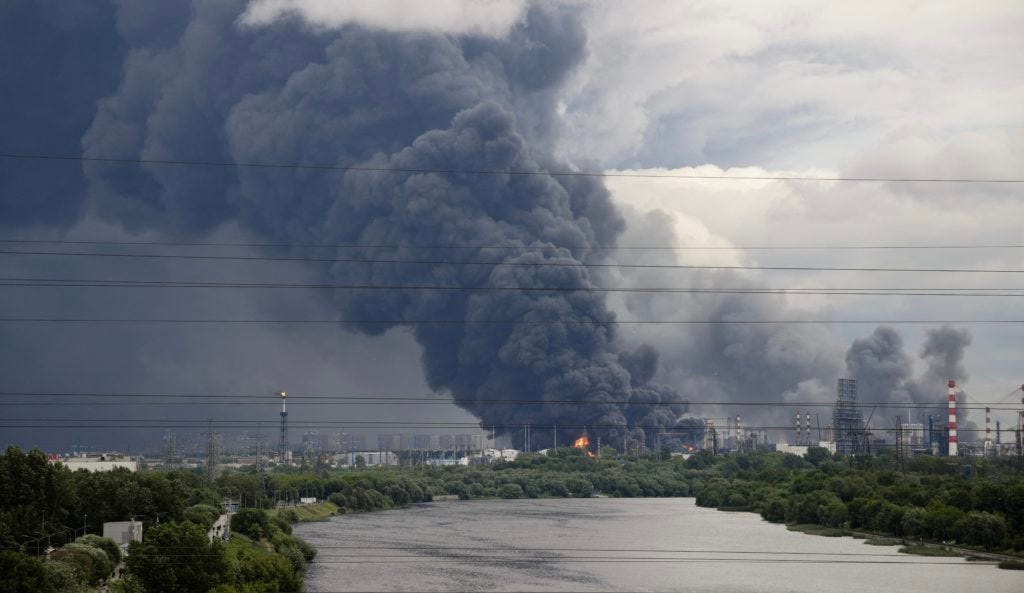
The Moscow Oil refinery, which supplies about 40 percent of Moscow’s petrol and about half its diesel, was struck for the second time in a week. Smoke, soot and flight cancellations turned Ukraine’s long-range drone campaign into a visible domestic test for President Vladimir Putin in Moscow.
Sources: Washington Post, New York Times
European Union leaders split sharply over whether the bloc should open contact with Russia, after European Council President António Costa’s office established a diplomatic channel with Moscow without broad prior consultation.
French President Emmanuel Macron and German Chancellor Friedrich Merz criticised the outreach at a late-night Brussels summit, arguing that the time was not right to talk to Russian President Vladimir Putin and that any future effort should be led by France, Germany and the UK. Other leaders backed Costa, with Belgian Prime Minister Bart De Wever saying no one else could represent the EU unless Putin showed willingness to negotiate.
Costa’s team said the contacts were brief, contained no negotiations and were intended to defend EU interests when the moment came. The dispute exposed divisions over diplomacy, Ukraine’s battlefield position and who has legitimacy to speak for Europe.
Sources: Politico Europe, Euronews
Israeli strikes and fresh clashes with Hezbollah continued in southern Lebanon despite the United States and Iran signing an agreement intended to end fighting across the region, including Lebanon.
Lebanese state media reported that Israeli drone strikes killed three people near Kfar Tibnit and Zebdine. Hezbollah said it had repelled a four-day Israeli offensive and later reported new clashes near Kfar Tibnit. Israeli forces said they would continue operating inside a security zone extending about 10 kilometres into Lebanese territory to remove threats and strengthen northern Israel’s defences.
US President Donald Trump said Washington expected “a complete ceasefire on all fronts”. But Hezbollah and Israel both signalled they would continue military operations. The fighting highlighted the gap between the diplomatic agreement and conditions on the ground, where exchanges of fire and competing objectives have persisted.
Sources: Al Jazeera, CNA
Restacking this post will help it reach more readers interested in the world.

US Defence Secretary Pete Hegseth announced a review of the American military presence in Europe, warning Nato allies that US force levels could be cut in countries spending least on defence.
Speaking to Nato defence ministers in Brussels, Hegseth accused some countries of “free riding” and criticised allies that restricted US access to European bases during strikes on Iran. He said Nato would become a two-way street, with US dues contingent on members meeting defence spending targets, as Washington pushes Europe to take primary responsibility for its own defence.
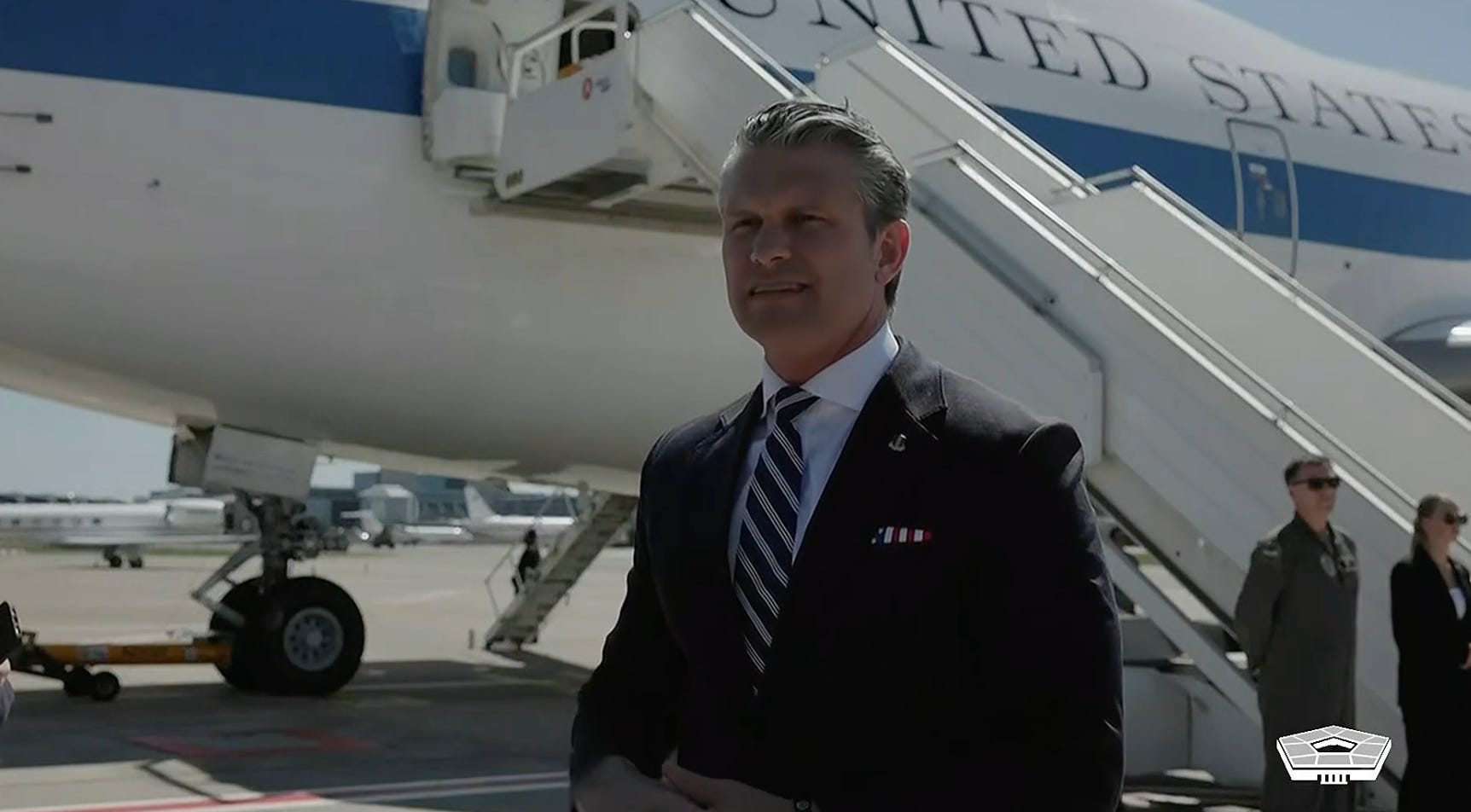
Nato Secretary General Mark Rutte declined to criticise Hegseth, saying he was right to keep pressure on allies. Rutte said Nato was undergoing a massive transformation and that members broadly agreed to step up as the US adjusted its pledges to the alliance’s force model.
Sources: The Guardian, The Independent
Andy Burnham’s emphatic Makerfield by-election victory has opened a direct challenge to Prime Minister Keir Starmer, giving the Greater Manchester mayor a parliamentary seat and a route into any Labour leadership contest.
Burnham won 54.8 percent of the vote, ahead of Reform UK on 34.5 percent, taking more votes than all his rivals combined in a seat where Reform had recently been dominant in local elections. In his victory speech, Burnham said the result could be a turning point and a final chance for Labour to change direction.
The result deepens pressure on Starmer, whose office gave no immediate comment. About a quarter of Labour MPs have already called for him to quit, while Burnham has said he would stand in any leadership contest. Under Labour rules, 81 MPs would be needed to trigger a leadership challenge.
Sources: Reuters, BBC

Gunmen attacked Diori Hamani International Airport in Niger’s capital, Niamey, early on Thursday, marking the second assault on the facility this year. Witnesses reported gunfire and explosions lasting around 30 minutes before security forces regained control.
Niger’s Defence Ministry said 11 soldiers and two civilians were killed, while 22 attackers died and about 20 suspects were arrested. Hours later, civil aviation authorities said the airport had resumed normal operations.
The attack was claimed by JNIM, Al Qaeda’s local affiliate, after an Islamic State branch claimed responsibility for a similar strike in January. The airport hosts a Nigerien air force base and the headquarters of the Niger-Burkina Faso-Mali joint military force. Since military officers seized power in a 2023 coup promising improved security, violence has continued to spread across the Sahel.
Sources: New York Times, Associated Press
A study using internal Bank of England company data suggests Brexit reduced the size of the UK economy by about 6% over the decade since the 2016 referendum. Researchers reconstructed how Britain might have grown had it remained in the European Union and found that roughly half of the impact came from uncertainty after the vote, with the remainder linked to trade barriers following departure from the customs union and single market in 2021. Broader studies cited by the authors indicate an average impact of 8%.
Bank of England Governor Andrew Bailey recently said lower growth reflected reduced export markets and weaker productivity, though he added the effect on financial services had been less severe than many predicted. Prime Minister Keir Starmer is due to meet European leaders in July to discuss agreements covering food exports, electricity and emissions trading.
Sources: Bloomberg, BBC

Brazil’s federal police executed 18 search-and-seizure warrants in a widening Banco Master investigation, including one targeting Senator Jaques Wagner, a close ally of President Luiz Inácio Lula da Silva and leader of the Workers’ Party in the Senate.
Investigators are examining suspicious payments and whether Wagner received undue economic benefits, including a luxury apartment in Salvador, while using his position in Congress to advance Banco Master’s interests. Wagner denied wrongdoing, said he had never received money from anyone tied to the bank and said his relationship with former chief executive Daniel Vorcaro was practically nonexistent.
The case has also touched Senator Flávio Bolsonaro, a right-wing presidential candidate. Banco Master was shut down by Brazil’s Central Bank in November, Vorcaro was arrested in March, and federal police estimate the bank’s total fraud at about $2.3bn.
Sources: Al Jazeera, Associated Press
Restacking or sharing this publication means more people can read it. Commenting extends the conversation. Liking shows your appreciation.
On this day …
On this day in 1865, Union General Gordon Granger arrived in Galveston, Texas, and announced that enslaved people were free, more than two years after the Emancipation Proclamation had been issued. The date became known as Juneteenth and is now widely recognised as a milestone in the history of emancipation in the United States.
Juneteenth highlights the difference between legal change and practical reality. Freedom had been declared, but its implementation depended on political authority, enforcement and time.
The legacy of that gap continues to inform discussions about civil rights, equality and the meaning of citizenship today.
Thanks for sharing