


We will be taking a short break from publishing 10 Things Global News over the holiday period.
We will be back in your inbox early in the New Year
All the best of the season to you and your loved ones and see you in 2026
EU Agrees €90bn Loan for Ukraine, Sidesteps Asset Seizure
Russia Deploys Oreshnik Missile System to Belarus
Thailand Reframes Cambodia Clash as War on Scammers
US Sanctions Two More ICC Judges Over Israel Probe
Trump Suspends US Diversity Visa Lottery After Shootings
EU Delays Mercosur Trade Deal Amid Farmer Protests
TikTok Signs Deal to Spin Off US Operations
Australia Plans Gun Buyback After Bondi Attack
Trump Signs Record $901bn Defence Bill
Bank of Japan Lifts Interest Rate to 0.75%
On this day ….
On this day in 1843, Charles Dickens published A Christmas Carol in London.
Beyond its enduring popularity, the novella helped reshape public attitudes toward poverty, charity and social responsibility in industrial Britain.
Dickens portrayed economic hardship not as moral failure but as a social condition demanding empathy and reform.
The story resonated at a time of widening inequality and weak social protections, influencing debates well beyond literature. Its themes helped embed the idea that prosperity carries obligations toward the vulnerable.
More than a century later, the work continues to shape how societies think about compassion, reform and the moral limits of markets.
If you are having trouble coming up with a gift on a budget what better than a subscription to 10 Things Global News for some of your friends & family?
You’ll be giving the gift of knowledge to someone who matters to you - even better it’s free.
If you reply to this post through email or DM us through the app and let us have the e-mail address of the recipient, your name and their name then we will sign them up and send them a nice note advising of the gift from you.
Please only do so if you are confident that they would actually like to receive the newsletter as we don’t want to spam anyone

European Union leaders have agreed to provide €90 billion in financial support to Ukraine through joint borrowing, opting to fund Kyiv’s war effort via EU-backed loans rather than by seizing frozen Russian state assets. The decision follows hours of negotiations in Brussels aimed at securing Ukraine’s financing for the next two years.
The loan will be backed by the EU budget and is intended to cover both military and economic needs. Leaders said Russian assets held in Europe, estimated at €210 billion, will remain frozen until Moscow pays war reparations. If Russia does so, Ukraine could then use those funds to repay the loan. However, proposals to base the loan directly on Russian assets were set aside for now due to legal and political risks.
The compromise overcame resistance from several member states, including concerns raised by Belgium, where most of the assets are held. As a result, the EU maintained unity while ensuring continued funding for Ukraine’s defence.
Sources: The Independent, Reuters

Belarus’ president Alexander Lukashenko said Russia had deployed its latest nuclear-capable Oreshnik missile system to Belarus. He said the intermediate range ballistic missile system arrived on Wednesday and is entering combat duty.
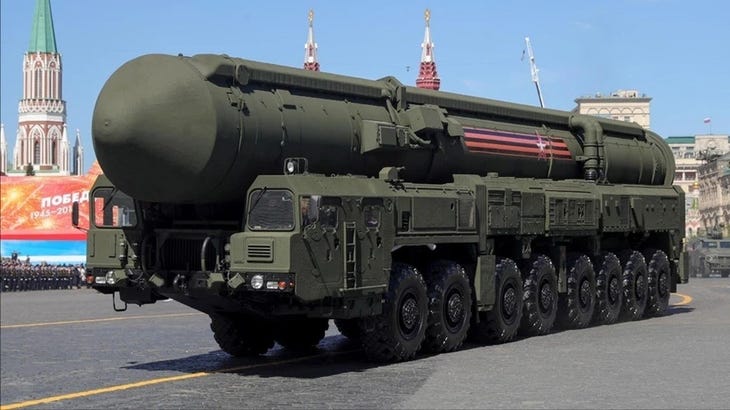
However, Lukashenko did not say how many missiles have been deployed or give other details. Russian President Vladimir Putin said on Wednesday that the Oreshnik will enter combat duty this month, and warned Moscow will seek to extend its gains in Ukraine if Kyiv and its Western allies reject the Kremlin’s demands in peace talks. U.S. President Donald Trump has unleashed an extensive diplomatic push to end the fighting.
Russia previously deployed tactical nuclear weapons to Belarus, whose territory it used to launch a full-scale invasion of Ukraine in February 2022. Intermediate-range missiles can fly between 500 and 5,500 kilometres, and such weapons were banned under a Soviet-era treaty that Washington and Moscow abandoned in 2019.
Sources: Associated Press, The Kyiv Post

Thailand’s army has recast its deadly clash with Cambodia as a battle against scam centres, adding a new motive for bombing runs across the border that it says are aimed at rooting out cybercriminals. A military division called the strikes a “war against the scam army” and said it is on the frontline against transnational crime syndicates operating across Cambodia, Laos and Myanmar.
However, Thailand’s Second Army Area Command said some targets hit in Cambodia this month were scam compounds used by Cambodian troops, after earlier focusing only on military targets. It said Thai forces have neutralised at least six scam-related facilities, including two sites previously sanctioned by the US government.
Meanwhile, Cambodia’s defence ministry said Thailand used F-16s to drop two bombs in Poipet, a casino town known for housing cybercrime operations, while a Thai army spokesman said every target identified was clearly being used as a military base.
Sources: Bloomberg, BBC

The Trump administration has imposed sanctions on two more judges at the International Criminal Court over their role in cases examining alleged Israeli war crimes in Gaza, prompting the court to warn of a “flagrant attack” on its independence. The move expands a pressure campaign against the ICC that has already targeted judges, prosecutors and senior staff.
The sanctions were announced by US Secretary of State Marco Rubio, who said the judges had directly engaged in efforts to investigate, arrest or prosecute Israeli nationals without Israel’s consent. They were part of a panel that upheld arrest warrants issued in November 2024 for Israeli Prime Minister Benjamin Netanyahu and former defence minister Yoav Gallant. Netanyahu praised Washington for taking what he called strong action against the court.
However, the ICC said the measures threaten the international legal order and undermine an impartial judicial institution. The United States and Israel are not ICC members, but the court asserts jurisdiction over alleged crimes committed on the territory of a member state, including sitting heads of government.
Sources: France 24, The Times of Israel

President Donald Trump suspended the green card lottery programme on Thursday, and Homeland Security Secretary Kristi Noem said she is ordering US Citizenship and Immigration Services to pause the programme at Trump’s direction. Noem said the move followed the suspect in the Brown University and MIT shootings entering the United States through the programme.
The suspect, Portuguese national Claudio Neves Valente, initially entered the US on a student visa in 2000 and later became a permanent resident in 2017. He was found dead on Thursday evening from a self-inflicted gunshot wound, officials said.
However, the diversity visa programme makes up to 50,000 green cards available each year by lottery, and it was created by Congress. The move is almost certain to invite legal challenges.
Sources: The Guardian, Associated Press

The European Union has delayed the signing of its long-awaited free trade agreement with the South American Mercosur bloc until January, following farmer protests and last-minute opposition from France and Italy. European Commission chief spokesperson Paula Pinho confirmed the postponement on Thursday.
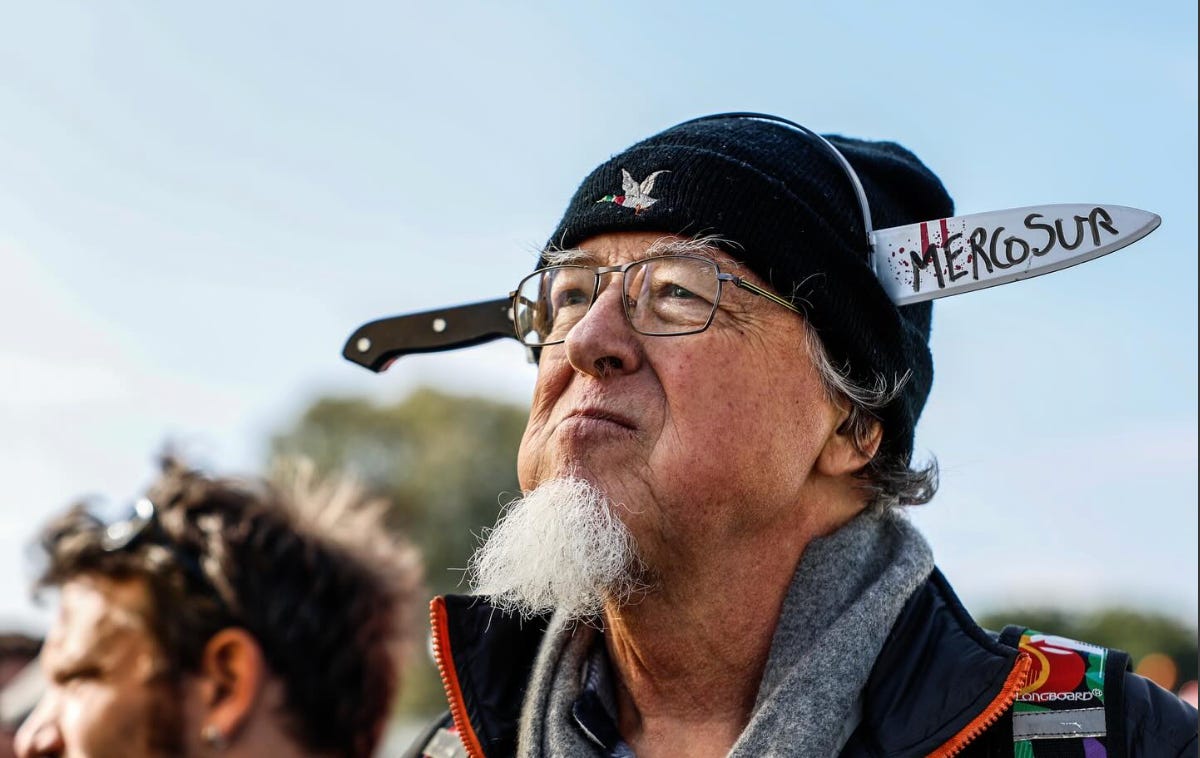
Commission President Ursula von der Leyen had planned to travel to Brazil this weekend to sign the deal, but lacked sufficient backing from EU member states. An agreement was reached to delay the signing after talks involving von der Leyen, European Council President Antonio Costa and Italian Prime Minister Giorgia Meloni, with Italy indicating it would support the deal in January.
French President Emmanuel Macron also pushed for a delay, citing pressures on farmers and calling for further discussions. The decision came as thousands of farmers staged protests in Brussels, blocking roads with tractors and clashing with police. The EU-Mercosur pact would be the bloc’s largest trade deal by tariff cuts, but critics fear cheaper imports could harm European agriculture.
Sources: Al Jazeera, Le Monde
TikTok has signed a deal to spin off its US operations to a new entity controlled by mostly American investors, according to an internal memo reviewed by Axios and NPR.
However, Oracle, Silver Lake and Abu Dhabi-based MGX will own 45% of the new US entity, with around 20% kept by ByteDance and about a third held by existing ByteDance investors. The sale memo says the US algorithm will be retrained with only Americans’ data and content moderation will be set by the new entity, yet the underlying algorithm will still be owned by ByteDance.
As a result, the deal follows a 2024 law passed by Congress to ban the app unless it was sold, a law the Supreme Court upheld in January. The agreement is set to close on Jan. 22, the memo says.
Sources: Axios, NPR

Australia will launch a national gun buyback scheme to reimburse owners who hand in surplus, newly banned or illegal firearms, Prime Minister Anthony Albanese said on Friday. The government said it will tighten laws around gun ownership after the Bondi attack on Sydney’s Jewish community, in which 15 people, including a 10-year-old girl, were killed.
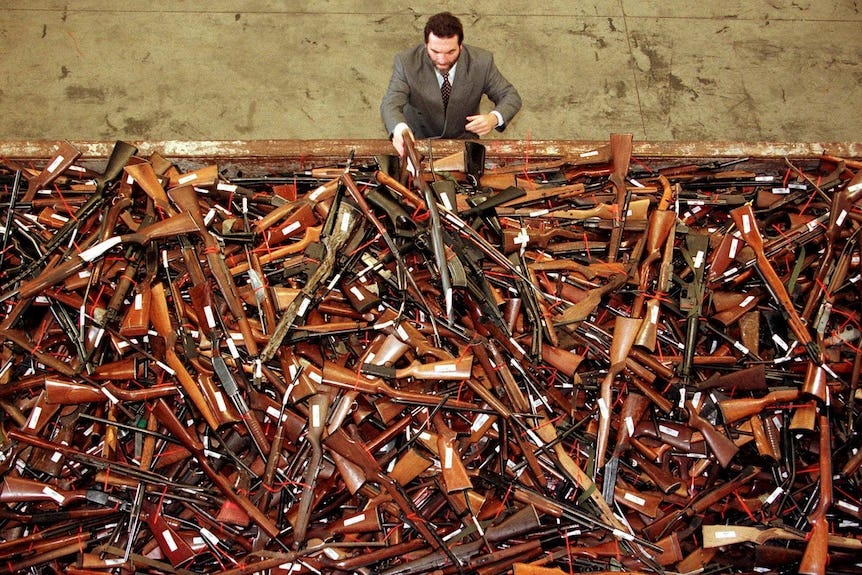
One of the terrorists held a firearm licence and had six guns, Albanese said, adding there was no reason for someone in that situation to have that many. However, Labor will first have to pass legislation to provide funding, with the Commonwealth splitting the cost 50:50 with states and territories.
This Sunday will be a day of reflection, with Australians urged to observe a minute’s silence and light a candle at 6:47 p.m., one week after the attack. Flags will be flown at half-mast.
Sources: New York Times, ABC News

Donald Trump signed the fiscal 2026 National Defense Authorization Act on Thursday in a quiet White House move without an Oval Office ceremony.
The bill authorises a record $901 billion in annual military spending, $8 billion more than Trump requested, and includes $800 million for Ukraine - $400 million in each of the next two years - through the Ukraine Security Assistance Initiative, which pays US companies for weapons.
However, it also limits the Department of Defense’s ability to drop US forces in Europe to fewer than 76,000, bars the US European commander from giving up the title of NATO Supreme Commander, and provides $175 million under the Baltic Security Initiative to support Latvia, Lithuania and Estonia.
The White House said Trump backed the measure because it funds his Golden Dome missile defence system and eliminates diversity, equity and inclusion programmes at the Pentagon.
Sources: Reuters, The Guardian

The Bank of Japan raised its policy rate by 0.25 percentage points to around 0.75 per cent on Friday, taking short-term rates to their highest level in 30 years. The move was unanimous and the fourth under Governor Kazuo Ueda, who said the bank will continue to raise the policy rate if the economy performs in line with expectations.
However, markets took the decision as priced in. The 10-year JGB yield broke through 2 per cent to the highest level since 1999, while the yen slipped to ¥156.08 per dollar before strengthening to ¥155.85. The bank said real interest rates would remain significantly negative and accommodative financial conditions would continue.
Meanwhile, consumer price inflation has been above the 2 per cent target for more than three years, and prices excluding fresh food rose 3 per cent in November. Traders said they would look for clarity on 2026 rate rises at Ueda’s press conference later Friday.