


US And Iran Exchange Strikes As Gulf Attacks Spread (Conflict)
Trump’s Asia Visit Exposes Unease Over US Reliability (Asia)
Australia And UK Target Israeli Settlement Expansion (Middle East)
Europe Joins Ukraine Talks Despite Fears Over Russian Demands (Diplomacy)
France Rejects Russian Claims Over Secret Ukraine Mission (Europe)
Le Pen Proposes Lower French Retirement Age (Europe)
COP31 Climate Deal Divides Nations Over Fossil Fuels (World)
Gaza Ceasefire Faces Collapse as Reconstruction Stalls (Middle East)
Nvidia Doubles Revenue as Board Rules Out Huang Return (Technology)
US Technology Outages Expose Infrastructure Fragility (Technology)
A succinct daily briefing delivered each weekday to help you stay on top of the stories shaping the world.

The United States struck an Iranian missile launch site on Qeshm Island after Iranian drones targeted a US radar system in Bahrain, as attacks spread across the Gulf. US Central Command said the drones were intercepted without damage to personnel or equipment. Iran’s Revolutionary Guards said their operation was retaliation for alleged US drone violations of Iranian airspace.
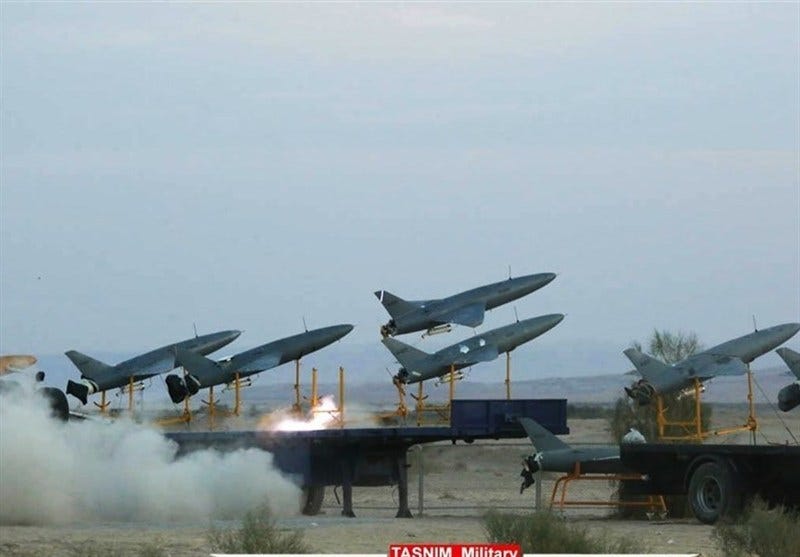
Kuwait reported hostile drone attacks, while Bahrain said its defences intercepted further Iranian attacks early Wednesday. The exchanges follow several weeks of reduced hostilities, with Gulf states hosting American military facilities again exposed to strikes.
The escalation coincides with continuing threats to shipping through the Strait of Hormuz, where Iran said three tankers struck mines on Tuesday. The US has been escorting vessels through the waterway, which normally carries about a fifth of global oil. A third American aircraft carrier has arrived in the Middle East ahead of planned talks involving the US, China and Russia.
Sources: Al Jazeera, France 24

US President Donald Trump arrived in Manila on Tuesday as the ASEAN summit was concluding, amid growing concerns among Southeast Asian governments about Washington’s reliability. His visit included meetings with Quad partners India, Japan and Australia and a trade agreement with Thailand, before planned talks in China with Presidents Xi Jinping and Vladimir Putin.
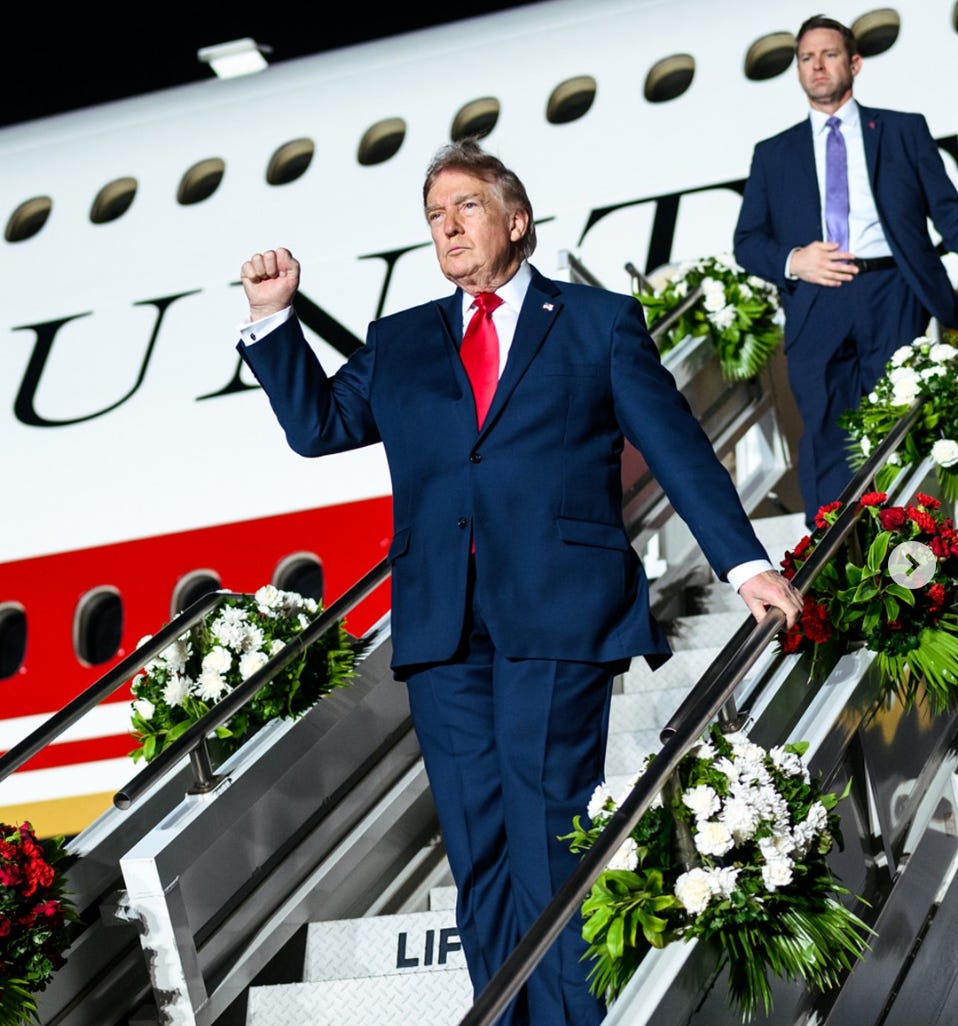
The region has been hit by US tariffs and rising energy costs from the Iran war, although exports to America increased 30% last year, supported by demand for AI components. Washington is promoting its Pax Silica technology initiative to reduce dependence on Chinese supply chains, while China retains extensive economic influence across Southeast Asia.
The Philippines illustrates the balancing act. President Ferdinand Marcos Jr., who previously strengthened ties with Washington, has recently adopted a more conciliatory approach towards Beijing despite continuing South China Sea disputes. Reduced US patrols and uncertainty over American commitments have complicated regional calculations.
Sources: BBC, New York Times

Australia and Britain have announced coordinated sanctions against individuals and companies involved in Israeli settlement expansion in the occupied West Bank. Australia targeted three individuals and four organisations, including prominent settler leader Daniella Weiss and her Nachala movement. Britain sanctioned eight construction and property development companies, seeking to restrict financing for settlement activity.
The measures focus partly on the E1 corridor east of Jerusalem, where planned construction would effectively divide the West Bank and separate it from East Jerusalem. Australian Foreign Minister Penny Wong said settlement expansion and settler violence were undermining prospects for a two-state solution. Israeli settlements in occupied territory are illegal under international law.
Israeli Foreign Minister Gideon Saar condemned the British sanctions as hostile and promised countermeasures, while the Palestinian foreign ministry welcomed them. Britain is also developing legislation to prohibit imports from settlements. Australia has ruled out a similar import ban but is considering further targeted measures.
Sources: The Guardian, BBC

European governments have agreed to participate in renewed US-led negotiations over Ukraine despite concerns that Russia is seeking concessions on NATO deployments and European security. Washington has proposed discussing troop placements and alliance rules alongside a peace settlement, including a possible exchange of Ukrainian territory for NATO membership.
European officials fear that negotiations could legitimise Russian demands to withdraw NATO forces from countries that joined after 1997. Lithuanian Foreign Minister Kęstutis Budrys rejected any Russian veto over European security decisions. Nevertheless, EU leaders have appointed representatives to participate, concerned that Washington could otherwise negotiate directly with Moscow without European involvement.
Ukrainian President Volodymyr Zelenskyy has encouraged European participation and expressed conditional openness to American proposals. European officials remain sceptical of Moscow’s intentions as Russian attacks continue. US envoys are expected in Berlin on Thursday, while President Donald Trump prepares to meet Russian President Vladimir Putin and Chinese President Xi Jinping.
Sources: Bloomberg, Politico Europe

Russia has accused France of direct involvement in the Ukraine war following revelations that French military personnel have been operating inside Ukraine since at least summer 2026. Russian Foreign Minister Sergei Lavrov said the deployment went beyond supporting Kyiv and amounted to participation in the conflict.
The confidential mission, known as Operation Volia, involves a small number of French soldiers providing training and technical support for sophisticated weapons, including Caesar howitzers and Mirage 2000 fighter jets. French Foreign Minister Jean-Noël Barrot acknowledged the personnel’s presence but rejected suggestions that France was a co-belligerent, describing their activities as maintenance and training far from the frontline.
France has previously trained Ukrainian forces in France and Poland. The disclosure raises questions about the boundaries of Western military assistance and parliamentary oversight in Paris. Defence analyst Ulrich Bounat warned that Moscow could portray the non-combat deployment as evidence of direct NATO participation.
Sources: RFI, Reuters

French presidential candidate Marine Le Pen has proposed lowering the retirement age to between 60 and 62, reversing reforms intended to extend working lives. Her National Rally party would allow people who began working before 20 to retire at 60, while reducing the contribution years needed for a full pension to between 40 and 42.
Le Pen estimates the changes would cost €18.6bn annually by 2032, largely offset by tighter eligibility rules and other savings. She also proposed mandatory investment accounts funded through existing employer contributions, marking a shift towards privately invested retirement savings.
Opponents and economists questioned the calculations as France struggles with an ageing population and a projected budget deficit of 5.4% of GDP this year. Public pensions already cost about 13.4% of GDP. Le Pen defended the proposals as financially sustainable, while analysts warned that earlier retirement could reduce employment and worsen public finances.
Sources: FT, Politico Europe

Negotiations at the COP31 climate summit in Turkiye have become contentious after co-host Australia circulated an 18-page draft agreement calling for a fossil fuel phaseout and net zero emissions in wealthy countries by 2030. European Union climate envoy Wopke Hoekstra warned that the document could make negotiations untenable, while Australian Climate Minister Chris Bowen said another draft was expected before Friday’s scheduled conclusion.

A separate dispute concerns the timing of the UN climate science panel’s seventh assessment report. European, African and Pacific countries want it published before the 2028 review of global emissions reductions. Saudi Arabia and India have been accused of seeking publication in 2029, although Riyadh says its position reflects the need for scientific review and participation.
The talks require consensus, allowing any country to block an agreement. Antigua and Barbuda’s environment minister Michael Joseph said agreement on fossil fuel phaseout could prove extremely difficult.
Sources: Arab News, Al Jazeera

The US-backed Board of Peace has warned the UN Security Council that Gaza’s year-old ceasefire could collapse unless Israel and Hamas fulfil commitments made under the 2025 agreement. Its report said continued Israeli strikes and Hamas military activity were obstructing implementation, while restrictions on supplies and funding shortfalls were leaving civilians facing another winter in tents and rubble.
The board criticised Israel for failing to approve the deployment of an interim Palestinian technocratic administration and the training and return of civilian police. These delays have also held up an international stabilisation force, Israeli troop withdrawal and reconstruction. Israel says it has taken steps to address the humanitarian crisis.
The board urged the Security Council to press both parties to meet their obligations, warning that neither could use the other’s delays to justify inaction. It also called for a credible pathway towards Palestinian self-determination and statehood.
Sources: Al Jazeera, Times of Israel

Nvidia reported quarterly revenue of $115.8 billion, more than double a year earlier, as its board ruled out reinstating former chief executive Jensen Huang following his resignation amid a scandal involving an alleged Chinese spy. Board chairman Harvey Jones said directors had unanimously accepted Huang’s departure. Interim chief executive Colette Kress raised the company’s fiscal 2028 revenue growth forecast to 75%.
Data-centre sales rose 110% to $107.6 billion, while Nvidia forecast $130 billion in revenue for the current quarter. Shares rose more than 4% after hours, although the company has lost substantial market value since the scandal emerged.
The leadership crisis coincides with tighter US restrictions on advanced chip exports to Asian countries and scrutiny of Nvidia’s financing arrangements with customers. The company has committed $390 billion to future supply and capacity, while US regulators are investigating whether its disclosures misled investors. Nvidia is reviewing the export restrictions’ impact.
Sources: AFP, Wall Street Journal

A succession of technology outages across the United States has disrupted banking, air travel, consumer services and a classified National Security Agency communications network, prompting demands for answers from lawmakers. Secretary of State Marco Rubio said there was no evidence that the incidents were connected or caused by hostile acts.
The failures had different reported causes. A software bug disrupted JPMorgan Chase transactions, an internal update affected Apple services, and a Microsoft malfunction followed routine traffic rerouting. An ageing router contributed to widespread air traffic disruption after a contractor replaced telecommunications wiring. The NSA also experienced an internal network outage.
Republican Representative Mike Lawler called for an immediate congressional briefing, while Democratic Senator Mark Warner raised concerns about artificial intelligence changing cybersecurity risks. Experts cautioned that no public evidence linked the outages to attacks, pointing instead to fragile infrastructure and inadequate redundancy.
The explanations for the disruptions did not satisfy some members of the public and have prompted some Americans to stockpile supplies.
Sources: Bloomberg, The Hill
Restacking or sharing this publication means more people can read it. Commenting extends the conversation. Liking shows your appreciation.
On this day …
On this day in 1916, the Battle of the Somme ended after nearly five months of fighting between Allied and German forces on the Western Front during the First World War.
Launched on 1 July, the Anglo-French offensive sought to break German defensive positions and relieve pressure on French forces at Verdun. Despite extensive artillery bombardments and repeated infantry assaults, territorial gains remained limited.
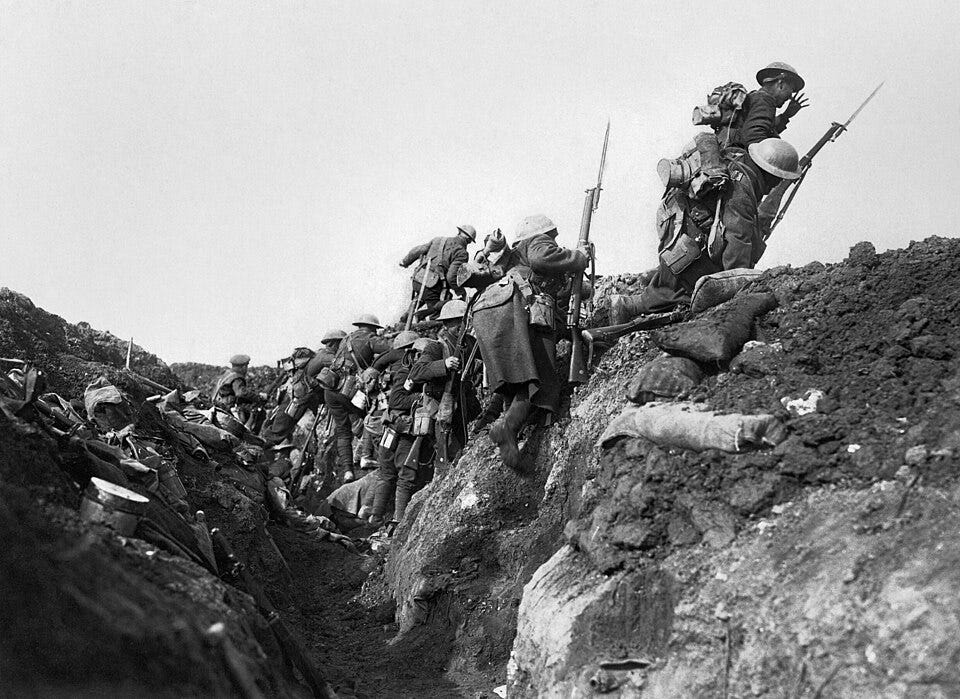
The battle resulted in more than one million casualties across both sides and became emblematic of the devastating human cost of industrialised warfare.
The Somme demonstrated how advances in military technology had transformed warfare without an effective change in tactics and just how much this mismatch cost in terms of human lives.
Is what we are seeing in Ukraine a modern example of this? - drone warfare has changed the face of modern combat and we are again seeing almost unimaginable loss of life.