


Trump Criticises Nato As Allies Refuse Iran Role
Macron Rejects Trump Push On Hormuz Operations
Iran Vows Revenge After Larijani Killing
Russia Deepens Military Support For Iran
US Counterterrorism Chief Quits Over Iran War
Pentagon Plans Mass Production Of LUCAS Drones
Takaichi Faces Difficult Trump Visit Over Iran
EU Tries Pipeline Fix To Break Orbán Veto
Belgian Court Clears Way For Lumumba Murder Trial
Chile Starts Border Trenches At Peru Frontier

Donald Trump criticised Nato allies after failing to secure support for a US-led effort to patrol the Strait of Hormuz, where disruption has affected roughly one-fifth of global oil flows. The US president had urged European partners to deploy naval vessels to escort tankers, but most declined, arguing they would not join a war they did not start.
Speaking at the White House, Trump described the refusal as a “foolish mistake” and a test of alliance commitment, while insisting the US did not require assistance. European leaders, including those in the UK, France and Germany, maintained the conflict was not their responsibility and that Nato had no mandate to intervene.
The episode exposed divisions over burden-sharing within the alliance, with Trump suggesting the US could reconsider aspects of its support while noting he had no immediate retaliatory measures in mind.
Sources: CNN, BBC

Emmanuel Macron said France would “never” take part in operations to reopen the Strait of Hormuz during the current conflict, directly rejecting Donald Trump’s suggestion that Paris was willing to help. France said it was not party to the war and would not use force to reopen the waterway while hostilities continued.
Macron said France was instead working with European, Asian and Gulf partners on a possible future escort system for tankers and commercial ships once the situation had stabilised and the main bombing had ceased. French officials said any such mission would require de-escalation, prior negotiations with Iran, and an international framework.
The stance underlined a widening split between Washington and key allies over how to respond to the disruption of a route that carries about one-fifth of global oil and liquefied natural gas.
Sources: Reuters, The Hill

Iran vowed retaliation after Ali Larijani, secretary of the Supreme National Security Council, was killed in an Israeli strike, as missiles were launched towards central Israel and two people were killed near Tel Aviv. Israeli authorities also reported damage that disrupted railway operations, while Iran said the attack was revenge for Larijani’s death.

Israel cast Larijani’s killing as part of a wider campaign against Iran’s leadership and said it would also track down and neutralise Mojtaba Khamenei. Iranian Foreign Minister Abbas Araghchi said the assassination would not destabilise the political system, arguing the state had continued to function even after Ali Khamenei was killed on 28 February.
The exchange underscored how the war is combining leadership decapitation with continuing missile escalation, while both sides signal no immediate path to de-escalation.
Sources: South China Morning Post, Al Jazeera

Russia has expanded military cooperation with Iran by providing satellite imagery, intelligence and modified drone components, according to people familiar with the matter. The support is intended to help Tehran target US forces and regional allies more effectively during the war.
The assistance reportedly includes improved Shahed drone components, tactical guidance drawn from Russia’s experience in Ukraine, and direct satellite imagery in the early days of the conflict. Analysts and officials cited in the reports said the aid may have contributed to more focused Iranian strikes on radar and command systems in the Gulf.
The development points to a deeper operational partnership between Moscow and Tehran, even without a formal military alliance, as the conflict widens and intelligence support becomes more central to battlefield effectiveness. Russia has denied giving intelligence to aid the strikes.
Sources: Wall Street Journal, NDTV

Joe Kent, the director of the National Counterterrorism Center, resigned in protest at the US-Iran war, declaring in his resignation letter that Iran posed no imminent threat to the United States. Kent, a Trump appointee, said he could not in good conscience support the conflict and argued the administration had been misled about the basis for war.
Donald Trump responded by calling Kent “very weak on security” and said it was a good thing he had left. The White House also rejected Kent’s claims, insisting the president had acted on strong and compelling evidence that Iran was preparing to attack first. Tulsi Gabbard likewise said it was for Trump to decide what constituted an imminent threat.
The resignation opened a public split inside the administration over the central justification for the war, turning an intelligence dispute into a visible political rupture.
Sources: CNN, South China Morning Post

The Pentagon plans to mass produce Low-Cost Uncrewed Combat Attack System (LUCAS) one-way attack drones after using them in the current war in the Middle East. The system is a US version of Iran’s Shahed drone and was deployed to the region before the start of Operation Epic Fury against Iran.
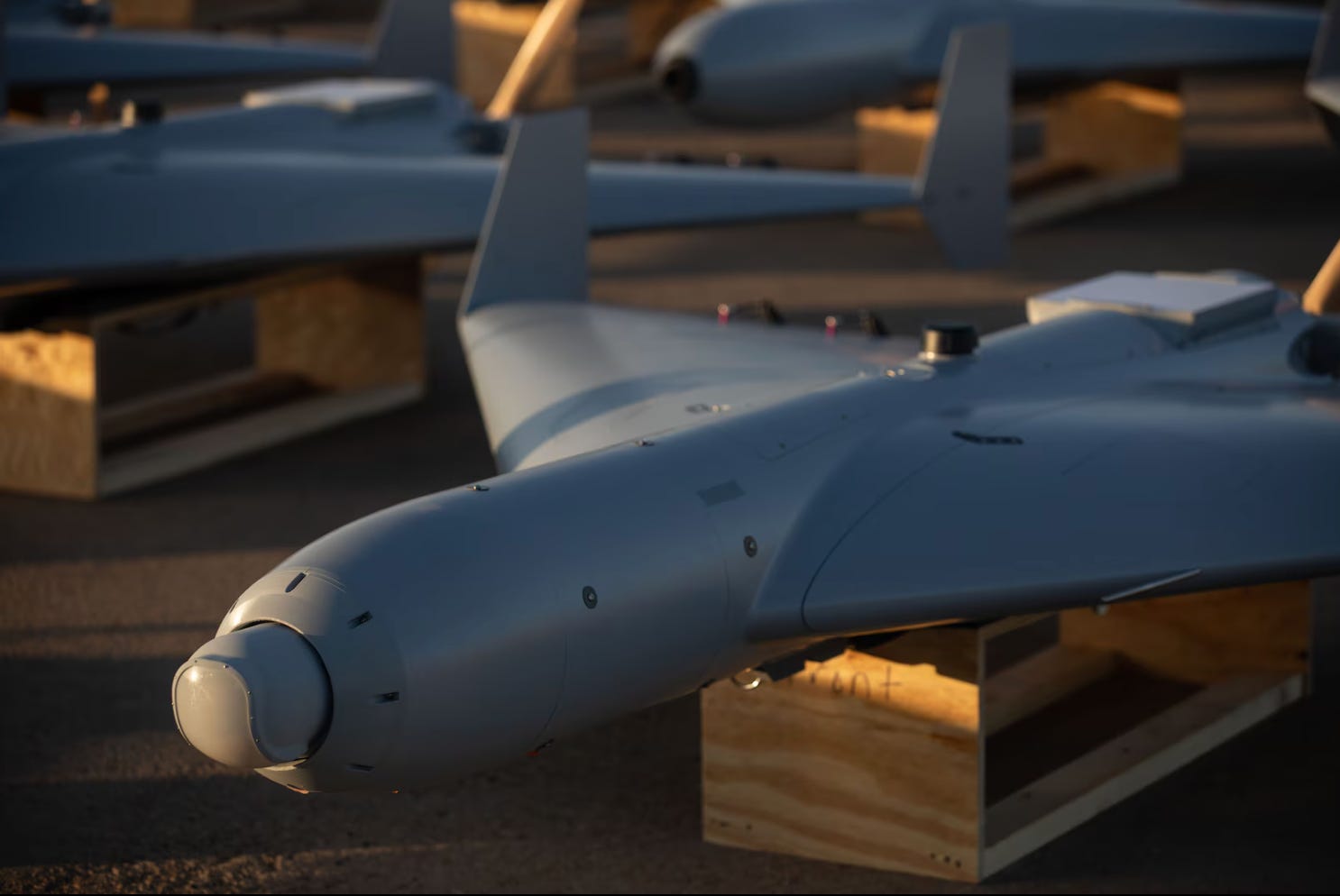
Defence officials said the drones had performed well in combat and described them as a useful tool in the arsenal. Emil Michael, the under secretary of defence for research and engineering, said the aim was to build them at scale in the United States and create surge capacity. SpektreWorks has so far manufactured dozens.
The move reflects a push to field cheaper long-range strike systems that can substitute for cruise missiles costing millions of dollars, with each LUCAS drone estimated to cost about $55,000 and have a range of more than 400 nautical miles.
Sources: Wall Street Journal, Bloomberg

Sanae Takaichi said her meeting with Donald Trump would be “extremely difficult” after his demands for allied naval support in the Strait of Hormuz pushed Japan into a diplomatic bind. Trump had urged allies to help secure the waterway, then angrily withdrew the request after limited support, while also naming Japan in a post declaring the US did not need help.
For Tokyo, the problem is strategic as well as legal. Takaichi said she would explain what Japan is able to do under its laws, while ruling out an immediate deployment into the conflict zone. Japan relies heavily on Middle Eastern oil, but its constitutional and political constraints make military involvement highly sensitive.
The White House meeting now becomes an early test of whether Japan can preserve alliance ties with Washington while avoiding deeper entanglement in a war it did not choose.
Sources: Bloomberg, New York Times

The European Union has offered technical support and funding to help Ukraine repair the damaged Druzhba pipeline, in an attempt to break Hungary’s veto on a 90 billion euro loan for Kyiv. European leaders said Ukraine had accepted the offer, which is aimed at restoring Russian oil transit to Hungary and Slovakia after deliveries were halted in January.
Viktor Orbán has tied his approval of the loan to the resumption of oil flows, declaring that “if there is no oil, there is no money”. Volodymyr Zelenskyy said Ukraine was making all possible efforts to restore operations, despite his opposition to Russian energy transit through Ukrainian territory.
The dispute has turned energy infrastructure into leverage in a wider political struggle over war funding, sanctions and EU unity, with Brussels hoping pipeline repairs can provide Orbán with a route out of the standoff.
Sources: NPR, Politico Europe

A Belgian court has ruled that Étienne Davignon, 93, must stand trial over his alleged role in the 1961 killing of Patrice Lumumba, the first prime minister of independent Congo. He is the only surviving former Belgian official among 10 people accused in the case brought by Lumumba’s family in 2011.
Davignon is accused of participation in war crimes linked to Lumumba’s unlawful detention, transfer and degrading treatment. The ruling marks a late legal reckoning over a killing that Belgium has already acknowledged carrying out with state support, and for which it has apologised to Lumumba’s relatives and to the Democratic Republic of Congo.
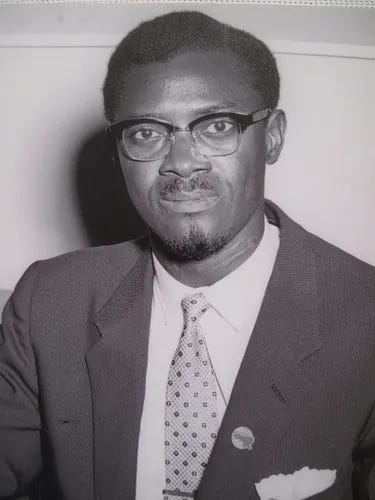
For Lumumba’s family, the decision opens a long-delayed attempt to place colonial responsibility on the record of justice as well as history. The trial is expected to begin next year.
Sources: FT, BBC

Chile has begun digging trenches along its northern border with Peru as President José Antonio Kast moves to deliver on a campaign pledge to curb illegal migration and strengthen military presence at the frontier. Kast inspected the start of construction near the Chacalluta crossing and said the measures were intended to restore state control.
The trench work forms part of a wider “Border Shield” plan that will combine trenches, fences, surveillance systems and obstacles, with military personnel patrolling the barrier. Kast has argued the project is needed after irregular crossings brought more than 180,000 people into Chile in recent years, while the government also links the border crackdown to drug trafficking and organised crime.
Human rights and migrant advocates have criticised the hardline approach, warning that migration policy must also respect due process, family unity and international human rights obligations.
Sources: Reuters, BBC
On this day …
On this day in 2014, Russia formally annexed Crimea after a disputed referendum held following the collapse of Ukraine’s pro-Russian government.
President Vladimir Putin signed a treaty incorporating the peninsula into the Russian Federation, arguing that the move reflected the will of local residents.
Ukraine and most Western governments rejected the annexation as illegal under international law, triggering sanctions and the sharpest confrontation between Russia and the West since the Cold War.
The crisis also ignited armed conflict in eastern Ukraine and set in motion geopolitical tensions that would escalate dramatically in the years that followed.
More than a decade later, Crimea remains one of the central flashpoints in the struggle over Europe’s post–Cold War security order.