


Saudi Arabia Finds Itself Fighting Alone (Conflict)
Gaza’s Damaged Buildings Become a Deadly Risk (Middle East)
Europe And Canada Seek Closer Ties As Trump Warns (Diplomacy)
Fed Raises Rates Despite Trump Opposition (Markets)
Thaci Sentenced To 25 Years For War Crimes (Courts)
Rutte Calls For More European Power In NATO (Europe)
US Pays UN Arrears And Protects Its Vote (Geopolitics)
Belarus Trades Prisoner Releases For Sanctions Relief (Europe)
US Military Prepares For Combat Beyond Earth (US)
Freshwater Reserves Decline As Water Cycle Shifts (Environment)
A succinct daily briefing delivered each weekday to help you stay on top of the stories shaping the world.

Saudi Arabia is struggling to secure Western military backing after the Houthi offensive in Yemen, exposing the limits of the kingdom’s external security support as Iran and its allies expand their regional reach.
Two Western officials said neither the United States nor European countries was prepared to provide direct military backing for a counteroffensive. Washington and its allies have also stayed outside a Saudi-led maritime defence coalition announced in July. Crown Prince Mohammed bin Salman travelled to Cairo seeking Egyptian help after Washington declined to intervene.
The refusal comes after Houthi forces overran Saudi-backed Yemeni forces and captured territory around the Bab el-Mandeb Strait. Some political analysts say Washington’s reluctance to aid Riyadh may prove more consequential than the battlefield setback itself, weakening Saudi leverage and reinforcing doubts about US security guarantees.
Yemeni political analyst Farea Al-Muslimi said the Saudi-American relationship had rarely faced such a test.
Sources: Reuters, New York Times

A Gaza City building damaged by Israeli strikes earlier in the war collapsed on Wednesday, killing at least 21 people, including 11 children. The structure was known to be unstable but six displaced Palestinian families had sheltered there because they had few alternatives.

The collapse highlights a wider danger from war damaged buildings as reconstruction remains stalled. More than one fifth of Gaza City buildings assessed by the Norwegian Refugee Council in March were structurally unsound, while two-thirds of Palestinian households were living in tent camps in August. Among households living in buildings, 72% occupied structures with minor or moderate damage.
Rescue teams have only a few working excavators and dwindling fuel as they also try to recover hundreds of bodies from earlier collapses.
No reconstruction has taken place since the ceasefire was agreed almost a year ago. Israel says rebuilding will not be permitted until Hamas disarms.
Sources: Associated Press, Al Jazeera
Europe and Canada are seeking a closer economic and security relationship after the European Union invited Canada to become its first “associate member”, drawing a tariff threat from US President Donald Trump.
European Commission President Ursula von der Leyen said the two sides should cooperate on manufacturing, technology, defence, energy and economic security. Canadian Prime Minister Mark Carney has sought greater access to EU markets, funds and programmes without full membership, while Canada has also formally applied to join the British-led Joint Expeditionary Force.
The proposal remains largely symbolic. Associate membership has no existing legal basis, several EU states have expressed concern about the term, and three European diplomats said the title may not survive.
Trump said he could impose very heavy tariffs on Europe if he considered the arrangement hostile. Officials are nevertheless working towards tangible progress at an EU-Canada summit in Montreal at the end of October.
Sources: CNBC, New York Times

The Federal Reserve has raised US interest rates for the first time since 2023, lifting its benchmark range by 0.25 percentage points to 3.75%-4% as inflation remains above target. The unanimous decision defied President Donald Trump’s demands for lower rates.
Federal Reserve Chair Kevin Warsh said inflation was “too high and has been for too long”. Inflation reached 3.4% in August, while higher energy prices have followed the war with Iran. Warsh said the Fed cannot affect individual prices such as oil or food but can prevent those increases from broadening across the economy.
All but two Federal Open Market Committee members forecast another increase this year. Trump responded by demanding rates be lowered and said the benchmark should be 1% or less. Major US banks including JP Morgan, KeyCorp and BNY raised their prime lending rates to 7% from 6.75%.
Sources: BBC, NBC

Kosovo’s former President Hashim Thaci has been sentenced to 25 years in prison after being convicted of war crimes committed during the 1998-99 war for independence from Serbia. The Hague-based Kosovo Specialist Chambers found him guilty of murder, torture, cruel treatment and arbitrary detention.
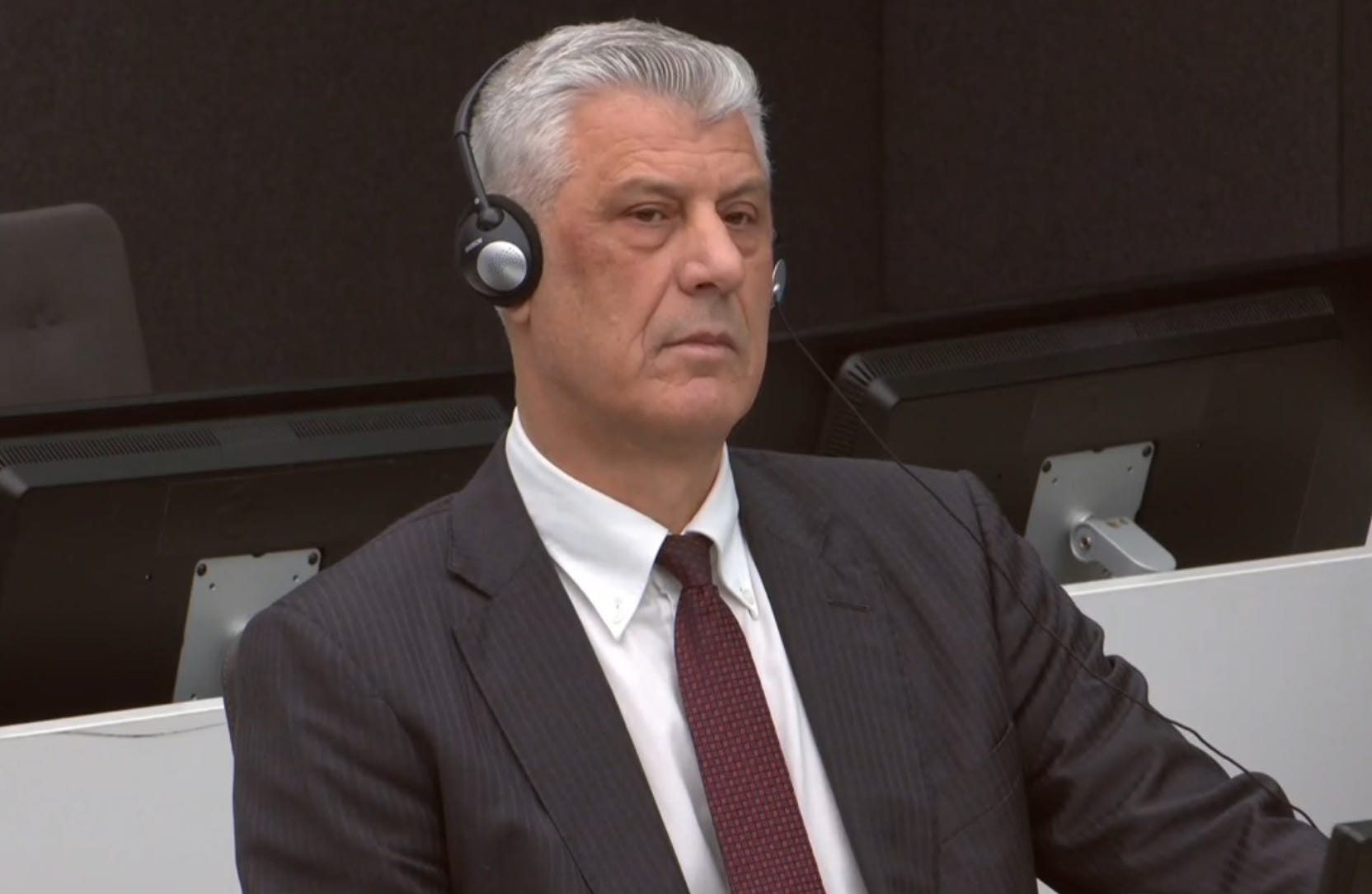
The court found Thaci and three former Kosovo Liberation Army commanders criminally responsible for the murder of 96 people, torture of 303 detainees, cruel treatment of 49 and arbitrary detention of 385. They were acquitted of six crimes against humanity charges after prosecutors failed to prove a widespread and systematic attack on civilians.
Presiding Judge Charles Smith said Thaci had used his leadership and authority to encourage crimes, while stressing the trial was not about the legitimacy of the KLA or its goal of Kosovo independence. Thaci maintained his innocence, and both he and prosecutors can appeal.
Sources: Associated Press, The Guardian

NATO Secretary General Mark Rutte has called for “more UK and more Europe” in the alliance, warning that collective defence will not be credible without greater investment. He said NATO faces its most dangerous and complex security environment in a generation, citing wars in Europe and the Middle East and wider geopolitical uncertainty.
Alliance members agreed in 2025 to increase defence spending towards US levels after President Donald Trump demanded Europe take the lead in defending the continent. Britain has budgeted to reach 2.7% of GDP by the end of the next decade which is below the alliance-wide target of 3.5% by 2035.
Rutte said Europe had previously assumed the US would provide most of NATO’s military strength and funding. Canada, meanwhile, has formally applied to join the British-led Joint Expeditionary Force as it seeks closer military cooperation with Europe and to diversify its defence ties away from the US.
Sources: The Guardian, Anadolu Agency
The Trump administration has paid $725 million to the United Nations regular budget, reducing Washington’s arrears and ensuring the US keeps its General Assembly vote when the body convenes in New York next week. The US also paid $102 million towards peacekeeping.
UN spokesperson Farhan Haq said Washington still owes $1.312 billion to the regular budget but the latest payments mean it is no longer at risk of losing its 2027 General Assembly vote under Article 19. The rule removes voting rights when a member’s arrears exceed two years of annual contributions, although grace periods are possible.
The US remains the UN’s largest budget contributor but the Trump administration has slowed mandatory payments and cut voluntary funding to agencies. A US official said last month that payments would depend on continued UN reforms. The organisation is pursuing its own cost-cutting programme amid a financial crisis.
Sources: The Express Tribune, Reuters

Belarus has released 25 prisoners in exchange for the United States lifting sanctions on two Belarusian companies, in what US special envoy John Coale called an interim deal. The agreement followed Coale’s meeting with Belarusian President Alexander Lukashenko, who has sought the removal of remaining US sanctions.
Coale said further prisoner releases and sanctions relief would follow after details are agreed, and that Washington was working to secure more releases soon. Since President Donald Trump returned to office, Lukashenko has released hundreds of political prisoners through US-mediated agreements that also eased sanctions.
Belarusian opposition leader-in-exile Sviatlana Tsikhanouskaya welcomed the releases but warned they did not represent political change. The Viasna human rights centre says 887 political prisoners remain in Belarus. Some of those freed were taken to Lithuania, while a Viasna lawyer said authorities had confiscated some passports in what he described as forced deportation.
Sources: Associated Press, Al Jazeera

The US military is preparing for possible combat extending beyond Earth’s orbit towards the moon, days after revealing for the first time that it has deployed weapons in space. General Dan Caine, chairman of the Joint Chiefs of Staff, said American forces should adapt for operations extending to cislunar space.
Lieutenant General Gregory Gagnon, head of the Space Force’s Combat Forces Command, said potential adversaries were seeking to extend warfare into space. He identified China as pursuing activities there. China’s foreign ministry said it opposed the weaponisation of outer space.
The shift raises questions over existing international rules. The 1967 Outer Space Treaty, signed by the US and China, reserves celestial objects including the moon for peaceful purposes and prohibits nuclear weapons in space. Gagnon said the Space Force would conduct safe and responsible operations.
Sources: The Guardian, Associated Press
The world’s freshwater reserves are continuing a decade-long decline as river flows become increasingly abnormal, according to the World Meteorological Organization. In 2025, one of the three driest years for rivers in 35 years, only around 36% of river basins recorded normal flows.

Groundwater, glaciers, snow, soil moisture and lakes traditionally buffer droughts and dry seasons. WMO Secretary-General Celeste Saulo said these slower reserves act as the planet’s “savings account” but groundwater levels are declining across many regions and nearly two-thirds of monitored wells were outside their normal range in 2025.
Every major glacier region also lost ice for a fourth consecutive year, with cumulative losses of roughly 1,400 gigatonnes between 2023 and 2025. Saulo said countries need shared data, standards and early warnings as water crosses borders, while the WMO says monitoring will become increasingly important as countries adapt to changing conditions.
Sources: France 24, UN
Restacking or sharing this publication means more people can read it. Commenting extends the conversation. Liking shows your appreciation.
On this day …
On this day in 1787, delegates to the Constitutional Convention in Philadelphia signed the United States Constitution. They had originally assembled to revise the Articles of Confederation but instead created an entirely new framework of government built around a stronger federal system and divided political powers.
Thirty-nine delegates ultimately signed the document, while three present refused, partly because it lacked a bill of rights. Ratification then became a major political contest, requiring approval from nine of the thirteen states before the new system could take effect.
The US Constitution has since survived civil war, territorial expansion, profound social change and repeated political crises.
Its longevity raises a continuing question: is constitutional durability evidence of exceptional design, or of each generation’s ability to reinterpret it?