


US And Iran To Resume Nuclear Talks In Geneva
Iran Meets IAEA Ahead Of US Nuclear Talks
Land Dispute Dominates Geneva Peace Talks
Starlink Block Tied To Ukraine Battlefield Gains
Drone Strike On Sudan Market Kills 28
Rubio Backs Orban Ahead Of Hungary Election
Australia Refuses Help After Syria Camp Turnback
India AI Summit Hit By Opening Day Disarray
China Rift Hits Japan Tourism And Growth
Hapag-Lloyd Agrees $4.2 Billion Deal For Israel’s Zim

The United States and Iran to hold indirect talks in Geneva on Tuesday aimed at resolving their long-running nuclear dispute, as Washington masses forces in the region and President Donald Trump warns of consequences if no deal is reached.
U.S. envoys Steve Witkoff and Jared Kushner are expected to attend, alongside Iranian Foreign Minister Abbas Araqchi, with Oman mediating. Trump said he would be involved “indirectly” and believes Tehran wants an accord.
The talks unfold under the threat of escalation. The United States has ordered a buildup of forces including aircraft carriers, and officials have prepared for the possibility of operations if negotiations collapse. Iran insists it will only discuss curbs on its nuclear programme in exchange for sanctions relief, rejecting talks on missiles.
Sources: Reuters, New York Times

Iran’s top diplomat met the head of the United Nations nuclear watchdog in Geneva ahead of a second round of negotiations with the United States over Tehran’s nuclear programme. Foreign Minister Abbas Araghchi met Rafael Grossi, director-general of the International Atomic Energy Agency, and said he would also meet Oman’s foreign minister, whose country is hosting the talks.
As President Donald Trump ordered an additional aircraft carrier to the region, Iran launched a second naval drill in weeks. The Revolutionary Guard began the exercise in waterways through which 20 percent of the world’s oil passes, and sailors were warned that a northern lane of the Strait of Hormuz could see a live-fire drill.
The Trump administration is seeking a deal to limit Iran’s nuclear programme and ensure it does not develop nuclear weapons. Tehran has signalled it could be open to compromise on the nuclear issue in exchange for easing international sanctions.
Sources: PBS, Associated Press

Russia and Ukraine meet in Geneva for a fresh round of United States mediated peace talks, with land emerging as the central sticking point as President Donald Trump presses both sides to reach a deal.
The two-day talks follow earlier rounds in Abu Dhabi that failed to yield a breakthrough and come days before the fourth anniversary of Russia’s full-scale invasion of Ukraine.
Moscow is demanding that Kyiv cede the remaining 20 percent of the eastern region of Donetsk that Russian forces have failed to capture, a demand Ukraine refuses. Russia occupies about one-fifth of Ukraine, including Crimea and parts of the eastern Donbas region.
President Volodymyr Zelenskyy has said his country is facing the greatest pressure to make concessions, while Kyiv maintains its goal of a sustainable and lasting peace.
Sources: Al Jazeera, TRT World

Ukrainian forces have recaptured 201 sq km from Russia between Wednesday and Sunday, the most land retaken in such a short period since a June 2023 counteroffensive, according to analysis of data from the Institute for the Study of War. The territory, concentrated mainly east of Zaporizhzhia, is almost equivalent to Russian gains for the entire month of December.

Analysts said the counterattacks are likely leveraging a recent block on Russian forces’ access to Starlink, which Russian milbloggers have claimed is causing communications and command and control issues on the battlefield. Military observers noted disruption of Starlink antennas used by Moscow on the frontlines after announcements of measures to end the Kremlin’s use of the technology.
Ukrainian officials have said Russian drones used Starlink to circumvent electronic jamming systems and strike targets with precision.
Sources: The Guardian, The Independent

Drone-fired missiles hit a market in central Sudan’s Kordofan region on Sunday, killing at least 28 people and wounding dozens, according to a rights group tracking violence against civilians. Emergency Lawyers said drones bombed the al-Safiya market in Sodari in North Kordofan state while it was bustling with civilians, including women, children and the elderly, and warned the number of casualties was likely to rise.
The area is a fierce front line in the three-year-old war between the Sudanese army and the paramilitary Rapid Support Forces. Emergency Lawyers said the drones belonged to the army, a claim denied by two military officials who said the army does not target civilian infrastructure.
The conflict, which erupted in April 2023, has killed at least 40,000 people and displaced 12 million, according to the World Health Organization.
Sources: Al Jazeera, Associated Press

US Secretary of State Marco Rubio praised Hungarian Prime Minister Viktor Orban in Budapest on Monday, saying Washington wanted Hungary to do well, especially while Orban leads the country. Rubio signed a civilian nuclear cooperation agreement and defended a US sanctions exemption that allows Hungary to keep buying Russian energy.
The visit comes as Orban trails in most polls ahead of an April election. His opponent, Peter Magyar, has gained traction with an anti-corruption message, and says he aims to end Orban’s nearly 16-year reign and return Hungary to a Western European orientation.
Rubio said Orban’s relationship with President Donald Trump has been beneficial and framed the moment as a golden era of relations. Critics question how the approach serves US interests, noting Hungary now buys a greater percentage of its oil from Russia than at the start of the invasion.
Sources: Washington Post, CNN

A group of 34 Australian women and children held in Syria’s Kurdish-controlled Roj detention camp were released on Monday to head home, but were later returned to the camp for “technical reasons”. The group, described as relatives of Islamic State fighters, boarded minibuses for Damascus with a military escort before being ordered to turn back. A camp official said family representatives were still working to resolve the issue with Syrian authorities.
Prime Minister Anthony Albanese said Australia would not provide assistance or repatriation. A government spokesperson said people in this cohort need to know that if they have committed a crime and return to Australia, they will be met with the full force of the law.
Roj is home to more than 2,000 people from 40 nationalities, mainly women and children, held there since Islamic State lost its last territorial foothold in Syria in 2019.
Sources: BBC, Al Jazeera

India opened the five-day AI Impact Summit in New Delhi after Narendra Modi inaugurated the event, which aims to declare a “shared roadmap for global AI governance and collaboration”. Officials expect 250,000 visitors including 20 national leaders and 45 ministerial-level delegations, with Emmanuel Macron and Luiz Inacio Lula da Silva among those expected.

Tech executives expected include Sundar Pichai, Sam Altman and Brad Smith. Organisers say the summit runs until February 20 and is not expected to produce a binding political agreement, instead ending with a nonbinding pledge or declaration.
The opening day faced online criticism as attendees reported long queues, overcrowding and organisational lapses. Delegates said unclear instructions left many scrambling to reclaim possessions after the exhibition building was cleared for security sweeps, while others cited poor signage, limited seating and speakers still awaiting confirmation of Tuesday sessions and agendas, and some panels could not accommodate all seeking entry.
Sources: Al Jazeera, Reuters

The dispute with China over the security of Taiwan is weighing on Japan’s economy as Beijing urges citizens to avoid travel. The row followed remarks in November by Prime Minister Sanae Takaichi suggesting Japan would come to Taiwan’s defence if China invaded.
Chinese arrivals, the largest source of inbound tourism and spending, fell 45 percent in December from a year earlier. China has accounted for around a quarter of all foreign visitors to Japan. In the last three months of last year, inbound tourist spending dropped 2.8 percent to $45.6 billion, the first year-on-year decline in more than four years, while the economy grew 0.2 percent in the quarter.
China reiterated travel warnings ahead of the Lunar New Year holiday starting Tuesday, citing “unstable” public security. Japan is also bracing for China to begin choking imports of rare earths, with stockpiles lasting only 60 to 180 days.
Sources: New York Times, The Guardian

Hapag-Lloyd said it will buy Israel’s ZIM Integrated Shipping Services for $4.2 billion in cash, aiming to secure its position as the world’s fifth-largest shipping group with a modern fleet of over 400 vessels.
Hapag-Lloyd will acquire 100 percent of ZIM’s shares for $35 per share, funded through cash reserves and external financing of up to $2.5 billion. Analysts said the deal could lift its global market share to just under 9 percent. The announcement drew backlash in Israel, with ZIM staff going on strike at its headquarters in Haifa and the city’s mayor urging the government to block it.
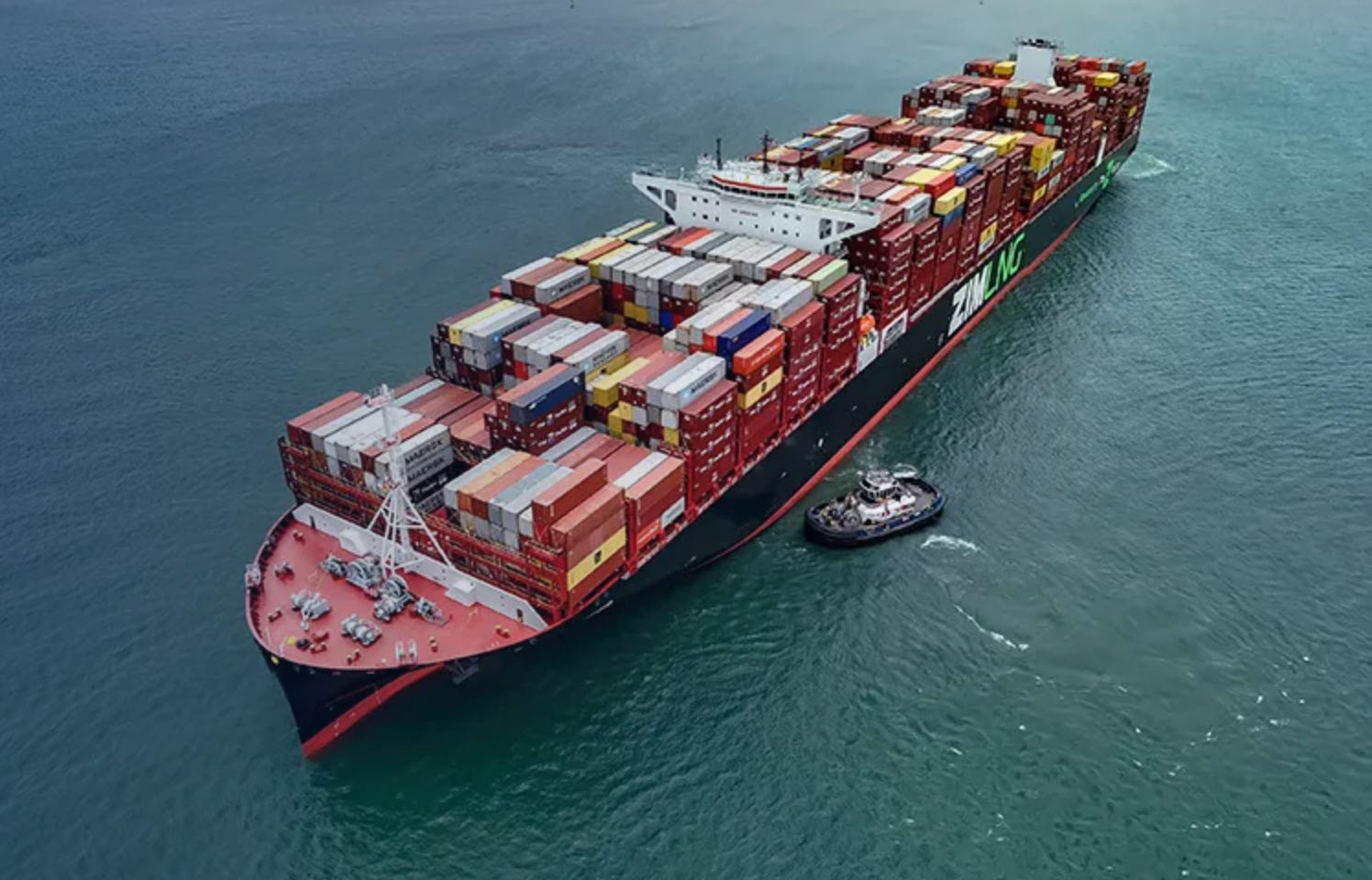
Under a related arrangement, Israeli private equity fund FIMI will acquire a 16-vessel business carved out from ZIM and form “New ZIM”, with the state “golden share” transferred to a FIMI subsidiary. The takeover is expected to close by late 2026, subject to approvals including the State of Israel.
Sources: Reuters, Times of India
On this day …..
On this day in 1947, the U.S.-funded broadcaster Voice of America began Russian-language transmissions aimed at audiences inside the Soviet Union.
Launched as wartime information programming, VOA now entered the early Cold War as an instrument of public diplomacy, seeking to present American policy and reporting directly to listeners behind the Iron Curtain.
Moscow responded by intensifying jamming efforts, underscoring the emerging contest over information and influence.
The Cold War would be fought not only with armies and alliances, but with words carried across borders by radio waves.