


Trump Links Korea Alliance To Iran Dispute (Geopolitics)
Kushner Reopens Direct Channel With Hamas (Diplomacy)
Iran Continues to Prepare For A Wider War (Middle East)
Lebanon Fighting Complicates Iran Talks (Conflict)
Far-Right Minister Calls For 30 To 40 Gaza Killings Nightly (Conflict)
Carrier Deployment Raises Crew Welfare Concerns (Middle East)
EU Plans Major Expansion Of Russia Sanctions (Europe)
British-Made Drones Strike Inside Russia (UK)
Belgium’s Biggest Wildfire Heads Towards Germany (Europe)
DR Congo Ebola Outbreak Becomes Deadliest (Africa)
A succinct daily briefing delivered each weekday to help you stay on top of the stories shaping the world.

President Donald Trump said the United States would substantially reduce joint military exercises with South Korea citing both his “very good relationship” with North Korean leader Kim Jong Un and Seoul’s refusal to participate in the US effort to “denuclearise” Iran.
The announcement came less than 24 hours before annual exercises were due to begin, despite South Korean officials previously saying they would proceed as scheduled.
The decision connects two previously separate policy arenas. Washington’s military posture on the Korean Peninsula is now being discussed alongside allied participation in the Iran conflict. South Korea said it would continue consultations on military cooperation related to the Strait of Hormuz while reviewing Trump’s comments.
Analysts warned that reducing exercises could weaken alliance coordination & deterrence while offering uncertain diplomatic gains with North Korea. The move also follows Trump’s long-standing criticism that the United States bears too much of the financial burden for South Korea’s security and could be linked to what Trump sees as South Korea’s failure to make substantial investments in US manufacturing, as promised.
Sources: BBC, CNN

Jared Kushner, President Donald Trump’s son-in-law & close adviser, met with Hamas leaders in Egypt on Sunday as Washington sought to advance a Gaza disarmament plan rejected by Israeli Prime Minister Benjamin Netanyahu. Kushner was expected to travel to Israel afterwards to meet Netanyahu. Hamas said it remained committed to Trump’s peace framework.
Trump’s roadmap calls for Hamas to relinquish governing authority and weapons while Israeli forces withdraw in phases but Netanyahu has demanded “genuine disarmament” before any Israeli withdrawal. Hamas said it had accepted the roadmap and urged mediators and the Board of Peace to compel Israel to meet its obligations.
Direct talks between the US government and Hamas were once rare but the Trump administration has held multiple rounds of negotiations with the group to win freedom for hostages and end the Israeli military campaign in Gaza. The United States still designates Hamas as a terrorist organisation.
Sources: New York Times, Al Jazeera

Iran’s leadership is preparing for a more sustained confrontation with the United States and its regional allies, according to intercepted communications and intelligence cited by Arab officials. Measures include expanding Revolutionary Guard influence over the regular army, accelerating missile and drone production, strengthening counterintelligence and preparing allied militias for wider operations.
The shift has already extended beyond the Persian Gulf. Iran-backed Houthis have attacked Saudi-linked shipping and declared the Bab al-Mandeb Strait closed to Saudi Arabia, while Iran has targeted ships in the Strait of Hormuz and threatened Gulf energy facilities. Revolutionary Guard commanders were also sent to Yemen to plan expanded operations.
The preparations expose a widening gap between Washington and Tehran over the war’s trajectory. Former US diplomat Alan Eyre said Iran would remain on a wartime footing, while more pragmatic figures within Iran, including President Masoud Pezeshkian, have warned that Iran needs a negotiated settlement or risks economic collapse.
Sources: Wall Street Journal, Palestine Chronicle
Israel’s deadliest day of strikes in Lebanon in months has put strain on a US-brokered ceasefire and added another complication to stalled negotiations with Iran. The Israeli military said it killed senior Hezbollah commander Abu Hassan Alaa in southern Lebanon, while 11 people died in strikes on Saturday. Prime Minister Benjamin Netanyahu said the attacks were retaliation for a Hezbollah action that injured three Israeli soldiers.
The ceasefire framework links Hezbollah’s disarmament with an eventual Israeli withdrawal and a larger Lebanese army security role. Lebanese President Joseph Aoun said the latest attacks sent “a clear message to the negotiation track”, while Israel said further strikes would follow if it faced new threats.
The escalation comes as the US-Iran ceasefire expires Monday with talks deadlocked over the Strait of Hormuz and Washington preparing fresh economic measures.
Iran has argued that Israeli strikes on Lebanon violate its agreement with the United States.
Sources: Bloomberg, Al Jazeera

Israel’s National Security Minister Itamar Ben-Gvir said Israel should carry out “30 to 40” targeted killings in Gaza every night and called for Jewish settlements to be re-established across the enclave. Speaking on a podcast hosted by former hostage Rom Braslavski, Ben-Gvir criticised Prime Minister Benjamin Netanyahu’s recent reduction of strikes in Gaza.

Ben-Gvir also advocated encouraging Palestinians to leave Gaza, saying he wanted settlements “throughout Gaza”. He does not control Israel’s military and cannot order strikes but he oversees the national police and prison system and is a senior figure in Netanyahu’s coalition.
The comments come as Israel heads towards an October 27 election and as Washington pushes a Gaza ceasefire plan. Netanyahu has rejected elements of the latest US peace proposal and says Israel will not retreat until Hamas is fully disarmed, leaving other ceasefire elements, including reconstruction, on hold.
Sources: Associated Press, FT
Restacking this post will help it reach more readers interested in the world.

US Central Command chief Admiral Brad Cooper has acknowledged mental health concerns aboard the USS Abraham Lincoln as the aircraft carrier returns home after more than 260 days of being deployed. Cooper said the ship has among the lowest number of mental health cases across the Navy’s 11 active carriers while adding that long periods at sea remain challenging.
Reports describing food shortages, water contamination, mouldy showers and attempted jumps overboard have prompted congressional Democrats to seek information about crew welfare and the federal response. Acting Navy Secretary Hung Cao announced Friday that the Lincoln would return home after a deployment originally expected to end in May was extended.
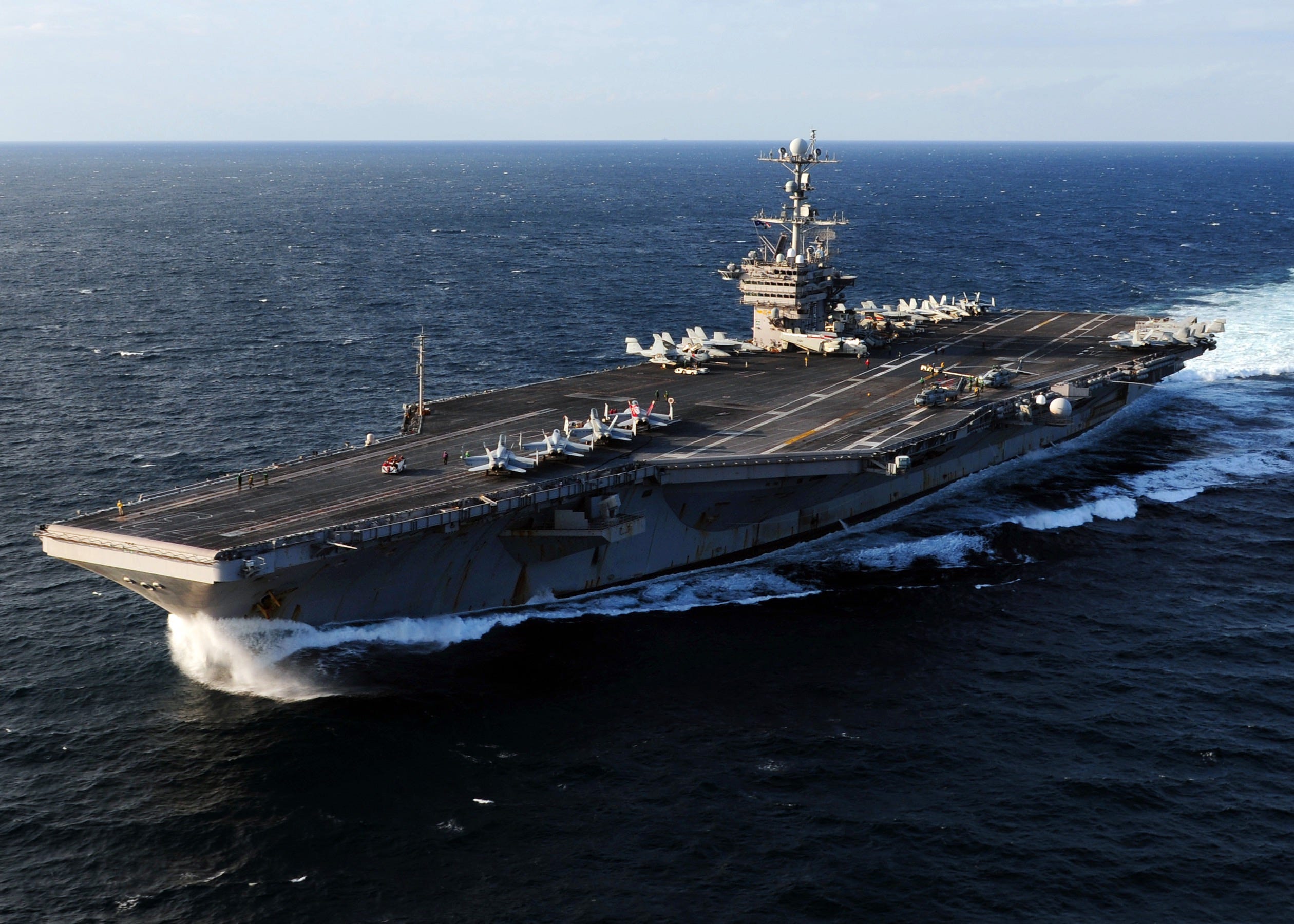
The Navy is sending the USS George Washington to the Middle East as the Lincoln’s replacement. US officials have disputed reporting about conditions aboard the carrier, with Defence Secretary Pete Hegseth saying reports had “completely misrepresented” the situation.
Sources: The Hill, South China Morning Post

The European Union plans to significantly expand sanctions on Russia this autumn with EU foreign policy chief Kaja Kallas proposing what she called the bloc’s most far-reaching listings since the war began. Kallas said existing sanctions had deprived Russia’s war machine of more than €1 trillion and that the new package would increase the number of sanctioned Russian entities by a third.
The EU has adopted 21 rounds of sanctions since Russia launched its full-scale invasion of Ukraine in 2022. Its latest package, approved in July, imposed new restrictions on Russia’s banking sector and cryptocurrency networks.
Kallas did not provide further details on the timing or content of the proposed measures. She said sanctions should continue increasing until Moscow ends the war, signalling that the EU intends to use a broader sanctions list as part of its continuing economic response to Russia’s invasion.
Sources: Reuters, RTE

British-made drones are being used to strike targets inside Russia for the first time with a military source confirming their use against military and industrial sites including refineries and Wildberries warehouses. The attacks mark a new phase in British support for Ukraine after the UK announced in April that it would supply tens of thousands of drones including long-range strike systems.
Ukraine has increasingly targeted Wildberries facilities, saying the logistics hubs are used to buy military equipment and supply Russian forces. A Wildberries warehouse was struck in the Moscow region on Sunday during one of the largest drone attacks reported there.
Moscow region Governor Andrei Vorobyov said an 83-year-old man was killed and several people were injured in Podolsk. Russia’s Defence Ministry said it had downed 822 Ukrainian drones across the country, while damage was reported at several sites around Moscow.
Sources: BBC, Reuters

Belgium’s biggest wildfire on record has burned about 3,000 hectares in the High Fens and pushed towards the German border prompting evacuations and a multinational response. Firefighters from Belgium, Germany and Luxembourg have been joined by Dutch helicopters, the Belgian army and local farmers, while the EU has deployed three helicopters and two water-bombing aircraft.
Rain and cooler temperatures are now improving conditions with Belgium’s weather agency expecting 5 to 9mm of rainfall and temperatures of 19 to 20C. Interior Minister Bernard Quintin said two fire fronts were under control, although evacuated residents have been told not to return.
The fire is more than twice the size of Belgium’s previous record blaze in 2011. German authorities in Monschau also asked residents near the border to leave because of expected smoke pollution, even though the fire was not forecast to cross into Germany.
Sources: Reuters, RTE

The Ebola outbreak in the Democratic Republic of Congo has become the deadliest in the country’s history, killing 2,325 people since it was declared on 15 May. Public health authorities have recorded 4,945 confirmed cases, including 101 in the latest 24-hour period. UN humanitarian chief Tom Fletcher has described it as the fastest-growing outbreak on record.
The epidemic is caused by the Bundibugyo species of Ebola, for which there is currently no approved vaccine. The virus has spread to six of DR Congo’s 26 provinces, and the World Health Organization has described the pace of transmission as exceptional.
The outbreak has already surpassed the 2,299 deaths recorded during DR Congo’s 2018-2020 epidemic. Fletcher warned that someone is dying every 30 minutes. The WHO says it hopes to bring transmission under control within three months rather than end the outbreak entirely.
Sources: Al Jazeera, BBC
Restacking or sharing this publication means more people can read it. Commenting extends the conversation. Liking shows your appreciation.
On this day …
On this day in 1998, the Russian government devalued the rouble, defaulted on domestic debt and declared a 90-day moratorium on some foreign obligations. The announcement followed months of financial instability, falling commodity prices and growing concern over the government’s ability to finance its debts.
The crisis quickly spread beyond Russia’s borders. Investors withdrew capital from emerging markets, currencies came under renewed scrutiny and financial institutions with significant exposure faced mounting losses. The collapse of the US hedge fund Long-Term Capital Management weeks later reinforced concerns about the growing interconnectedness of global finance.
Russia’s default became one of the defining financial events of the late 1990s and a reminder that instability in one market can rapidly become a global problem. What lessons from 1998 remain relevant in today’s increasingly interconnected financial system?