


Houthis Strike Yemen’s Presidential Palace (Conflict)
Ukraine Resumes Refinery Strikes As US Ties Fray (Conflict)
White House Ordered Ukraine Starshield Restrictions (Geopolitics)
Ukraine Runs Critically Short Of Patriot Missiles (Conflict)
Lebanon Faces Test Over Seized Hezbollah Explosives (Middle East)
Drone Strikes Raise Black Sea Security Fears (Conflict)
War And Geopolitics Reshape Global Trade Routes (World)
Student Protests Intensify Challenge To Albania’s Rama (Europe)
France Braces For Weekend Youth Protests (Europe)
Brazil Cuts Working Week Ahead Of Presidential Runoff (South America)
A succinct daily briefing delivered each weekday to help you stay on top of the stories shaping the world.

Houthi missiles and drones struck Yemen’s presidential Al-Maashiq Palace in Aden on Thursday, killing five people and wounding 16. Prime Minister Shaya al-Zindani and cabinet members were safe. The palace is the seat of Yemen’s Saudi-backed, internationally recognised government. The attack was the first there in the current conflict between the Iran-aligned Houthis and Saudi Arabia.
Houthi military spokesperson Yahya Saree said the group targeted what it described as a Saudi military operations headquarters, under its policy of targeting Saudi reinforcements wherever located. Fighting between the Houthis and Saudi-led coalition has escalated amid clashes linked to the US and Israeli war on Iran.
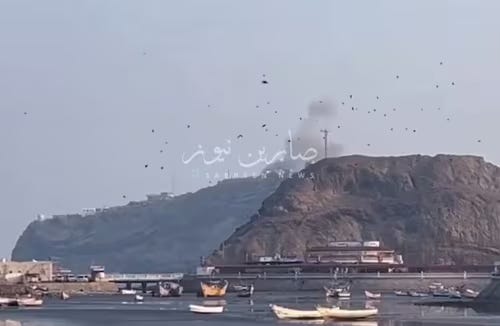
The escalation is also reaching Saudi infrastructure. Riyadh’s international airport has been targeted 20 times since the start of October, while attacks and threats against commercial shipping, airports and oil infrastructure have raised concerns over energy supplies, aviation and fuel prices.
Sources: CNN, The Guardian

Ukraine attacked an oil refinery in Russia’s Ryazan region on Thursday, ending a brief pause on energy-related strikes that President Volodymyr Zelenskyy said Moscow had not observed. The drone attack started a fire at the refinery about 300 kilometres southeast of Moscow.
Zelenskyy said Ukraine had accepted US President Donald Trump’s demand to halt energy attacks but Russia continued striking Ukrainian energy infrastructure. He also said Ukraine had been denied its usual Western intelligence on Russian ballistic missile strikes and faced restrictions on US-controlled Starlink communications.
The dispute has deepened tensions between Kyiv and Washington. Zelenskyy said he felt betrayed by Trump, while Trump said Zelenskyy was more difficult to deal with than Russian President Vladimir Putin. Amid fears of declining US support, Zelenskyy travelled to Brussels for talks with European leaders, while EU foreign policy chief Kaja Kallas said Europe was standing beside Ukraine.
Sources: Associated Press, Times of India

An order to restrict the Starshield satellite system used by Ukraine’s military came from inside the White House, according to two US officials and a Western official briefed on the matter. Pentagon leaders were told the military-grade SpaceX service needed to be slowed, although the officials did not identify who issued the order.
Ukrainian officials said the restrictions interfered with drones used for strike missions against Russian forces and logistics in occupied territory, as well as interceptor drones defending against Russian Shahed attacks. Service was subsequently restored, although movement remained limited to 160 kilometres per hour.
The restrictions came as US President Donald Trump pressed Kyiv to stop attacks on Russian refineries. Relations have deteriorated as Washington also threatened to halt intelligence on Russian missile launches, while Trump said intelligence sharing continued. Kyiv was subsequently told the Starshield restriction was a White House decision.
Sources: Reuters, Kyiv Independent

Ukraine is critically short of Patriot interceptor missiles, leaving it increasingly exposed to Russian ballistic missile attacks. A Ukrainian official said only a couple remained after stocks fell to 10 on 7 October and were largely used during subsequent attacks. Another person familiar with the situation said the country had exhausted the sophisticated weapons.
Patriot systems are among the few capable of intercepting incoming ballistic missiles but global stocks have been depleted by heavy use in Ukraine and the Middle East. The United States fired more than 1,000 Patriot and THAAD missiles during the first month of the Iran war, while new Patriot interceptors can take up to 36 months to produce.
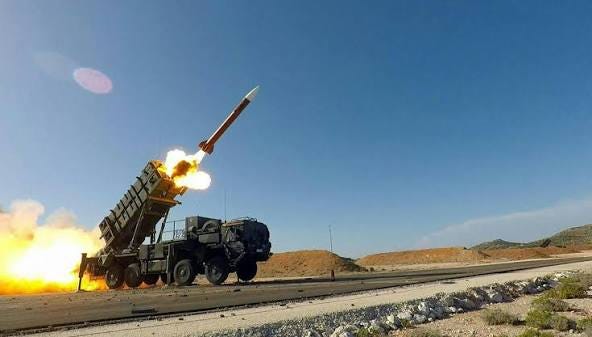
A senior NATO official said Patriot interceptors continue to flow through a European-funded programme. However, the Ukrainian official said deliveries have been irregular since May and cannot currently be guaranteed.
Sources: Washington Post, Kyiv Post

US Secretary of State Marco Rubio urged Lebanese President Joseph Aoun not to return explosives seized from Hezbollah, in a case testing Beirut’s policy of keeping weapons under state control. Lebanese security forces intercepted about 780 kilograms of explosives, including TNT and C-4, being transported towards Beirut last week and arrested two suspects.
Hezbollah acknowledged ownership and said the explosives were intended for use against Israel. The group and its allies have pressed the government to return the shipment and release its members.
Rubio urged Aoun to hold accountable those who ordered, financed and directed the shipment. Aoun said Lebanese security forces were implementing decisions to confiscate weapons and combat smuggling, while judicial authorities would enforce the law without favouritism. Lebanon banned Hezbollah’s military activities in March and has pledged under a US-brokered agreement to disarm the group, which has refused while Israeli forces remain in Lebanon.
Sources: Axios, Jerusalem Post

A drone struck the San Marino-flagged chemical tanker Wine Trader off Romania’s Black Sea coast on Thursday, setting it on fire and leaving seven of its 12 crew missing. Five people were rescued. Romanian President Nicusor Dan confirmed the strike and said another tanker, the Yara J, had been hit by a drone the previous night.
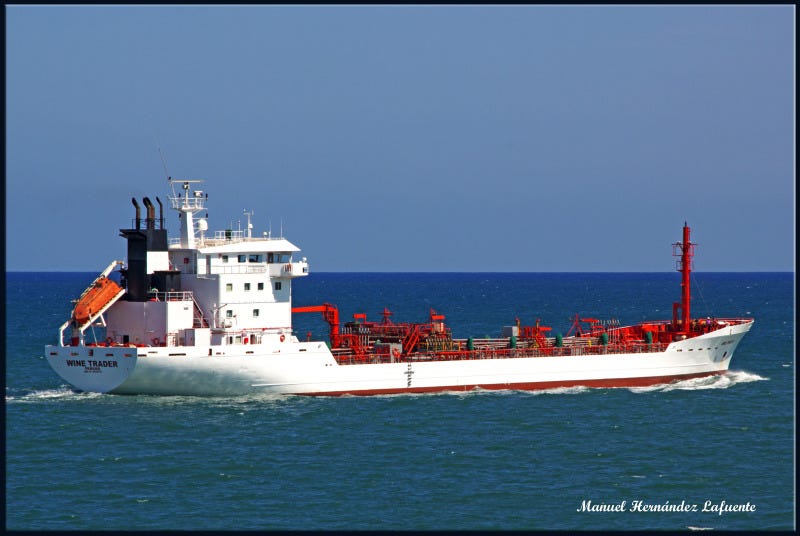
The incidents follow a series of attacks on commercial shipping near Romania and Bulgaria, both NATO and European Union members. Two merchant ships were struck off Bulgaria on Tuesday, while another drone attack sank a Turkish-owned cargo ship off Romania on 5 October, killing two people.
NATO Secretary-General Mark Rutte said the alliance had increased counter-drone capabilities along its eastern flank and would adjust its deterrence and defence posture as needed. Romanian and Bulgarian leaders were also due to discuss whether to seek NATO consultations over threats to their security.
Sources: Associated Press, BBC

Wars and geopolitical shocks are driving lasting changes in global trade as businesses diversify supply chains and retain alternative routes, World Trade Organization Director-General Ngozi Okonjo-Iweala said. Middle Eastern trade has contracted sharply during the Iran war with the WTO forecasting exports to fall 17% this year and imports about 15%.
Okonjo-Iweala said trade could rebound after the war and the reopening of the Strait of Hormuz but repeated disruptions have strengthened the case for contingency planning. Businesses have found alternative routes despite higher costs and some are likely to remain because companies and countries want protection against future shocks.
The WTO nevertheless expects global merchandise trade volumes to grow 3.9% in 2026, helped by demand for AI-related products. Okonjo-Iweala warned that AI demand is masking weaker underlying trade trends amid ongoing conflicts and tariffs.
Sources: Reuters, WTO

Student-led protests against Albanian Prime Minister Edi Rama entered a third day on Thursday with demonstrators clashing with police in Tirana and unrest spreading to at least three other cities. Protesters threw rocks and fireworks, while riot police used tear gas and water cannons. National police chief Skender Hita said 71 officers had been injured.
The demonstrations began around demands for education reform but have joined the broader anti-government Flamingo movement, which alleges widespread corruption and opposes a luxury tourism development on Albania’s southern coast associated with an investment firm founded by Jared Kushner. Thousands of high school students joined marches through Tirana demanding Rama’s resignation.
Rama rejected calls to step down, saying he had a mandate to complete negotiations on European Union membership. The protests, which follow months of largely peaceful demonstrations over the development, are the biggest challenge yet to Rama after he won a fourth term last year.
Sources: Associated Press, NBC News

French Prime Minister Sebastien Lecornu warned that authorities feared unrest during hundreds of protests planned for Saturday, saying demonstrations that began over school conditions no longer resembled a student movement but had become “a movement of urban violence”. France is in the fourth week of its biggest youth protest movement in decades.
The protests have blockaded hundreds of high schools as students demand absent teachers be replaced and decrepit buildings repaired. Police have opened internal investigations into 36 allegations of officer violence, while 6,773 under-18s have been taken into custody since demonstrations began in mid-September. More than 1,000 were released without charges.
Interior Minister Laurent Nuñez denied excessive policing or repression and suspended stun grenades at school demonstrations. Student leaders were meeting government officials on Thursday, while Lecornu acknowledged their grievances as legitimate amid what he called an atmosphere of “perma-crisis” driven by wars, inflation and purchasing-power concerns.
Sources: The Guardian, Reuters

Brazil’s Congress has approved a constitutional amendment cutting the working week from 44 hours to 40 and guaranteeing employees two days off without reducing salaries. The measure, championed by President Luiz Inácio Lula da Silva, is the biggest overhaul of workers’ rights since Brazil returned to democracy in 1988 and is estimated to benefit more than 30 million workers.
The amendment passed the Senate by 75 votes to one less than two weeks before the presidential run-off between Lula and Senator Flávio Bolsonaro. Bolsonaro, who won the first round with 47% against Lula’s 45.2%, reversed his earlier opposition and voted for the measure, citing its popularity.
The change will be phased in, initially reducing the week to 42 hours after a two-month grace period before reaching 40 hours. Critics warn of higher production costs, while supporters argue better-rested employees will be more productive.
Sources: BBC, DW
Restacking or sharing this publication means more people can read it. Commenting extends the conversation. Liking shows your appreciation.
On this day …
On this day in 1964, China detonated its first atomic bomb at the Lop Nur test site in Xinjiang, becoming the fifth country to develop a nuclear weapon after the United States, Soviet Union, Britain and France.
The successful test came after relations between Beijing and Moscow had deteriorated sharply, leaving China increasingly determined to develop an independent nuclear capability. Mao Zedong’s government argued that possessing the bomb was necessary to deter nuclear coercion by the major powers. China would test its first hydrogen bomb less than three years later.
More than six decades later, China’s nuclear arsenal remains central to the strategic balance in Asia and indeed the world.