


Russia Hits Kyiv After EU-Ukraine Drone Deal (Conflict)
US Strikes Expand Iran War (Conflict)
China Overtakes US In Global Favourability Poll (World)
France Approves Assisted Dying Law (Europe)
US Imposes 25% Tariffs On Some Brazilian Imports (US)
Israeli Strikes Deepen Gaza Ceasefire Erosion (Middle East)
Hong Kong Arrests Booksellers In New Security Sweep (Asia)
Australia Sets AI Data Centre Guardrails (Technology)
EU Delays Russia Sanctions As Oil Cap Freeze Extends (Europe)
Baltics Warn Of Limited Russian Test Of Nato (Europe)
A succinct daily briefing delivered each weekday to help you stay on top of the stories shaping the world.

Russia hit Kyiv with ballistic missiles overnight, killing two people and injuring six, including a 16-year-old boy, according to Kyiv Mayor Vitali Klitschko. At least three of the wounded were hospitalised. Warehouses and non-residential buildings were hit in multiple districts, and emergency crews battled fires after the assault on the capital.
The attack came hours after European Commission President Ursula von der Leyen visited Kyiv and announced a new drone deal between Ukraine and the European Union. She said the agreement would combine Ukrainian battlefield expertise with Europe’s industrial scale to launch joint projects and expand production, using the EU’s technological and industrial capacity.
Ukrainian officials also reported that Russian bombardments across the country killed 13 people and injured about 50 others on Wednesday, with industrial plants and healthcare facilities struck in Odesa and Sumy.
Sources: Al Jazeera, Kyiv Independent

The United States intensified its strikes on Iran early Thursday, hitting targets further north as American forces also fired on a ship they accused of trying to break their naval blockade. Iran retaliated with missile and drone fire targeting Bahrain, Jordan and Kuwait before dawn.
Days of back-and-forth attacks and renewed threats to the Strait of Hormuz have strained the interim deal meant to end the war and widened the regional confrontation.
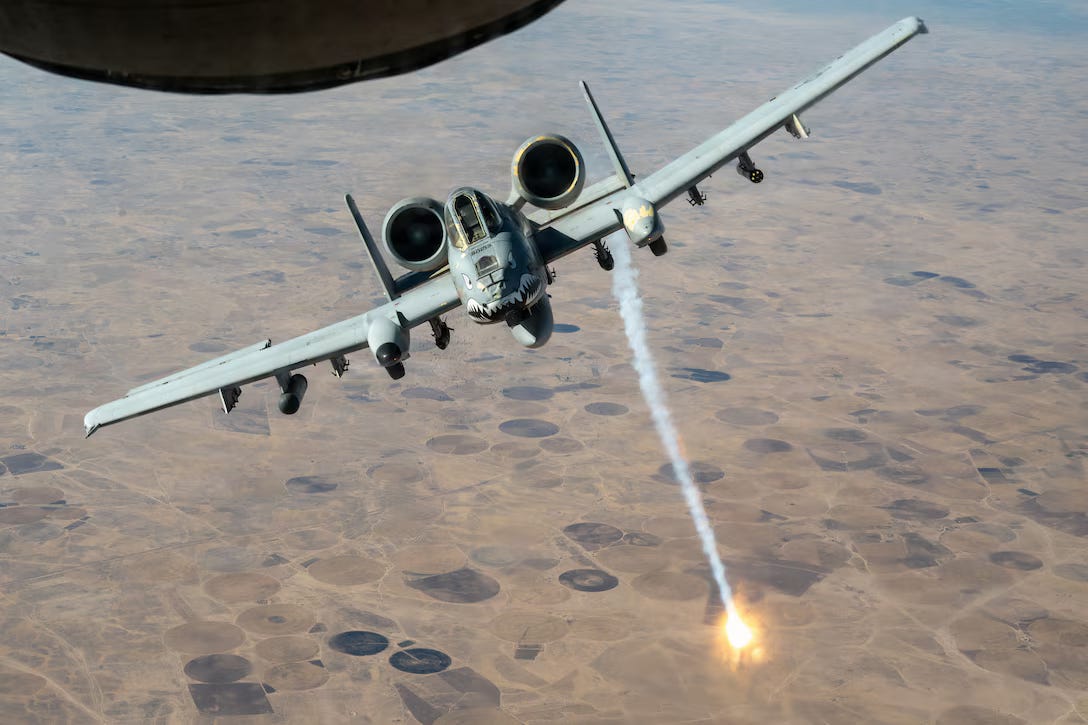
US President Donald Trump said Tehran “better behave” and said the US had targeted Iranian military capabilities used to threaten vessels moving through the strait. Iran’s top negotiator, Mohammad Bagher Ghalibaf, said Tehran had “no reason” to abide by the deal if it did not benefit from it. Brent crude traded above $85 a barrel on Thursday as fighting kept the strait at the centre of the conflict.
Sources: BBC, Associated Press

Pew Research Center said views of the United States and China have flipped this year, with China now seen more positively than the US in most of the 36 countries surveyed. More people have favourable views of China than the US in 25 countries, while the US is viewed more positively in only six.
Views of Chinese President Xi Jinping are also more favourable than views of US President Donald Trump in 22 countries, though confidence in both men remains low.
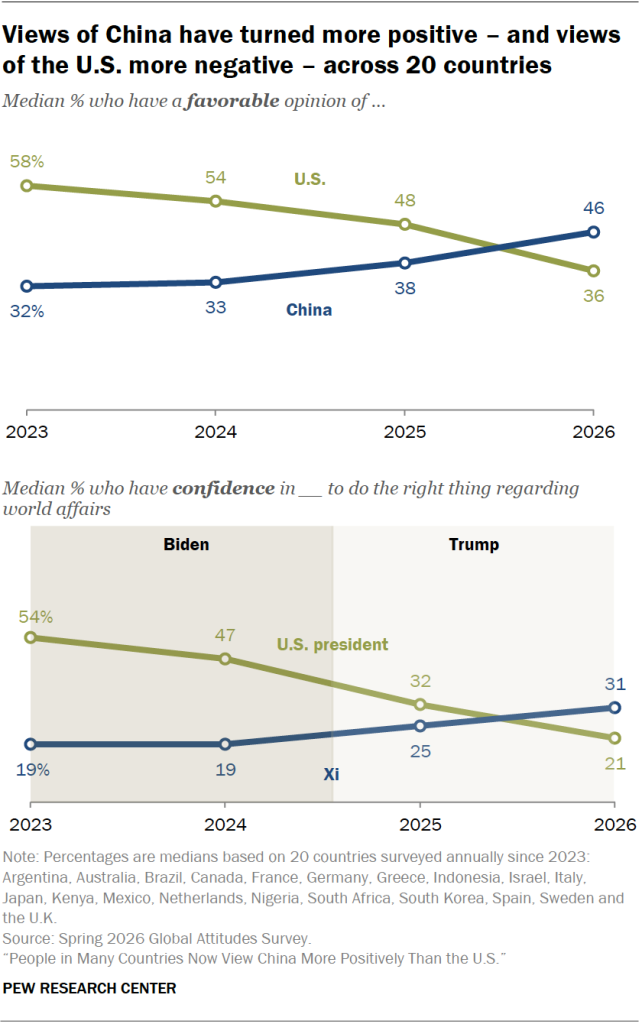
The shift reflects improving views of China and worsening views of the US. Pew said the US still receives higher ratings than China on respect for personal freedoms, but that gap is narrowing as confidence in Washington weakens.
The survey, based on interviews with more than 42,000 people conducted from February to May, marks the first time in roughly 20 years of Pew tracking that China has been viewed more positively than the US.
Sources: The Guardian, Pew Research

French lawmakers approved a bill to legalise medically assisted dying for terminally ill adults, moving France closer to joining a small group of countries that allow the practice. The National Assembly passed the measure 291 to 241 after more than two years of debate, overriding previous Senate rejections.
The law applies to adult patients who are French or living in France on a stable and regular basis, have an incurable, deadly affliction in an advanced or terminal stage, are experiencing unbearable or treatment-resistant pain, and are able to freely express their will.
Prime Minister Sébastien Lecornu said he would refer the legislation to the Constitutional Council. If approved, the law would allow doctors to help eligible patients die after medical review and a waiting period, though patients would normally administer the lethal substance themselves. President Emmanuel Macron said his 2022 commitment had been honoured.
Sources: New York Times, Le Monde

The United States is imposing 25% tariffs on some imports from Brazil from July 22 after a year-long investigation found what it described as unfair trade practices. The action, announced under Section 301 of the Trade Act of 1974, covers certain Brazilian imports but exempts some goods that are not produced in the US or that officials fear would disrupt supply chains, including coffee, beef, oranges and orange juice, some oil and gas energy products, and aerospace parts and components.
US Trade Representative Jamieson Greer said the measure was necessary to ensure American workers and companies compete on a level playing field and said negotiations had not resolved the issues.
Brazil would be the first country targeted under US President Donald Trump’s new tariff strategy relying on Section 301. Secretary of State Marco Rubio said Brazil had not negotiated in good faith.
Sources: Associated Press, Reuters
Restacking this post will help it reach more readers interested in the world.

Israeli airstrikes have killed at least a dozen people in Gaza over the past two days, local health officials said, including a woman and six police officers killed in an airstrike on a police station in Jabalia refugee camp.
On Wednesday, three members of a family were killed in central Gaza, while a man was killed in Khan Younis and a child was shot dead in the Muwasi area outside Rafah, according to hospital officials.
The latest killings come despite the ceasefire agreed in October between Israel and Hamas. The Israeli military said four of the police officers killed in Jabalia were Hamas militants, but did not provide evidence on how those killed were involved in planning or carrying out attacks.
At least 1,123 people have been killed in Gaza since the ceasefire took effect, according to the territory’s Health Ministry.
Sources: NBC News, Al Jazeera

Hong Kong police arrested five people after raiding two independent bookstores and seizing boxes of books in Mong Kok, in the latest operation targeting booksellers under the city’s 2024 national security law.
Police said two men and three women were suspected of displaying seditious materials and selling seditious publications that stirred up hatred against the government, judiciary and law enforcement agencies.

The arrests are the third round linked to independent bookstores since similar operations in March and June. Police said customs officials had referred the case after allegedly seditious books were found in a batch of goods shipped to Hong Kong from overseas. Have A Nice Stay, one of the stores raided, had already said it would shut on August 30, citing financial difficulties and an elusive red line.
Sources: NPR, Washington Post

Australia will require large data centres powering artificial intelligence to generate as much power as they consume and meet water-efficiency standards, as Prime Minister Anthony Albanese set out a national framework for the fast-growing industry.
The government said the standards would create a legal obligation for companies to avoid draining the power grid, while new legislation would be introduced early next year and an Office of A.I. reporting to the prime minister would coordinate implementation.

Mr Albanese also said Australian creators of books, music, art and news should retain control over the price and value of work used to train artificial intelligence systems, adding: “Anything less is theft.” The plan still requires backing from state governments, and the details of how the requirements will work and be enforced remain unclear.
Sources: New York Times, ABC News

EU countries failed for a third straight day to agree a new package of sanctions against Russia, forcing a temporary freeze of the bloc’s price cap on Russian crude. Ambassadors agreed to keep the cap at $44.10 per barrel until July 23 and deferred further discussions until July 22, as officials tried to prevent the ceiling from rising automatically after higher global oil prices driven by the war in Iran.
The delay gives the bloc more time to reach agreement on a 21st sanctions package that would further target Russia’s energy revenue. Talks have been slowed by disputes over restrictions on Russia’s liquefied natural gas sales and measures linked to Austria’s Raiffeisen Bank.
Without another extension, the oil cap was due to rise in line with elevated rates, weakening a tool allies use to suppress Moscow’s oil revenues and potentially giving the Kremlin a cash influx.
Sources: Politico Europe, Bloomberg

Lithuanian President Gitanas Nausėda said intelligence assessments suggest Russia could launch limited kinetic operations against critical energy or transport infrastructure in the Baltic states or Poland. He said the signals did not identify a specific location or timing, but pointed to targeted attacks rather than a large-scale assault.
Latvian President Edgars Rinkēvičs similarly warned that Moscow could respond to growing Ukrainian pressure with provocations against Nato’s eastern flank.
Polish Prime Minister Donald Tusk said the warnings should be taken seriously and that Poland was preparing intensively for various scenarios, while Foreign Minister Radosław Sikorski said Warsaw had a message for President Vladimir Putin: “We know what you are planning. Don’t do it.” The warnings come as countries on Nato’s eastern flank strengthen protection around critical infrastructure and after the EU and UK formally attributed a cyber attack on Poland’s energy grid last December to Russia’s FSB Centre 16.
Sources: Associated Press, FT
Restacking or sharing this publication means more people can read it. Commenting extends the conversation. Liking shows your appreciation.
On this day …
On this day in 1945, the United States conducted the Trinity test in the New Mexico desert, successfully detonating the world’s first nuclear weapon.
Developed as part of the Manhattan Project during the Second World War, the test confirmed that atomic weapons were operational and ushered in the nuclear age.
Less than a month later, atomic bombs were dropped on Hiroshima and Nagasaki, while the decades that followed were shaped by nuclear deterrence, arms races and efforts to prevent proliferation.
The legacy of Trinity continues to influence international security and strategic thinking today. Has the world ever truly escaped the shadow of that first explosion?