


Israel Keeps Striking As Lebanon Ceasefire Nears
US And Iran Move Closer To Framework War Deal
US Tightens Oil Pressure On Iran And Its Buyers
Trump Presses Xi On Iran Arms Before Beijing Summit
US Oil Exports Surge As Iran War Hits Supply
Refinery Fire Deepens Pressure On Australian Fuel
Sudan Aid Tops Target As War Enters Fourth Year
World Bank Launches Water Plan For One Billion
UN Watchdog Warns On North Korea Nuclear Surge
Vietnam Signals China Priority On First State Visit

Israel continued striking Hezbollah positions in southern Lebanon while opening space for a possible ceasefire, underscoring how military pressure and diplomacy are advancing at the same time. Benjamin Netanyahu said Israeli forces were focused on Bint Jbeil, which he described as a Hezbollah stronghold, and said Israel was reinforcing its security zone in southern Lebanon while negotiating with Beirut.
Israel’s security cabinet was due to meet to discuss possible ceasefire terms after more than five weeks of war. Rare direct talks between Israeli and Lebanese officials in Washington signalled renewed diplomatic movement, even as attacks continued on the ground.
Lebanese authorities say the conflict has killed more than 2,000 people and displaced 1.2 million, showing that any truce effort is unfolding under the umbrella of an active and still costly war.
Sources: Reuters, South China Morning Post

U.S. and Iranian negotiators made progress towards a framework agreement to end the war, according to U.S. officials, as mediators from Pakistan, Egypt and Turkey worked to bridge remaining gaps before a ceasefire expires on April 21. Vice President J.D. Vance, envoy Steve Witkoff and adviser Jared Kushner continued exchanging draft proposals with Iranian counterparts and mediators.
White House press secretary Karoline Leavitt said discussions remained productive and further in-person negotiations were likely, possibly again in Pakistan.
President Donald Trump said negotiations could take place within days and that the war was very close to over, although officials cautioned a deal was not guaranteed and would likely require extending the ceasefire to settle details of a comprehensive agreement.
Sources: Axios, South China Morning Post

The United States has threatened secondary sanctions on countries and banks handling Iranian oil money, as Washington intensifies its maritime blockade on Iran and ends a temporary waiver that had allowed some Iranian crude already at sea to reach global markets. Treasury Secretary Scott Bessent said buyers of Iranian oil and banks holding Iranian funds could face punitive measures.
Washington said it believed Chinese purchases would pause under the blockade and confirmed the waiver covering Iranian shipments loaded before March 20 would expire on April 19 without renewal.
The Treasury also imposed sanctions on more than two dozen individuals, companies and vessels tied to Iran’s oil transportation infrastructure, signalling a further tightening of the maximum pressure campaign as the war enters its seventh week.
Sources: Reuters, Times of India

Donald Trump said he asked Xi Jinping not to supply weapons to Iran and said the Chinese leader responded that Beijing was not doing so, pushing the Iran war discussion directly into the run-up to their planned meeting next month. Trump also said talks with Tehran could resume this week, even as the U.S. blockade has completely halted trade going in and out of Iran by sea.
The exchange came as transit through the Strait of Hormuz remained constrained, with traffic still at only a fraction of the 130-plus daily crossings seen before the war, and Beijing criticised the U.S. naval blockade as dangerous and irresponsible.
The episode shows how the war is testing a fragile detente between the world’s two biggest economies just weeks before Trump is due in Beijing.
Sources: Japan Times, Bloomberg

U.S. crude exports surged to 5.2 million barrels a day last week as buyers in Asia and Europe scrambled to replace Middle East supplies disrupted by the Iran war, pushing the United States close to becoming a net crude exporter for the first time since World War Two. Net imports narrowed to 66,000 barrels a day, the lowest level in weekly records going back to 2001.
The shift reflects how sharply the war has altered global energy flows after Iranian threats to shipping stopped around a fifth of the world’s oil and gas supplies from moving through the Strait of Hormuz.
However analysts say exports are now pushing against U.S. capacity limits, while rising foreign demand for American barrels risks feeding higher petrol and diesel prices at home and increasing political pressure for export curbs.
Sources: FT, Reuters

A major fire at one of Australia’s two oil refineries has deepened concern over domestic petrol supplies, with Viva Energy’s Geelong plant continuing to operate at reduced rates after a 13-hour blaze. Emergency crews were called just before midnight on Wednesday, the fire was extinguished on Thursday, and no one was injured after workers were evacuated safely.
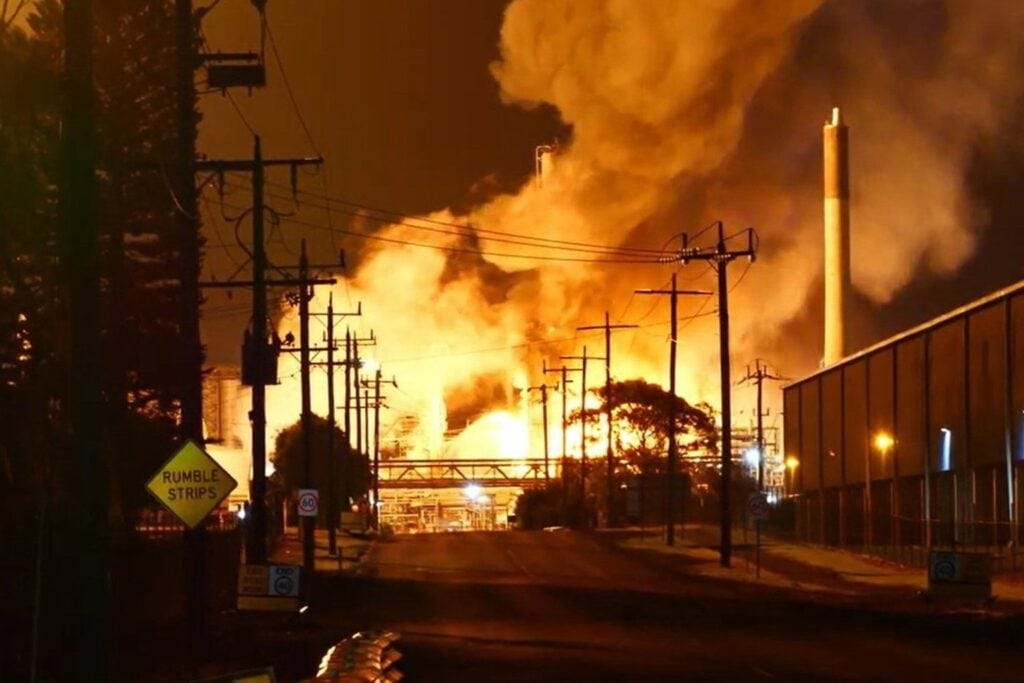
The refinery can process about 120,000 barrels a day and supplies about half of Victoria’s fuel and roughly a tenth of national fuel demand. Chris Bowen said the fire was “not great timing” as war in the Middle East strains fuel supplies, while Scott Wyatt said gasoline output was affected and production would only rise when it was safe.
Viva said it plans to replace lost production through imports, but analysts warned the risk of tighter supply and higher prices had increased.
Sources: BBC, Bloomberg

Donors pledged more than £1bn for Sudan at a Berlin conference, exceeding the target set by organisers as the country entered a fourth year of war with no ceasefire in sight. The commitments totalled £1.13bn and come as about 34 million people across Sudan require assistance, with famine, displacement and severe acute malnutrition deepening what the UN has called the world’s largest humanitarian crisis.
Yet the diplomatic picture remained bleak. Neither of Sudan’s warring parties attended the conference, and attempts by the United States and regional powers to secure a ceasefire have failed.
UN Secretary António Guterres called for an immediate cessation of hostilities, while British Foreign Secretary Yvette Cooper urged a concerted international effort to stop the flow of arms into Sudan, where the war has forced 13 million people from their homes and raised warnings of spillover beyond its borders.
Sources: The Guardian, South China Morning Post

The World Bank has announced a plan to help provide reliable water services to an additional one billion people by 2030, with about 400 million to be reached through World Bank Group programmes and another 600 million through support from development banks, philanthropy and private finance.
The initiative, called Water Forward, is backed by partners including WaterAid, the Netherlands and the United Arab Emirates.

The announcement comes as close to two billion people still lack safely managed water and four billion face water scarcity. World Bank President Ajay Banga said reliable water services at scale were now the task, while the programme will ask countries to identify priority areas and align governments, development banks, philanthropies and the private sector behind them.
Sources: The Independent, France 24

IAEA Head Rafael Grossi warned that North Korea was showing a “very serious increase” in its ability to produce nuclear weapons, with a rapid rise in operations at Yongbyon’s reactor, reprocessing unit, light-water reactor and other facilities. He said the pattern pointed to a significant expansion in weapons production capabilities and estimated the country already possessed a few dozen warheads.
The warning came as monitors said North Korea appeared to have completed a building at Yongbyon that could serve as a new uranium enrichment plant. Grossi said the agency had also noted construction of a new facility similar to the enrichment facility at Yongbyon, while outside analysts said additional enriched uranium production could significantly increase the number of weapons Pyongyang could possess.
North Korea has not conducted a nuclear test since 2017, but it has accelerated its weapons programme under Kim Jong-un.
Sources: Euronews, The Guardian

Vietnam’s new president To Lam used his first overseas trip to underline Beijing’s importance, meeting Chinese President Xi Jinping in Beijing and calling relations with China a strategic choice and top priority. Xi urged stronger infrastructure links and deeper cooperation in areas including artificial intelligence and semiconductors, while both sides attended a signing ceremony for cooperation documents. The trip was seen as a sign of the importance Hanoi places on the relationship.
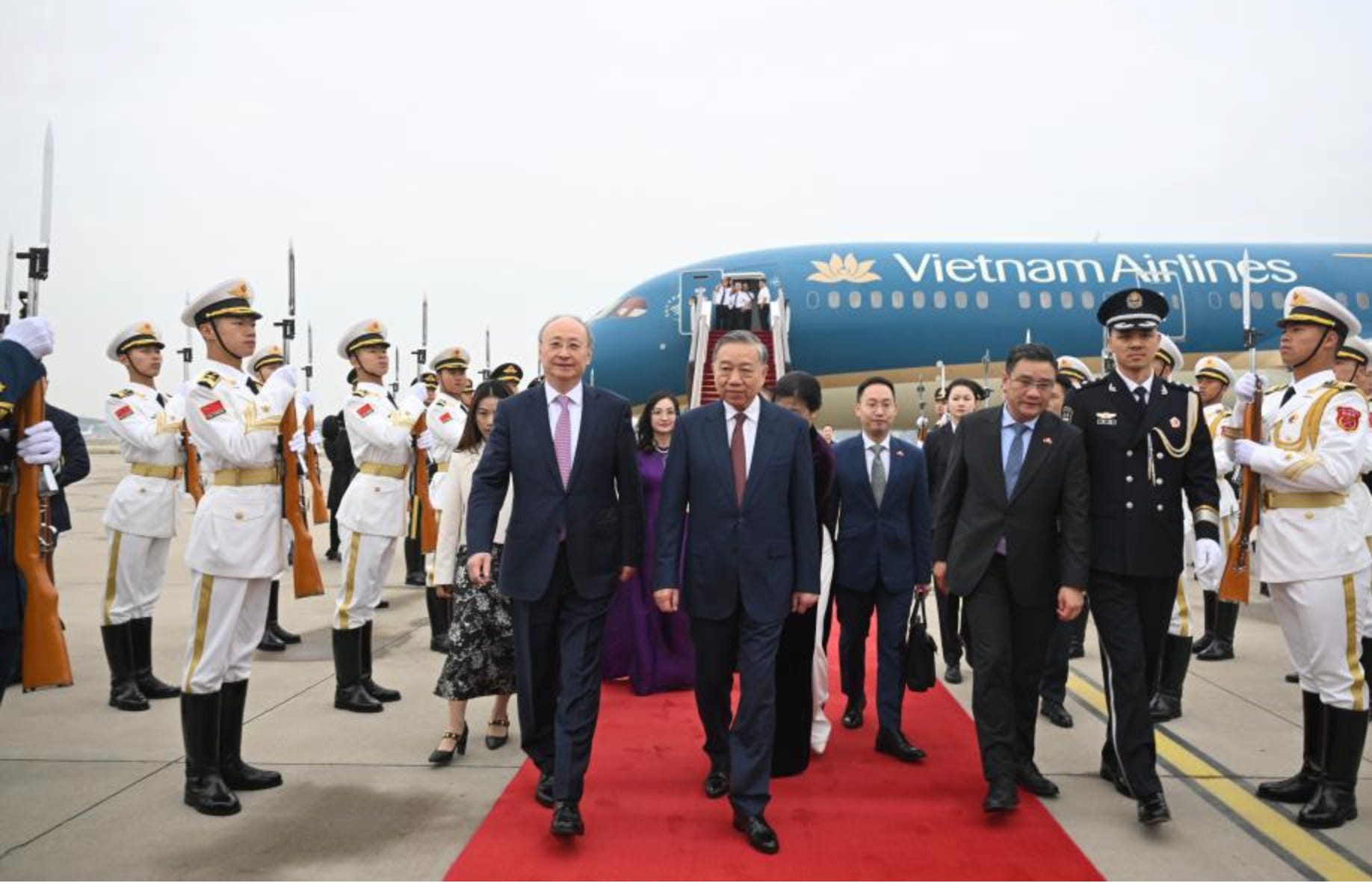
The visit came as both countries sought to manage wider economic and geopolitical pressures. Xi said China and Vietnam should jointly oppose unilateralism and protectionism and keep industrial and supply chains stable, while Lam said Hanoi was willing to expand cooperation in trade, investment, railways and other infrastructure.
Lam’s election as president last week consolidated his control over both party and state, making him one of Vietnam’s most powerful leaders in decades.
Sources: Associated Press, South China Morning Post
On this day …
On this day in 1947, the Texas City disaster became one of the deadliest industrial accidents in United States history when a ship carrying ammonium nitrate exploded in the port of Texas City.
The blast triggered fires and further detonations that devastated the surrounding industrial area and killed hundreds of people.
The disaster reshaped thinking about hazardous cargo handling and contributed to later improvements in industrial safety regulation and emergency planning. It remains a reference point in discussions about chemical risk management near major ports and cities.
How much of today’s industrial safety framework still reflected lessons first learned from disasters like this one?