


Saudi Arabia’s Oil Export Routes Under Strain (Middle East)
Iran War Exposes Impact on US Military (Conflict)
Nato Jets Shoot Down Drone Over Lithuania (Europe)
Ukraine Sets Conditions for Energy Ceasefire (Conflict)
Finland Joins France’s Nuclear Deterrence Initiative (Europe)
China Tightens Controls on Overseas Travel (China)
B’Tselem Accuses Israel of Dismantling West Bank Life (Middle East)
US 10-Year Treasury Yield Hits 5% (Finance)
Supreme Court Blocks Trump Mail-In Ballot Rules (Politics)
Panama Canal Cuts Traffic as Drought Worsens (Climate)
A succinct daily briefing delivered each weekday to help you stay on top of the stories shaping the world.

Saudi Arabia’s oil export options are narrowing after an attack shut the East-West Pipeline and Houthi advances expanded the threat to Red Sea shipping routes. Repairs to the pipeline, which carries crude from Gulf ports to the Red Sea port of Yanbu, could take three to five weeks, although partial flows may continue.
The pipeline had moved an average of between 2.6 million to 4 million barrels per day since late August. Rystad Energy said Brent reaching $109 signalled the market was increasingly pricing in a significant loss of supply. Saudi production had already fallen to 6 million barrels per day in August from nearly 10 million a year earlier.
The Houthis also captured the islands of Greater and Lesser Hanish, 160 kilometres north of the Bab el-Mandeb Strait, after seizing the port of Mokha and Mayun Island last week. A month long pipeline closure would make crude deliveries longer and more expensive, a longer shutdown could require a major reallocation of global crude flows.
Sources: Associated Press, FT

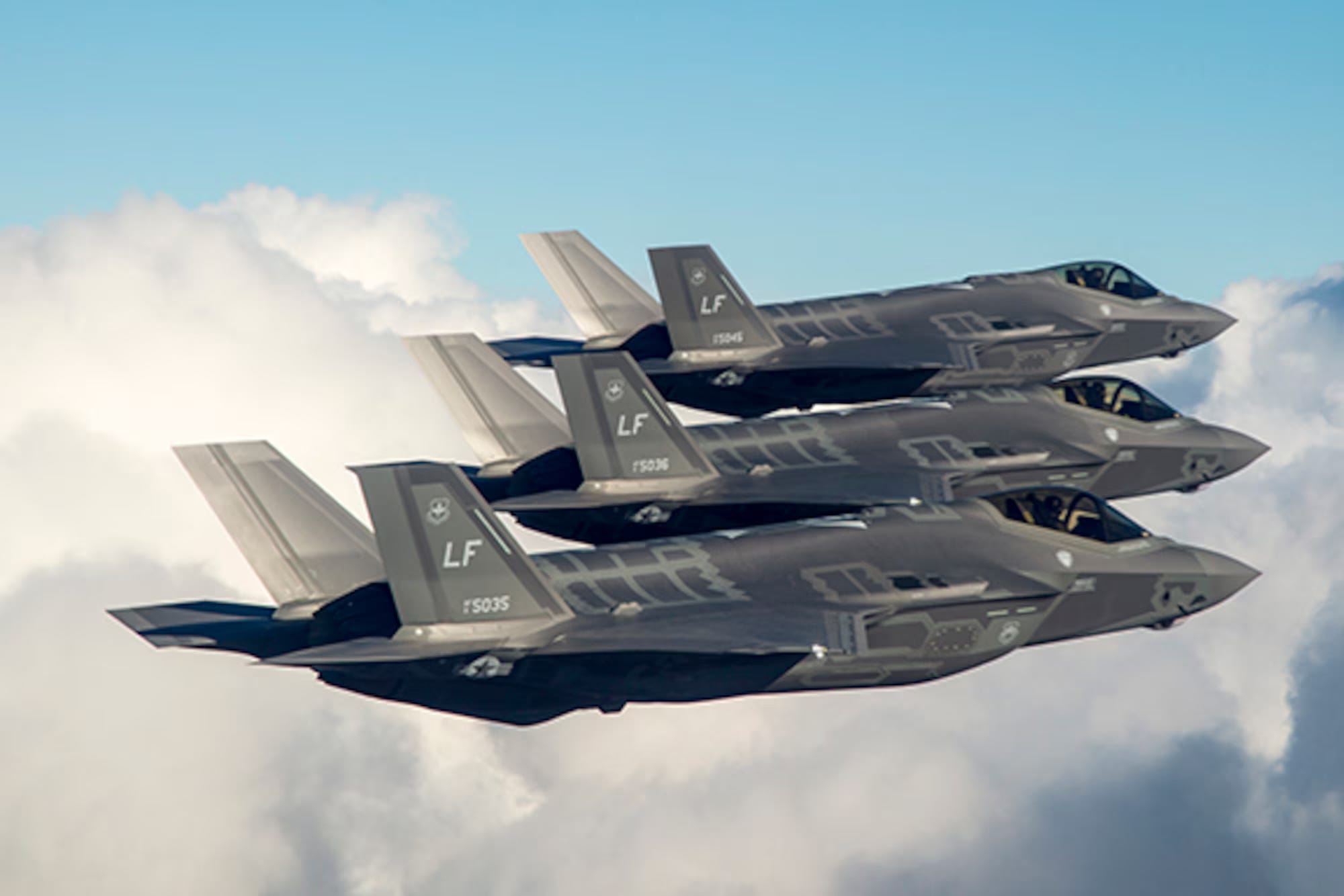
The Pentagon’s first formal accounting of US equipment & facility losses from the Iran war has revealed widespread damage & shortages. Iranian strikes damaged or destroyed hundreds of buildings and structures at US bases across eight Middle Eastern countries, while dozens of US aircraft were damaged or destroyed.
The war had cost an estimated $33.4 billion by June 29. The report said US munitions expenditure resulted in strategic inventory shortfalls and exposed industrial base bottlenecks for resupply.
A fifth-generation F-35A was damaged by enemy fire, while four F-15E fighters and an A-10 aircraft were destroyed by the end of June.
The attacks also changed US operations across the region. Personnel, assets and storage facilities were shifted, while the destruction of the Navy’s regional hub in Bahrain contributed to Diego Garcia becoming a sea logistics hub, stretching resupply cycles to 14 to 18 days.
Sources: CNN, CNBC

Nato fighter jets shot down a drone over Lithuania after it entered the country’s airspace from the direction of Belarus early on Tuesday. The aircraft was destroyed near Pratkunai, outside Kaunas, after alerts sounded across Vilnius and the surrounding region. The drone’s origins have not been determined.
Lithuanian President Gitanas Nausėda said the interception showed readiness was vital as Russia intensified its aggression against Ukraine. Lithuania’s defence ministry said its armed forces and Italian pilots serving in Nato’s Air Defence Mission had responded swiftly.
Poland also activated its air force as a preventive measure amid Russian drone attacks on Ukraine less than a day after recovering a suspected Russian military drone from the Baltic Sea. Lithuania, Latvia and Estonia have repeatedly experienced drone incursions since Russia’s full-scale invasion of Ukraine, while Nato jets have scrambled multiple times to intercept stray Ukrainian drones crossing into Baltic airspace this year.
Sources: The Guardian, BBC

Ukraine has said it is ready to support a US proposal for a ceasefire on energy targets if Washington can ensure Russia is genuinely prepared to end the war. US President Donald Trump said both countries had agreed not to strike each other’s energy facilities, but Ukrainian President Volodymyr Zelenskiy denied that Kyiv had formally endorsed such an agreement.
Zelenskiy said Ukraine would support de-escalation if it became a first step towards ending Russian strikes on Ukrainian critical infrastructure and Ukrainian strikes in response. He said any arrangement had to be reliable, long-term and have a real impact on people’s lives.
Russia has repeatedly struck Ukrainian energy sites, damaging heating and power networks, while Ukraine has attacked Russian industrial sites, particularly the oil industry.
Ukrainian attacks have caused serious petrol shortages in many Russian regions.
Sources: Reuters, Al Arabiya

Finland has formally joined France’s Forward Deterrence Initiative, deepening European nuclear cooperation while insisting NATO remains its primary security framework. The move was announced as part of a new Finnish-French strategic partnership, with a Nuclear Steering Group to be established within months to begin implementing the cooperation.
Finnish President Alexander Stubb said the initiative was primarily about strengthening European security and would neither replace nor overlap with NATO’s nuclear deterrence. Finland does not intend to station nuclear weapons on its territory in peacetime.

The initiative offers joint exercises, deeper consultation and potential temporary deployment of French nuclear-capable assets on participating countries’ territory. France retains exclusive control over its nuclear arsenal, with the final decision on use resting with the French president.
Britain, Germany, Poland, Sweden, the Netherlands, Belgium, Greece, Denmark and Norway have already joined while Estonia is discussing possible cooperation with France.
Sources: Al Jazeera, Euronews

China has introduced new controls on overseas travel, allowing authorities to impose exit bans on citizens whose activities are deemed to threaten national or technological security. Citizens judged to have harmed China’s national security or interests overseas can be barred from leaving for up to three years after returning.
The regulations also formalise restrictions affecting civil servants, Communist Party cadres, state-owned enterprise employees and private citizens working in sensitive areas. Premier Li Qiang signed the decree in July, with the State Council saying it aimed to safeguard national sovereignty, security and development interests.
Chinese authorities say the measures do not restrict ordinary citizens. Critics and legal experts say the broad wording gives authorities considerable discretion and could discourage overseas travel.
Data provided by rights group Safeguard Defenders showed records mentioning exit bans rose from 89 in 2016 to 188,760 last year.
Sources: BBC, FT

Israeli human rights group B’Tselem has accused Israel of systematically dismantling conditions supporting Palestinian collective life in the occupied West Bank. Its report identifies five areas: violence & intimidation, movement restrictions, economic strangulation, social & political destruction and ethnic cleansing & territorial takeover.
B’Tselem says these policies have accelerated since the current Israeli government took office in December 2022, with another escalation after October 2023. It says 200 new checkpoints have been established since then and 64 Palestinian shepherding communities have been depopulated under settler and military harassment.
The report also links movement restrictions and Israeli policies to worsening economic conditions. Almost all permits allowing West Bank Palestinians to work inside Israel have been revoked, cutting more than 140,000 people from their main source of livelihood.
The West Bank unemployment rate rose from 13.1% in 2022 to 31.3% in 2024.
Sources: The Guardian, Times of Israel

The 10-year US Treasury yield hit 5% on Monday for the first time since 2023, briefly reaching 5.01% before easing to 4.98%. The benchmark yield started the year at 4.15% and began climbing sharply after the commencement of the Iran war.
Higher Treasury yields increase borrowing costs across the US economy. The average 30-year fixed mortgage rate reached 6.76% last week, up from 6.15% at the start of the year while higher government bond yields can also make equities relatively less attractive.
The bond sell-off extends beyond the US. Ten-year government bond yields in Germany, France and the UK are at levels not seen in more than a decade while UK gilt yields briefly reached their highest level since 2007.
Higher energy prices, mounting public debt and expectations for higher interest rates are among the forces driving global yields higher.
Sources: CNN, FT

The US Supreme Court has rejected President Donald Trump’s attempt to implement new mail-in ballot rules before November’s midterm elections, leaving in place a federal judge’s injunction blocking the US Postal Service from proceeding. The plan would have required states to upload voter lists and introduced new ballot envelope requirements, including barcodes.
Justice Brett Kavanaugh said there was a fair prospect the rule was lawful but applying it in the 2026 elections would be arbitrary and capricious because election officials lacked sufficient time to implement it. Justices Clarence Thomas and Samuel Alito dissented.
Trump signed the executive order in March, arguing the measures would combat electoral fraud. Twenty-three states and Washington DC sued to stop it while legal challenges argued the order violated states’ constitutional authority over elections. Some states have already begun distributing mail-in ballots ahead of elections that will determine control of Congress.
Sources: BBC, The Hill

The Panama Canal will cut average daily ship transits to 29.5 from October as severe drought linked to El Niño reduces the water available to operate its locks. Authorities had already cut daily transits from 36 to 32 on 4 September to preserve water.
The canal handles 5% of global maritime trade and about 40% of US container traffic. Its locks rely on fresh water flowing into Lake Gatun and officials said in September that the watershed had received less rainfall than forecast.

The restrictions could tighten further, with El Niño expected to peak later this year and be the strongest in four decades. Similar low water levels in 2023 forced authorities to reduce daily transits from 38 to 22, creating a bottleneck and prompting companies to seek alternative routes.
Disruption to the Strait of Hormuz from the US and Israel’s war on Iran has also complicated shipping logistics.
Sources: The Guardian, Straits Times
Restacking or sharing this publication means more people can read it. Commenting extends the conversation. Liking shows your appreciation.
On this day …
On this day in 2008, Lehman Brothers filed for Chapter 11 bankruptcy protection after efforts to rescue the investment bank failed. With more than $600 billion in assets, it became the largest corporate bankruptcy in US history and the defining corporate failure of the global financial crisis.
Lehman’s collapse exposed how deeply financial institutions had become connected through mortgages, securities & credit markets. Confidence evaporated, lending froze and governments and central banks were forced into extraordinary interventions as the crisis spread through the global economy.
The consequences extended far beyond finance, contributing to recession, unemployment and lasting political distrust of financial institutions.
The enduring question is whether Lehman changed the financial system or simply changed how governments respond when it breaks.