


Trump and Xi Expose Summit Power Gap (Geopolitics)
Trump Turns Xi Warning Into Biden Attack (Politics)
IMF Says US China Thaw Eases Global Risk (Economy)
Gas Tax Push Exposes Iran War Cost Strain (Economy)
US Troop Halt Deepens Europe Security Anxiety (Europe)
Streeting Resignation Deepens Starmer Crisis (UK)
Latvia Government Falls After Drone Breach (Europe)
CIA Visit Tests Cuba Crisis Diplomacy (Geopolitics)
Russia Barrage Undercuts Peace Hopes (Conflict)
Somalia Drought Deepens as Aid Shrinks (Africa)
A succinct daily briefing delivered each weekday to help you stay on top of the stories shaping the world.

Donald Trump opened his Beijing visit by casting relations with Xi Jinping in personal terms, calling him “a great leader” and stressing that the two men could resolve problems directly. Xi used the same encounter to set limits, warning that the United States must handle Taiwan with “utmost caution” and describing it as the most critical issue in the relationship.
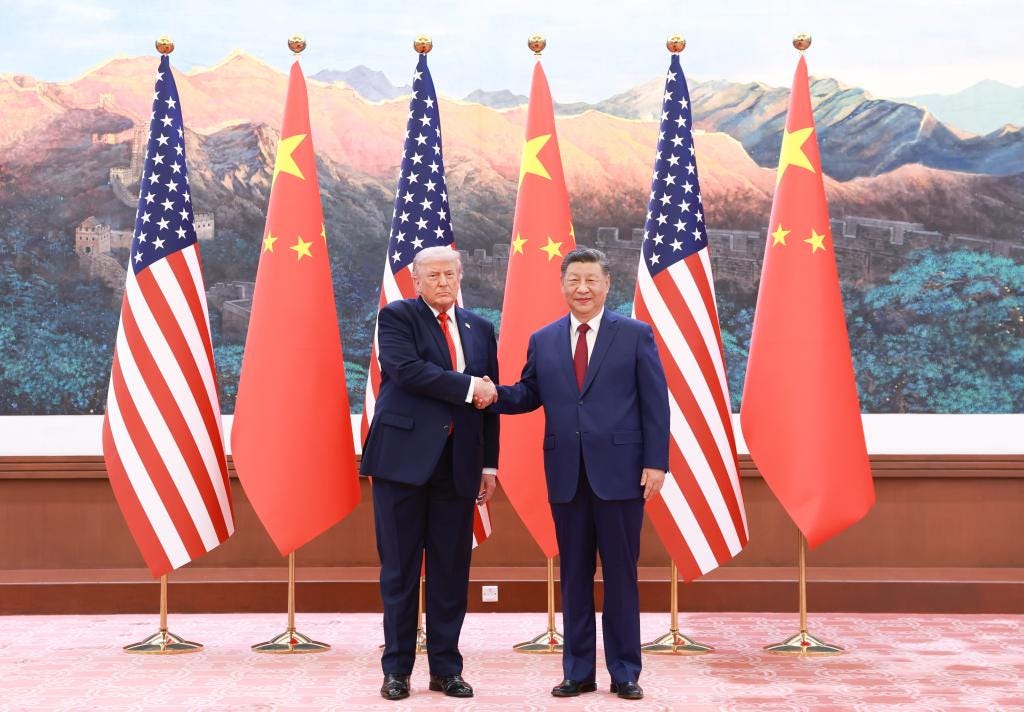
The contrast framed a summit in which Washington emphasised business, agriculture, oil and possible Boeing sales, while Beijing promoted a “constructive, strategically stable relationship” designed to guide ties for three years and beyond. The White House did not mention Taiwan in its statement.
Xi also invoked the risk of a “Thucydides Trap”, warning that poor handling could push relations into danger. The meeting suggested renewed engagement, but on terms shaped by China’s insistence on stability and red lines.
Sources: South China Morning Post, New York Times
Trump’s response to Xi Jinping’s reported remarks about American decline turned a strategic warning into a domestic political argument. After Xi questioned whether China and the United States could avoid the “Thucydides trap”, Donald Trump said Xi had been referring to damage caused under Joe Biden, not to the United States under his own administration.
Trump wrote that Xi was “100% correct” if he meant the country had declined during Biden’s presidency, while saying the United States was now “the hottest Nation anywhere in the world”. He did not identify the specific Xi comment he was addressing.
The exchange came as Taiwan remained an undercurrent in Trump’s state visit to China. Xi told Trump that the relationship would be put in jeopardy if the “Taiwan question” was not handled well, while Chinese officials called Taiwan the most important issue in China-U.S. relations.
Sources: The Hill, The Independent

The International Monetary Fund welcomed initial positive dialogue between Donald Trump and Xi Jinping, saying reduced tension between the world’s two largest economies would benefit both countries and the global economy. Julie Kozack said high-level engagement was important and that constructive dialogue could reduce trade tensions and uncertainty.
The comments came as the two-day summit in Beijing mixed economic openings with strategic risk. Xi warned Trump that mishandling disagreements over Taiwan could push relations to a “very dangerous place”, but discussions on trade and investment were described as more positive than after last year’s tariff escalation.
Trump said China had agreed to order 200 Boeing jetliners, while Scott Bessent said U.S. energy and farm goods were discussed. The IMF also said the global economy was moving into its middle adverse scenario as the Middle East war kept oil above $100 a barrel.
Sources: Reuters, Investing.com

The White House is weighing a federal gas tax suspension as officials try to contain the economic and political fallout from the Iran war. Donald Trump has backed pausing the tax, which would cut 18 cents a gallon from motor fuel prices now averaging more than $4.50 nationwide.
The proposal has gained urgency as fuel prices have risen 50% since the war began, consumer sentiment has fallen to a record low and inflation reached 3.8% in April. More than six in 10 Americans said higher gas prices had hurt their household finances, while Trump’s economic approval rating fell to 30%.
The measure would need congressional approval and may offer limited relief. Mark Zandi said consumers might see closer to 10 to 12 cents after retailers and distributors take their cut, while experts warned the move could strain highway funding.
Sources: Reuters, CNBC

US Defence Secretary Pete Hegseth’s decision to cancel the deployment of 4,000 U.S. troops to Poland surprised Pentagon officials and European allies, with troops and equipment already beginning to arrive when the order was issued. The planned nine-month rotation would have involved Texas-based forces training with NATO allies in Poland, which Donald Trump has previously described as a “model ally” because of its defence spending.
The cancellation followed an earlier Pentagon decision to withdraw 5,000 troops from Germany after Friedrich Merz criticised the United States over the Iran conflict. Officials in Washington and Europe spent the following day seeking clarification about whether further troop reductions could follow.
NATO officials attempted to downplay the operational impact, but former U.S. Army Europe commander Ben Hodges warned the decision removed “a very important asset” from NATO’s deterrence posture against Russia.
Sources: Politico, New York Times
Restacking or sharing this publication means more people can read it. Commenting extends the conversation. Liking shows your appreciation.

Wes Streeting resigned as Britain’s health secretary, saying he no longer had confidence in Keir Starmer’s leadership and that Labour’s unpopularity was a major factor in defeats across England, Scotland and Wales. Streeting called for any leadership contest to be a “battle of ideas”, but did not say he had secured the 81 MPs needed to trigger one.
The pressure widened when Josh Simons said he would resign his parliamentary seat so Andy Burnham could seek election and return to Westminster. Burnham said he would request permission to stand in the Makerfield by-election, arguing that bigger change was needed nationally.
Starmer appointed James Murray as health secretary and said he was sorry Streeting had stepped down. His spokesman insisted the prime minister was focused on governing, while several senior Cabinet ministers continued to back him.
Sources: Al Jazeera, New York Times

Evika Silina resigned as Latvia’s prime minister, triggering the collapse of her coalition government months before parliamentary elections due in October. She said she was resigning but “not giving up”, while her government will remain as caretaker until a replacement is sworn in.

The crisis followed Silina’s dismissal of Defence Minister Andris Spruds after two stray Ukrainian drones flew into Latvia from Russia and exploded at an oil storage facility. The Latvian Army did not detect the drones, and Silina blamed Spruds for not developing anti-drone systems fast enough.
Spruds’s Progressives party then withdrew support from the government, leaving Silina without a parliamentary majority. President Edgars Rinkevics will meet all parliamentary parties as he begins the process of selecting a new head of government, while Ukraine has offered experts to help Latvia protect its skies.
Sources: Reuters, Euronews

CIA director John Ratcliffe met Cuban officials in Havana as the island faced record energy shortages and prolonged blackouts. Cuba said the meeting was intended to support political dialogue and show that it did not threaten U.S. national security, while a CIA official said Washington was prepared to discuss economic and security issues only if Cuba made fundamental changes.
The visit came after Washington imposed a fuel blockade in January. Cuban Energy Minister Vicente de la O Levy said Cuba’s oil reserves had run out and described the energy system as critical, while hospitals, schools and government offices have been affected by fuel shortages.
US Secretary of State Marco Rubio renewed a $100 million aid offer to be distributed through the Catholic Church, bypassing the government. Cuban President Miguel Diaz-Canel said the crisis could be eased faster if Washington lifted or relaxed the blockade.
Sources: South China Morning Post, BBC

Russia launched one of its largest aerial attacks on Ukraine since the start of the war, firing hundreds of drones and missiles at Kyiv and other cities over two days. Ukrainian President Volodymyr Zelensky said 1,567 drones had been launched since Wednesday and at least 27 civilians were killed, including 21 in Kyiv.
The assault followed Vladimir Putin’s claim that the war was “coming to an end” and came after a U.S.-brokered three-day ceasefire ended with allegations of violations by both sides. Zelensky said the strikes were “definitely not the actions of those who believe the war is coming to an end”.
Ukraine said air defences intercepted most of the overnight attack, but Zelensky warned that ballistic missiles remained the hardest challenge. He urged partners not to stay silent and called for continued support to protect Ukraine’s skies.
Sources: RFI, South China Morning Post

Somalia is facing another severe drought, with millions affected after three years without steady rain in parts of the country. Rivers have dried, crops have withered and experts warned the crisis could be among the worst in Somali history.
The pressure is being intensified by aid cuts and higher prices linked to the Iran war. Somalia imports 70% of its food and buys most of its fuel from the Middle East. The latest rainy season produced the lowest maize and sorghum harvest on record, while food security experts warned that nearly half a million children could face severe acute malnutrition.
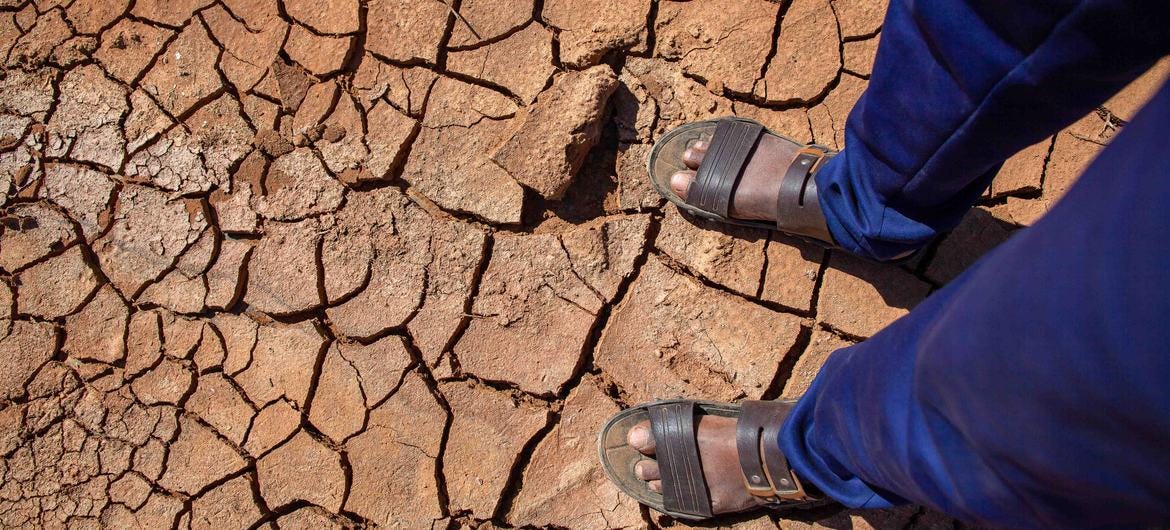
The Somali government and the United Nations estimated that 6.5 million people face crisis levels of hunger. Aid funding fell to $531 million in 2025 from $2.38 billion in 2022, and the World Food Programme has reached only 300,000 of the 2 million people it intended to help.
Sources: The Independent, Associated Press
Restacking this post will help it reach more readers interested in the world.
On this day …
On this day in 1940, McDonald’s founders Richard and Maurice McDonald opened their first restaurant in San Bernardino, California. Their highly standardised approach to speed, pricing, and food preparation helped define the modern fast-food industry and later became a global business model replicated across countless sectors.
The expansion of fast-food culture transformed consumer habits, urban life, labour practices, and global supply chains. It also became increasingly associated with rising obesity rates, processed food consumption, and public health concerns linked to diet-related illness.
Supporters argued that fast food delivered affordability and convenience to mass populations, while critics pointed to the long-term social and healthcare costs that accompanied those changes. Few restaurant concepts have altered global eating patterns as profoundly as McDonald’s.
Did the fast-food revolution primarily democratise convenience, or fundamentally reshape public health in ways societies are still struggling to manage?
Good Morning 🌞 Thank you