


Trump Says Iran Peace Deal Will Be Signed Friday (Geopolitics)
Trump Rebukes Netanyahu Over Beirut Strike (Middle East)
Both Putin And Zelensky Get Calls Before G7 Summit (Geopolitics)
Geneva Protests Turn Violent Before G7 Summit (Europe)
Trump Hosts UFC Event On White House Lawn (US)
China Strike Threat To Australia Set To Grow (Australasia)
Swiss Reject Population Cap In EU Test (Europe)
Pashinyan Wins Armenia Vote Amid Russia Test (Politics)
Mindanao Quake Raises Seabed And Kills Marine Life (Asia)
Starmer Moves Toward Social Media Ban For Under-16s (UK)
A succinct daily briefing delivered each weekday to help you stay on top of the stories shaping the world.
US President Donald Trump said a deal with Iran will be signed on Friday, after Pakistan’s Prime Minister Shehbaz Sharif announced a “permanent termination of military operations on all fronts”, including Lebanon. Tehran later confirmed that an immediate and permanent end to the war, which began after a US-Israeli assault on Iran on 28 February, would be announced on Monday.
The reported draft includes a ceasefire, reopening the Strait of Hormuz, lifting the US naval blockade, withdrawing US forces from around Iran, suspending sanctions on oil sales and releasing $24bn in frozen Iranian assets during a 60-day negotiation period.
Key details remain unsettled. Trump said the strait’s opening was linked to signing and mine removal, while nuclear talks will continue for 60 days. Global oil prices fell after the announcement, though questions remain over damaged infrastructure, insurance and shipping confidence.
Sources: Al Jazeera, The Guardian

US President Donald Trump publicly criticised Israeli Prime Minister Benjamin Netanyahu after Israel struck Hezbollah targets in Beirut hours before a US-Iran agreement was due to be signed, saying the attack had delayed the process by a few hours.
Trump said the memorandum of understanding with Iran was “now complete” and remained on track for a formal signing in Switzerland on Friday. He said he had told Netanyahu directly that the Beirut strike was unacceptable, while acknowledging that Hezbollah had attacked Israel first but caused no damage and killed nobody.
Israel said the strikes targeted Hezbollah command centres in Beirut’s Dahiyeh district after fire towards Israeli territory. Iranian officials continued to warn of retaliation, while Trump argued the deal would help Israel by preventing Iran from obtaining a nuclear weapon, requiring disposal of nuclear material and allowing snap inspections.
Sources: Times of India, Jerusalem Post
US President Donald Trump held separate calls with Russian President Vladimir Putin and Ukrainian President Volodymyr Zelensky on Sunday, ahead of this week’s G7 summit in France, where Ukraine is expected to be a major topic.
Russian presidential aide Yuri Ushakov said Trump told Putin that ending the conflict was vital and that he was ready to act with European partners and Kyiv, including at the G7. Ushakov said Putin argued intensified Ukrainian strikes on Russian targets would not change the battlefield situation.
Zelensky said he thanked Trump for US support, discussed what could bring peace closer and updated him on Ukraine’s strengthened battlefield position. He said they agreed to meet at the G7. The calls came as US-brokered efforts to end the war have stalled while Washington remains focused on Iran, even as Ukraine argues battlefield momentum has opened a window for talks.
Sources: South China Morning Post, Reuters, Reuters

Thousands of protesters marched in Geneva on Sunday before the G7 summit opened across Lake Geneva in Evian, with police saying about 20,000 people joined a demonstration that was mostly peaceful before violence broke out.
Protesters opposed to the summit set a Tesla on fire, smashed windows and clashed with police near the United Nations area. Police used tear gas and water cannons after demonstrators threw bottles, stones, firecrackers and pieces of cement. Authorities said about 600 Black Bloc protesters took part, while Switzerland mobilised up to 4,000 troops to support police.

The unrest came before leaders from Britain, Canada, Germany, Italy, Japan and the United States were due to gather in France for a three-day summit hosted by French President Emmanuel Macron. The agenda includes efforts to end the war in Iran and Ukraine’s war against Russia.
Sources: RFI, DW

US President Donald Trump hosted mixed martial arts fights on the White House lawn on Sunday, the first professional sporting event held at the presidential residence and part of celebrations for America’s 250th anniversary.
The invite-only UFC event coincided with Trump’s 80th birthday and featured seven bouts, corporate sponsorships and about 4,300 expected attendees. The UFC spent about $60m on the event, including $700,000 for grass repairs, while tickets were controlled by the Trump administration and UFC offered others to guests paying more than $1m.
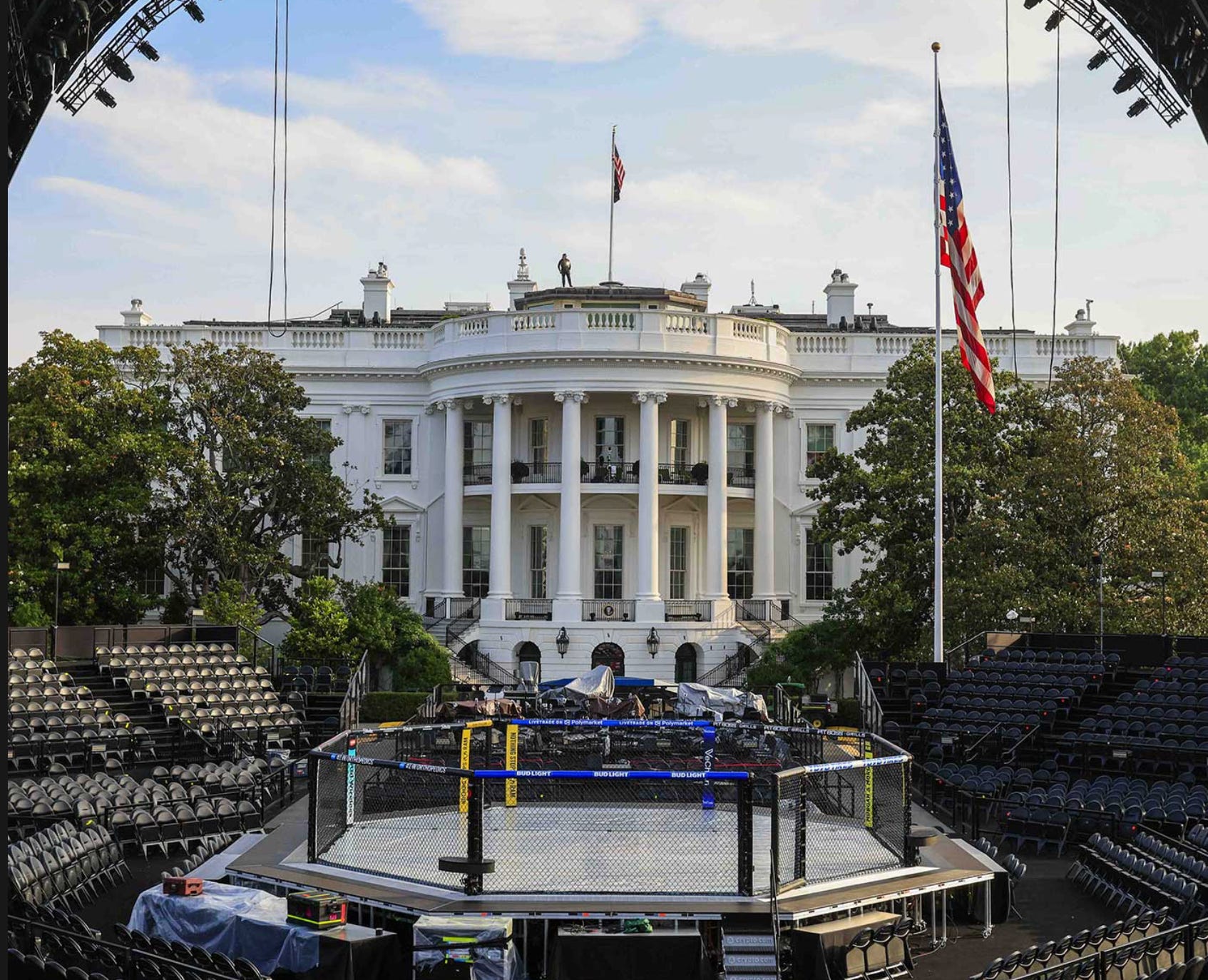
The spectacle drew scrutiny over presidential power, private business and ethics. Trump reported buying up to $50,000 in shares of UFC parent TKO Group Holdings, while the White House rejected conflict-of-interest allegations. A Reuters/Ipsos poll found only 16% of US adults said it was appropriate to hold the event.
Sources: Reuters, BBC
Restacking this post will help it reach more readers interested in the world.
China’s ability to strike Australia militarily will grow markedly over the next decade, though a Lowy Institute report said the most immediate threats are cyberattacks, undersea cable disruption and pressure on maritime trade.
The report said China can already strike northern Australia with missiles deployed to South China Sea outposts. It said a new long-range stealth bomber under development, or the deployment of missiles and aircraft to bases closer to Australia, could quickly and dramatically increase the long-term threat to the Australian landmass.
The assessment comes as Australia remains wary of China’s expanding Pacific influence while pursuing security deals with Pacific nations to prevent any permanent Chinese military presence. The Lowy Institute said China’s military build-up is reshaping the Indo-Pacific balance of power in ways that affect Australian security regardless of whether Beijing can strike Australian territory directly.
Sources: Reuters, The Lowy Institute
Swiss voters rejected a proposal to cap the country’s population at 10 million, with results showing nearly 55% against and 45% in favour, on turnout of about 60%.
The proposal from the Swiss People’s Party would have forced tougher restrictions if the population, now 9.1 million, reached 9.5 million before 2050, and required Switzerland to leave its free movement agreement with the European Union if the 10 million threshold was exceeded. That would have ended access to the EU single market, where more than half of Swiss products are sold.
Swiss Justice Minister Beat Jans welcomed the result as “a sign of stability, openness and reliability”. Business groups and the government had opposed the initiative, warning it could damage the economy, labour supply and relations with Brussels, though concerns over rents, development, crowded transport and rising health costs remain.
Sources: BBC, The Guardian

Armenia’s election authority confirmed that Prime Minister Nikol Pashinyan’s Civil Contract party won the June 7 parliamentary election, a vote seen as a test of Russia’s influence and Armenia’s geopolitical direction.
Final results gave Civil Contract 49.7% of the vote and enough seats to form a government. The pro-Russian Strong Armenia party appealed to annul the result, alleging widespread violations, while opposition supporters protested outside the Central Electoral Commission. OSCE observers said voters had a genuine choice, but cited divisive rhetoric and uneven campaign opportunities.
Pashinyan has sought closer relations with the European Union and the United States, while most opposition parties campaigned on a pro-Russian platform. Russia imposed trade restrictions before the vote, which OSCE monitors described as direct pressure. European Commission President Ursula von der Leyen called the bans economic coercion.
Sources: Associated Press, Kyiv Independent
A 7.8-magnitude earthquake in the southern Philippines last week killed at least 61 people, left at least 40 missing and raised parts of the seabed by as much as two metres, exposing coral, seagrass beds and marine life.
The quake struck southern Mindanao on Monday. Residents first reported the geological phenomenon known as coastal uplift two days later, after shorelines extended by as much as 200 metres in some places. The Philippine Institute of Volcanology and Seismology said movement along the Cotabato Trench pushed up parts of the coasts of Sarangani and Davao Occidental.
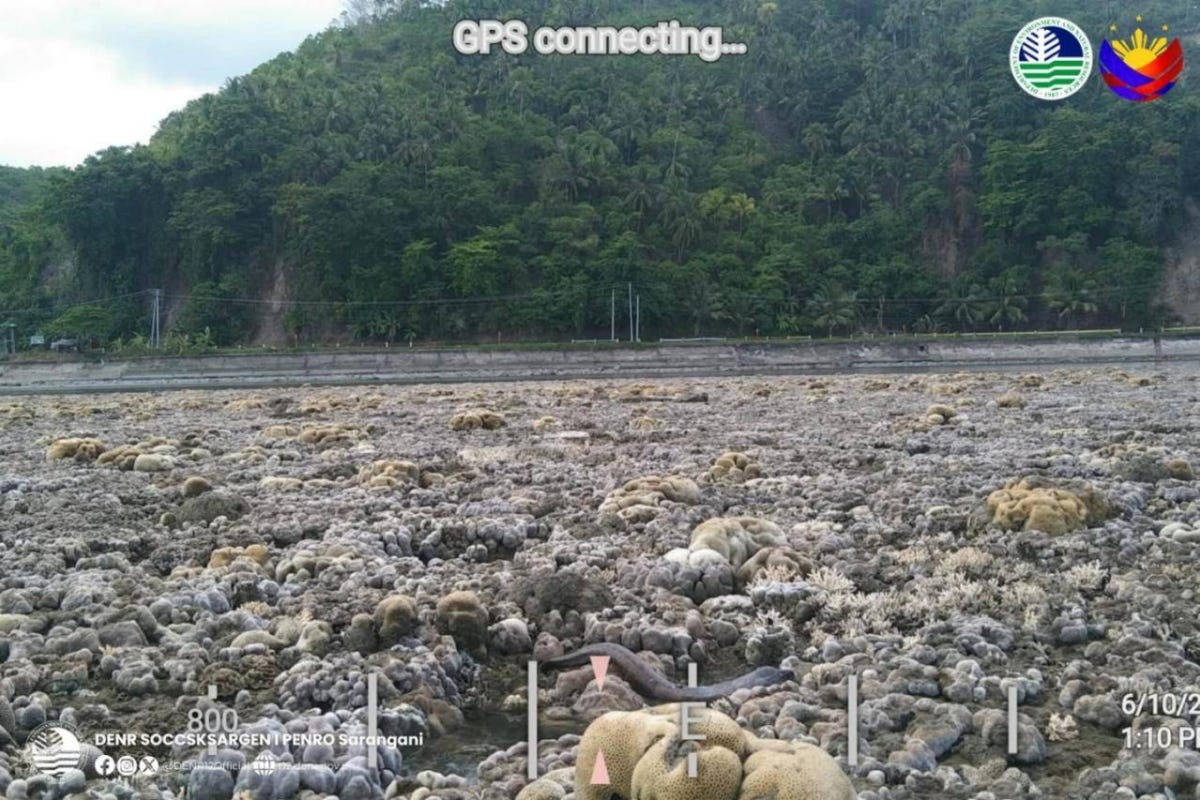
The environment department said teams found long stretches of exposed shoreline, coral reef and seagrass beds. Images showed exposed coral with dead fish and aquatic life, while officials said the affected area had not yet been fully surveyed.
Sources: The Guardian, South China Morning Post
Prime Minister Sir Keir Starmer is expected to announce plans to ban under-16s from major social media platforms including TikTok, Snapchat and Instagram, in what officials describe as an “Australia-plus” approach to online child safety.
The package is also expected to stop children livestreaming on some sites and prevent them talking to strangers on gaming apps. Ministers are considering social media curfews and restrictions on AI chatbots, with further details due next month. Sir Keir said the government would “call time on a system that’s failing our kids” and described online safety as one of the biggest debates of the age.
The move follows a national consultation that received more than 116,000 responses. More than 90% of parents who responded supported a social media ban for under-16s, while more than 83% said the risks outweighed the benefits. Critics argue bans could create a false sense of safety and push children elsewhere online.
Sources: BBC, NBC News
Restacking or sharing this publication means more people can read it. Commenting extends the conversation. Liking shows your appreciation.
On this day …
On this day in 1215, King John sealed Magna Carta at Runnymede after a dispute with rebellious barons. Although originally a practical political settlement, the document established the principle that rulers were subject to the law rather than above it.
Over centuries, its ideas influenced constitutional government, due process and the protection of individual rights across much of the world.
More than 800 years later, debates about executive power, judicial independence and the limits of government authority remain central to politics in many countries.
The questions Magna Carta raised have never entirely disappeared.
Thank you for sharing.
I appreciate your time researching and posting 🙂