


Iran Widens Shipping Attacks as Hormuz Risk Rises (Middle East)
Ukraine Misses Missile Warnings Two Nights Running (Conflict)
Saudi Strikes Yemen as Houthis Target Riyadh and Aramco (Conflict)
Black Sea Ship Attacks Bring War Closer to NATO (Conflict)
Iran Shifts UK Threats Towards Military Targets (UK)
Albanian Student Protests Turn Violent in Tirana (Europe)
French School Protests Enter Third Week (France)
Argentina Takes Falklands Oil Dispute to Tribunal (South America)
UK EU Summit Opens Door to Closer Relations (Europe)
Hungary Repeals Most Orban Era LGBTQ Restrictions (Europe)
A succinct daily briefing delivered each weekday to help you stay on top of the stories shaping the world.

Iran has changed the pace, type and geographical scope of attacks on shipping around the Strait of Hormuz, according to two senior Iranian officials, as Tehran seeks to keep oil prices high before November’s US midterm elections. One official said different offensive tactics began about 10 days ago, increasing attacks on vessels deemed to violate Iranian restrictions.
At least five incidents involving commercial ships were recorded around Hormuz in the past 48 hours while operations are expanding into the Gulf of Oman and waters off Qatar and the United Arab Emirates. A US military official said Iran is also using unarmed spotters in small boats after much of its radar capability was destroyed.
The escalation threatens a recent recovery in Persian Gulf oil exports. Shipping industry figures reported signs cargo flows may be slowing, although there was no clear evidence that oil loadings had changed.
Sources: Reuters, Bloomberg

Ukraine received no early warning from Western partners before Russian ballistic missile attacks on Kyiv on two consecutive nights, raising questions over a critical intelligence channel as relations between Kyiv and Washington deteriorate.
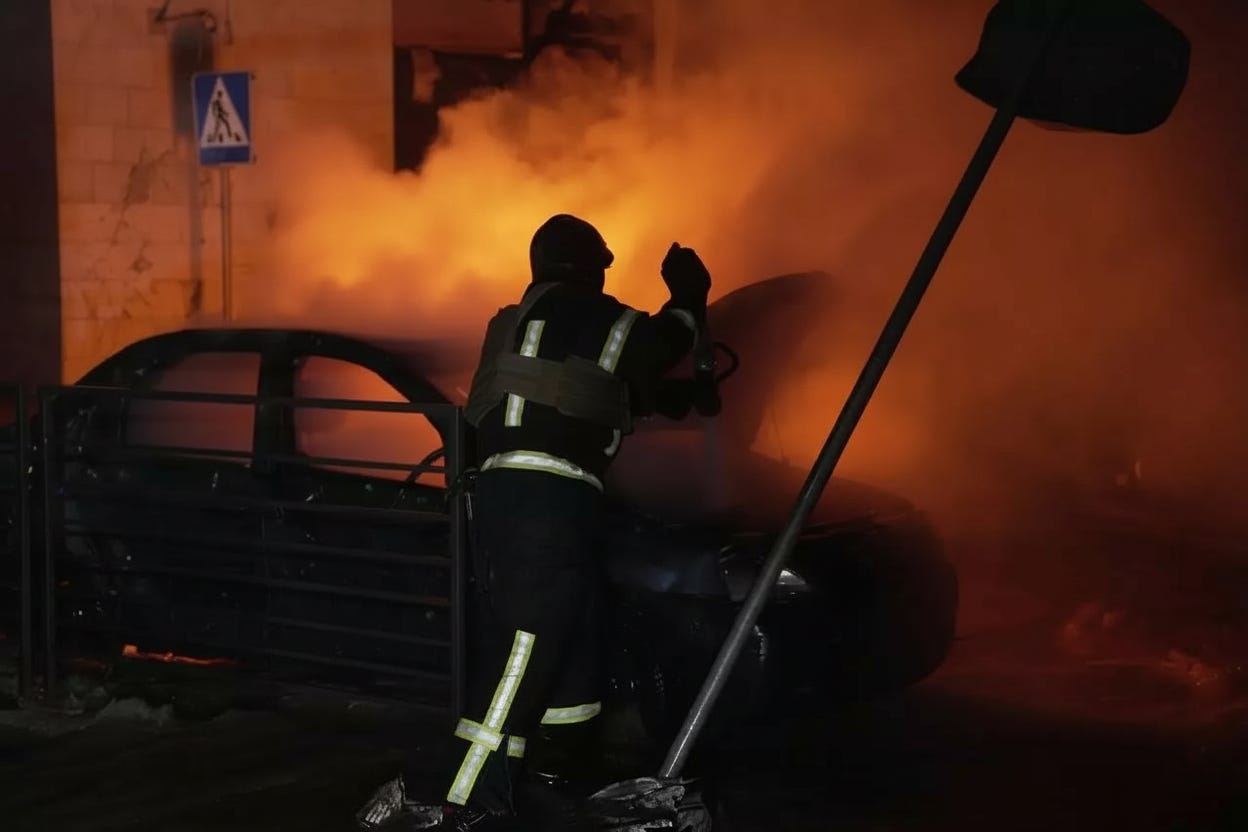
Ukrainian President Volodymyr Zelenskyy said warnings about ballistic missile launches help prevent deaths. US President Donald Trump said Washington was continuing to share intelligence, while Ukraine’s foreign minister said the first attack went undetected because Russia used a special type of weaponry. A senior Ukrainian official separately described the lapse as a “failure” rather than a deliberate decision.
Ukraine relies heavily on Western intelligence to monitor Russian military preparations and lacks comparable satellite capabilities. The United States has previously warned Kyiv of ballistic missile launches, allowing public alerts and air defences to respond. Washington briefly paused intelligence sharing after a White House confrontation in 2025.
Sources: Associated Press, New York Times

Saudi Arabia intercepted missiles and drones targeting Riyadh and other cities after the Saudi-led coalition struck a fuel depot near Yemen’s Houthi-controlled capital, Sanaa, marking another escalation in the widening conflict.
Saudi-led coalition spokesman Major General Turki al-Maliki said four missiles and two drones were intercepted near Riyadh. An Aramco administration building in Dhahran was also targeted, causing a limited fire but no casualties, while debris from intercepted missiles injured four people and damaged 15 homes. The Houthis had warned they would target Saudi airports and oil facilities in response to strikes on Sanaa.
The exchange follows deadly Houthi attacks on Riyadh’s King Khalid International Airport, where 13 people were killed on Saturday and another person on Sunday. Saudi Arabia is backing a Yemeni government counteroffensive after the Houthis seized strategic territory in September, including along the Bab al-Mandab Strait.
Sources: BBC, Al Jazeera

Drone attacks on two merchant ships near Bulgaria have left 11 sailors missing, escalating Black Sea hostilities close to NATO territory. The Guinea-Bissau-flagged HS Dignity sank 15 nautical miles east of Krapets, while the Ukrainian-owned Chelsea 3 was struck by three drones off Byala. All 15 crew aboard the second vessel were rescued.
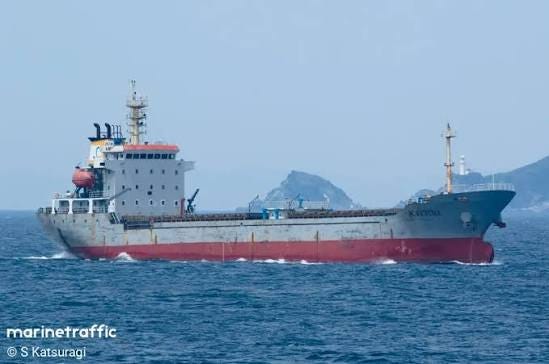
Bulgarian Prime Minister Rumen Radev said there was no clear evidence attributing responsibility, although he said logic suggested Russia benefited. Bulgaria summoned the Russian ambassador, informed NATO and the European Union, and requested assistance strengthening air and maritime surveillance and defence.
The attacks follow similar strikes in the area last week. European Commission President Ursula von der Leyen said the Black Sea had become another front in the escalation of Russia’s war in Ukraine, while NATO Secretary General Mark Rutte said the alliance had strengthened its posture along its eastern flank.
Sources: CNN, FT

Iran is shifting its campaign in Britain towards military sites and other harder targets, marking a “major shift” in Tehran’s ambitions, MI5 Director General Ken McCallum has warned. He said the intensity, scale and shape of the Iranian threat was changing, with more than 50 arrests in Iran-linked operations over the past year.

McCallum said the suspected September plot against RAF Fairford, used by US bombers striking Iran, was “not unique”. The United States later withdrew its bombers following reports of a possible drone attack.
However, McCallum said Iran remained constrained beyond the Middle East and had relied on criminals for operations in Britain and Europe. He said Tehran had not demonstrated anything close to the capability required for a sophisticated attack on British military installations. MI5 is now devoting more resources to foreign-state threats than during the Cold War, with McCallum describing Russia as Britain’s “aggressor No. 1”.
Sources: NBC News, Washington Post
If you like this post then please Restack it - it really helps

Albanian student protests over education and social conditions turned violent in Tirana on Tuesday, with demonstrators throwing bricks and concrete blocks at the Education Ministry and riot police responding with tear gas and water cannons. At least 23 people were arrested, while police said six officers and a female journalist were injured.
Student organisers cited university conditions, higher education costs, financial support and employment prospects after graduation. Some protesters also expressed frustration over inequality and government economic policies; demonstrators demanded Prime Minister Edi Rama’s resignation.
The unrest follows a series of anti-government protests in Tirana since May, sparked by a luxury tourism project linked to US President Donald Trump’s family. The project has fuelled anger over alleged corruption and lack of transparency. Deputy Prime Minister Albana Kociu condemned Tuesday’s violence, saying attacks on institutions, police and public property were not an acceptable form of youth expression.
Sources: Reuters, Al Jazeera

French school protests entered a third week as over 160,000 people marched nationwide on Tuesday over teacher shortages, overcrowded classes and deteriorating buildings. Swedish climate activist Greta Thunberg joined students outside a school in Saint-Denis, saying young people were not being included in decisions about their future.
Most demonstrations were peaceful, although riot police used tear gas in Nantes and Paris. Education Minister Édouard Geffray said 3,000 substitute teachers were being deployed to schools with the worst staff shortages, while 214 of France’s 3,700 high schools were completely closed on Tuesday.
The protests have left the government balancing demands for greater education investment against efforts to reduce France’s deficit and debt. More nationwide demonstrations are planned for Saturday, potentially drawing people concerned about fuel and energy prices and the cost of living, as student organisers insist the coming school holidays will not end the mobilisation.
Sources: The Guardian, Sydney Morning Herald

Argentina has asked an international tribunal to halt new oil and gas exploration near the Falkland Islands, escalating its dispute with Britain over activity around the territory. Buenos Aires says UK-authorised exploration is illegal and seeks to preserve Argentine sovereign rights over its continental shelf.
The action targets the Sea Lion project, a joint British-Israeli venture about 130 miles from the islands that is expected to begin production in 2028. The UK says the project is lawful and that Argentina’s application does not invalidate existing licences or require development to stop.
Britain is also preparing measures to protect companies from the extraterritorial impact of Argentine laws after President Javier Milei threatened sanctions against firms exploiting oil near the islands. UK Overseas Territories Minister Uma Kumaran accused Argentina of economic coercion, while London said it would engage with the tribunal and comply with any binding provisional measures.
Sources: BBC, Mercopress

Britain and the European Union will hold a leaders summit in Brussels on November 20, seeking agreements on agri-food trade, emissions trading and a youth mobility scheme as both sides pursue closer cooperation.
British Prime Minister Andy Burnham told Parliament that securing those agreements was the immediate priority before beginning a “calm, clear-eyed, rational look” at options for the longer-term relationship. He has previously suggested those options could include rejoining the single market, customs union or the EU itself. Conservative leader Kemi Badenoch criticised the focus, saying neither leaving nor rejoining would solve all Britain’s problems.
European Council President António Costa said stronger cooperation was essential, citing shared security and prosperity. Additional agreements could cover defence and security, migration and law enforcement. The summit, also to be attended by European Commission President Ursula von der Leyen, was originally scheduled for July but postponed after Keir Starmer’s administration collapsed.
Sources: Politico Europe, Reuters

Hungary’s parliament has repealed most provisions of a 2021 law restricting LGBTQ+ content accessible to children, marking the first significant reversal of policies introduced under former Prime Minister Viktor Orban. The amendment passed on Tuesday by 139 votes to 51, retaining protections for under-18s from sexually explicit or violent material.
The restrictions had limited the portrayal or promotion of sexual and gender diversity and were ruled in April to violate EU treaties by the European Court of Justice. Prime Minister Peter Magyar said the changes would bring Hungary into line with European Union regulations.

The EU welcomed the vote as an important signal of commitment to common values and subsequently unfroze €4.2 billion in funding for Hungary. Rights groups welcomed the removal of restrictions but said other discriminatory provisions remain, including laws preventing legal recognition for transgender people and adoption by same-sex couples.
Sources: DW, Euronews
Restacking or sharing this publication means more people can read it. Commenting extends the conversation. Liking shows your appreciation.
On this day …
On this day in 1066, the armies of William, Duke of Normandy and England’s King Harold II met near Hastings in one of the most consequential battles in English history. Harold’s forces had recently marched south after defeating a Norwegian invasion at Stamford Bridge, while William had crossed the Channel to press his claim to the English throne.
After a day of fighting, Harold was killed and the English army defeated. William was crowned king on Christmas Day, beginning Norman rule and transforming England’s aristocracy, government, land ownership, language and relationship with continental Europe.
Few battles have changed a country so comprehensively in a single day.