


Trump Seeks Stability In High-Stakes Beijing Visit (Diplomacy)
China Arms Claims Raise Pressure On Trump (Geopolitics)
Russia Drone Barrage Tests Ukraine After Ceasefire (Conflict)
Iran’s War Economy Strains Under Blockade (Middle East)
Israel UAE Dispute Exposes Delicate Alliance (Middle East)
France Clears Cruise Ship After Norovirus Outbreak (Health)
Argentina Protests Test Milei’s University Cuts (South America)
Sarkozy Prosecutors Seek Seven-Year Sentence (Europe)
Streeting Challenge Threatens Starmer Agenda (UK)
Philippine Senate Shooting Deepens ICC Standoff (Asia)
A succinct daily briefing delivered each weekday to help you stay on top of the stories shaping the world.

Donald Trump arrived in Beijing on Wednesday for a summit with Xi Jinping as tensions over Iran, trade and Taiwan continue to strain relations between the world’s two largest economies. Chinese officials staged an elaborate welcome ceremony featuring military honours and flag-waving youths, while Trump described the relationship as one that could remain strong “for many decades to come”.
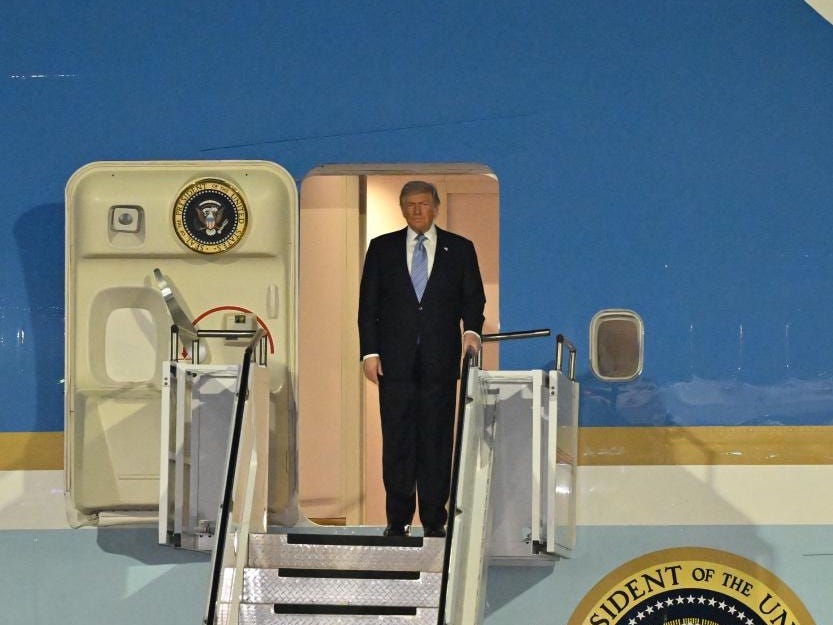
Trade is expected to dominate the talks, with Trump pushing for greater access for American firms and larger Chinese purchases of US agricultural products, aircraft and energy exports. The meeting also comes as the Iran war continues to disrupt global energy markets through the effective closure of the Strait of Hormuz.
Taiwan remains another major source of friction, with Trump expected to discuss an $11 billion US weapons package for the island. Both sides are also seeking to prevent tensions over technology restrictions and tariffs from escalating further.
Sources: Associated Press, South China Morning Post
US officials say Chinese companies have discussed secret arms sales to Iran, including plans to route weapons through other countries to hide the origin of the shipments. The intelligence does not make clear whether any arms have been shipped or whether Chinese officials formally approved the sales.
The disclosure came as Donald Trump arrived in Beijing for meetings with Xi Jinping. Trump said on Tuesday that he planned a “long talk” with Xi about the Middle East conflict and had previously asked him not to allow arms transfers to Iran. US officials say no Chinese weapons appear to have been used against US or Israeli forces since the war began.
China has already provided Iran with intelligence, spy satellite access and dual-use components used in drones, missiles and other weaponry. Finished weapons would be more sensitive, especially as China relies heavily on oil that normally moves through the Strait of Hormuz.
Sources: New York Times, Jerusalem Post

Russia launched a large daytime drone assault on Ukraine on Wednesday, killing at least six people and hitting multiple regions shortly after a three-day US-brokered ceasefire expired. Volodymyr Zelenskyy said at least 800 Russian drones had been launched since midnight and warned that missile attacks could follow.
The strikes targeted residential, railway, port, energy and other civilian infrastructure across Ukraine, including regions near Nato borders. Slovakia closed its land border crossings with Ukraine indefinitely for security reasons after attacks reached the far western Zakarpattia region.
The escalation came as both sides resumed long-range attacks. Russian officials said 286 Ukrainian drones had been intercepted over Russia, Crimea and nearby seas, while regional officials reported damage to industrial facilities. Ukraine’s increasingly frequent strikes on Russian energy sites have added another layer to a war in which battlefield momentum has slowed.
Sources: The Guardian, BBC

Iran’s economy is under mounting strain as war damage, a US naval blockade and the closure of the Strait of Hormuz squeeze trade, jobs and household incomes. Hadi Kahalzadeh, an Iranian economist, said the cost of the war and blockade had been “very substantial and unprecedented”, though he said Iran could probably avoid complete economic collapse.
The pressure is falling heavily on ordinary Iranians. Official data put annual inflation at 53.7% in mid-April, while food inflation exceeded 115% compared with the previous year. The rial has lost more than half its value in the past year, and mass job losses have hit technology and industrial firms.
Iran’s leaders are urging the public to endure. Iran’s Supreme Leader Mojtaba Khamenei described the conflict as an “economic battlefield”, while Iranian Parliamentary Speaker Mohammad Bagher Qalibaf called on Iranians to be frugal as the blockade restricts critical Gulf trade.
Sources: Associated Press, Israel Hayom
Israeli Prime Minister Benjamin Netanyahu’s office said on Wednesday that he had made a secret visit to the United Arab Emirates during Israel’s military campaign in Iran, a claim the Emirati government denied hours later. The Israeli statement said the meeting with UAE President Sheikh Mohamed bin Zayed had produced a “historic breakthrough” in relations.
The exchange exposed both the depth and fragility of a relationship strengthened by the Iran war. The Emirates has faced more Iranian drone and missile strikes than any other country since the US-Israeli war began, while Israel has deployed Iron Dome air defences in the Gulf state.
Abbas Araghchi, Iran’s foreign minister, warned that “collusion with Israel” was “unforgivable”, though he did not directly name the Emirates. The dispute underlined how military cooperation can deepen privately while public politics across the Arab world remain highly sensitive.
Sources: The Guardian, New York Times
Restacking or sharing this publication means more people can read it. Commenting extends the conversation. Liking shows your appreciation.

French authorities allowed a cruise ship to resume operations on Wednesday after temporarily keeping more than 1,700 passengers and crew aboard in Bordeaux during an outbreak of gastrointestinal illness. Health officials later confirmed norovirus on the Ambassador Cruise Line vessel Ambition.
Around 50 people had been sickened with symptoms consistent with acute gastrointestinal infection, while another account put the number at 80 since Monday. A 92-year-old British passenger died on board, but officials said his death was caused by cardiac arrest and was unrelated to the outbreak.

Passengers with symptoms were treated and isolated in their cabins, while isolation rules remained in place for travellers still ill. Officials said there was no evidence linking the outbreak to a separate hantavirus case cluster on another cruise ship, and the Ambition was expected to continue its journey towards Santander, Spain.
Sources: New York Times, France 24

Tens of thousands of Argentines marched on Tuesday against Argentine President Javier Milei’s cuts to public universities, with large crowds gathering in Buenos Aires and other cities. Protesters denounced budget shortfalls in a tuition-free system that has long been central to the country’s middle class and educated workforce.
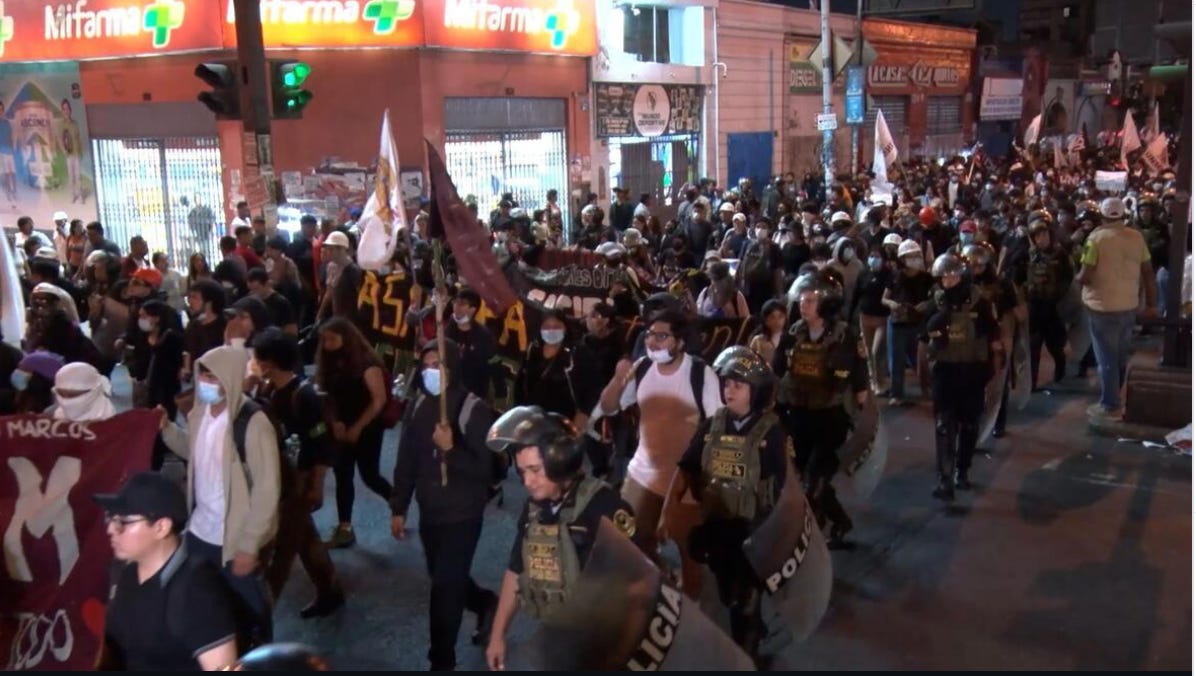
The demonstrations came after officials announced further reductions in state education and health spending. Congress passed a law to fund universities’ operating costs and raise salaries in line with inflation, but the government has not implemented it while challenging the measure in court.
The dispute has widened as Milei faces declining approval ratings, weak economic activity, falling wages and rising unemployment. Teachers’ groups say salaries have fallen sharply, while Ricardo Gelpi, rector of the University of Buenos Aires, said hundreds of research professors had left public posts for better-paid work elsewhere.
Sources: Associated Press, Buenos Aires Times
French prosecutors asked an appeals court on Wednesday to sentence former President Nicolas Sarkozy to seven years in prison over allegations that he sought illegal Libyan financing for his successful 2007 presidential campaign. Sarkozy, who led France from 2007 to 2012, has repeatedly denied wrongdoing and said the allegations are politically motivated.
The case centres on claims that Sarkozy struck a secret deal with the Libyan leader Muammar Gaddafi to secure campaign funding in exchange for helping restore the Libyan leader’s international image after Tripoli was blamed for two deadly plane bombings. A lower court last year found Sarkozy guilty of criminal conspiracy, but acquitted him of corruption and personally accepting illegal campaign financing.
Sarkozy served 20 days in prison before being released pending appeal, becoming modern France’s first president to have served time behind bars. A verdict is expected on November 30.
Sources: France 24, South China Morning Post
Reports that Wes Streeting, Secretary of State for Health and Social Care, is preparing to resign and challenge Keir Starmer have thrown Labour into its most serious leadership crisis since last week’s local election losses. Allies said Streeting was likely to quit this week, while Starmer’s supporters said he would fight any attempt to remove him.
The threat overshadowed King Charles III’s state opening of Parliament, where Starmer tried to present a new legislative agenda focused on growth, energy security and defence. Any contest could take months and would require Streeting to secure 81 Labour nominations before a leadership race could begin.
The turmoil has unsettled markets and policymaking. Government borrowing costs briefly rose after the report, while investors were described as preferring Starmer and Chancellor of the Exchequer Rachel Reeves to remain in place with their borrowing constraints as Britain faces slow growth, weak employment and rising inflation.
Sources: Bloomberg, Reuters

Gunfire erupted inside the Philippine Senate on Wednesday during a standoff over Ronald “Bato” Dela Rosa, a senator and former national police chief wanted by the International Criminal Court. No casualties were reported, and officials said the source of the gunfire remained unclear.
Dela Rosa has been holed up in the Senate since Monday after evading local agents seeking his arrest. The court has issued a warrant over alleged crimes against humanity linked to the anti-drug campaign he oversaw as police chief under Rodrigo Duterte, whose presidency saw thousands killed in police operations.
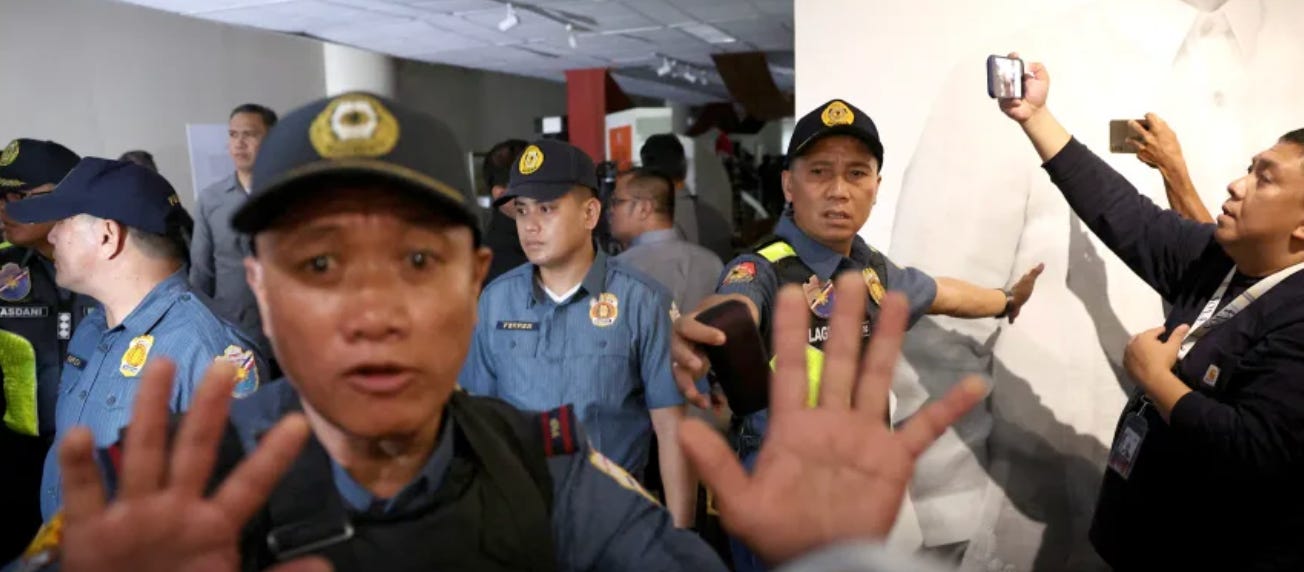
Senate President Alan Peter Cayetano said Dela Rosa was safe and would not be arrested that day. Philippine President Ferdinand Marcos Jr. said no government forces had tried to enter the Senate to arrest him, while Interior Secretary Jonvic Remulla said Dela Rosa would remain in the building during a security sweep.
Sources: Washington Post, CNN
Restacking this post will help it reach more readers interested in the world.
On this day …
On this day in 1948, Israel declared independence as the British Mandate in Palestine came to an end. Within hours, neighbouring Arab states launched military operations, beginning the first Arab-Israeli war and triggering one of the modern era’s most enduring geopolitical conflicts.
For supporters, the declaration represented the establishment of a Jewish state after centuries of persecution culminating in the Holocaust. For Palestinians, it marked the beginning of mass displacement and a prolonged struggle over land, sovereignty, and national identity.
The conflict that emerged from those events would influence regional alliances, global diplomacy, energy politics, military strategy, and great-power relations for decades afterward. Even today, many of the Middle East’s political fault lines remain connected to decisions and outcomes from 1948.
Has any single post-war state creation generated such lasting geopolitical consequences across multiple generations?
Good Morning