


US Blockade Targets Iranian Gulf Oil Lifeline
US Pushes Israel-Lebanon Talks Amid Ongoing War
Iran War Revives Talk Of A Gulf Petroyuan
Meloni Rebukes Trump Over Attack On Pope Leo
Ex NATO Chief Says UK Defence Drift Leaves Britain Exposed
Carney Wins Majority To Push Trade Reset
Ex-Lafarge Chief Jailed Over Syria Terrorist Payments
Judge Throws Out Trump Suit Against WSJ
Magyar Signals End To Hungary Loan Block
US Detains Brazil Ex Spy Chief Fugitive Ramagem

The United States began enforcing a blockade of maritime traffic to and from Iranian ports on Monday after peace talks with Tehran failed to produce a breakthrough, with President Donald Trump presenting the move as pressure on Iran’s economy. European governments declined to participate, while US notices said neutral transit through the Strait of Hormuz to non-Iranian destinations would continue.
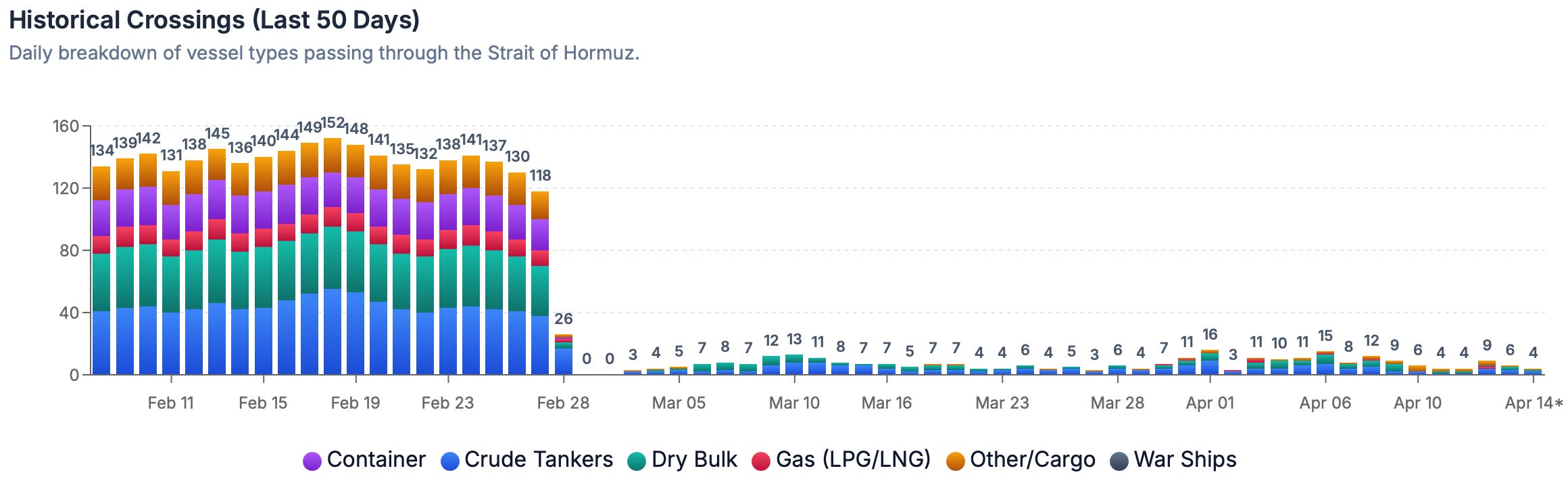
Oil prices initially rose above $100 a barrel as the measure tightened risks around the Gulf energy corridor, and the United States deployed more than 15 warships to support enforcement, but then later eased somewhat as energy market participants hoped for further talks between the parties.
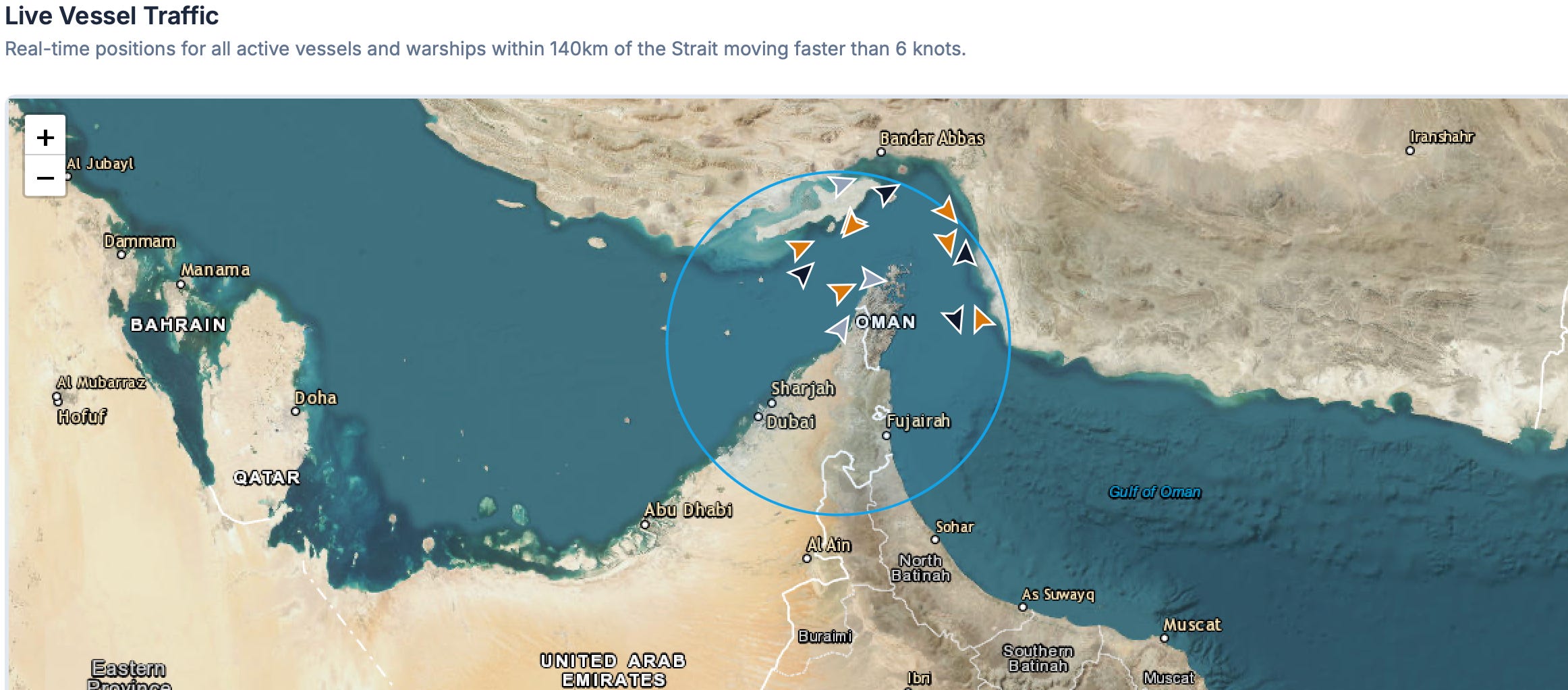
Iran warned that if its ports were threatened no port in the Gulf would remain safe, while analysts said uncertainty over protection for commercial shipping could keep traffic low and prolong disruption to global energy flows. Several Asian countries have already begun rationing fuel and warning reserves could be depleted within months if the crisis continues.
Sources: South China Morning Post, New York Times

US Secretary of State Marco Rubio is due to host the Israeli and Lebanese ambassadors in Washington on Tuesday in the most senior direct meeting between the two countries since 1993, opening talks on a possible ceasefire, Hezbollah’s longer-term disarmament and a wider peace deal. The meeting comes amid Israeli strikes, a ground invasion in southern Lebanon and a request from Lebanon and the Trump administration for a pause in attacks.
The opening reflects pressure on Benjamin Netanyahu to de-escalate, but Lebanon enters with limited leverage. President Joseph Aoun has proposed direct negotiations yet warned disarmament cannot be imposed by force, while Hezbollah leader Naim Qassem has rejected nationwide disarmament talks.
Israel ignored earlier Lebanese proposals, scaled down strikes on Beirut and continued its offensive in the town of Bint Jbeil, leaving diplomacy open but the main military question unresolved.
Sources: Axios, BBC

The war in Iran has revived debate over whether China’s currency could gain a larger role in oil trade, after Iran took control of the Strait of Hormuz and began accepting yuan payments for safe passage. The shift has fed new interest in a Gulf “petroyuan”, especially as China deepens its payments infrastructure and expands financial links across the Middle East.
Yet the conflict has strengthened interest more than it has changed the global currency order. Yuan payments and receipts between China and the Middle East reached 1.1 trillion yuan in 2024, but most involved securities rather than goods, and the CIPS payments network still handles only a fraction of the daily volume processed by the dollar-based CHIPS system.
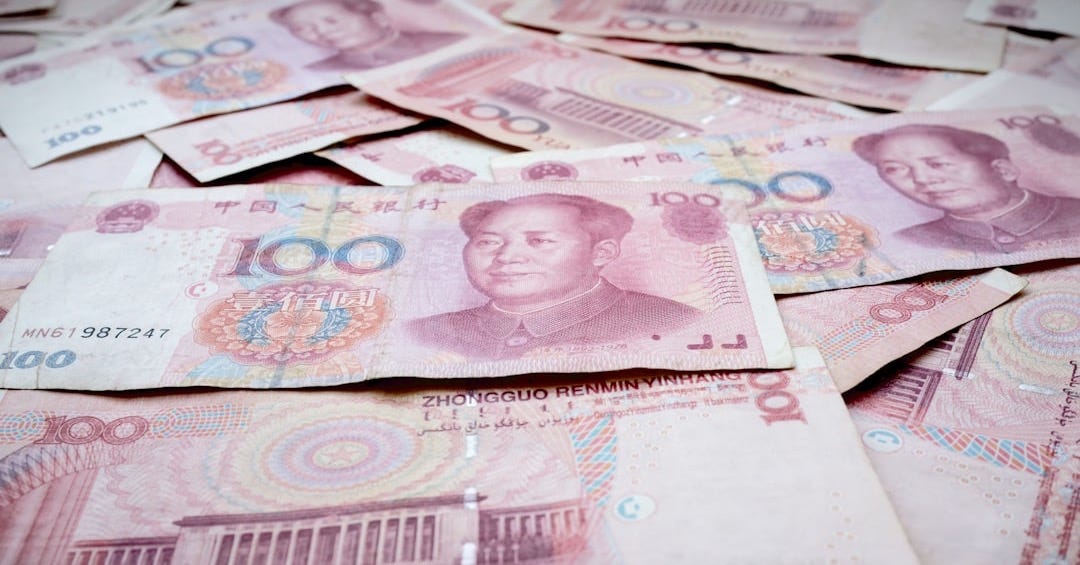
Analysts say the conflict may increase incentives to use the yuan in oil trade, but not necessarily enough to produce a near-term replacement for the dollar.
Sources: Bloomberg, Fortune

Giorgia Meloni issued a rare public rebuke of Donald Trump on Monday after he attacked Pope Leo, calling the US president’s words “unacceptable” and defending the pontiff’s right to call for peace and condemn war. The intervention was notable because Meloni has cultivated close ties with Trump and had initially avoided directly addressing his remarks, prompting criticism from opposition parties in Italy.
The clash has widened beyond a personal dispute into a political problem for one of Trump’s closest allies in Europe. Matteo Salvini also distanced himself, while Pope Leo said he had “no fear” of the Trump administration and would continue speaking out against war.
In Italy, where the pope carries deep national and religious weight, Trump’s criticism triggered a broad backlash that cut across party lines and exposed the domestic risks for leaders associated too closely with him.
Sources: Reuters, BBC

Former NATO Secretary General George Robertson has accused Keir Starmer’s government of showing “corrosive complacency” on defence, warning Britain is “underprepared”, “under attack” and “not safe” as delays continue over a long-promised defence investment plan.
Robertson, who authored the government’s strategic defence review, said the Iran war should be a “rude wake-up call” and argued Starmer was not willing to make the necessary investment.
The intervention is notable because it comes from a senior adviser who had worked behind the scenes until now. Robertson said there is a funding gap of around £28bn over the next four years in existing military plans, while ministries remain in deadlock over how to proceed. He pointed to Britain’s inability to deploy more than one Royal Navy warship to the Mediterranean within the first fortnight of the Iran war as evidence of wider strain across logistics, engineering, cyber, ammunition, training and medical resources.
Sources: The Guardian, FT

Canada’s Mark Carney secured a majority government after his Liberal Party won key special elections and was boosted by five defections from opposition lawmakers, giving him stronger control of the House of Commons and making another federal election unlikely soon. Early projections showed the Liberals winning seats in Toronto and near Montreal, while a further projected gain would bring the party to 173 seats, just above the threshold required for a majority.
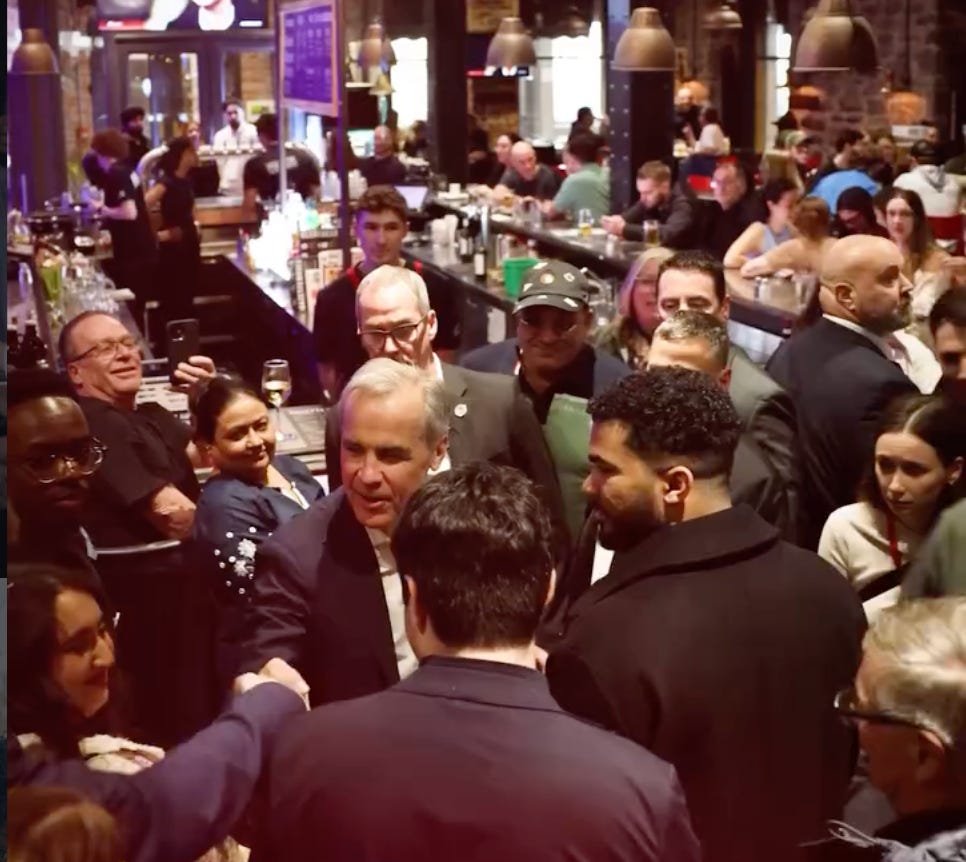
The result gives Carney greater freedom to push an agenda centred on reducing Canada’s reliance on the United States, diversifying trade relationships and building export infrastructure. It also clears the way for priorities including increased defence spending, ports and energy export facilities.
Carney’s rise followed Justin Trudeau’s resignation and was strengthened by a political climate shaped by Donald Trump’s tariffs, annexation threats and wider pressure on Canada’s economic relationship with its southern neighbour.
Sources: Bloomberg, CNN

A French court sentenced former Lafarge chief executive Bruno Lafont to six years in prison on Monday for financing jihadist groups in Syria to keep the company’s cement plant operating in 2013 and 2014, and ordered him to begin serving the sentence immediately. Former deputy managing director Christian Herrault received five years, while the company was fined €1.125 million for payments made through its Syrian subsidiary to armed groups and intermediaries.
The ruling centres on nearly €5.6 million paid to secure access to raw materials and allow the movement of trucks and staff as war spread across northern Syria. Presiding judge Isabelle Prevost-Desprez said the financing, primarily benefiting Islamic State, helped the group gain control of natural resources and fund attacks in the region and abroad, particularly in Europe.
The court said the company had formed a “genuine commercial partnership” with Islamic State. A separate case over alleged complicity in crimes against humanity remains ongoing.
Sources: Le Monde, The Guardian

A federal judge dismissed Donald Trump’s defamation lawsuit against the publisher of The Wall Street Journal on Monday, ruling that he had failed to make a valid legal claim over an article about a letter bearing his name in Jeffrey Epstein’s 2003 birthday book. Judge Darrin Gayles said Trump had not shown the paper acted with the “actual malice” required in a defamation case involving a public figure.
The ruling rested heavily on the paper’s reporting process. Gayles said the article itself showed that journalists had tried to investigate, including by contacting Trump, the FBI and the Justice Department before publication, and that the complaint “comes nowhere close” to the required standard.
Trump was given until April 27 to file an amended lawsuit, and his legal team said he would do so. Dow Jones said it stood behind the reliability, rigour and accuracy of the reporting.
Sources: Wall Street Journal, Politico

Péter Magyar signalled that Hungary will drop its opposition to the EU’s €90 billion loan to Ukraine, potentially ending a four-month standoff that had threatened Kyiv’s financing. He said the decision on the package “was already made in December” and that his incoming government wanted to be coherent with earlier commitments, while indicating the blockage could be lifted even before he formally takes office.
The shift would remove one obstacle to disbursing funds that Ukraine needs by May, but it does not mean Hungary will help finance the package. Magyar said he supported keeping Hungary’s opt-out because of the country’s budget position, adding that the deficit had tripled since 2010.
The move marks an early foreign policy break from Viktor Orbán, who had first approved the loan and then reversed course, tying release of the money to repairs on a pipeline carrying Russian oil through Ukraine to Hungary.
Sources: Politico Europe, Euronews

US immigration officers detained Alexandre Ramagem on Monday after Brazil requested the extradition of the former intelligence chief, who fled to the United States following his conviction over a failed scheme to stop Luiz Inacio Lula da Silva taking office after the 2022 election. Ramagem had been sentenced to 16 years in prison and was listed in Immigration and Customs Enforcement custody.
The detention adds an international dimension to Brazil’s post-coup accountability drive. Police said the arrest resulted from cooperation between Brazilian federal police and US law enforcement authorities, while Brazil described Ramagem as a fugitive convicted of armed criminal association, attempted coup d’etat and the attempted violent abolition of the rule of law.
During his time in the US, Ramagem had remained publicly active and was also under investigation in a separate case over alleged illegal spying for Jair Bolsonaro’s inner circle using Israeli surveillance software.
Sources: The Guardian, Le Monde
On this day …
On this day in 2003, scientists announced the completion of the Human Genome Project, marking the first successful sequencing of the full human genetic blueprint. The achievement followed more than a decade of international collaboration and opened new possibilities in medicine, biotechnology, and disease research.
It helped accelerate advances in personalised treatment, cancer diagnostics, and rare-disease identification, while also raising long-term ethical questions about genetic data and privacy.
The project became one of the defining scientific milestones of the early twenty-first century.
Two decades on, is genetic medicine advancing as quickly as its early promise suggested?
Thank you for sharing this