


Trump’s Energy Ceasefire Meets Russian Strikes (Conflict)
Washington Sends Two Signals On Russia (Geopolitics)
EU Targets Core Of Russia’s Military Supply Chain (Europe)
Houthi Attacks Expose Saudi Arabia’s Vulnerabilities (Conflict)
China And EU Step Back From Trade War (Trade)
Hackers Target Supermarkets Through Connected Fridges (France)
IMF Warns Global Economy Is Running Out Of Buffers (Economy)
War And Drought Push Sudan Closer To Famine (Africa)
Deadly Strikes Expose Sudan Egypt Border Vacuum (Africa)
India Voter Roll Dispute Moves To Supreme Court (India)
A succinct daily briefing delivered each weekday to help you stay on top of the stories shaping the world.

Ukrainian President Volodymyr Zelenskyy said Russia struck at least six energy targets after US President Donald Trump announced that Moscow and Kyiv had agreed to stop attacking each other’s energy systems. Zelenskyy said Ukraine had refrained from striking Russian energy sites since Trump’s announcement and remained ready to honour a ceasefire.
Trump insisted on Monday that the agreement was in place, while Kremlin spokesman Dmitry Peskov said talks were continuing. Peskov later rejected Zelenskyy’s proposal for a full 60-day truce, saying Russia wanted long-term peace rather than a ceasefire.
The dispute unfolded as Russian attacks continued across Ukraine. A strike on a Kyiv apartment building killed two people and injured at least nine, while Ukraine said Russia’s latest campaign against its grid had already caused daily power cuts in Kyiv. EU foreign ministers meanwhile approved their largest sanctions package since Russia’s 2022 invasion.
Sources: Associated Press, Reuters

General Alex Grynkewich, commander of US and NATO forces in Europe, pledged wide-ranging measures to defeat any Russian attack on the alliance, while US officials have privately pressed Ukraine to stop striking Russian oil refineries.
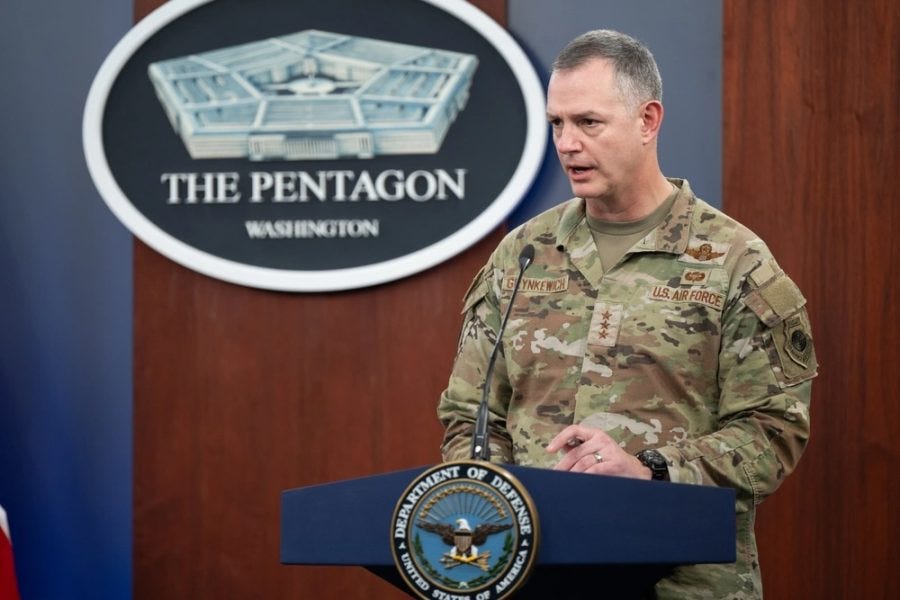
Grynkewich said NATO would “block, blunt and break” an attack, using precision weapons, drones and autonomous systems. He said conflict with Russia was neither imminent nor inevitable but promised any attack against an ally would prove futile.
The message contrasts with Washington’s private requests to Kyiv, which Ukrainian officials interpreted as carrying a threat to US weapons and intelligence support. President Donald Trump, seeking to lower energy prices before November’s midterm elections, has also agreed to buy Russian diesel and temporarily eased sanctions. The combination leaves Washington publicly strengthening NATO deterrence while simultaneously asking Ukraine to curb attacks that have damaged Russia’s energy infrastructure.
Sources: Washington Post, New York Times

The European Union has sanctioned almost 1,600 Russian people and companies linked to the country’s arms industry, its biggest single sanctions listing since Russia launched its full-scale war on Ukraine almost five years ago.
EU foreign policy chief Kaja Kallas said more than half of the measures target the production chain for ballistic missiles used against Ukrainian civilians, adding that this was the time to increase rather than ease pressure on Moscow. The sanctions focus on mid-level suppliers identified as the core of Russia’s military industry.
The targeted companies provide components including electronics, communications equipment, radar & navigation systems, satellite & missile systems, explosives and ammunition. Another 77 people were sanctioned over their alleged involvement in elections in occupied Ukrainian territory. The measures bring the number of Russian officials and entities targeted by the EU to more than 4,500.
Sources: Associated Press, Eunews

Houthi attacks on Saudi Arabia are widening from energy infrastructure to aviation, exposing growing security and economic vulnerabilities. Strikes on Riyadh’s King Khalid International Airport have killed at least 18 people and wounded more than 300, while Saudi officials are running low on interceptors needed to repel further attacks.
The campaign follows attacks on the kingdom’s East-West oil pipeline and refineries. Saudi Arabia is struggling to cover its territory with air defences, while foreign investment has fallen and the Finance Ministry expects GDP to shrink 3.6% in 2026.
The attacks are also threatening Crown Prince Mohammed bin Salman’s economic diversification plans. Saudi Arabia has sought military help from Pakistan and additional air defences globally, while increasingly exploring a diplomatic solution.
President Donald Trump said the US was communicating with the Houthis and might join Saudi strikes against them.
Sources: Reuters, CBS News, Wall Street Journal

China and the European Union have reached a four-year deal limiting Chinese hybrid car exports to Europe, temporarily easing trade tensions after four months of negotiations. Brussels will cap Chinese hybrid imports at 350,000 vehicles annually, with the quota rising 6% each year.
The limit is less than half the 800,000 vehicles the EU expects China to export to the bloc in 2026. Beijing also agreed to ease restrictions on rare earth licensing, while cutting VAT export rebates for new energy vehicles from 13% to 9% from April.

The agreement follows calls from French President Emmanuel Macron and German Chancellor Friedrich Merz for stronger EU trade defences against foreign economic distortions.
Brussels plans further proposals, while some officials fear the concessions could weaken political support for tougher measures. The EU runs a trade deficit with China exceeding €1 billion a day.
Sources: South China Morning Post, Euronews

Hundreds of French supermarkets were hit by a cyber-attack that remotely disabled refrigeration systems, forcing stores to discard food and demonstrating how digital intrusions can cause physical disruption. About 150 Intermarché stores were affected, with fridges and freezers heated to 50C for around six hours.
The Paris prosecutor’s office said the attack affected connected refrigerators across several major retailers, with food losses and fires reported. Prime Minister Sébastien Lecornu instructed France’s cybersecurity agency ANSSI to investigate, which identified a vulnerability in software supplied by Danish refrigeration company Danfoss.

Danfoss said affected units were running outdated firmware and that it had long advised customers to update supported systems or replace legacy technology. France is coordinating with European counterparts because other countries may also be affected. Dutch supermarket group Ahold Delhaize separately reported a security issue and took systems offline.
Sources: The Guardian, Bloomberg

The global economy could soon test the limits of its resilience as emergency energy stocks dwindle and heavily indebted governments lose capacity to absorb further shocks the International Monetary Fund has warned.
Global growth has weathered the Middle East conflict better than feared, helped by rerouted oil supplies and releases from strategic reserves. The IMF forecasts 3.1% growth this year but says another geopolitical shock could rapidly transmit through energy prices and supply disruptions.
IMF chief economist Silvana Tenreyro said borrowing costs have risen sharply in advanced economies, public debt is at historic highs and fiscal cushions have thinned. A scenario combining higher commodity prices with lost fiscal and monetary credibility would cut global growth by 0.5 percentage point in 2027. The IMF urged governments to rebuild fiscal capacity, warning that prolonged Middle East conflict could drive energy and food prices higher.
Sources: The Guardian, Wall Street Journal

Conflict and an El Nino-induced drought affecting roughly half of Sudan are increasing the risk of famine across Darfur and Kordofan, as food availability falls, prices rise and livelihoods deteriorate.
The Integrated Food Security Phase Classification said poor vegetation growth affects nearly two-thirds of cropland in North Darfur and about half in South Darfur, West Kordofan and South Kordofan. Healthcare is extremely limited and clean water increasingly scarce, while farmers are becoming more dependent on food assistance.
In May, nearly 19.5 million people, more than 40% of Sudan’s population, faced high levels of acute food insecurity, including 135,000 in the most severe classification. Severe acute malnutrition among children accessing nutrition services in Nyala more than doubled between January and August, while two South Darfur displacement camps recorded acute malnutrition above famine thresholds.
Sources: Al Jazeera, Arab News

At least 72 gold miners have been killed in air strikes in a remote and disputed area along the Sudan-Egypt border, according to a Sudanese rights group, exposing growing insecurity where Sudan’s central authority has weakened during its civil war.
Emergency Lawyers accused the Egyptian military of carrying out the strikes in mountainous territory it says lies inside Sudan. Egypt has not commented, and independent verification is difficult. In June, another mining site in the same border region was attacked before Egypt conducted what it called a large-scale operation against illegal gold mining.
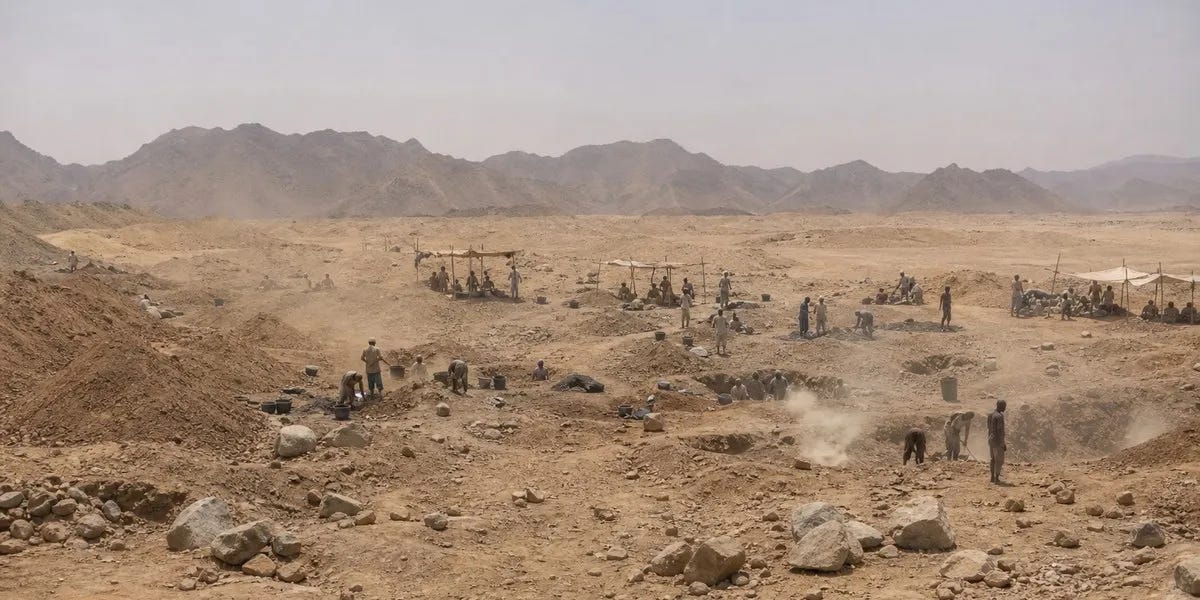
The poorly demarcated border has long been disputed and contains significant gold deposits. Sudan’s economic collapse has pushed people into dangerous, unregulated mining, while Egyptian security forces conduct border operations against illegal mining, migration and smuggling. The latest attack highlights how Sudan’s war is increasingly complicating security along its borders.
Sources: DW, Al Jazeera

India’s opposition has asked the Supreme Court to halt a nationwide revision of voter lists after more than 130 million names were removed, escalating a dispute that has triggered mass protests and detentions.
Thousands of protesters marched through New Delhi on Monday, while opposition parties submitted a petition alleging irregularities and seeking an investigation. Critics say eligible voters risk being disenfranchised, while the Election Commission denies wrongdoing and says its decisions were unanimous. Prime Minister Narendra Modi’s Bharatiya Janata Party says the revision is needed to remove duplicate and ineligible names.
The dispute is widening beyond the capital. The youth-led Cockroach Janta Party has threatened renewed protests, while a coalition of farmers’ organisations plans nationwide demonstrations on October 23. New Delhi police have also removed Jantar Mantar’s designation as a protest venue and selected three replacement sites.
Sources: NPR, Bloomberg
Restacking or sharing this publication means more people can read it. Commenting extends the conversation. Liking shows your appreciation.
On this day …
On this day in 1307, King Philip IV of France ordered the mass arrest of members of the Knights Templar across his kingdom. Founded during the Crusades to protect Christian pilgrims, the Templars had grown into a wealthy & powerful military order with extensive landholdings and a sophisticated financial network stretching across Europe.
Philip, who was heavily indebted to the order, accused its members of heresy and other crimes. Many were tortured into confessing, and Pope Clement V formally dissolved the order in 1312. Its last Grand Master, Jacques de Molay, was burned at the stake two years later.
Was the destruction of the Templars driven more by religion, politics or money?