


Trump Rejects China Role As Hormuz Grip Tightens
Israel Fears Iran Deal Will Leave War Unfinished
Pentagon Cost Estimate Deepens Iran War Scrutiny
Golden Dome Cost Estimate Hits $1.2tn
Saudi Strikes Reveal Wider Iran War
Iran Missile Capacity Challenges US Claims
Putin Tests Sarmat Missile After Nuclear Treaty Lapse
Macron Pledges €23bn Africa Investment Shift
Taiwan Arms Issue Tests Trump Xi Summit
Russia And Ukraine Cool On US Peace Talks
A succinct daily briefing delivered each weekday to help you stay on top of the stories shaping the world.

Donald Trump said he did not need China’s help to end the Iran war ahead of talks with Chinese President Xi Jinping in Beijing, even as Tehran tightened control over the Strait of Hormuz and peace negotiations remained stalled. Trump said the United States would “win it one way or the other” and insisted preventing Iran from obtaining a nuclear weapon was his sole priority.
The comments came as the war’s economic costs deepened. Oil prices climbed above $107 a barrel with maritime traffic through the strait still heavily disrupted, while new inflation data showed accelerating food, rent and airfare costs in the United States.
Iranian officials meanwhile expanded claims over the strait and continued military drills, while Washington and Beijing publicly aligned against permanent tolls on shipping through the waterway.
Sources: Al Jazeera, Reuters

Israel is concerned Donald Trump may reach an agreement with Iran that leaves some original war objectives unmet, according to Israeli sources. They said a deal that leaves Tehran’s nuclear programme partly intact while bypassing ballistic missiles and support for regional proxies would make Israel view the war as incomplete.
The concern reflects a gap between Trump, who appears reluctant to resume the war, and Benjamin Netanyahu, who fears it will end without achieving its initial aims. Early in the conflict, Trump suggested the United States wanted to destroy Iran’s ballistic missile programme, end support for proxies and shut down nuclear facilities.
Negotiations have since focused on uranium enrichment and reopening the Strait of Hormuz. Israeli officials are also worried that easing economic pressure could stabilise Iran, while the United States and Israel continue to coordinate potential military plans if talks fail.
Sources: CNN, Almayadeen

The cost of the United States war with Iran has risen to about $29bn, according to Pentagon comptroller Jay Hurst, up $4bn from an estimate two weeks earlier. Hurst told lawmakers the increase reflected updated repair and replacement of equipment and general operational costs.
Defence Secretary Pete Hegseth refused in congressional hearings to say how much emergency funding the administration would request, or when it would ask for it. He also said the White House had no intention of seeking congressional authorisation to continue operations in Iran.
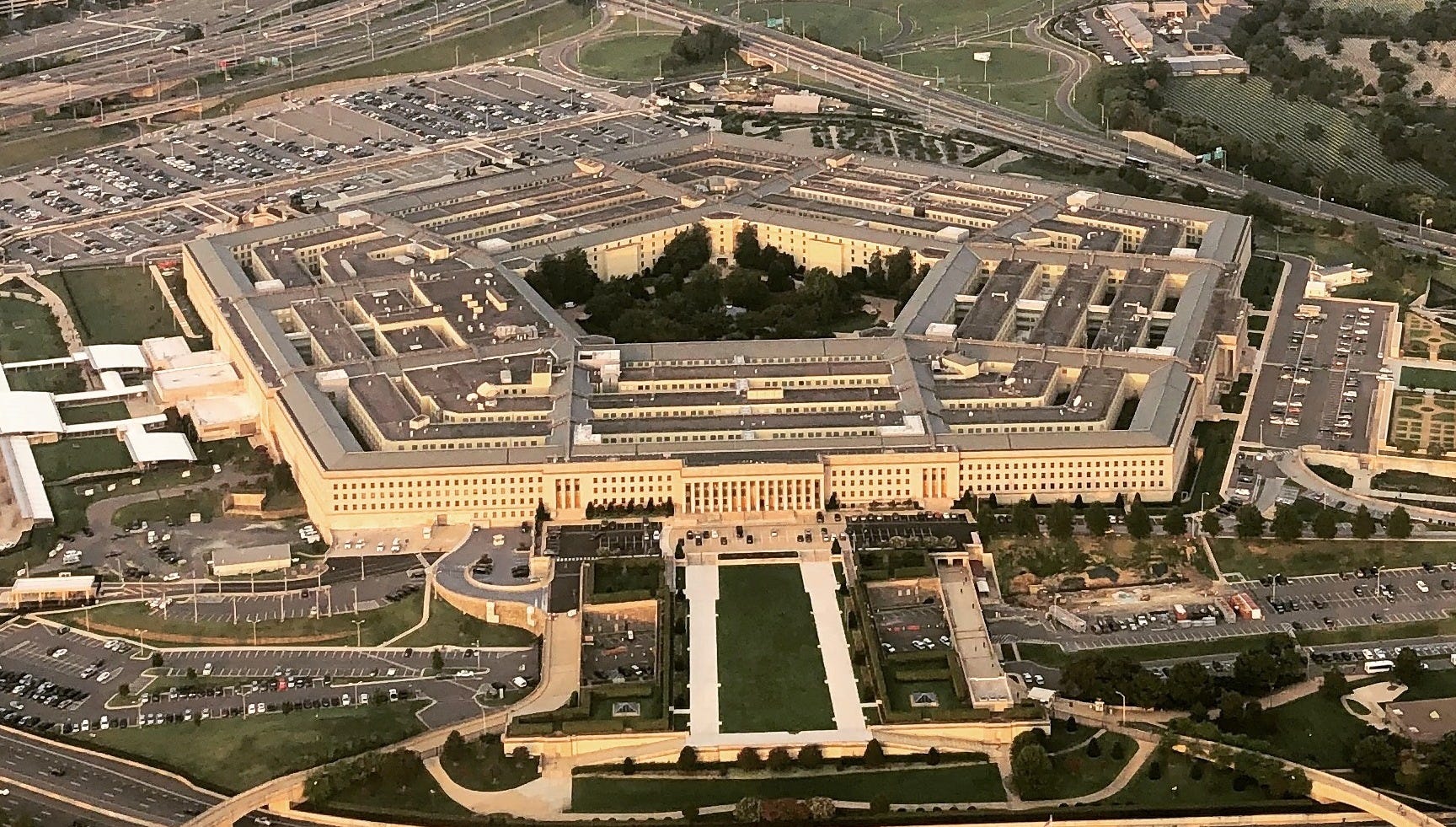
The hearings exposed growing scrutiny over the war’s financial and strategic strain. Lawmakers questioned the durability of the ceasefire, continued deployments and an active naval blockade, while Hegseth said the administration had plans to escalate, withdraw or shift assets if negotiations collapsed.
Sources: Reuters, New York Times

Donald Trump’s proposed Golden Dome missile defence system could cost taxpayers $1.2tn over 20 years, according to a nonpartisan congressional estimate, far above his earlier $175bn projection. The report said acquisition costs alone would exceed $1tn and that space-based interceptors would probably consume about 60 percent of the total.
The system is designed to protect the continental United States, Alaska and Hawaii against ballistic, hypersonic and cruise missiles using layers across land, sea and space. It could require several thousand satellites, radar and missile sites, and roughly 7,800 armed satellites to counter up to 10 enemy intercontinental ballistic missiles simultaneously.
The report also warned that Russia or China could still overwhelm the system in a full-scale attack, meaning some missiles would hit their targets even if it were eventually built.
Sources: New York Times, BBC
Saudi Arabia carried out unpublicised airstrikes on Iran in late March after attacks inside the kingdom, marking the first known direct Saudi military action on Iranian soil. The strikes followed a wider regional war that began when the United States and Israel launched airstrikes on Iran on February 28.
Iran later hit all six Gulf Cooperation Council states with missiles and drones, targeting US military bases, civilian sites, airports and oil infrastructure, while closing the Strait of Hormuz. Saudi Arabia, despite its close military relationship with Washington, was left exposed as attacks pierced the US security umbrella.
Saudi Arabia informed Iran about the strikes, prompting intensive diplomacy and warnings of further retaliation. The exchanges led to an informal de-escalation before Washington and Tehran agreed to a ceasefire on April 7.
Sources: Reuters, Times of India
Restacking or sharing this publication means more people can read it. Commenting extends the conversation. Liking shows your appreciation.

Classified US intelligence assessments show Iran has regained access to most of its missile sites, launchers and underground facilities, challenging Donald Trump’s public claims that its military had been crushed. The findings show Iran has operational access to 30 of 33 missile sites along the Strait of Hormuz and still holds roughly 70 percent of its prewar missile stockpile.
The assessments also found that about 90 percent of underground missile storage and launch facilities nationwide are partially or fully operational. That leaves Iran with significant remaining capability near a waterway carrying roughly a fifth of daily world oil consumption.
The findings sharpen the dilemma if the ceasefire collapses. US forces have already used large stocks of critical munitions, while more than 20 American warships are enforcing the blockade against Iran.
Sources: New York Times, Anadolu Agency

Vladimir Putin said Russia had successfully test-fired its nuclear-capable Sarmat intercontinental ballistic missile and that it would enter combat service by the end of the year. He described it as the world’s most powerful missile and said its warhead yield was more than four times greater than any Western equivalent.
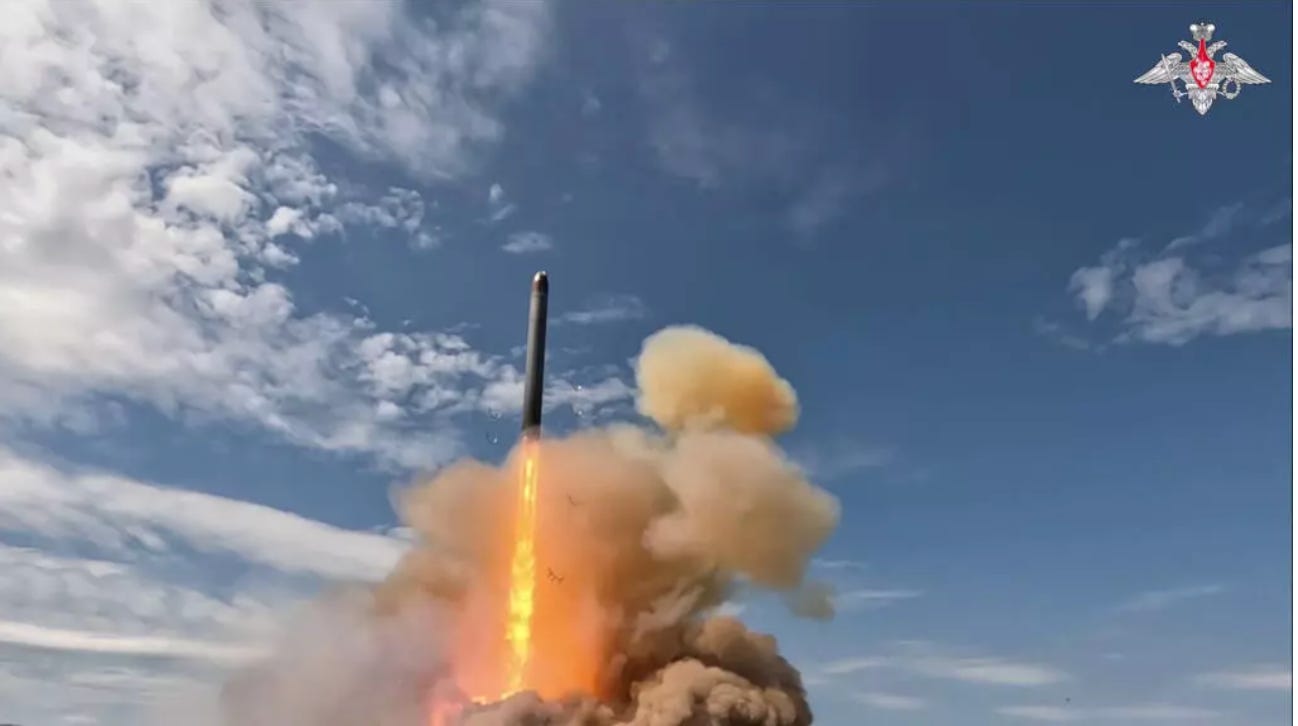
The test followed years of setbacks for a weapon first developed in 2011, with only one previous known successful test and a reported explosion during an abortive test in 2024. The missile is intended to replace about 40 Soviet-built Voyevoda missiles.
The launch came after New START, the last treaty limiting strategic warheads and delivery systems between Russia and the United States, expired in February. Moscow and Washington have resumed high-level military dialogue, but there are no signs of progress towards a successor agreement.
Sources: Al Jazeera, France 24

French President Emmanuel Macron announced €23bn in African investments as an Africa Forward Summit closed in Kenya, saying the gathering marked a financial shift in relations between France and African nations. The funding will cover sectors including energy, artificial intelligence and agriculture, with €14bn from French companies and €9bn from African entities.
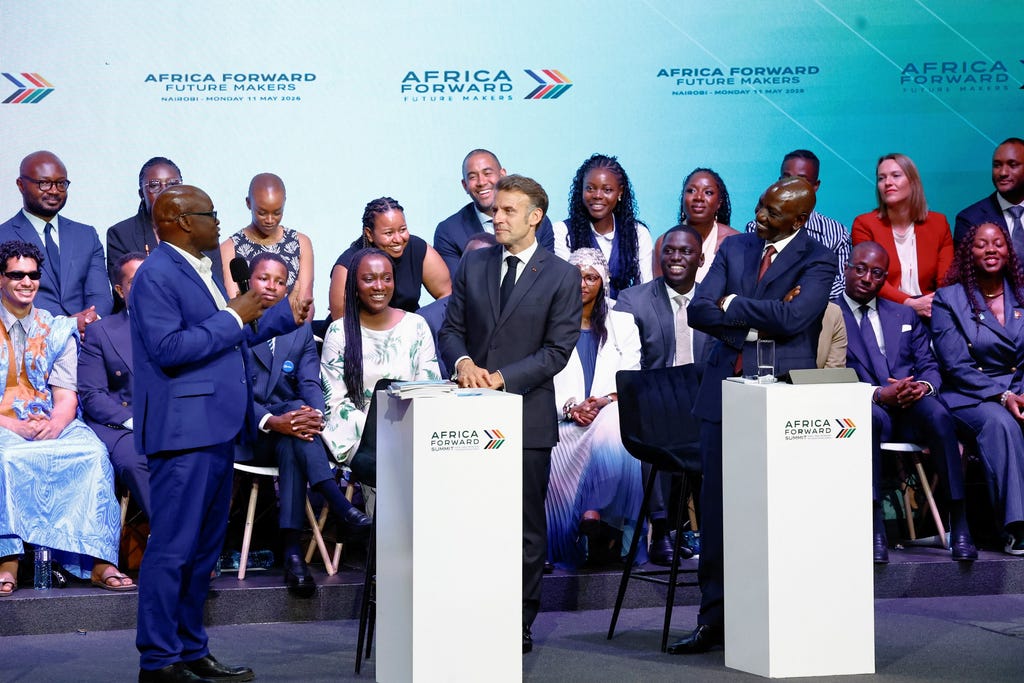
Kenyan President William Ruto said new partnerships should be built on sovereign equality, mutually beneficial investment and win-win engagement, not dependency, aid or exploitation. Macron said the days of assistance were behind France and that Paris would focus on co-investment.
The summit came after a fallout between France and former colonies in West Africa, where Paris has withdrawn troops after criticism of its heavy-handed approach. A joint declaration by 30 heads of state and government pledged cooperation across energy, technology, agriculture and health.
Sources: ABC News, Associated Press

China warned the United States against arms sales to Taiwan ahead of Donald Trump’s arrival in Beijing for talks with Xi Jinping, saying Washington should honour its commitments. Zhang Han, a spokesperson for China’s Taiwan Affairs Office, said Beijing firmly opposed US military ties with Taiwan and weapons sales to the island.
The issue is expected to be discussed during two days of meetings between Trump and Xi. The United States is legally bound to provide Taiwan with the means to defend itself, despite lacking formal diplomatic ties, and the Trump administration announced an $11bn weapons package in December.
The warning came after Taiwan’s opposition-controlled parliament approved only two-thirds of a $40bn special defence budget requested by President Lai Ching-te. A Taiwan security official said Beijing could use the reduced budget to press Trump to limit defence support.
Sources: Reuters, Asia One
Russia and Ukraine believe there is little prospect of reviving US-brokered peace talks, even if the Middle East war ends, according to people briefed on both sides’ positions. Vladimir Putin has shifted focus to capturing more Ukrainian territory by force and intends to expand demands once Russia controls the Donbas.
Kyiv officials believe Ukraine is less vulnerable to US pressure for a quick, unfavourable deal after halting Russia’s advance and increasing drone strikes deep behind Russian lines. Ukrainian officials said talks had stalled by February after the latest negotiations.
Donald Trump said last week that a deal was getting closer after a brief ceasefire, but neither side saw much value in continuing talks. Putin has rejected European mediation offers and Ukraine’s calls for a neutral-ground summit. Russia said there was little point in further talks unless Ukraine withdrew from the Donbas, while a senior German diplomat said Moscow was still seeking victory on the battlefield.
Sources: FT, UNN
Restacking this post will help it reach more readers interested in the world.
On this day …
On this day in 1607, English settlers established Jamestown in Virginia, creating Britain’s first permanent colony in North America.
The settlement struggled through disease, famine, internal conflict, and difficult relations with Indigenous peoples, and for long periods its survival remained uncertain.
Yet from that modest and precarious beginning grew a chain of political, economic, and demographic changes that would eventually contribute to the formation of the United States and the wider expansion of British influence overseas.
Systems of trade, representative assemblies, plantation agriculture, and later territorial expansion all traced part of their origins to early colonial footholds such as Jamestown. The settlement also marked the beginning of profound displacement and transformation for Indigenous societies across the continent.
Few small settlements have produced consequences that reshaped global history so extensively. At what point does a fragile outpost become the foundation of a future world power?
"difficult relations" is one way to put that