


Trump Revokes EPA Climate Authority Ruling
CIA Targets Chinese Officers In Recruitment Drive
Japan Seizes Chinese Boat In EEZ Incident
Trump Pauses China Tech Curbs Ahead Of Xi Summit
Portugal Approves Social Media Limits For Under 16s
US And Taiwan Sign Deal Cutting Tariffs And Boosting Purchases
EU Leaders Back “Buy European” In Strategic Sectors
Bangladesh BNP Claims Landslide After 2024 Uprising
US Hands Al Tanf Base To Syrian Forces
Former Norway PM Charged In Epstein Case

President Donald Trump has revoked the 2009 “endangerment finding” that concluded six greenhouse gases, including carbon dioxide and methane, are a danger to human health. The decision underpinned federal efforts to regulate emissions from vehicles, power plants, oil and gas operations and other sectors under the Clean Air Act.
Trump called the policy “disastrous” and said repealing it would reduce automobile manufacturers’ spending by $2,400 per vehicle. The White House described the move as the “single largest act of deregulation in the history of the United States of America”. EPA Administrator Lee Zeldin said the Clean Air Act “does not provide statutory authority” for vehicle emissions standards addressing global climate change.

Environmental and public health groups have promised legal challenges, while legal experts say the repeal could return the question of EPA authority over greenhouse gases to the courts, potentially reaching the Supreme Court.
Sources: CNN, BBC, US EPA

The CIA has issued a new video aimed at recruiting informants within China’s military, portraying a disillusioned midlevel officer frustrated by corruption in the People’s Liberation Army. The video follows last year’s Mandarin-language campaign and comes weeks after China removed senior military leaders and announced investigations into “grave violations of discipline and the law”.
US officials say allegations of corruption and a crackdown within the armed forces have created openings to recruit officers dissatisfied with superiors who use their positions to enrich themselves. CIA Director John Ratcliffe said the agency’s Mandarin video campaign had reached many Chinese citizens and that it would continue offering Chinese government officials an opportunity to work toward a brighter future together.
The agency says the online campaign is reaching its intended audience despite China’s internet restrictions and is part of a broader effort to rebuild and expand US human intelligence networks in China.
Sources: Reuters,New York Times

Japan has seized a Chinese fishing vessel and arrested its captain after the ship entered Japan’s exclusive economic zone off Nagasaki prefecture and sought to avoid inspection. The captain was arrested around 12:23 p.m. on Thursday after the vessel tried to flee, according to Japan’s Fisheries Agency.
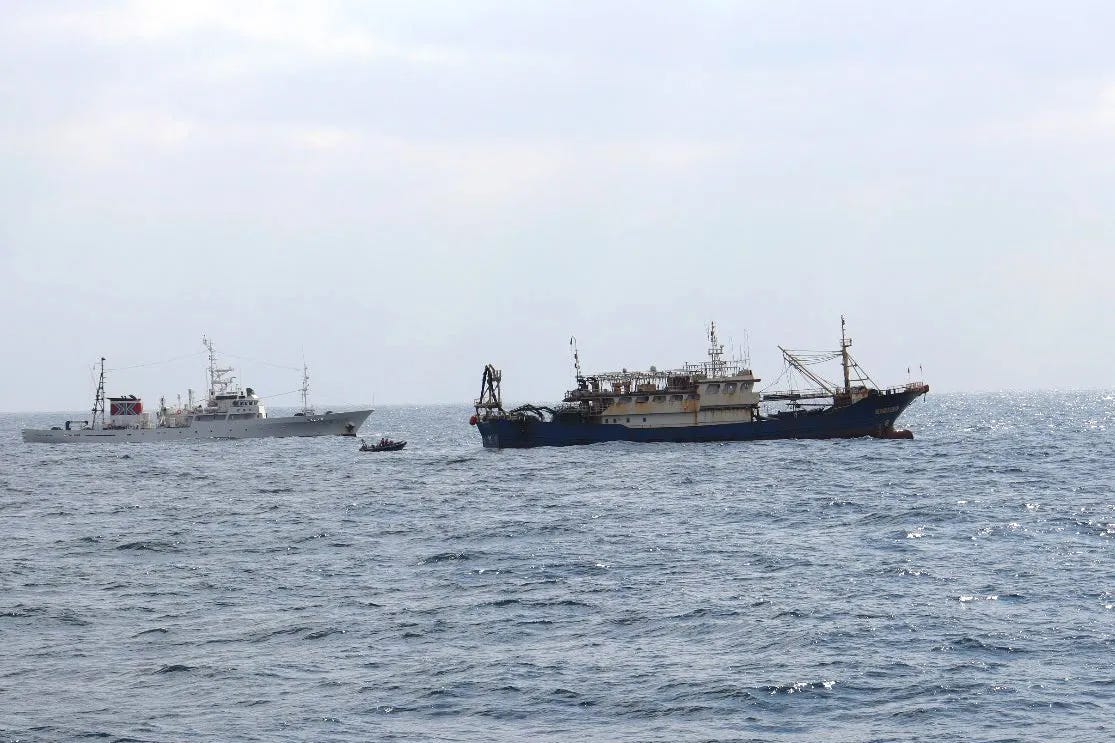
The agency said it was the first seizure of a Chinese fishing vessel since 2022. Ship seizures and arrests of crew members of foreign fishing vessels by Japan are relatively rare, with only five ships seized in the five-year period through 2025, including one Chinese vessel in 2022.
The arrest comes with ties between Beijing and Tokyo already strained after remarks by Prime Minister Sanae Takaichi in November about Taiwan, which Beijing demanded she retract. China has also advised citizens against travel to Japan, while officials say enforcement will continue with a resolute stance.
Sources: Bloomberg, The Guardian

The Trump administration has shelved a number of key tech security measures aimed at Beijing ahead of an April meeting between the two countries’ presidents. Measures on hold include a ban on China Telecom’s US operations, restrictions on sales of Chinese equipment for US data centres, and proposed bans on domestic sales of routers made by TP-Link.
Also paused are restrictions on the US internet business of China Unicom and China Mobile, and a measure that would bar sales of Chinese electric trucks and buses in the US. Sources said the moves follow a trade truce reached by Xi Jinping and Donald Trump in October, including a pledge by the Chinese to delay painful export restrictions on rare-earth minerals.
The Commerce Department said it is using its authorities to “address national security risks from foreign technology”, while Democratic lawmakers objected to shelving the measures.
Sources: Reuters, Seoul Economic Daily

Portugal’s parliament approved a bill on its first reading requiring explicit parental consent for children aged 13 to 16 to access social media. The draft legislation from the ruling Social Democratic Party was presented as a response to risks including cyberbullying, harmful content and predatory individuals.
A public system known as Digital Mobile Key will be used by parents to give consent and to support enforcement of the existing ban for children under 13. Tech providers are required to implement an age verification system compatible with the Digital Mobile Key.
The bill was approved by 148-69 votes with 13 abstentions and can still be modified before a final vote. Supporters said the measure is intended to give more power to parents and families to accompany and control access, while the bill also said it would fill a regulatory gap that has allowed multinational digital platforms to set rules unilaterally.
Sources: Newswire, Reuters
The US and Taiwan signed a trade pact confirming lower US tariffs on Taiwanese goods and setting out Taiwanese spending commitments on American products. The signing formalises an agreement unveiled in January to cut US tariffs on many Taiwanese exports from 20% to 15% and remove tariff and non-tariff barriers facing US exports to Taiwan.
Taiwan pledged to facilitate increased purchases through 2029, including $44.4 billion in liquefied natural gas and crude oil, $15.2 billion in civil aircraft and engines, and $25.2 billion in power equipment, power grids and other products. Taipei also committed to reducing most tariff barriers and providing preferential market access for US industrial and agricultural exports.
The pact needs to be reviewed by Taiwan’s opposition-controlled parliament. Vice Premier Cheng Li-chiun said Taiwan had secured most favoured nation tariff treatment and reduced the average levy on exports to the US to an average of 12.33%.
Sources: Bloomberg, Le Monde

EU leaders agreed to move ahead with a “Buy European” policy, favouring European companies in selected strategic sectors, after a retreat in the Belgian countryside on Thursday focused on competitiveness in a more volatile global economy.
European Council president António Costa said there was broad agreement to use European preference in a proportional and targeted way, citing defence, space, clean tech, quantum, artificial intelligence and payment systems. Commission president Ursula von der Leyen said she would present an action plan by March to deepen the single market, simplify rules and cut energy prices.
Later this month the Commission is expected to publish an Industrial Accelerator Act with targets for European content in strategic products. Von der Leyen also said moving ahead with a smaller group of member states might be necessary to avoid moving at the speed of the slowest, ahead of another leaders’ meeting in March.
Sources: The Guardian, FT

Bangladesh’s Bangladesh Nationalist Party said it had won enough seats to govern in the country’s first election since the 2024 student-led uprising that toppled Sheikh Hasina. Local TV stations showed the BNP-led coalition winning 209 seats, an overwhelming two-thirds majority in the 300-member parliament, while the Election Commission had yet to announce a final tally.
The BNP is led by Tarique Rahman, 60, who returned in December after 17 years in self-exile in London. His party urged supporters to hold special prayers on Friday and avoid celebratory rallies or processions.
Hasina’s Awami League, which ruled for more than 15 years, was barred from contesting. The Islamist Jamaat-e-Islami-led alliance was shown on 68 seats and its leader, Shafiqur Rahman, conceded defeat, saying it would pursue “positive politics”. A referendum on constitutional reforms was held alongside the vote, but there was no official word on the result.
Sources: Associated Press, CNN

The United States has vacated the Al Tanf military base in southeast Syria and handed it over to Syrian government forces, ending a decadelong presence at a garrison that had been a key hub for operations against Islamic State. Syria’s Defence Ministry said its forces had taken control of the base and secured the area “through coordination between the Syrian and American sides”.
US Central Command described the “orderly departure” as part of a deliberate and conditions-based transition, adding that US forces remain poised to respond to any ISIL threats in the region. About 1,000 American troops remain in Syria, mainly in the east, although officials have been considering a total military withdrawal.
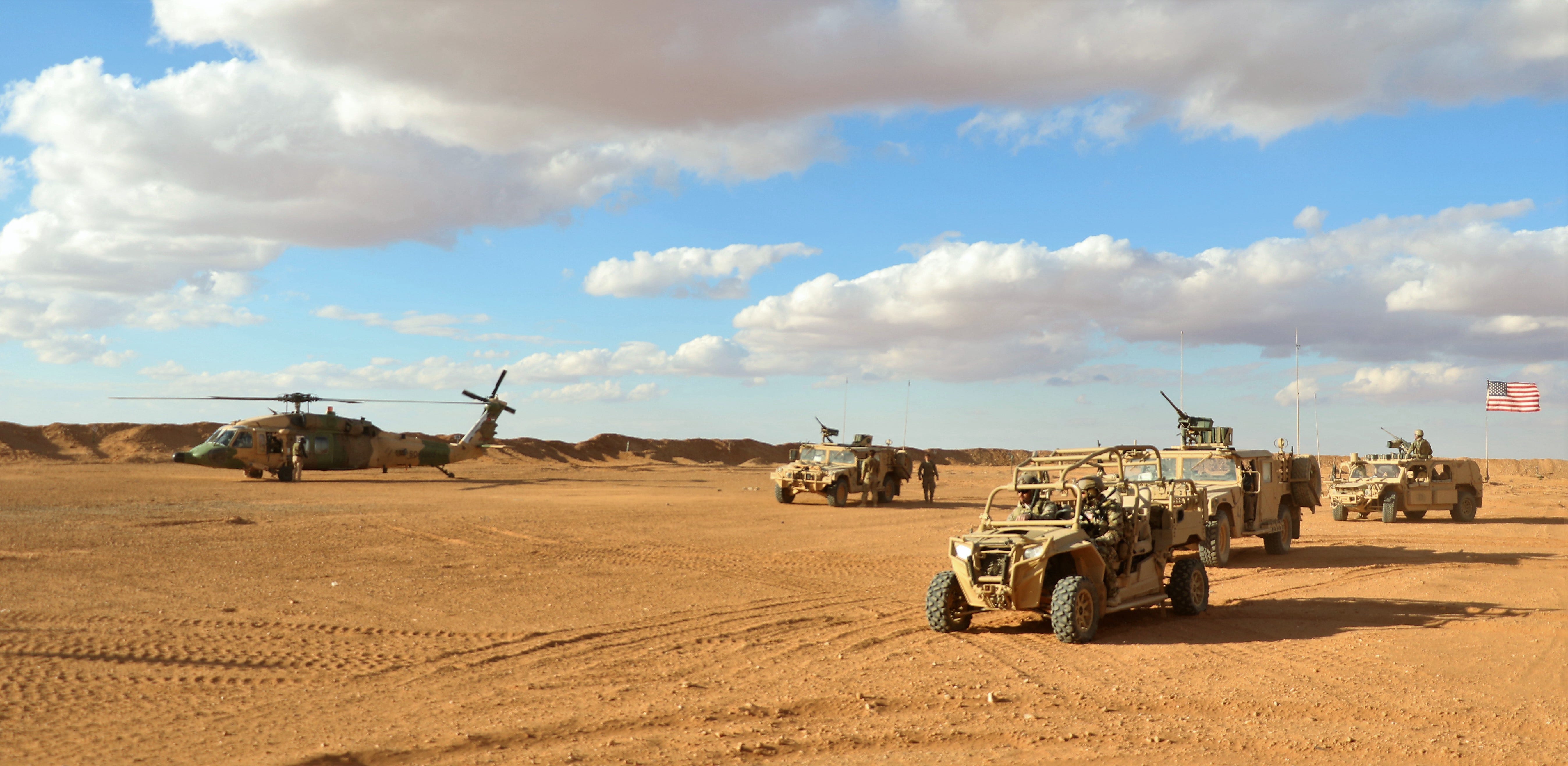
The base, established during Syria’s civil war in 2014, had helped pressure extremists near the borders with Jordan and Iraq and was seen as a bulwark against Iranian influence. Syrian army units have begun deploying along the nearby border areas.
Sources: Wall Street Journal, Al Jazeera

Former Norwegian Prime Minister Thorbjørn Jagland has been charged with “gross corruption” in connection with his ties to the convicted sex offender Jeffrey Epstein, Norwegian police said on Thursday. The charge came after the Council of Europe voted to waive the diplomatic immunity he held from his tenure as secretary general between 2009 and 2019.
Norway’s economic crimes agency said several of Jagland’s properties had been searched and that he would be questioned. Investigators are examining whether gifts, travel and loans were received in connection with his position. Files released by the US Department of Justice show exchanges in which Epstein appeared to confirm that Jagland could stay at his flat in Paris, and suggest the financier covered travel expenses for Jagland and his family.
Jagland’s lawyer has said he denies criminal liability and is cooperating with the authorities.
Sources: BBC, New York Times
On this day ….
On this day in 1945, Allied forces launched a massive bombing campaign against Dresden, causing widespread destruction and civilian casualties.
The attack occurred late in the Second World War, when Germany’s defeat was increasingly certain, making Dresden one of the most controversial bombings of the conflict.
Supporters argued it targeted transport and military infrastructure, while critics questioned its necessity and humanitarian cost.
The bombing has since become central to debates over strategic air warfare, proportionality, and civilian protection in conflict.
Dresden remains a reference point in discussions about how wars are fought, even when victory appears inevitable.