


Trump’s Turkey Flight Reveals New Security Calculus (US)
Israel’s Destruction Devastates Southern Lebanon (Middle East)
Iran Recasts Its Military For A Longer Conflict (Conflict)
Ukraine Strike Hits Russia’s Black Sea Grain Gateway (Conflict)
Colombia Quake Rescue Enters Final Phase (South America)
WHO Warns Congo Ebola Outbreak Could Become Deadliest (Africa)
Europe Watches A “Once In A Generation” Eclipse (Europe)
Europe’s Heat Waves Become An Economic Risk (Europe)
Oman Oil Spill Exposes A Growing Response Gap (Middle East)
Germany Gives Its Spies New Offensive Powers (Europe)
A succinct daily briefing delivered each weekday to help you stay on top of the stories shaping the world.

By now we well know that President Donald Trump was secretly transferred from a NATO summit in Ankara to a smaller military aircraft after intelligence officials raised concerns about a potential Iranian attack on the president or Air Force One.
What has emerged now is that both Secretary of State Marco Rubio and Treasury Secretary Scott Bessent instead departed on an older model of Air Force One that functioned as a decoy aircraft.
The operation relied on multiple layers of deception. President Trump publicly said he would use the older aircraft for the first leg of his return journey to Britain, while reporters, officials and White House staff were led to believe he remained on board.
According to officials, Trump boarded the decoy plane in front of cameras before leaving it concealed in a catering container elevated on a hydraulic lift. Trump later said the Secret Service and the military had requested the change and that he followed their recommendation however it raises the question whether “decoy” is in the job description for a US cabinet member?
Sources: Associated Press, New York Times
Israeli forces have systematically destroyed homes, roads, farmland and forests across occupied southern Lebanon with much of the damage documented after forces established control over emptied villages in mid-April.
Satellite analysis found clearance extending beyond isolated buildings into almost entire municipalities, while Lebanese authorities estimate nearly 85,000 housing units have been damaged or destroyed.
Destruction in Southern Lebanon - Video IDF
Israel says the campaign is intended to dismantle Hizbollah infrastructure, prevent the group rebuilding near the frontier and protect northern communities. Defence Minister Israel Katz said in July that Israel had destroyed all buildings in 24 Lebanese villages and up to 20,000 homes.
The destruction extends to water systems, bridges, farmland and healthcare. Israel controls a zone covering about 6 per cent of Lebanese territory, with roughly 270,000 residents barred from returning, while rights groups and legal experts say preventing civilian return could violate international law. Firefighters and residents of southern Lebanon have accused the Israeli military of deliberately wildfires in the region.
Sources: FT, The Guardian

Iran is restructuring its military command around what officials describe as an “offensive doctrine”, signalling a shift in strategy as the war with the United States and Israel continues. This week’s senior appointments promoted Islamic Revolutionary Guard Corps commanders associated with hardline positions on the war and the Strait of Hormuz while operational command structures were reorganised to increase coordination.
General Mohammad Reza Naqdi, an adviser to the new Revolutionary Guards commander, said the previous doctrine had focused on defence and preserving the country, while the new approach required the ability to take operations into enemy territory when conditions allowed.
The changes include the promotion of Mohsen Rezaee to lead the Supreme National Security Council and the appointment of Ahmad Vahidi as commander of the Revolutionary Guards. President Masoud Pezeshkian has previously accused Vahidi and other senior commanders of taking unilateral military actions that undermined ceasefire efforts.
Sources: Bloomberg, Iran International
Ukraine’s overnight attack on Novorossiysk damaged two major grain export terminals and struck Russia’s principal remaining naval base on the Black Sea, widening Kyiv’s campaign against Russian maritime infrastructure. Three people were killed and 24 injured, while Ukraine said four Russian warships were hit.
Russia’s agriculture ministry said it was redirecting cargo flows towards Baltic and Caspian ports and land routes because of logistical constraints. Russia is the world’s largest wheat exporter, and most of its grain exports move through Black Sea ports.
The strike comes as attacks on shipping and ports have intensified across the Black Sea. Ukraine’s recent operations have disrupted Russian grain shipments, while Russian strikes have damaged cargo ships and Odesa, Ukraine’s largest seaport.
A Moscow-based analytics company estimates Russian grain exports in August could fall by more than 50% compared with the same month over the previous five years.
Sources: BBC, Al Jazeera
Colombia’s earthquake rescue effort entered what officials called its “final phase” on Wednesday, with 265 people now confirmed dead, more than 3,500 wounded and nearly 500 still missing. The magnitude 7.4 quake was the strongest to strike the country this century and destroyed more than 9,500 homes.
Rescue crews were approaching the 72-hour mark, the period when survivors are considered most likely to be found alive beneath collapsed buildings. Cali Mayor Alejandro Eder said the most critical window was closing, although searches continued through the rubble.
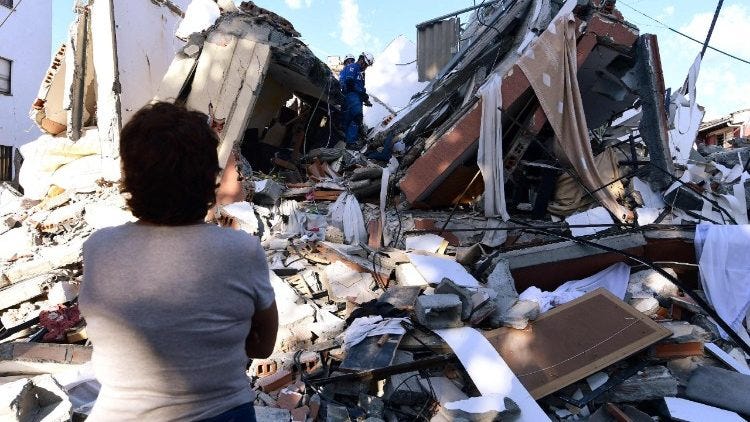
Columbian President Abelardo de La Espriella, inaugurated three days before the earthquake, declared an economic emergency and promised a fund to rebuild hospitals, schools, homes and infrastructure.
The United States and other countries are assisting with search-and-rescue teams and aid shipments across affected areas, while Washington has committed $15.5 million for emergency shelter, food protection and assessment.
Sources: Washington Post, Al Jazeera
Restacking this post will help it reach more readers interested in the world.
The Democratic Republic of Congo’s Ebola outbreak is on course to surpass the deadliest recorded epidemic of the disease, according to World Health Organisation Director-General Tedros Adhanom Ghebreyesus. More than 2,000 people have died from over 4,300 cases since the outbreak was declared on 15 May, although sequencing indicates transmission actually began in February.
The outbreak involves the rare Bundibugyo species, for which there is no approved vaccine or any recognised treatment. Conflict, poor infrastructure and limited access to affected communities in eastern Congo are complicating efforts to contain transmission of the disease, with health workers reaching only about 30 per cent of cases.
The WHO hopes to bring transmission under control within three months, while separate estimates suggest the outbreak could peak in six months or last as long as 12 months. Human trials of Bundibugyo vaccines and possible treatments are now under way.
Sources: Euronews, BBC

Europe witnessed its most dramatic solar eclipse in decades on Wednesday, as millions watched the Moon cover most or all of the Sun across a broad path from the Arctic to western Europe. Parts of Greenland, Iceland and Spain experienced totality (where the entirety of the sun is covered), while most of the UK saw more than 90 per cent of the Sun obscured.

In Spain officials expected as many as 6 million people along the eclipse path, while more than 450,000 tourists had travelled into the country to view the event. Iceland saw its first total solar eclipse in 72 years, with a record 31 cruise ships carrying about 53,000 passengers & crew positioning just for the event.
Totality lasted less than two minutes in some locations, revealing the Sun’s corona before daylight returned. The UK will not see a fuller solar eclipse until 2081, when up to 99 per cent of the Sun will be covered.
Sources: BBC, The Guardian
Europe is bracing for a fifth heat wave of a record-breaking summer, with temperatures forecast to reach 43C in Spain before then spreading east. Western Europe has already recorded its hottest June-to-July period on record, while drought, wildfires and water shortages have disrupted daily life across the continent.
More than 70 per cent of mainland France is under water-use restrictions, while nearly three-quarters of England is in drought. Italy’s largest agricultural trade association estimates climate-related damage to farming has already exceeded €3 billion.
The wider economic exposure is also growing. The European Environment Agency estimates extreme weather caused €822 billion of damage between 1980 and 2024, with a quarter occurring in the final four years. EU states spend about €29 billion annually on climate adaptation and mitigation, compared with the €70 billion the European Commission estimates is needed each year to 2050.
Sources: New York Times, FT

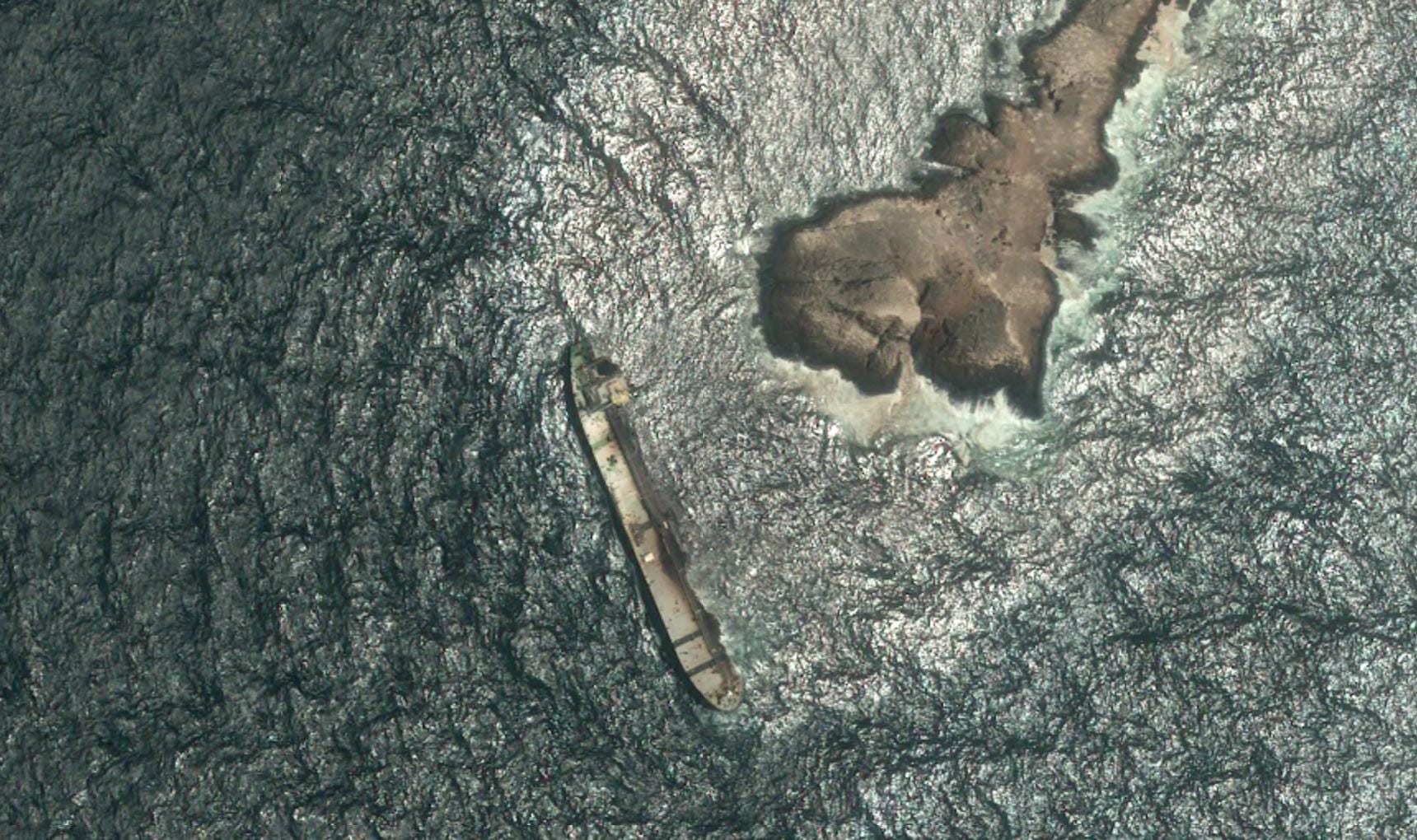
A major oil spill from the grounded tanker Caroline Bezengi has reached Oman’s mainland after spreading rapidly across the Gulf. The vessel, carrying an estimated 800,000 barrels of Russian crude, ran aground on June 30 near the Hallaniyat Islands, part of a marine nature reserve.
Oman’s Environment Authority said crude oil had affected up to 40km of coastline at Ras Madrakah, while satellite analysis estimated the slick covered more than 2,000 sq km. International agencies and environmental groups warn that seasonal monsoon conditions and delayed salvage have allowed the spill to expand sharply.
The response is complicated by sanctions and insurance rules. The tanker is not covered by a recognised Western insurer, while the IOPC Funds, the agency normally providing compensation for oil spills, said it would not cover clean-up costs because the incident is being treated as an act of war rather than an accident.
Sources: Straits Times, Al Jazeera

Germany is preparing its biggest expansion of intelligence powers in decades, allowing its secret services to conduct non-lethal covert operations including cyberattacks and sabotage. Interior Minister Alexander Dobrindt said the reforms marked a “new era” as Berlin responds to espionage, sabotage, cyberattacks and covert actions by foreign powers.
The changes would let the BND, the German spy agency, to disable hostile IT systems, block payment flows and, in rare cases, carry out foreign sabotage missions. Assassinations and other lethal operations would remain prohibited. Data collection and analysis powers would also expand, including greater use of artificial intelligence and longer data retention.
The reforms still require parliamentary approval before taking effect. Supporters argue Germany has fallen behind other European democracies and depends too heavily on allied intelligence, while critics warn that expanded surveillance and intervention powers could infringe fundamental rights and face constitutional challenges.
Sources: Euronews, Politico Europe
Restacking or sharing this publication means more people can read it. Commenting extends the conversation. Liking shows your appreciation.
On this day …
In the early hours of this day in 1961, East German forces began sealing the border between East and West Berlin, initially using barbed wire and roadblocks.
The barriers would develop into the Berlin Wall.
The move was intended to halt the flow of people leaving communist East Germany through West Berlin. Families and neighbourhoods were divided, crossings were tightly controlled and attempts to escape could be deadly.
For the next 28 years the wall became the most visible physical symbol of Europe’s Cold War division.
Its opening on 9 November 1989 became an equally powerful symbol of that order’s collapse.
Few political systems have produced a clearer monument to the consequences of preventing their own citizens from leaving.
Thank you