


Russia And Ukraine Agree Prisoner Exchange (Diplomacy)
Leaked Records Reveal Foreign Deaths In Russia’s War (Conflict)
Spain’s Housing Crisis Triggers General Strike (Europe)
Thousands Of European Schools Targeted By Bomb Hoaxes (Europe)
Iran Rules Out Transfer Of Enriched Uranium Abroad (Middle East)
France Warns Germany Over Long-Range Missile Risks (Europe)
Climate Summit Opens Amid Warnings Of Inadequate Action (Climate)
UK Appoints First Climate Security Representative (Climate)
Nvidia Board Prepares To Remove CEO Jensen Huang (Technology)
Vitol Venezuela Oil Deal Draws Scrutiny Over Vance Ties (US)
A succinct daily briefing delivered each weekday to help you stay on top of the stories shaping the world.

Russia and Ukraine have agreed in principle to a large prisoner exchange after two days of US mediated talks in Abu Dhabi ended without a breakthrough towards ending the war. The proposed exchange could take place within two or three weeks, although the number of prisoners has yet to be finalised.
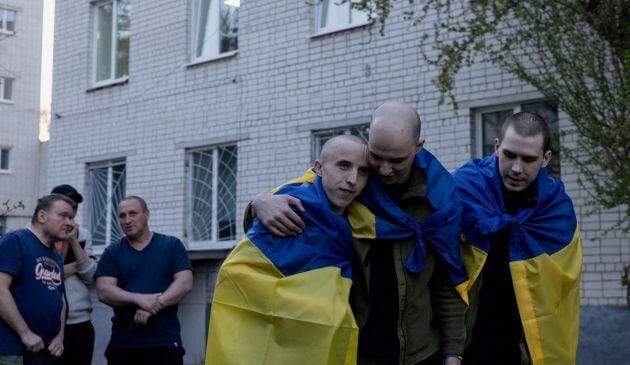
The negotiations, the first between the delegations since February, exposed continuing differences over territory and postwar security arrangements. Ukrainian President Volodymyr Zelenskyy reiterated that Kyiv would not surrender Russian occupied territory in exchange for peace. Moscow continues to demand that Ukraine relinquish the remaining Ukrainian held parts of Donetsk.
US envoys Jared Kushner and Steve Witkoff are due to meet Russian President Vladimir Putin in Moscow before travelling to Dublin to see Zelenskyy. Washington also wants European representatives included in negotiations, a move Moscow has resisted.
The prisoner exchange offers a limited humanitarian outcome while the central obstacles to a settlement remain.
Sources: Associated Press, BBC

Russian authorities have recorded 11,335 war-related deaths involving people born outside Russia or holding foreign citizenship, according to confidential statistics obtained by hackers and reviewed by journalists. The records cover February 2022 to August 2026 and include individuals from nearly 100 countries.
About 3,700 of those recorded were Ukrainian citizens or people born in independent Ukraine, many living in Russian-occupied territories. Approximately 80% of the remaining deaths involved people from other former Soviet republics. The data also identified around 340 deaths involving people from African countries, predominantly since 2025.
The figures expose the international reach of Russia’s military recruitment, although they do not represent a complete count of foreign fighters killed. Some individuals held Russian citizenship, while reporting delays and missing records limit the totals. Russia’s statistics agency acknowledged recent cyberattacks but denied finding evidence that confidential information had been leaked.
Sources: Bloomberg, United 24

Millions of workers joined a general strike across Spain on Wednesday as anger over rising rents and stagnant wages intensified ahead of snap parliamentary elections on November 29. Authorities estimated that 120,000 people marched in Madrid, while Barcelona officials reported 55,000 demonstrators. Unions described the strike as a success, although employers disputed participation figures.
Spain faces a housing shortage of approximately 750,000 homes, projected to exceed one million by 2028. Over the past decade, rents have increased 87%, compared with a 28% rise in wages. The growing affordability crisis has become a central election issue.
Prime Minister Pedro Sánchez called the early election after opposition parties blocked legislation intended to strengthen tenants’ rights. His government has supported the strike, prompting criticism from conservative opposition leader Alberto Núñez Feijóo, who described it as a protest against the opposition. Polls currently favour conservative parties over the governing left-wing coalition.
Sources: New York Times, DW

Thousands of schools across Italy, Scotland and Northern Ireland received threatening emails on Wednesday, prompting evacuations before authorities determined that the warnings were not credible. Italian officials reported that approximately 6,300 state schools received the messages, while more than 700 schools were targeted across Scotland and Northern Ireland.
In Italy, at least 300 schools were evacuated as a precaution. Prime Minister Giorgia Meloni said initial checks had found no evidence of concrete danger. Scottish police similarly dismissed the threats, advising schools that evacuations were unnecessary based solely on the emails. Authorities in the Republic of Ireland also reported receiving similar warnings.
The incidents follow a series of bomb hoaxes targeting European airlines and airports the previous week. Italy’s Education Minister Giuseppe Valditara suggested the messages were part of a cyberattack intended to cause alarm. Investigators have not established whether all the incidents are connected.
Sources: France 24, BBC

Iran has ruled out transferring any enriched nuclear material abroad, reinforcing a central obstacle to negotiations with Washington. Iranian security chief Mohsen Rezaei said Tehran would retain its uranium for domestic use, including nuclear-powered ships and submarines. Russia has previously offered to remove the material as part of a potential agreement.
The International Atomic Energy Agency estimated that Iran possessed 440.9 kilograms of uranium enriched to 60% before US and Israeli strikes on its nuclear facilities in June 2025. The quantity that survived remains unknown. Western governments accuse Iran of seeking nuclear weapons, which Tehran denies.
Rezaei also warned that renewed US attacks would trigger strikes against American bases, potentially including facilities in Europe. He said no negotiations were currently taking place, although Iran has submitted a nuclear proposal through Qatar. Washington insists nuclear issues must feature in talks aimed at ending the war.
Sources: Reuters, Times of India

France is urging Germany to clarify how it would deploy new long-range missiles, warning that strikes against Russia could inadvertently trigger nuclear retaliation. Berlin is developing ground-launched weapons with ranges from 500 to more than 2,000 kilometres as part of Europe’s military rearmament.
French officials fear that Moscow could misinterpret conventional strikes against Russian targets, particularly under President Emmanuel Macron’s proposed expansion of French nuclear deterrence to European partners. Paris is seeking a common understanding of escalation risks and targeting rules. Germany has welcomed discussions on developing a joint doctrine.
Britain is also participating in talks with Germany, including plans to develop missiles exceeding 2,000 kilometres in range. A senior British official cautioned against overstating concerns about Germany’s strategic experience. The discussions reflect Europe’s efforts to strengthen its defences amid uncertainty over American security commitments, while avoiding misunderstandings that could escalate a conventional conflict.
Sources: The Independent, FT

World leaders gathered in Antalya, Turkey, for the COP31 climate summit on Wednesday amid warnings that existing commitments are insufficient to limit global warming. Marshall Islands President Hilda Heine warned that exceeding the Paris Agreement’s 1.5C threshold would threaten island communities through rising seas and destructive flooding.
Barbados Prime Minister Mia Mottley cited UN projections indicating warming of 2.6C even if existing pledges are fulfilled, rising to 2.8C under current policies. UN Secretary-General António Guterres called for accelerated action and proposed taxing windfall profits earned by oil and gas companies during the Iran war to help vulnerable countries recover.
The summit has attracted 91 national leaders, although US President Donald Trump and Chinese President Xi Jinping are absent. Previous negotiations have struggled to secure further commitments on reducing fossil fuel use. Delegates face renewed demands for concrete measures rather than additional promises.
Sources: South China Morning Post, The Guardian

The UK has appointed Dame Madeleine Alessandri as its first special representative for climate security, placing climate-related risks within national security planning. Prime Minister Andy Burnham is expected to announce the role at the COP31 summit in Turkey on Thursday. Alessandri chairs the Joint Intelligence Committee, which provides security assessments to ministers.
A committee report warned that overseas ecosystem collapse could affect UK security within five years through food shortages, higher prices, migration and conflict. Alessandri said she would work across government and internationally to improve preparedness before environmental threats become crises.
Burnham will reaffirm Britain’s commitment to net zero by 2050 and support a global electrification target of 35% by 2035. Environmental campaigners, however, question the government’s position after it approved the Jackdaw gasfield and considered weakening electric vehicle targets. The appointment comes amid competing demands over domestic emissions policy and international climate finance.
Sources: The Guardian, The Independent

Nvidia’s board is preparing to remove co-founder and chief executive Jensen Huang following revelations of two extramarital relationships, including one with a woman suspected by US intelligence officials of working for China.
Huang acknowledged an affair with Alice Huang, an executive at Singapore-based Megaspeed, a major Nvidia customer under US investigation over suspected chip diversions to China. A second relationship reportedly involved Kimberly Powell, a senior Nvidia executive. Beijing has dismissed the espionage allegations, while Megaspeed and Nvidia have denied wrongdoing.

The developments have raised questions about succession planning at the world’s leading AI chipmaker. Huang, who owns approximately 3.6% of Nvidia, has previously questioned the need for formal succession arrangements. Shares fell around 8% in after-hours trading following the reports.
Sources: Wall Street Journal, Japan Times

US Energy Secretary Chris Wright contacted Vitol trader John Addison on January 5, two days after the operation that removed Venezuelan President Nicolás Maduro, to discuss marketing Venezuelan crude. Vitol and rival Trafigura received special licences within days, without competitive bidding, subsequently earning hundreds of millions of dollars.
Addison had donated $300,000 to Vice President JD Vance’s 2022 Senate campaign effort. A US official confirmed Vance had recommended Addison to Wright as trustworthy. Flight records placed their aircraft at the same Montana airport in December, although both men denied meeting there or discussing Venezuela.

The Energy Department said Vance and Wright never discussed Venezuelan oil sales and that Vitol was selected for its market position. Both trading firms denied advance knowledge of the military operation. Democratic lawmaker Robert Garcia has questioned how the licences were awarded, while Addison has since retired from Vitol and become chairman of Wright’s energy policy advisory board.
Sources: Reuters, Oil Price
Restacking or sharing this publication means more people can read it. Commenting extends the conversation. Liking shows your appreciation.
On this day …
On this day in 1927 Leon Trotsky was expelled from the Soviet Communist Party, marking a decisive stage in Joseph Stalin’s consolidation of power following Vladimir Lenin’s death in 1924.
Trotsky, a leading figure in the 1917 Bolshevik Revolution and founder of the Red Army, had opposed Stalin’s growing authority and advocated a different course for Soviet socialism. His expulsion followed years of factional struggles within the party. He was subsequently exiled from the Soviet Union in 1929 and assassinated in Mexico in 1940.
Trotsky’s downfall illustrated the increasingly centralised and intolerant political system emerging under Stalin’s leadership.